Is Mono and Diglycerides Halal

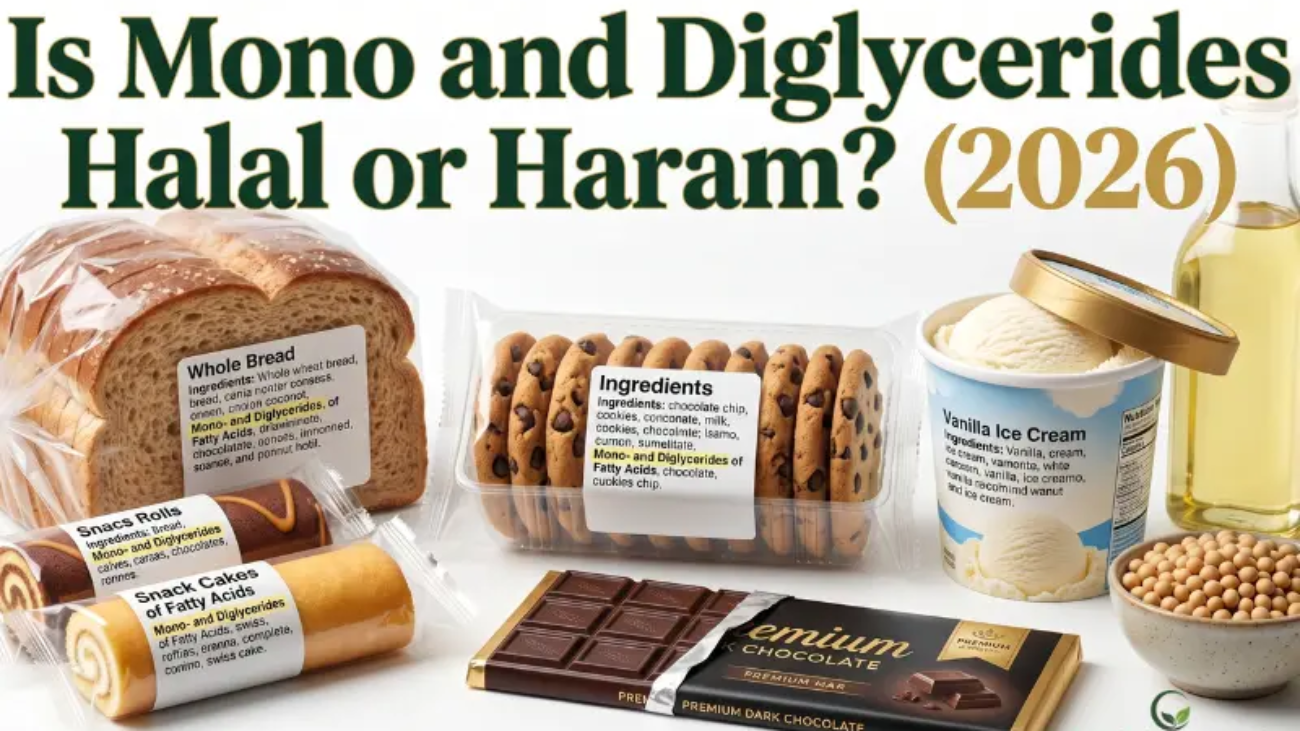
Is Mono and Diglycerides Halal or Haram? (2026) Complete Guide

The answer to “Is mono and diglycerides halal or haram?” depends on where the ingredient comes from. Mono and diglycerides can be made from plant oils, animal fats, or a mixture of both. If they come from vegetable sources, they are generally considered halal. If they come from pork fat, they are haram. When the source is not clearly mentioned, the ingredient may be considered doubtful and requires further verification.

If you are asking whether mono diglycerides halal or whether monoglycerides pork is a concern, the safest approach is to check halal certification, contact the manufacturer, or choose products that clearly state the ingredient source.

Mono and diglycerides are among the most common food additives found in processed foods today. They are used in bread, cakes, cookies, chocolate, ice cream, margarine, peanut butter, and many packaged foods. Most people never notice them because they usually appear in small amounts on ingredient labels.

However, many consumers become concerned when they learn that mono and diglycerides can come from both plant and animal sources. This raises important questions about halal status, especially when the source is not listed on the package. In this guide, we will explain what mono and diglycerides are, how they are made, whether they can come from pork, and how Islamic scholars generally view them.

What Are Mono and Diglycerides?

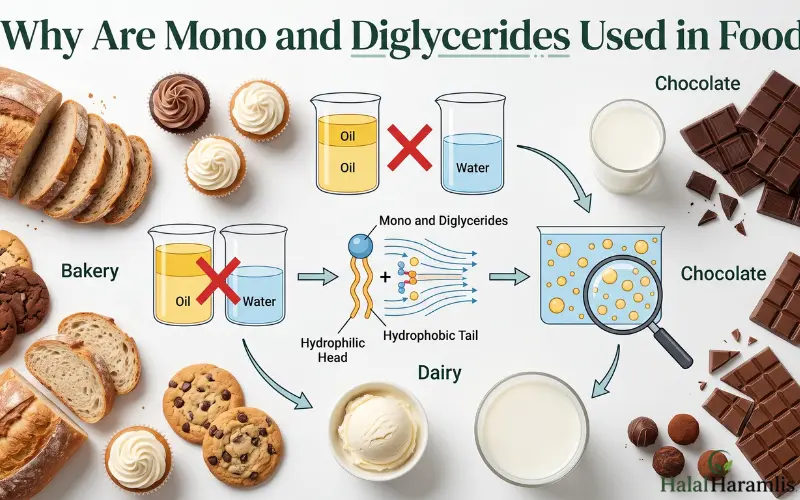
Mono and diglycerides are food emulsifiers.

An emulsifier helps ingredients mix together that normally would not mix well.

For example:

  • Oil and water
  • Fat and milk
  • Chocolate and cream

Food manufacturers use mono and diglycerides to improve texture, shelf life, and product stability.

They are often listed as:

  • Mono and diglycerides
  • Monoglycerides
  • Diglycerides
  • E471 (in some countries)

Why Are Mono and Diglycerides Used in Food?

Is Mono and Diglycerides Halal

Food companies use them because they provide several benefits.

These benefits include:

  • Improving texture
  • Preventing ingredient separation
  • Extending shelf life
  • Making products softer
  • Improving consistency

Without emulsifiers, many processed foods would not have the same appearance and texture consumers expect.

Foods That Commonly Contain Mono and Diglycerides

Because these additives are so common, understanding their halal status is important.

Is Mono and Diglycerides Halal or Haram?

This is the main question many consumers ask.

There is no universal answer.

The halal status depends on the source of the fat used during production.

Possible sources include:

  • Vegetable oils
  • Beef fat
  • Chicken fat
  • Fish oils
  • Pork fat

If mono and diglycerides are produced from halal plant sources, they are generally halal.

If they are produced from pork fat, they are haram.

If the source is unknown, some scholars classify the ingredient as doubtful until further information becomes available.

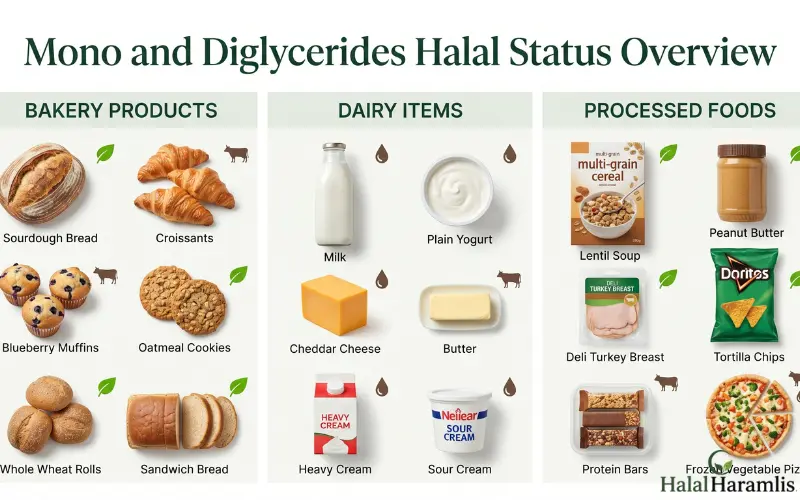
Mono and Diglycerides Halal Status Overview

This table explains why identifying the source is important.

How Are Mono and Diglycerides Made?

Is Mono and Diglycerides Halal

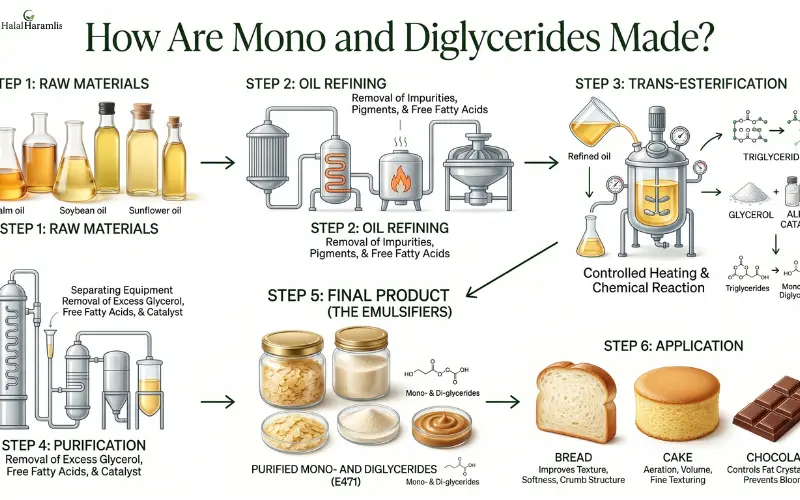
Manufacturers create mono and diglycerides by reacting glycerol with fats.

The process separates fatty acids and combines them with glycerol.

The final ingredient helps stabilize foods and improve texture.

The problem is that the original fat source is not always disclosed on food labels.

This is where halal concerns begin.

Can Mono and Diglycerides Come From Pork?

Many consumers search for:

Monoglycerides Pork

The answer is yes.

Mono and diglycerides can technically be made from pork fat.

However, they can also come from:

  • Palm oil
  • Soybean oil
  • Sunflower oil
  • Canola oil
  • Beef fat
  • Fish oils

The ingredient name alone does not reveal the source.

That is why consumers often seek halal certification or direct confirmation from manufacturers.

Are Mono Diglycerides Halal When Made From Plants?

Yes.

When mono and diglycerides come from plant oils, most scholars consider them halal.

Common halal sources include:

  • Palm oil
  • Soybean oil
  • Sunflower oil
  • Coconut oil
  • Canola oil

These sources are widely used in modern food manufacturing.

For this reason, many mono and diglycerides used today are actually plant-based.

Plant-Based Sources of Mono and Diglycerides

Plant-derived versions are generally the safest option for halal-conscious consumers.

Why Are Mono and Diglycerides Considered Doubtful?

The biggest issue is labeling.

Food labels usually state:

“Mono and Diglycerides”

But they rarely specify:

  • Plant source
  • Animal source
  • Pork source
  • Beef source

Without this information, consumers cannot easily determine the halal status.

Some scholars recommend avoiding doubtful ingredients when a clear halal alternative is available.

Others allow consumption when there is strong evidence that plant sources are commonly used.

Scholar Opinions on Mono and Diglycerides

Islamic scholars generally divide the issue into three categories.

Clearly Plant-Based

Halal.

Clearly Pork-Based

Haram.

Unknown Source

Requires further investigation.

Many halal certification organizations evaluate mono and diglycerides before approving products.

This helps remove uncertainty for consumers.

Ingredient Source Comparison

This simple comparison explains why ingredient sourcing matters so much.

Alcohol, Gelatin, and Enzyme Concerns

Many people confuse mono and diglycerides with other ingredients that may raise halal concerns.

While mono and diglycerides themselves are emulsifiers, they are often discussed alongside ingredients such as:

  • Gelatin
  • Enzymes
  • Alcohol-based flavorings
  • Animal-derived additives

Understanding the difference helps consumers make better decisions.

Do Mono and Diglycerides Contain Gelatin?

A common question is whether mono and diglycerides contain gelatin.

The answer is usually no.

Mono and diglycerides are different ingredients and are not gelatin.

However, a food product may contain both:

  • Mono and diglycerides
  • Gelatin

This is why reading the full ingredient list is important.

Gelatin vs Mono and Diglycerides

Although they serve similar functions in some foods, they are different ingredients.

Do Mono and Diglycerides Contain Alcohol?

Generally, mono and diglycerides themselves do not contain alcohol.

However, products that contain mono and diglycerides may also include:

  • Flavor extracts
  • Artificial flavors
  • Alcohol-based flavor carriers

For this reason, the overall product should be reviewed rather than focusing on only one ingredient.

What Is E471?

In many countries, mono and diglycerides are listed as:

E471

E471 is one of the most common food additives used worldwide.

It is found in:

  • Bread
  • Ice cream
  • Chocolate
  • Margarine
  • Processed foods

The halal concern regarding E471 is exactly the same as mono and diglycerides because they are essentially the same ingredient.

Is E471 Halal or Haram?

The answer depends on the source.

If E471 Comes From Plants

Halal.

If E471 Comes From Pork

Haram.

If E471 Comes From Unknown Animal Sources

Further verification may be needed.

This is why some halal certification organizations carefully inspect E471 before approving products.

Why Food Labels Do Not Specify the Source

Many consumers wonder why companies do not simply state the source.

There are several reasons:

  • Label space limitations
  • Manufacturing flexibility
  • Supplier changes
  • Regulatory requirements

Because regulations in many countries do not require disclosure of the source, consumers may need additional verification.

Country-Wise Halal Status of Mono and Diglycerides

Different countries have different food manufacturing practices.

This is one reason halal-certified products are often preferred.

How Halal Certification Organizations Handle Mono and Diglycerides

Halal certifiers do not automatically reject products containing mono and diglycerides.

Instead, they investigate:

  • Ingredient source
  • Manufacturing process
  • Supplier records
  • Production methods

Only after verification can halal certification be granted.

Why Halal Certification Matters

Halal certification helps remove uncertainty.

Benefits include:

  • Ingredient verification
  • Manufacturing inspections
  • Cross-contamination controls
  • Supplier audits
  • Consumer confidence

When a product carries a trusted halal logo, consumers do not need to guess where mono and diglycerides came from.

Foods Most Likely to Contain Mono and Diglycerides

Many everyday foods use these additives.

Bakery Products

  • Bread
  • Buns
  • Cakes
  • Muffins

Frozen Foods

  • Frozen desserts
  • Frozen pastries

Dairy Products

  • Ice cream
  • Whipped toppings

Snack Foods

  • Crackers
  • Cookies
  • Packaged snacks

Consumers who frequently eat processed foods often consume mono and diglycerides regularly.

How to Identify Halal-Friendly Products

When shopping, consider the following steps.

Step 1: Check the Ingredient List

Look for:

  • Mono and diglycerides
  • E471
  • Emulsifiers

Step 2: Check for Halal Certification

A halal logo provides additional confidence.

Step 3: Contact the Manufacturer

Many companies will provide ingredient source information.

Step 4: Research the Brand

Some brands publicly state that their mono and diglycerides are plant-based.

Consumer Guide: What Should You Do?

Consumers generally fall into three categories.

Strict Approach

Avoid products with unknown mono and diglycerides sources.

Moderate Approach

Consume products when plant-based sourcing is likely.

Certification-Based Approach

Choose only halal-certified products.

Each approach is based on personal comfort and scholarly guidance.

Common Misconceptions About Mono and Diglycerides

Many myths exist online.

Myth 1: All Mono and Diglycerides Are Haram

False.

Many come from plant oils.

Myth 2: All Mono and Diglycerides Come From Pork

False.

Pork is only one possible source.

Myth 3: E471 Is Always Haram

False.

E471 may be halal or haram depending on its source.

Myth 4: Halal Certification Is Unnecessary

False.

Certification helps verify ingredient origins.

Foods That Often Use Plant-Based Mono and Diglycerides

Plant-based sources are common in modern food production because they are often cheaper and easier to obtain.

Are Mono and Diglycerides Safe to Eat?

Food safety authorities around the world generally approve mono and diglycerides for food use.

They are widely used in commercial food production.

The main concern for halal-conscious consumers is not safety but source verification.

Scholar Opinions on Mono and Diglycerides

Most scholars agree on the following:

The disagreement usually concerns products where the source cannot be identified.

Best Halal Alternatives

If you wish to avoid uncertainty, look for products that use:

  • Sunflower lecithin
  • Soy lecithin
  • Pectin
  • Plant-based emulsifiers
  • Halal-certified additives

These ingredients often provide similar functions while reducing uncertainty.

FAQs

Is mono and diglycerides halal or haram?

It depends on the source. Plant-based versions are generally halal, while pork-derived versions are haram.

What are mono and diglycerides?

They are emulsifiers used to improve texture and shelf life in processed foods.

Are mono diglycerides halal?

Many are halal because they come from vegetable oils, but verification is recommended.

Can monoglycerides come from pork?

Yes, pork fat can be used as a source.

Is E471 halal?

E471 may be halal or haram depending on the source used.

Do mono and diglycerides contain gelatin?

No, they are different ingredients.

Do mono and diglycerides contain alcohol?

Typically no, but other ingredients in the product should also be checked.

Are mono and diglycerides vegan?

Some are vegan, while others may come from animal fats.

Why is the source not listed?

Food labeling laws in many countries do not require source disclosure.

How can I verify the source?

Contact the manufacturer or choose halal-certified products.

Are mono and diglycerides common?

Yes, they are among the most widely used food additives in the world.

What is the safest option?

Choose products with trusted halal certification and transparent ingredient sourcing.

Conclusion

The answer to “Is mono and diglycerides halal or haram?” depends entirely on where the ingredient originates. Mono and diglycerides can be produced from vegetable oils, fish oils, halal animal fats, or pork fat. Because food labels rarely identify the source, uncertainty can sometimes exist.

For consumers seeking the clearest answer, halal certification remains the most reliable solution. Products certified by reputable halal organizations have typically undergone ingredient and manufacturing reviews, reducing doubts about mono and diglycerides.

In general, plant-based mono and diglycerides are considered halal by most scholars, while pork-derived versions are clearly haram. When the source cannot be determined, consumers may choose to investigate further or select halal-certified alternatives for greater peace of mind.

Are Reese's Halal or Haram

Are Reese’s Halal or Haram? (2026) Complete Ingredient Guide

The answer to “Are Reese’s halal or haram?” depends on the ingredients, country of manufacture, and halal certification status. Most standard Reese’s Peanut Butter Cups do not contain pork meat, but they are not widely halal-certified in many countries.

If you are asking “Is Reese’s halal?” the safest answer is that the product should be checked individually by reviewing the ingredient list, certification status, and manufacturer information before consuming it.

Reese’s is one of the most popular chocolate and peanut butter candies in the world. Produced by Hershey’s, Reese’s products are known for their combination of creamy peanut butter and milk chocolate. They are sold in supermarkets, convenience stores, and online stores across many countries.

Because Reese’s is a processed confectionery product, many people want to know whether it is halal or haram. Questions about gelatin, alcohol, emulsifiers, and animal-derived ingredients often arise when discussing chocolate products. This guide explains everything you need to know about Reese’s halal status in 2026.

What Is Reese’s?

Reese’s is a chocolate candy product that typically contains:

  • Milk chocolate
  • Peanut butter
  • Sugar
  • Peanuts
  • Vegetable oils
  • Milk ingredients
  • Flavorings

The most popular variety is Reese’s Peanut Butter Cups, although many other versions are available.

Because recipes may vary by country and product type, ingredient lists can differ.

Are Reese’s Halal or Haram?

There is no simple worldwide answer.

Several factors influence the halal status of Reese’s:

  • Ingredient sources
  • Manufacturing process
  • Halal certification
  • Country of production
  • Cross-contamination risks

A product sold in one country may have different ingredients from a product sold elsewhere.

For this reason, Reese’s cannot automatically be classified as halal worldwide.

Reese’s Halal Status Overview

Is Reese’s Halal?

Many consumers search:

The answer depends on the specific product and country.

Some versions may contain ingredients that appear halal, while others may require additional verification.

The lack of halal certification in many regions is one reason people continue to ask about the halal status of Reese’s products.

Ingredient-by-Ingredient Halal Analysis

Understanding the ingredients helps provide a clearer answer.

Peanuts

Peanuts are naturally halal.

There are generally no halal concerns associated with peanuts.

Peanut Butter

Peanut butter is usually made from:

  • Peanuts
  • Salt
  • Oils
  • Sweeteners

These ingredients are generally halal.

Sugar

Sugar is normally considered halal and is widely used in chocolate products.

Milk Ingredients

Milk and dairy ingredients are halal unless mixed with questionable additives.

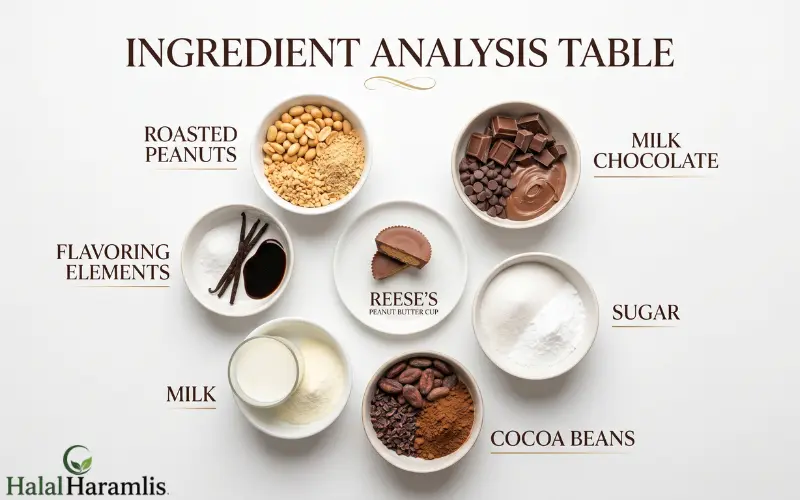
Ingredient Analysis Table

Are Reese's Halal or Haram

Is Reese’s Chocolate Halal?

The chocolate used in Reese’s generally contains:

  • Cocoa
  • Milk
  • Sugar
  • Cocoa butter

These ingredients are normally halal.

However, processed chocolate products may also contain flavorings and emulsifiers that require verification.

This is why checking the complete ingredient list is important.

Does Reese’s Contain Pork?

Are Reese's Halal or Haram

One of the most common questions is whether Reese’s contains pork.

Standard Reese’s products generally do not list pork meat as an ingredient.

However, consumers often investigate:

  • Gelatin
  • Emulsifiers
  • Processing aids
  • Flavoring ingredients

The absence of pork meat does not automatically guarantee halal status, but it removes one major concern.

Pork-Related Ingredient Concerns

Does Reese’s Contain Gelatin?

Gelatin is one of the most searched halal concerns.

Many standard Reese’s Peanut Butter Cups do not list gelatin as a primary ingredient.

However:

  • Product formulas may change
  • Limited editions may differ
  • Country-specific versions may vary

Consumers should always review the ingredient label of the exact product they are purchasing.

Understanding Gelatin Sources

Not all gelatin is the same.

Beef Gelatin

May be halal if sourced from halal-slaughtered animals.

Pork Gelatin

Not halal.

Fish Gelatin

Generally halal.

Plant-Based Alternatives

Usually halal and widely accepted.

When gelatin appears on a label, its source becomes important.

Does Reese’s Contain Alcohol?

Alcohol is another common concern.

Most standard Reese’s products are not marketed as containing alcoholic beverages.

However, some flavorings used in food manufacturing may involve alcohol during processing.

Consumers who avoid all alcohol-derived ingredients may prefer products with halal certification.

Alcohol and Flavoring Analysis

Halal Certification Status

Halal certification is one of the easiest ways to determine whether a product meets halal standards.

When purchasing Reese’s, look for:

  • Halal logos
  • Certification marks
  • Official manufacturer information
  • Country-specific labeling

Certification standards vary from region to region.

Why Certification Matters

Certification helps verify:

  • Ingredient sourcing
  • Production standards
  • Manufacturing processes
  • Cross-contamination controls

This makes halal-certified products easier to evaluate.

Country-Wise Reese’s Halal Status

The halal status of Reese’s may vary between countries.

Always check the product available in your local market.

Cross-Contamination Concerns

Even when ingredients appear halal, manufacturing facilities may process products containing non-halal ingredients.

Potential concerns include:

  • Shared production equipment
  • Shared storage areas
  • Shared packaging systems

This is one reason some consumers prefer halal-certified confectionery products.

Scholar Opinions on Reese’s

Islamic scholars generally recommend:

  • Reading ingredient labels carefully
  • Looking for halal certification
  • Avoiding doubtful ingredients
  • Choosing products with clear halal status

When ingredient sources cannot be verified, opinions may vary.

The common recommendation is to choose certainty whenever possible.

Muslim Consumer Guide

Before buying Reese’s:

Check Ingredients

Review the ingredient list carefully.

Check for Gelatin

Verify its source if present.

Review Flavorings

Some flavorings may require clarification.

Look for Certification

Halal certification provides greater confidence.

Contact the Manufacturer

If unsure, ask directly.

These simple steps help consumers make informed decisions.

Halal Alternatives to Reese’s

If you prefer products with clear halal certification, consider:

  • Halal-certified peanut butter chocolates
  • Halal-certified confectionery brands
  • Chocolate products with halal logos
  • Local halal sweet manufacturers

These options often provide greater transparency.

FAQs

Are Reese’s halal or haram?

It depends on ingredients, certification, and country of manufacture.

Is Reese’s halal?

Some versions may be suitable, while others require verification.

Does Reese’s contain pork?

Standard Reese’s products generally do not list pork meat.

Does Reese’s contain gelatin?

Many standard products do not, but formulas may vary.

Is Reese’s chocolate halal?

Chocolate ingredients are generally halal, though additional ingredients should be reviewed.

Is peanut butter halal?

Yes, peanut butter is generally halal.

Does Reese’s contain alcohol?

Standard products are not marketed as alcoholic products.

Is Reese’s halal in the USA?

Most products are not specifically halal-certified.

Is Reese’s halal in the UK?

Consumers should check local packaging and certification.

Why does halal status vary?

Ingredients and manufacturing processes can differ by country.

Should I look for halal certification?

Yes, certification is one of the easiest ways to verify halal status.

What is the safest option?

Choose products with clear halal certification and transparent ingredient information.

Conclusion

The answer to “Are Reese’s halal or haram?” depends on the ingredients, manufacturing process, country of production, and halal certification status. Standard Reese’s products generally contain peanuts, peanut butter, milk chocolate, sugar, and other ingredients that are commonly considered halal.

However, questions about flavorings, emulsifiers, gelatin, alcohol-derived processing aids, and manufacturing practices mean that halal status should not be assumed automatically. This is especially true when products lack halal certification.

The safest approach is to read ingredient labels carefully, verify certification where available, and choose products that provide clear information about their ingredients and production standards.

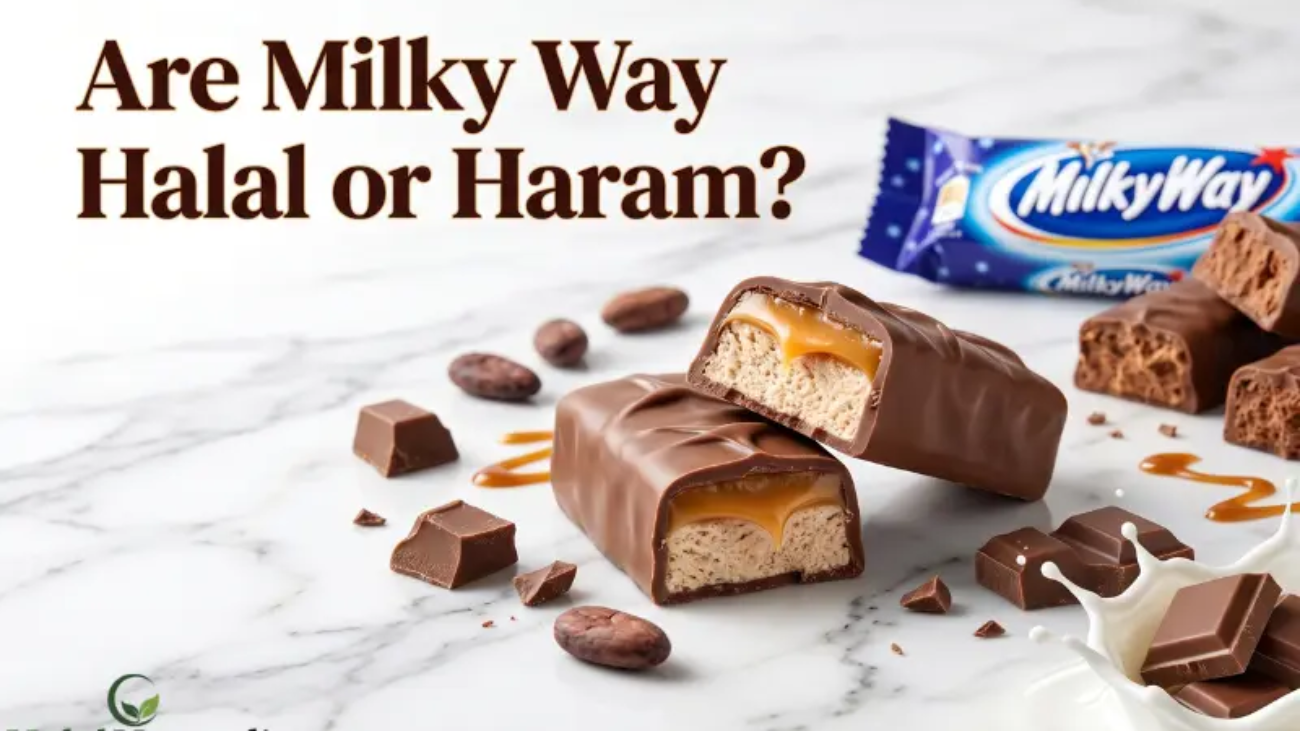
Are Milky Way Halal

Are Milky Way Halal or Haram? (2026) 

The answer to “Are Milky Way halal or haram?” depends on the country where the product is sold and the ingredients used in that specific version. Many Milky Way bars contain ingredients that appear halal, such as milk chocolate, sugar, and nougat. However, halal certification is not available in every country, and some ingredients may require further verification.

If you are asking “Is the Milky Way halal?”The safest approach is to check the ingredient list, country of manufacture, and halal certification on the packaging before consuming it.

The Milky Way is one of the world’s most popular chocolate bars. Known for its soft nougat center covered in milk chocolate, it has been enjoyed for decades by chocolate lovers around the globe. Because it is a processed confectionery product, many consumers want to know whether the Milky Way is halal or haram.

Questions such as “Does the Milky Way contain pork?”, “Does Milky Way contain gelatin?”, and “Is milky chocolate halal?” are common among Muslims who want to ensure their food choices comply with Islamic dietary guidelines.

This guide explains Milky Way ingredients, gelatin concerns, alcohol concerns, halal certification, scholar opinions, and safer alternatives in simple and easy-to-understand language.

What Is Milky Way?

Milky Way is a chocolate candy bar produced by Mars. The classic version usually contains:

  • Milk chocolate
  • Nougat
  • Sugar
  • Cocoa butter
  • Milk ingredients
  • Vegetable oils
  • Flavorings

Different countries may sell slightly different versions of the product.

Because recipes can vary, checking the local packaging is always important.

Are Milky Way Halal or Haram?

There is no single worldwide answer.

Several factors affect the halal status of Milky Way:

  • Ingredients used
  • Source of additives
  • Manufacturing process
  • Halal certification
  • Country of production

A product may be considered halal in one country and require further verification in another.

For this reason, Milky Way cannot automatically be classified as halal everywhere.

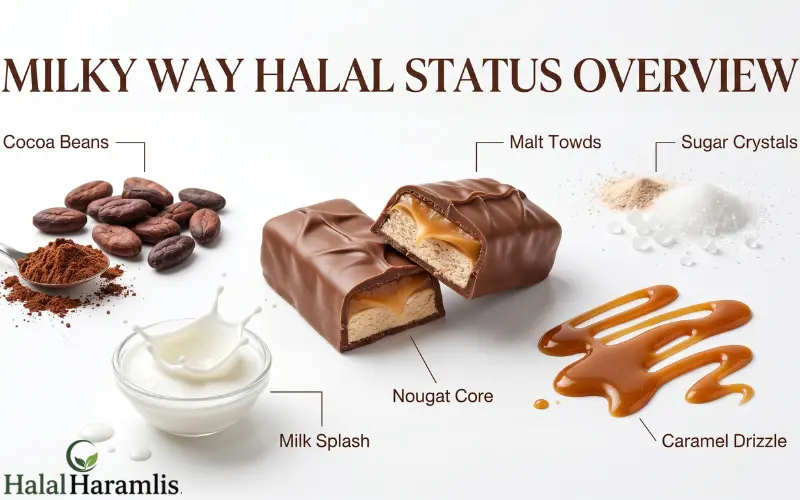
Milky Way Halal Status Overview

Are Milky Way Halal

Is Milky Way Halal?

Many consumers simply ask:

The answer depends on where the product is made and whether it carries halal certification.

Some versions sold in certain countries may have halal certification. Others may not be certified even if the ingredient list appears acceptable.

Because ingredient sources can change over time, checking the latest product packaging remains important.

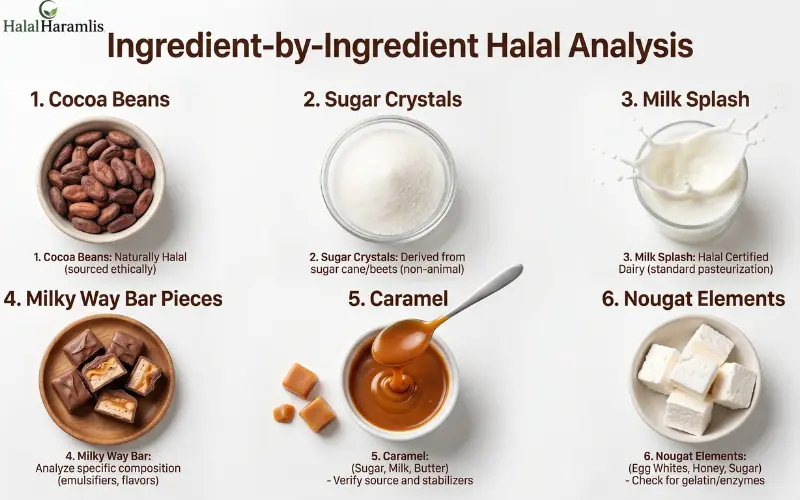
Ingredient-by-Ingredient Halal Analysis

Are Milky Way Halal

Understanding the ingredients is one of the best ways to evaluate halal status.

Sugar

Sugar is generally considered halal.

Some consumers investigate sugar processing methods, but most halal authorities accept standard refined sugar.

Cocoa

Cocoa beans and cocoa products are naturally halal.

Milk

Milk is halal and commonly used in chocolate production.

Vegetable Oils

Most vegetable oils are halal unless mixed with prohibited ingredients.

Flavorings

Flavorings sometimes require additional verification because manufacturing methods can differ.

Ingredient Analysis Table

Is Milky Chocolate Halal?

Are Milky Way Halal

Another common question is:

Milk chocolate is generally halal because its main ingredients include:

  • Milk
  • Sugar
  • Cocoa
  • Cocoa butter

However, processed chocolate products sometimes contain additional ingredients that require verification, including flavorings and emulsifiers.

For this reason, each chocolate product should be reviewed individually.

Does Milky Way Contain Pork?

Many consumers worry about hidden pork ingredients in processed sweets.

Standard Milky Way bars generally do not list pork meat as an ingredient.

However, consumers often investigate:

  • Gelatin sources
  • Emulsifier sources
  • Flavoring sources
  • Manufacturing processes

The absence of pork meat does not automatically make a product halal, but it removes one of the major concerns.

Pork-Related Ingredient Concerns

When evaluating chocolate products, consumers often check for:

Reviewing ingredient labels helps identify potential concerns.

Does Milky Way Contain Gelatin?

One of the most searched questions is:

The answer depends on the product version and country.

Some Milky Way products may not contain gelatin, while certain variations, limited editions, or regional recipes could differ.

Because formulas can change, consumers should always read the ingredient label of the exact product they intend to buy.

Understanding Gelatin Sources

Not all gelatin is the same.

Beef Gelatin

May be halal if obtained from properly halal-slaughtered animals.

Pork Gelatin

Not halal.

Fish Gelatin

Generally halal.

Plant-Based Alternatives

Usually halal and widely accepted.

When gelatin appears on an ingredient list, the source becomes very important.

Does Milky Way Contain Alcohol?

Alcohol is another concern for halal-conscious consumers.

Standard Milky Way bars are not marketed as alcoholic products.

However, some flavorings used in food manufacturing may involve alcohol during processing.

Because production methods vary, consumers who avoid all alcohol-derived ingredients may prefer products carrying halal certification.

Alcohol and Flavoring Analysis

The source and manufacturing method matter more than the ingredient name alone.

Halal Certification of Milky Way

Halal certification provides one of the clearest indicators of product suitability.

When buying Milky Way, look for:

  • Halal logos
  • Certification marks
  • Manufacturer statements
  • Country-specific information

Certification standards may vary between regions.

Why Halal Certification Matters

Halal certification helps verify:

  • Ingredient sources
  • Production methods
  • Cross-contamination controls
  • Manufacturing standards

A halal logo can remove much of the uncertainty associated with processed foods.

Country-Wise Milky Way Halal Status

The halal status of Milky Way may differ by country.

Always review the product available in your local market.

Cross-Contamination Concerns

Even when ingredients appear halal, manufacturing facilities may process products containing non-halal ingredients.

Possible concerns include:

  • Shared production equipment
  • Shared storage facilities
  • Shared packaging systems

This is one reason some consumers prefer certified halal products.

Scholar Opinions on Milky Way

Islamic scholars generally recommend:

  • Checking ingredient labels
  • Looking for halal certification
  • Avoiding doubtful ingredients
  • Seeking certainty when possible

When ingredient sources are unclear, different scholarly opinions may exist.

The common recommendation is to choose products with clear halal status whenever possible.
Muslim Consumer Guide

Before purchasing Milky Way:

Check the Ingredient List

Read the packaging carefully.

Look for Gelatin

Verify the source if gelatin is present.

Review Flavorings

Some flavorings may require clarification.

Check Certification

A halal logo provides additional confidence.

Contact the Manufacturer

If information is unclear, ask directly.

These simple steps can help consumers make informed decisions.

Halal Alternatives to Milky Way

If you prefer products with clear halal certification, consider:

  • Halal-certified chocolate bars
  • Halal-certified confectionery brands
  • Chocolate products with official halal logos
  • Local halal sweet manufacturers

These options may offer greater certainty regarding ingredient sources.

Common Mistakes When Checking Chocolate Halal Status

Many people make assumptions without checking facts.

Common mistakes include:

  • Assuming all chocolate is halal
  • Ignoring ingredient labels
  • Forgetting country differences
  • Assuming no pork means automatically halal
  • Ignoring gelatin and flavorings

A few minutes of checking can prevent uncertainty.

FAQs

Are Milky Way halal or haram?

It depends on the ingredients, country of production, and certification status.

Is Milky Way halal?

Some versions may be halal, while others require verification.

Does Milky Way contain pork?

Standard Milky Way bars generally do not list pork meat as an ingredient.

Does Milky Way contain gelatin?

Some versions may not contain gelatin, but formulas can vary by country.

Is milky chocolate halal?

Milk chocolate is generally halal, though additional ingredients should also be reviewed.

Is dairy milk okay for Muslims?

Yes, milk itself is halal and widely consumed by Muslims.

Does Milky Way contain alcohol?

Standard products are not marketed as alcoholic products, but flavorings may require verification.

Is Milky Way halal in the USA?

Consumers should review local ingredient information and certification status.

Is Milky Way halal in the UK?

Check the packaging and any available halal certification.

Why does halal status vary?

Recipes, suppliers, and manufacturing processes may differ between countries.

Should I look for halal certification?

Yes, certification is one of the easiest ways to verify halal status.

What is the safest option?

Choose chocolate products with clear halal certification and transparent ingredient information.

Conclusion

The answer to “Are Milky Way halal or haram?” depends on the ingredients, country of manufacture, and halal certification status of the product. Standard Milky Way bars generally contain ingredients such as milk chocolate, sugar, cocoa, and nougat, which are usually considered halal.

However, questions about gelatin, flavorings, emulsifiers, alcohol-derived processing aids, and manufacturing practices mean that halal status cannot always be assumed. This is especially true when products lack official halal certification.

The safest approach is to read the ingredient label, verify certification where available, and choose products with clear halal information. By checking these details, consumers can make informed decisions that align with their dietary preferences and Islamic guidelines.

Are Snickers Halal

Are Snickers Halal or Haram? (2026) Complete

The answer to “Are Snickers halal or haram?” depends on the country where the product is made and the ingredients used. In many regions, standard Snickers bars do not contain pork meat. However, some products may contain ingredients that require halal verification, such as emulsifiers, flavorings, or cross-contamination concerns.

Most Snickers bars are made with peanuts, caramel, nougat, milk chocolate, sugar, and other common ingredients. While these ingredients are generally halal, the lack of halal certification in many countries means consumers should check the packaging and manufacturer information before consuming them.

Snickers is one of the most popular chocolate bars in the world. It is produced by Mars and is sold in supermarkets, convenience stores, and online stores across many countries. The combination of peanuts, caramel, nougat, and milk chocolate makes it a favorite snack for millions of people.

Because Snickers is a processed confectionery product, questions often arise about its halal status. Consumers frequently want to know whether Snickers contains pork, gelatin, alcohol, or other ingredients that may affect its permissibility in Islam. This guide explains everything you need to know about Snickers ingredients, halal concerns, and safer choices in 2026.

What Is Snickers?

Snickers is a chocolate candy bar that typically contains:

  • Milk chocolate
  • Peanuts
  • Caramel
  • Nougat
  • Sugar
  • Vegetable oils
  • Flavorings

It is manufactured by the company Mars and is available in many varieties and sizes worldwide.

Are Snickers Halal or Haram?

There is no single worldwide answer because ingredients and manufacturing processes can vary by country.

Several factors determine whether Snickers may be halal:

  • Ingredients used
  • Source of additives
  • Manufacturing process
  • Halal certification
  • Country of production

Because of these differences, Snickers cannot automatically be classified as halal everywhere.

Snickers Halal Status Overview

Are Snickers Halal?

Many consumers search specifically for:

The answer depends on the specific product and country.

In some countries, Snickers products may carry halal certification. In others, they may not be certified even though the ingredient list appears acceptable.

When a product lacks halal certification, some consumers choose to avoid it while others review the ingredient list and make their own decision.

Ingredient-by-Ingredient Halal Analysis

Are Snickers Halal

Understanding each ingredient helps provide a clearer picture.

Peanuts

Peanuts are naturally halal and present no halal concerns.

Sugar

Sugar is generally halal. However, some consumers investigate sugar processing methods, especially in countries where bone char filtration may be used.

Milk Chocolate

Milk chocolate ingredients are generally halal unless questionable additives are included.

Caramel

Caramel is usually made from sugar and is generally considered halal.

Nougat

Nougat commonly contains:

  • Sugar
  • Egg whites
  • Nuts
  • Flavorings

Most standard nougat ingredients are halal.

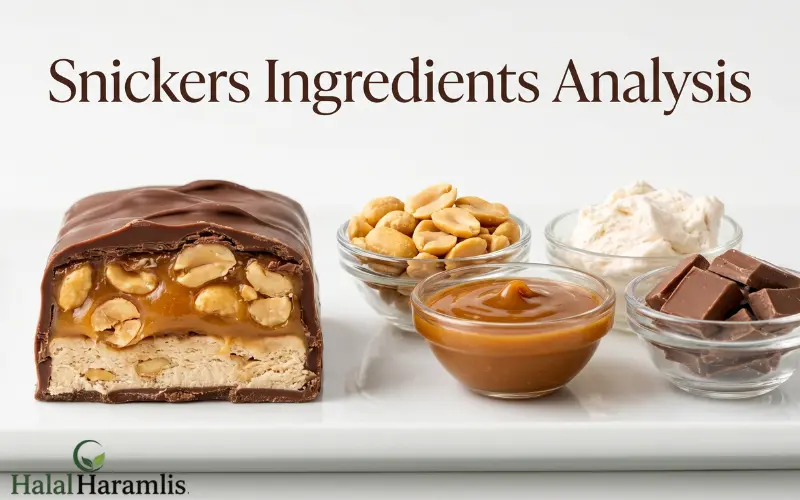
Ingredient Analysis Table

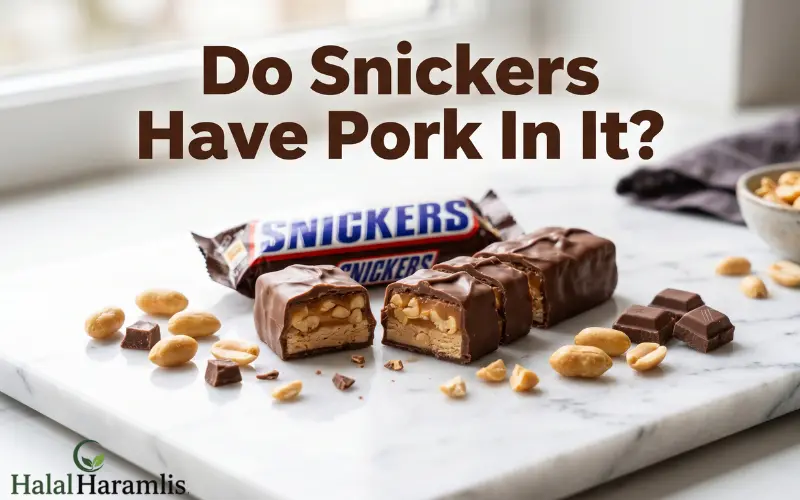
Do Snickers Have Pork in It?

Are Snickers Halal

One of the most common questions is:

Standard Snickers bars generally do not list pork meat as an ingredient.

However, halal-conscious consumers often investigate:

  • Gelatin sources
  • Emulsifier sources
  • Flavoring sources
  • Manufacturing practices

Although pork itself is not typically listed in standard Snickers bars, ingredient formulations can vary by country and product version.

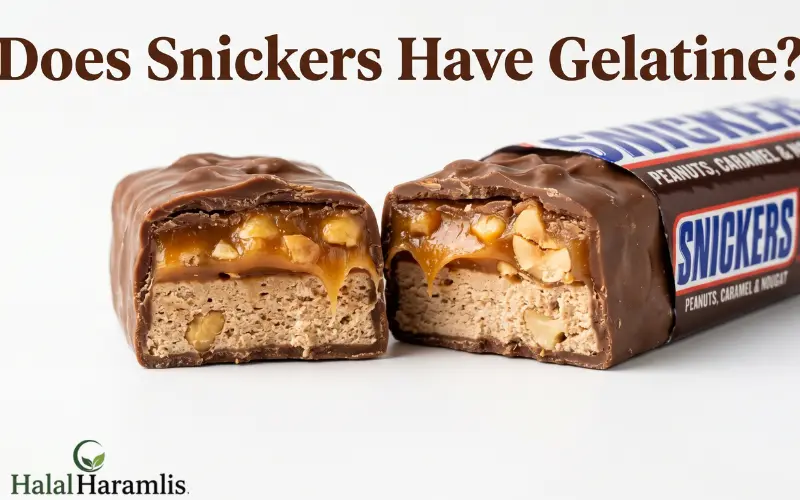
Does Snickers Have Gelatine?

Are Snickers Halal

Another frequently searched question is:

Many standard Snickers bars do not list gelatin as a primary ingredient.

However:

  • Recipes can vary by country
  • Limited-edition products may differ
  • Related confectionery products may contain gelatin

This is why checking the packaging of the specific product is important.

Gelatin Concerns Explained

Gelatin can come from different sources:

Beef Gelatin

May be halal if sourced from halal-slaughtered animals.

Pork Gelatin

Not halal.

Fish Gelatin

Generally halal.

Plant-Based Alternatives

Usually halal.

When gelatin is present, the source becomes the key factor.

Does Snickers Contain Alcohol?

Alcohol is another common concern.

Most standard Snickers bars are not marketed as containing alcoholic beverages.

However, some processed flavorings may involve alcohol during manufacturing.

Because recipes vary globally, consumers who avoid all alcohol-derived ingredients should review official ingredient information.

Sugar Processing and Halal Concerns

Some consumers ask whether sugar in candy products is always halal.

In some countries, refined sugar may be processed using filtration methods that create discussion among scholars.

Most halal certification organizations still consider standard sugar halal unless there is clear evidence of a prohibited substance being present.

Does Snickers Contain Animal-Derived Ingredients?

Some ingredients can potentially come from animal sources, including:

  • Emulsifiers
  • Flavorings
  • Processing aids

These ingredients are not automatically haram, but their source may require verification when halal certification is unavailable.

Snickers Halal Certification Status

One of the easiest ways to determine halal status is through certification.

Consumers should look for:

  • Halal logos
  • Certification marks
  • Official manufacturer statements

Certification standards may differ between countries.

Snickers in Different Countries

The halal status of Snickers may vary depending on where it is produced.

Always review the product sold in your local market.

Scholar Opinions on Snickers

Islamic scholars generally recommend:

  • Reviewing ingredients
  • Looking for halal certification
  • Avoiding doubtful products
  • Choosing products with clear halal status

When ingredient sources cannot be verified, opinions may differ among scholars.

Muslim Consumer Guide

Before buying Snickers:

Check the Label

Review the ingredient list carefully.

Look for Certification

Halal certification provides additional confidence.

Verify Country of Origin

Recipes may vary between countries.

Contact the Manufacturer

If uncertain, ask the manufacturer directly about ingredient sources.

Halal Alternatives to Snickers

If you prefer products with clear halal certification, consider:

  • Halal-certified chocolate bars
  • Halal-certified confectionery brands
  • Local halal sweets
  • Chocolate products with official halal logos

These options may provide greater certainty.

FAQs

Are Snickers halal or haram?

It depends on the ingredients, country of production, and halal certification status.

Are Snickers halal?

Some versions may be halal, while others require verification.

Do Snickers have pork in it?

Standard Snickers bars generally do not list pork meat as an ingredient.

Does Snickers have gelatine?

Many standard versions do not, but recipes may vary by country.

Does Snickers contain alcohol?

Standard bars are not marketed as containing alcoholic beverages, but some flavorings may require verification.

Is Snickers halal in the USA?

Most Snickers products in the USA are not specifically halal-certified.

Is Snickers halal in the UK?

Consumers should check packaging and certification information.

Are peanuts in Snickers halal?

Yes, peanuts are naturally halal.

Is Snickers chocolate halal?

The chocolate itself is generally halal, though other ingredients should also be reviewed.

Should I look for halal certification?

Yes, certification is one of the easiest ways to verify halal status.

Can ingredient formulas change?

Yes, manufacturers may change recipes over time.

What is the safest option?

Choose products with clear halal certification and transparent ingredient information.

Conclusion

The answer to “Are Snickers halal or haram?” is not always straightforward. Standard Snickers bars generally do not contain pork meat, and many of their core ingredients such as peanuts, sugar, milk chocolate, caramel, and nougat are usually considered halal.

However, the halal status can vary depending on the country of production, ingredient sourcing, certification status, and manufacturing processes. Questions about gelatin, emulsifiers, flavorings, and cross-contamination are often the main reasons consumers seek additional verification.

For the greatest peace of mind, check the ingredient list, look for halal certification, and verify manufacturer information whenever possible. This approach helps ensure that food choices align with personal halal requirements and preferences.
Are Twix Halal

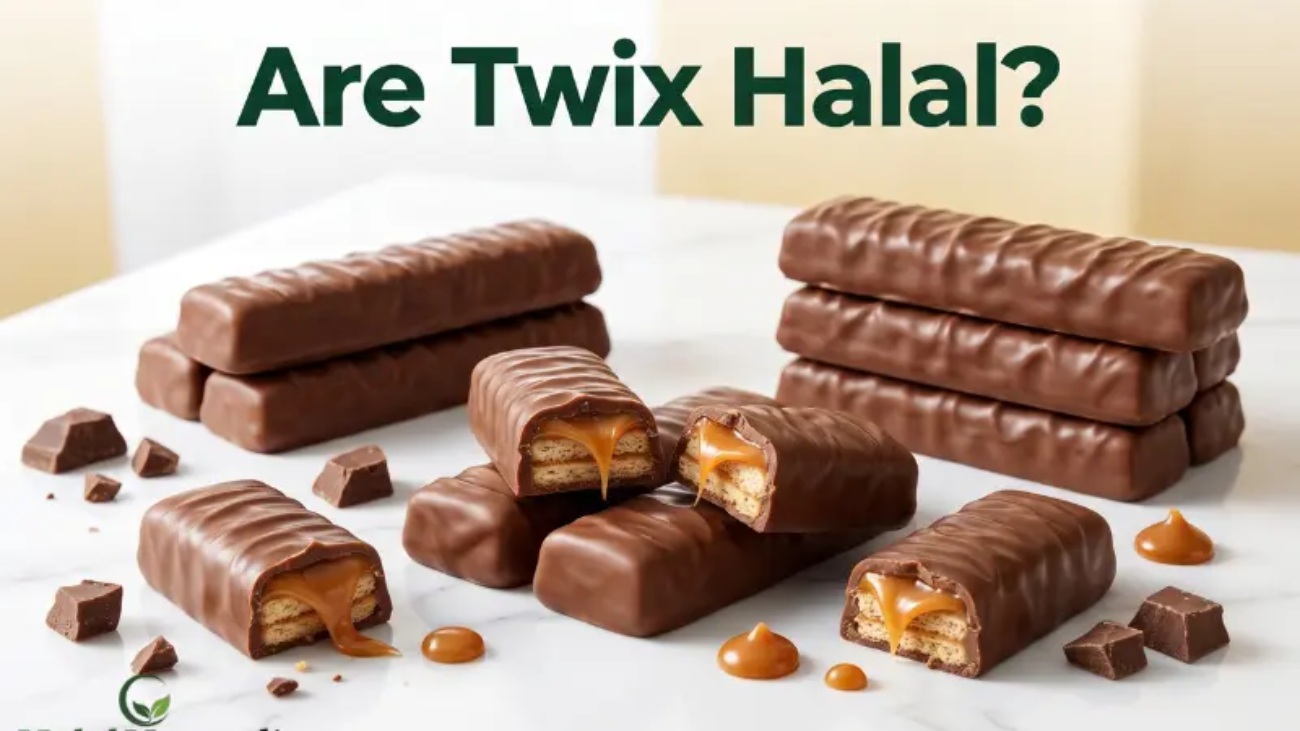
Are Twix Halal or Haram? (2026 Guide)

Yes, many Twix products are generally considered halal-friendly because they do not typically contain pork or obvious haram ingredients. However, the halal status of Twix can vary depending on the country, ingredients, flavorings, and manufacturing processes. Muslims should always check the ingredient label and local halal certification before consuming any Twix product.

Standard Twix bars usually contain chocolate, caramel, biscuit, sugar, milk ingredients, and vegetable oils. While these ingredients are generally halal, some consumers prefer additional verification regarding flavorings, emulsifiers, and cross-contamination concerns.

Twix is one of the most popular chocolate bars in the world. Known for its crunchy biscuit base, smooth caramel layer, and milk chocolate coating, Twix is sold in dozens of countries and enjoyed by millions of people every day.

Because Twix contains several processed ingredients, Muslim consumers often ask questions such as “Are Twix halal or haram?”, “Are Twix halal?”, and “Is Twix halal in USA?”

The answer is not always straightforward because ingredient formulations can differ from one country to another. While standard Twix bars generally do not contain pork or gelatin, some specialty versions may contain ingredients that require additional checking.

This guide examines Twix ingredients, halal concerns, USA status, scholar opinions, and everything Muslim consumers should know before eating Twix.

What Makes Chocolate Bars Halal?

A chocolate bar is generally considered halal when it does not contain prohibited ingredients and follows Islamic dietary guidelines.

Common halal requirements include:

  • No pork ingredients
  • No non-halal gelatin
  • No intoxicating alcohol
  • No haram animal derivatives
  • No major contamination with haram substances

Halal Requirements Table

If these conditions are met, a chocolate bar is generally considered halal.

What Is Twix Made Of?

Are Twix Halal

Twix contains several ingredients that give it its unique texture and taste.

Typical ingredients include:

  • Sugar
  • Milk chocolate
  • Wheat flour
  • Caramel
  • Palm oil
  • Cocoa butter
  • Skim milk
  • Salt
  • Emulsifiers
  • Flavorings

Most of these ingredients are generally considered halal.

Twix Ingredient Overview

Based on the ingredient list, Twix does not usually contain obvious haram ingredients.

Are Twix Halal?

Many standard Twix products are generally regarded as halal-friendly.

The bar primarily contains plant-based ingredients, dairy products, cocoa, and sugar. These ingredients are usually permissible under Islamic dietary rules.

However, because recipes may vary by country, Muslims should review local ingredient labels and halal certifications whenever possible.
Twix Halal Overview

For many Muslim consumers, standard Twix bars are generally considered permissible.

Does Twix Contain Pork?

One of the biggest concerns among Muslim consumers is pork.

Standard Twix bars do not typically contain pork meat, pork fat, or pork-derived ingredients.

The main ingredients consist of chocolate, biscuit, caramel, and dairy products.

Pork Analysis

Most standard Twix products do not list pork ingredients.

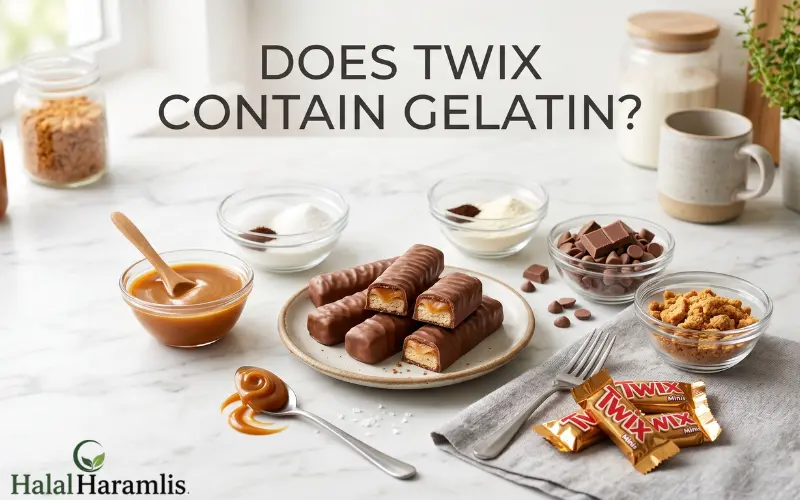
Does Twix Contain Gelatin?

Are Twix Halal

Gelatin is another common concern because some gelatin is derived from pork.

The good news is that standard Twix bars generally do not contain gelatin.

Unlike gummy candies or marshmallow products, Twix gets its texture from biscuit, caramel, chocolate, and oils rather than gelatin.

Gelatin Analysis

This is one reason many Muslims consider Twix halal-friendly.

Twix Ingredients Analysis

Let’s examine the main ingredients more closely.

Sugar

Sugar is generally halal and does not present concerns.

Wheat Flour

Wheat flour is plant-based and halal.

Cocoa and Chocolate

Chocolate and cocoa are naturally halal unless mixed with haram ingredients.

Milk Ingredients

Milk and dairy ingredients are generally halal.

Palm Oil

Palm oil is plant-derived and considered halal.

Ingredient Analysis Table

Most standard ingredients found in Twix are generally halal-friendly.

What About Emulsifiers?

Emulsifiers help maintain the texture of chocolate products.

Most Twix products use plant-based emulsifiers such as soy lecithin.

Emulsifier Analysis

Plant-based emulsifiers are generally accepted as halal.

Is Twix Halal in USA?

Are Twix Halal

Many Muslims specifically ask whether Twix is halal in the United States.

Standard Twix bars sold in the USA are generally considered halal-friendly because they do not typically contain pork or gelatin ingredients.

However, the product is not widely marketed as halal-certified in the United States.

Twix USA Status

Most standard Twix products sold in America are generally considered permissible.

Is Twix Halal in Other Countries?

The halal status may vary depending on local manufacturing and certification.

Country-Wise Status

Consumers should always verify local packaging and certifications.

Do Twix Bars Contain Alcohol?

Standard Twix bars do not typically contain alcoholic beverages.

Some consumers question flavorings used in chocolate products, but regular Twix bars generally do not list alcohol as a primary ingredient.

Alcohol Analysis

For most consumers, alcohol is not considered a major concern with standard Twix bars.

Cross-Contamination Concerns

Some Muslims consider manufacturing practices when evaluating halal status.

Possible concerns include:

  • Shared production equipment
  • Shared manufacturing lines
  • Contact with non-halal ingredients

Because practices vary between facilities, some consumers prefer products with halal certification.

Manufacturing Considerations

What Do Islamic Scholars Say?

Many scholars apply the principle that foods are halal unless clear evidence shows otherwise.

When reviewing Twix, scholars often focus on:

  • Ingredient sources
  • Flavorings
  • Emulsifiers
  • Manufacturing methods
  • Certification status

Since standard Twix bars do not typically contain pork or gelatin, many scholars consider them permissible unless new information indicates otherwise.

Halal-Friendly Alternatives to Twix

For those who prefer halal-certified chocolate products, several alternatives are available.

Halal Chocolate Alternatives

Certified products provide additional confidence for Muslim consumers.

See Also:

FAQs

Are Twix halal or haram?

Many standard Twix products are generally considered halal-friendly.

Are Twix halal?

Most regular Twix bars are generally regarded as halal.

Is Twix halal USA?

Many standard Twix products sold in the USA are generally considered halal-friendly.

Does Twix contain pork?

Standard Twix bars do not typically contain pork ingredients.

Does Twix contain gelatin?

Most standard Twix bars do not contain gelatin.

Can Muslims eat Twix?

Many Muslims consume standard Twix products.

Is Twix halal in the UK?

Many Twix products sold in the UK are generally considered halal-friendly.

Does Twix contain alcohol?

Standard Twix bars do not typically contain alcoholic beverages.

Is Twix halal certified?

Certification varies depending on the country.

Why do some Muslims avoid Twix?

Some prefer products with official halal certification.

Are Twix ingredients halal?

Most standard ingredients are generally considered halal.

What is the safest option?

Choosing halal-certified chocolate products provides the highest level of confidence.

Conclusion

Most standard Twix bars are generally considered halal-friendly because they do not typically contain pork, gelatin, or other clearly haram ingredients. The main ingredients—including chocolate, caramel, wheat flour, milk, and vegetable oils—are usually permissible under Islamic dietary guidelines.

However, halal certification, ingredient sourcing, and manufacturing practices can vary by country. For this reason, checking ingredient labels and local certifications remains the best approach. If complete certainty is important, choosing halal-certified chocolate products is always the safest option. For many Muslim consumers, though, standard Twix bars are generally regarded as permissible to eat.

Are Nutella Halal

Are Nutella Halal or Haram? (2026 Guide)

Yes, Nutella is generally considered halal in most countries because it is made from ingredients such as sugar, hazelnuts, cocoa, skim milk powder, and vegetable oils that do not normally contain haram substances. However, Muslims should always check the ingredient label and local halal certification because ingredients and manufacturing processes can vary by country.

The biggest concerns usually involve flavorings, emulsifiers, and cross-contamination rather than the main ingredients themselves. Most standard Nutella products do not contain pork, gelatin, or obvious haram ingredients.

Nutella is one of the most popular chocolate hazelnut spreads in the world. Produced by Ferrero, it is enjoyed by millions of people as a breakfast spread, dessert topping, and snack ingredient. Because Nutella contains multiple ingredients and is sold in many countries, Muslims often ask questions such as “Are Nutella halal or haram?”, “Is Nutella halal?”, and “Is Nutella halal or haram?”

At first glance, Nutella appears simple. It mainly contains hazelnuts, cocoa, sugar, and milk. However, many Muslim consumers want to know whether the flavorings, emulsifiers, and manufacturing processes meet halal requirements.

In this guide, we will analyze Nutella’s ingredients, discuss halal certification, examine country-wise status, and explain whether Muslims can eat Nutella with confidence.

What Makes a Food Halal?

A food is generally considered halal when it follows Islamic dietary guidelines and does not contain prohibited ingredients.

Common halal requirements include:

  • No pork ingredients
  • No non-halal animal derivatives
  • No intoxicating alcohol
  • No haram gelatin
  • No cross-contamination with prohibited substances

Basic Halal Requirements

If a food meets these conditions, it is generally considered halal.

What Is Nutella Made Of?

Nutella contains a relatively simple list of ingredients.

Typical ingredients include:

  • Sugar
  • Palm oil
  • Hazelnuts
  • Cocoa
  • Skim milk powder
  • Lecithin
  • Vanillin

Most of these ingredients are naturally halal.

Nutella Ingredient Overview

Based on the ingredient list alone, Nutella does not contain obvious haram substances.

Is Nutella Halal?

In most countries, Nutella is generally regarded as halal-friendly.

The product does not typically contain:

  • Pork
  • Gelatin
  • Alcoholic beverages
  • Animal fats

Because of this, many Islamic scholars and halal organizations consider standard Nutella products permissible to consume.

However, Muslims should remember that recipes and manufacturing practices can change over time.

Does Nutella Contain Pork?

Are Nutella Halal

One of the most common concerns among Muslim consumers is pork.

The good news is that standard Nutella does not usually contain pork ingredients.

The spread is primarily made from plant-based ingredients, cocoa, milk, and nuts.

Pork Analysis

This is one reason why Nutella is often considered halal-friendly.

Does Nutella Contain Gelatin?

Another common question is whether Nutella contains gelatin.

Standard Nutella does not typically contain gelatin.

Unlike gummy candies, marshmallows, or some desserts, Nutella achieves its texture through oils, nuts, and emulsifiers rather than gelatin.

Gelatin Analysis

Because gelatin is not usually part of the recipe, it is not considered a major halal concern for Nutella.

Nutella Ingredients Analysis

Let’s examine the ingredients individually.

Sugar

Sugar is generally halal and does not create halal concerns.

Hazelnuts

Hazelnuts are naturally halal and form a major part of Nutella.

Cocoa

Cocoa is plant-based and widely accepted as halal.

Skim Milk Powder

Milk powder is generally halal unless mixed with non-halal additives.

Palm Oil

Palm oil is plant-derived and considered halal.

Ingredient Analysis Table

What About Lecithin?

Lecithin is used as an emulsifier to keep Nutella smooth and creamy.

Most Nutella products use soy lecithin or sunflower lecithin.

Lecithin Status

Most modern Nutella products use plant-based lecithin, making them generally halal-friendly.

Is Nutella Halal in the USA?

Are Nutella Halal

Many Muslims in the United States regularly purchase Nutella and wonder whether it is halal.

The standard Nutella sold in the USA is generally considered halal-friendly because it contains ingredients such as sugar, hazelnuts, cocoa, skim milk powder, palm oil, and lecithin. These ingredients do not normally contain pork or gelatin.

However, Nutella products can change over time, and Ferrero may introduce special editions or limited products with different ingredients. Therefore, reading the ingredient label remains important.

Nutella USA Status

For most Muslim consumers in America, standard Nutella is generally considered permissible.

Is Nutella Halal in the UK?

Nutella sold in the United Kingdom is also generally regarded as halal-friendly.

The ingredients used in UK Nutella products are very similar to those used in many other countries. Standard jars typically contain sugar, palm oil, hazelnuts, cocoa, skim milk powder, lecithin, and flavoring.

These ingredients do not usually raise major halal concerns.

Nutella UK Status

Because recipes can change, consumers should always check local packaging.

Does Nutella Contain Alcohol?

Some Muslims ask whether Nutella contains alcohol because flavorings are often used in chocolate and dessert products.

Standard Nutella does not typically contain alcoholic beverages or obvious alcohol-based ingredients.

However, the flavoring ingredient listed as vanillin may raise questions among some consumers because flavor compounds can be produced through different manufacturing methods.

For most halal authorities, standard Nutella does not present a significant alcohol concern.

Alcohol Analysis

Is Nutella Halal Certified?

Halal certification varies by country.

In some countries, Nutella products carry halal certification from recognized halal authorities. In other regions, Nutella may not display a halal logo even though the ingredients appear halal-friendly.

This difference often causes confusion among consumers.

Halal Certification Overview

Are Nutella Halal

The absence of a halal logo does not automatically mean a product is haram. Many foods contain halal ingredients but are not officially certified.

What Do Islamic Scholars Say About Nutella?

Many Islamic scholars follow the principle that food is halal unless there is clear evidence proving otherwise.

When evaluating Nutella, scholars usually examine:

  • Ingredient sources
  • Emulsifiers
  • Flavorings
  • Manufacturing methods
  • Certification status

Since standard Nutella does not typically contain pork or gelatin, many scholars consider it permissible unless evidence of haram ingredients is found.

If uncertainty exists, Muslims may choose certified halal products for additional peace of mind.

Cross-Contamination Concerns

Some Muslims also consider how products are manufactured.

Potential concerns include:

  • Shared equipment
  • Shared production lines
  • Contact with non-halal ingredients
  • Manufacturing facility practices

For many consumers, the ingredient list remains the primary concern. Others prefer halal-certified products to minimize uncertainty.

Manufacturing Considerations

Why Some Muslims Still Avoid Nutella

Although Nutella is generally considered halal-friendly, some Muslims choose to avoid it.

Common reasons include:

  • Lack of halal certification in certain countries.
  • Questions about flavoring sources.
  • Concerns regarding manufacturing processes.
  • Preference for certified halal products.

These decisions are usually based on personal religious caution rather than confirmed haram ingredients.

Country-Wise Nutella Halal Status

The halal status of Nutella can differ slightly depending on local certification and manufacturin.

Country-Wise Status Table

Always verify the packaging available in your region.

Halal Alternatives to Nutella

If you prefer products with clear halal certification, there are several alternatives available.

Halal-Friendly Alternatives

These options can provide additional confidence for Muslim consumers.

See Also:

FAQs

Are Nutella halal or haram?

Most standard Nutella products are generally considered halal-friendly.

Is Nutella halal?

In most countries, standard Nutella is generally regarded as halal.

Is Nutella halal or haram?

Nutella is generally considered halal because it does not typically contain pork or gelatin.

Does Nutella contain pork?

No, standard Nutella does not usually contain pork ingredients.

Does Nutella contain gelatin?

No, standard Nutella does not typically contain gelatin.

Is Nutella halal in the USA?

Most standard Nutella products sold in the USA are generally considered halal-friendly.

Is Nutella halal in the UK?

Nutella sold in the UK is generally considered halal-friendly.

Does Nutella contain alcohol?

Standard Nutella does not typically contain alcoholic beverages.

Is Nutella halal certified?

Certification varies depending on the country.

Can Muslims eat Nutella?

Many Muslims around the world consume Nutella.

Why do some Muslims avoid Nutella?

Some prefer products that carry official halal certification.

What is the safest option?

Nutella products with halal certification provide the highest level of confidence.

Conclusion

Nutella is generally considered halal-friendly because its main ingredients include sugar, hazelnuts, cocoa, skim milk powder, palm oil, and plant-based emulsifiers. Standard Nutella products do not typically contain pork, gelatin, or other clearly haram ingredients, which is why many Muslim consumers around the world regularly enjoy it.

However, halal certification can vary from one country to another, and manufacturing processes may differ between regions. For this reason, it is always wise to check the ingredient label and look for halal certification whenever possible. If complete certainty is important, choosing a halal-certified Nutella product or a certified alternative remains the safest option. For most consumers, though, standard Nutella is generally regarded as a halal-friendly chocolate hazelnut spread.
Are Hershey’s Chocolate Halal

Are Hershey’s Chocolate Halal or Haram? (2026 Guide)

Most standard Hershey’s chocolate products are generally considered halal because they are made with ingredients such as cocoa, sugar, milk, and vegetable-based additives that do not usually contain haram substances. However, not all Hershey’s products have the same halal status. Some specialty chocolates, filled candies, and limited-edition products may contain ingredients that require further verification.

Muslims should always check the ingredient label, especially for products containing marshmallows, caramel fillings, cookies, or specialty flavorings. The halal status can also vary by country and product type

Hershey’s is one of the most famous chocolate brands in the world. From classic milk chocolate bars to cookies and cream products, Hershey’s offers a huge range of sweets enjoyed by millions of people every day.

Because the brand produces many different products, Muslim consumers often ask questions such as “Are Hershey’s chocolate halal or haram?”, “Can Muslims eat Hershey’s?”, “Is Hershey’s halal in UK?”, “Does Hershey’s chocolate have pork?”, and “Is there gelatin in Hershey’s chocolate?”

The answer depends on the exact product. While many standard chocolate bars contain simple ingredients that are generally halal-friendly, some varieties may include additives, flavorings, or fillings that require closer examination.

This guide explains the halal status of Hershey’s chocolate, analyzes its ingredients, discusses gelatin concerns, examines UK availability, and helps Muslim consumers make informed choices.

What Makes Chocolate Halal?

Chocolate is generally halal unless it contains ingredients that are prohibited under Islamic dietary laws.

Common halal concerns include:

  • Pork-derived ingredients
  • Non-halal gelatin
  • Alcohol-based flavorings
  • Animal-derived additives
  • Cross-contamination during production

Halal Requirements for Chocolate

If these conditions are met, chocolate is generally considered halal.

Are Hershey’s Chocolate Halal?

Many standard Hershey’s chocolate bars are generally considered halal-friendly.

Common ingredients include:

  • Sugar
  • Milk
  • Cocoa
  • Cocoa butter
  • Chocolate
  • Vegetable oils
  • Lecithin
  • Natural flavor

Most of these ingredients are widely accepted as halal.

However, Muslims should still check the ingredients because some products may contain fillings, marshmallows, cookies, or flavorings that require verification.

Hershey’s Basic Ingredients Analysis

Are Hershey’s Chocolate Halal

Can Muslims Eat Hershey’s?

In many cases, yes.

Muslims can generally eat standard Hershey’s chocolate bars if they do not contain haram ingredients.

Products with simple recipes are usually the safest choices because they contain fewer ingredients that require investigation.

Many Muslim consumers regularly eat:

  • Hershey’s Milk Chocolate
  • Hershey’s Special Dark
  • Hershey’s Cookies ‘n’ Creme (ingredient check recommended)
  • Hershey’s Kisses (ingredient check recommended)

However, checking the packaging remains important because recipes can change.

Does Hershey’s Chocolate Have Pork?

This is one of the most common questions among Muslim consumers.

Most standard Hershey’s chocolate bars do not contain pork ingredients.

Classic milk chocolate products are generally made from:

  • Cocoa
  • Sugar
  • Milk
  • Chocolate
  • Emulsifiers

These ingredients do not normally contain pork.

Pork Ingredient Analysis

Direct pork ingredients are uncommon in standard Hershey’s chocolate.

Is There Gelatin in Hershey’s Chocolate?

Many Muslims worry about gelatin because some gelatin is made from pork.

The good news is that most standard Hershey’s chocolate bars do not typically contain gelatin.

However, certain products sold under the Hershey’s brand may include:

  • Marshmallow fillings
  • Specialty candy products
  • Seasonal treats

These products should always be checked individually.

Gelatin Status

Reading the ingredient list is the safest approach.

Hershey’s Chocolate Ingredients Analysis

Are Hershey’s Chocolate Halal

Understanding ingredients helps determine whether a product is halal.

Common Ingredients

Most ingredients found in standard Hershey’s bars are generally halal-friendly.

What About Soy Lecithin?

Soy lecithin is one of the most common ingredients found in chocolate products.

It helps improve texture and prevents ingredients from separating.

Because soy lecithin is derived from soybeans, it is generally considered halal.

Emulsifier Analysis

Most Hershey’s products use plant-based emulsifiers.

Are Hershey’s Kisses Halal?

Many Hershey’s Kisses varieties are generally halal-friendly.

However, flavored versions may contain additional ingredients such as:

  • Caramel fillings
  • Cookies
  • Special flavorings
  • Seasonal ingredients

Because of this, ingredient labels should always be checked.

Hershey’s Kisses Overview

Is Hershey’s Halal in UK?

Hershey’s products sold in the UK may differ slightly from products sold in the United States.

Many standard Hershey’s bars available in the UK are generally considered halal-friendly because they do not contain obvious haram ingredients.

However, halal certification is not present on all products.

Hershey’s UK Status

Consumers in the UK should always review local packaging because recipes can change.

Do Hershey’s Chocolates Contain Alcohol?

Most regular Hershey’s chocolate bars do not list alcohol as an ingredient.

However, some specialty products and flavorings may require verification.

This is particularly true for:

  • Limited-edition products
  • Seasonal chocolates
  • Specialty dessert flavors

Standard milk chocolate bars usually do not raise alcohol-related concerns.

Cross-Contamination Concerns

Some Muslims also consider how products are manufactured.

Potential concerns include:

  • Shared equipment
  • Shared production lines
  • Contact with non-halal ingredients

While many consumers focus mainly on ingredients, others prefer products with halal certification for additional confidence.

Manufacturing Considerations

What Do Islamic Scholars Say?

Many scholars follow the principle that food is halal unless there is clear evidence proving otherwise.

When reviewing chocolate products, scholars often examine:

  • Gelatin sources
  • Flavorings
  • Emulsifiers
  • Manufacturing methods
  • Certification

If doubtful ingredients are present, some scholars recommend avoiding the product until more information becomes available.

Halal-Friendly Alternatives

If you prefer products with clear halal certification, there are many alternatives available.

Halal Chocolate Alternatives

Certified products provide extra assurance for Muslim consumers.

See Also:

FAQs

Are Hershey’s chocolate halal or haram?

Many standard Hershey’s chocolates are generally considered halal-friendly.

Can Muslims eat Hershey’s?

Yes, many Muslims consume standard Hershey’s chocolate products.

Does Hershey’s chocolate have pork?

Most standard Hershey’s chocolates do not contain pork ingredients.

Is there gelatin in Hershey’s chocolate?

Most regular Hershey’s bars do not typically contain gelatin.

Is Hershey’s halal in UK?

Many standard Hershey’s products sold in the UK are generally halal-friendly.

Are Hershey’s Kisses halal?

Many plain Kisses varieties are generally considered halal-friendly.

Does Hershey’s contain alcohol?

Most regular Hershey’s chocolate bars do not list alcohol as an ingredient.

Are Hershey’s Cookies ‘n’ Creme halal?

The ingredients should be checked because formulations may vary.

Are Hershey’s dark chocolates halal?

Many standard dark chocolate products are generally halal-friendly.

Why do some Muslims avoid Hershey’s?

Some consumers prefer products with halal certification.

What is the safest Hershey’s product?

Plain milk chocolate bars are generally among the safest choices.

Should I check the label every time?

Yes, because ingredients and recipes can change.

Conclusion

Most standard Hershey’s chocolate products are generally considered halal-friendly because they contain common ingredients such as cocoa, sugar, milk, and vegetable-based additives that do not normally raise halal concerns. Regular milk chocolate bars, dark chocolate products, and many plain Hershey’s items do not typically contain pork or gelatin.

However, not every Hershey’s product is the same. Filled chocolates, marshmallow products, seasonal editions, and specialty candies may contain ingredients that require further verification. Because recipes can vary by country and may change over time, reading the ingredient label remains important. If complete certainty is required, choosing halal-certified chocolate products is always the safest option for Muslim consumers.

Are KitKat Halal

Are KitKat Halal or Haram? (2026 Guide)

Most standard KitKat bars are generally considered halal because they are made from ingredients such as sugar, cocoa, milk, wheat flour, and vegetable fats that do not usually contain haram substances. However, the halal status can vary depending on the country, flavor, and manufacturing process.

Some special KitKat varieties may contain ingredients that require additional verification, such as flavorings, emulsifiers, or other additives. Therefore, Muslims should always check the ingredient label and halal certification when available.

KitKat is one of the most famous chocolate bars in the world. Produced by Nestlé in many countries, KitKat is known for its crispy wafer layers covered in smooth milk chocolate. Over the years, hundreds of KitKat flavors have been introduced, including chocolate, caramel, hazelnut, matcha, strawberry, and limited-edition varieties.

Because KitKat is so popular, many Muslims ask questions such as “Are KitKat halal or haram?”, “Can Muslims eat Kit Kats?”, “Is KitKat chocolate halal?”, “Is KitKat halal?”, and “Does KitKat contain gelatin?”

The answer is not always as simple as yes or no. The halal status depends on the ingredients used, the country where the product is manufactured, and whether any questionable additives are present.

This guide explains the halal status of KitKat, analyzes its ingredients, discusses gelatin concerns, and helps Muslim consumers make informed choices.

What Makes Chocolate Halal?

Are KitKat Halal

Chocolate is generally halal unless it contains ingredients that are prohibited in Islam.

Common halal concerns include:

  • Pork-derived ingredients
  • Gelatin
  • Alcohol-based flavorings
  • Animal-derived emulsifiers
  • Cross-contamination during manufacturing

Halal Requirements for Chocolate

If these conditions are met, chocolate products are generally considered halal.

Is KitKat Halal?

In many countries, standard KitKat bars are generally considered halal-friendly.

The basic ingredients found in traditional KitKat products usually include:

  • Sugar
  • Cocoa
  • Milk solids
  • Wheat flour
  • Vegetable fats
  • Emulsifiers
  • Flavorings

Most of these ingredients are generally halal.

However, special flavors and regional recipes may contain additional ingredients that require verification.

Standard KitKat Overview

Because recipes differ by country, consumers should always review the local ingredient label.

Is KitKat Chocolate Halal?

Most standard KitKat chocolate products are generally considered halal.

The chocolate coating usually contains:

  • Cocoa mass
  • Cocoa butter
  • Milk ingredients
  • Sugar

These ingredients do not normally create halal concerns.

The main issues arise when special flavorings, fillings, or additives are introduced into limited-edition products.

Can Muslims Eat Kit Kats?

Are KitKat Halal

Many Muslims around the world regularly consume KitKat bars.

If the product contains only halal ingredients and does not include haram additives, it is generally considered permissible.

However, Muslims who follow stricter halal standards may prefer products that carry official halal certification.

Factors Muslims Consider

Checking these factors helps consumers make informed decisions.

Does KitKat Contain Gelatin?

One of the most common questions is:

Does KitKat contain gelatin?

Most standard KitKat bars do not typically contain gelatin as a regular ingredient.

Traditional milk chocolate KitKat products usually rely on ingredients such as sugar, cocoa, milk solids, flour, and vegetable fats rather than gelatin.

Gelatin Analysis

Because recipes can change, consumers should always read the packaging before purchasing.

KitKat Ingredients Analysis

Are KitKat Halal

Understanding the ingredients helps determine whether a product is halal.

Common Ingredients

Most of these ingredients are widely accepted as halal.

What About Emulsifiers?

Emulsifiers help chocolate maintain its texture and consistency.

The most common emulsifier found in KitKat products is soy lecithin.

Emulsifier Overview

Most emulsifiers used in standard KitKat products are plant-based.

Are Flavored KitKats Halal?

Flavored KitKat products require more attention than regular varieties.

Examples include:

  • Strawberry KitKat
  • Matcha KitKat
  • Hazelnut KitKat
  • Caramel KitKat
  • Specialty Seasonal Flavors

These products may contain additional ingredients that require verification.

Flavored KitKat Status

The more complex the flavor, the more important it becomes to review the ingredient list.

Is KitKat Halal in the USA?

Many Muslims in America regularly buy KitKat products and wonder whether they are halal.

Most standard KitKat bars sold in the United States are generally considered halal-friendly because they do not typically contain pork-derived ingredients or gelatin. The ingredients mainly consist of chocolate, milk solids, sugar, wheat flour, and vegetable fats.

However, some seasonal and limited-edition varieties may contain additional ingredients that require verification.

KitKat USA Status

Reading the ingredient label remains the safest approach.

Is KitKat Halal in the UK?

KitKat products sold in the United Kingdom may have slightly different recipes than those sold in other countries.

Many standard KitKat bars in the UK are generally considered halal-friendly because they do not usually contain gelatin or obvious haram ingredients. However, recipe changes can occur, and some specialty flavors may use ingredients that require additional review.

KitKat UK Status

Consumers should always review the packaging available in their own country.

Does KitKat Contain Alcohol?

Most regular KitKat bars do not list alcohol as an ingredient.

However, some specialty chocolates and limited-edition products may use flavorings that require additional verification. Certain flavor extracts used in the food industry can sometimes involve alcohol during processing.

This does not automatically make every flavored KitKat haram, but Muslims who follow strict halal standards may prefer products with halal certification.

Alcohol Concern Overview

What Do Islamic Scholars Say?

Many Islamic scholars follow the principle that foods are considered halal unless there is clear evidence showing that they contain haram ingredients.

When evaluating products like KitKat, scholars usually examine:

  • Gelatin sources
  • Emulsifier sources
  • Flavoring ingredients
  • Alcohol content
  • Manufacturing practices

If a product contains doubtful ingredients whose source cannot be confirmed, some scholars recommend avoiding it until more information becomes available.

This follows the Islamic principle of avoiding doubtful matters.

Cross-Contamination Concerns

Some Muslims also consider manufacturing practices when determining whether a food product is halal.

Potential concerns include:

  • Shared production lines
  • Shared equipment
  • Contact with non-halal ingredients
  • Manufacturing of products containing gelatin

For many consumers, these concerns are secondary if the ingredients themselves are halal. Others prefer products carrying halal certification for additional assurance.

Manufacturing Considerations

Why Some Muslims Avoid Certain KitKat Products

Although many KitKat bars are generally considered halal-friendly, some Muslims still choose to avoid certain varieties.

Common reasons include:

  • Unclear flavoring sources.
  • Lack of halal certification.
  • Questions about emulsifiers.
  • Concerns regarding manufacturing processes.
  • Uncertainty about specialty ingredients.

Because of these concerns, many Muslims prefer standard KitKat bars over limited-edition products.

Which KitKat Products Are Usually the Safest?

The simplest varieties are often considered the easiest to evaluate.

Many Muslims feel comfortable choosing:

  • Original KitKat
  • Two Finger KitKat
  • Standard Milk Chocolate KitKat
  • Dark Chocolate KitKat

These products generally contain fewer specialty ingredients than seasonal or flavored editions.

Commonly Preferred Options

Halal-Friendly Chocolate Alternatives

If you are uncertain about a specific KitKat flavor, there are many halal-certified chocolate brands available.

Alternative Options

Choosing certified products can remove much of the uncertainty.

See Also:

FAQs

Are KitKat halal or haram?

Most standard KitKat bars are generally considered halal-friendly.

Can Muslims eat Kit Kats?

Yes, many Muslims consume standard KitKat products after reviewing the ingredients.

Is KitKat chocolate halal?

Most regular KitKat chocolate products are generally considered halal.

Is KitKat halal?

Many standard KitKat varieties are considered halal-friendly.

Does KitKat contain gelatin?

Most regular KitKat bars do not typically contain gelatin.

Is KitKat halal in the USA?

Most standard KitKat products sold in the USA are generally halal-friendly.

Is KitKat halal in the UK?

Many standard UK KitKat products are generally considered halal-friendly.

Does KitKat contain pork?

Regular KitKat bars do not typically contain pork ingredients.

Does KitKat contain alcohol?

Most standard KitKat products do not list alcohol as an ingredient.

Are flavored KitKats halal?

Some flavored varieties may require ingredient verification.

Why do some Muslims avoid KitKat?

Some consumers prefer halal-certified products and avoid items with unclear ingredients.

What is the safest KitKat option?

Original KitKat is generally considered one of the safest and simplest choices.

Conclusion

KitKat remains one of the most popular chocolate snacks in the world, and most standard varieties are generally considered halal-friendly. Regular KitKat bars typically contain ingredients such as cocoa, sugar, milk solids, wheat flour, and vegetable fats, and they usually do not contain gelatin or pork-derived ingredients. For this reason, many Muslims feel comfortable consuming standard KitKat products.

However, not every KitKat flavor has the same ingredient list. Limited-edition products, seasonal releases, and specialty flavors may contain additional ingredients that require further verification. Since recipes can vary by country and change over time, reading the ingredient label is always recommended. If complete certainty is important, choosing halal-certified chocolate products remains the best option for Muslim consumers.

Are Lay’s Chips Halal

Are Lay’s Chips Halal or Haram? (2026 Guide)

Most Lay’s chips are generally considered halal because they are made primarily from potatoes, vegetable oils, and seasonings. However, not every flavor has the same halal status. Some varieties may contain cheese powders, dairy enzymes, meat flavorings, or other ingredients that require additional verification.

The halal status of Lay’s chips can also vary by country. A flavor sold in the United States may have different ingredients from the same flavor sold in the United Kingdom or another country. Therefore, Muslims should always check ingredient labels and halal certification whenever possible.
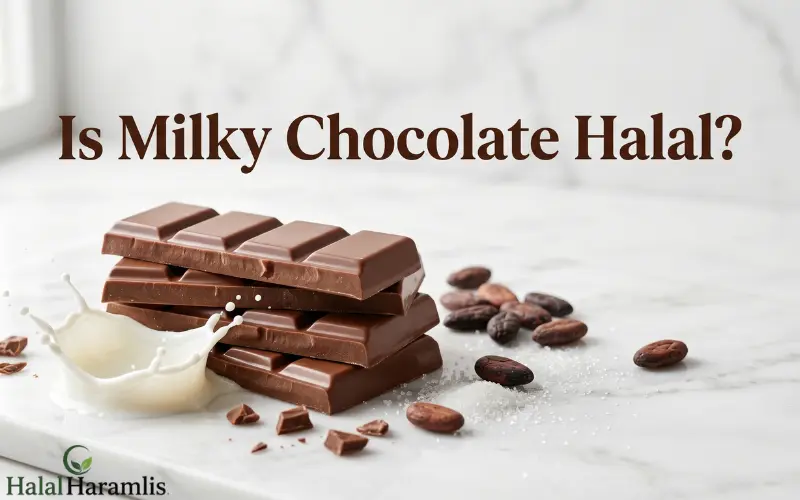
Lay’s is one of the most popular potato chip brands in the world. The brand is sold in more than 100 countries and offers dozens of flavors ranging from simple salted chips to barbecue, cheese, sour cream, and limited-edition varieties.

Because Lay’s products are available almost everywhere, many Muslims ask questions such as “Are Lay’s chips halal or haram?”, “Are Lay’s chips halal?”, “Are Lay’s chips halal in UK?”, and “Are Lay’s chips halal in USA?”

Unlike meat products, potato chips may seem simple at first. However, many flavored snacks contain ingredients that require closer examination. Cheese powders, flavor enhancers, dairy enzymes, animal-derived ingredients, and processing methods can all affect whether a product is considered halal.

This guide explains the halal status of Lay’s chips, analyzes their ingredients, examines different flavors, and discusses their status in the UK and USA.

What Makes a Snack Halal?

Are Lay’s Chips Halal

A snack is generally considered halal when it does not contain ingredients prohibited by Islamic dietary laws.

Muslims often check for:

  • Pork-derived ingredients
  • Animal-based enzymes
  • Alcohol-derived additives
  • Non-halal flavorings
  • Cross-contamination concerns

Halal Requirements for Packaged Snacks

If these conditions are met, the snack is generally considered halal.

Are Lay’s Chips Halal?

The answer depends on the flavor.

Many Lay’s chips contain simple ingredients such as potatoes, vegetable oils, and seasonings that are generally halal.

However, some flavored varieties may contain ingredients that require further investigation. Cheese powders, dairy ingredients, meat flavorings, and certain additives can create uncertainty if their sources are not clearly identified.

Because recipes vary by country and may change over time, Muslims should review ingredient labels before purchasing.

Lay’s Chips Ingredients Analysis

Are Lay’s Chips Halal

Most Lay’s chips begin with a simple potato base.

Common ingredients include:

  • Potatoes
  • Vegetable oils
  • Salt
  • Seasonings
  • Flavor enhancers
  • Dairy ingredients (in some flavors)

Ingredient Analysis

The ingredients that usually require the most attention are flavorings and dairy-based additives.

Are Original Lay’s Chips Halal?

Original Lay’s chips are generally considered the safest option for Muslim consumers.

The ingredients are simple and typically include:

  • Potatoes
  • Vegetable oil
  • Salt

These ingredients are generally halal and do not usually contain animal-derived substances.

Original Lay’s Overview

Because of their simple ingredient list, Original Lay’s chips are widely considered halal-friendly.

Are BBQ Lay’s Chips Halal?

Barbecue-flavored chips often generate questions among Muslim consumers.

Some BBQ seasonings are completely plant-based, while others may contain flavorings designed to imitate meat flavors.

The halal status depends on the exact ingredients used in the specific product and country.

BBQ Flavor Analysis

For this reason, BBQ flavors should always be checked individually.

Are Cheese-Flavored Lay’s Chips Halal?

Cheese flavors require additional attention because they may contain:

  • Cheese powder
  • Whey powder
  • Milk ingredients
  • Dairy enzymes

These ingredients are not automatically haram.

The concern usually centers on the enzymes used during cheese production. If those enzymes come from halal sources, the product may be halal. If the source is unclear, some Muslims choose to avoid the flavor.

Cheese Flavor Overview

Because recipes differ, checking the label is important.

Do Lay’s Chips Contain Pork?

Are Lay’s Chips Halal

Most standard Lay’s chips do not contain pork.

However, some specialty flavors may contain ingredients or flavorings that require verification.

Direct pork ingredients are uncommon in regular Lay’s products, but consumers should still review ingredient labels, especially when trying limited-edition flavors.

Are Lay’s Chips Halal in USA?

Many Muslims living in America ask about Lay’s chips sold in the United States.

Most Original Lay’s chips sold in the USA are generally considered halal-friendly because they contain simple ingredients and do not contain obvious haram substances.

However, flavored varieties may contain ingredients that require additional review.

Lay’s USA Status

Reading the ingredient label remains the best practice.

Are Lay’s Chips Halal in UK?

The halal status of Lay’s chips in the United Kingdom can differ from products sold in other countries because manufacturers sometimes use different recipes for different markets.

Many plain and lightly flavored Lay’s products sold in the UK are generally considered halal-friendly. However, some cheese-based, meat-inspired, or specialty flavors may contain ingredients that require further investigation.

Because ingredient lists can change, Muslims in the UK should always check the packaging available in local stores rather than relying on ingredient information from another country.

Lay’s UK Status

Checking for halal certification on the packaging can provide additional confidence.

Are Sour Cream & Onion Lay’s Halal?

Sour Cream & Onion is one of the most popular Lay’s flavors worldwide.

This flavor often contains:

  • Sour cream powder
  • Milk ingredients
  • Onion seasoning
  • Flavor enhancers

The main concern is usually not the sour cream itself but the source of any enzymes used in dairy ingredients and the exact composition of the flavoring blend.

Because formulas vary by country, consumers should review the ingredient label carefully.

Sour Cream & Onion Analysis

What About Artificial Flavorings?

Artificial flavorings often create confusion among consumers.

Many artificial flavorings are created in laboratories and do not come from animal sources. In such cases, they are generally considered halal.

However, some flavoring systems may contain ingredients derived from animals or may use alcohol during processing. Because manufacturers are not always required to disclose every detail on packaging, some Muslims prefer products with halal certification.

Artificial Flavoring Overview

The source of the ingredient is often more important than whether it is natural or artificial.

Do Lay’s Chips Contain Alcohol?

Most standard Lay’s chips do not list alcohol as an ingredient.

However, some flavoring systems used in processed foods may involve alcohol during manufacturing. This does not automatically mean the final product contains alcohol in a significant amount.

For Muslims who follow strict halal standards, products with clear halal certification often provide the greatest peace of mind.

What Do Islamic Scholars Say?

Many Islamic scholars apply the general principle that food is considered halal unless there is clear evidence that it contains haram ingredients.

When reviewing packaged snacks such as Lay’s chips, scholars typically examine:

  • Ingredient sources
  • Flavoring composition
  • Dairy enzymes
  • Manufacturing processes
  • Halal certification

If a product contains doubtful ingredients whose source is unknown, some scholars recommend avoiding it until further information becomes available.

This approach follows the Islamic teaching of avoiding doubtful matters.

Cross-Contamination Concerns

Some Muslims also consider how products are manufactured.

Potential concerns include:

  • Shared production equipment
  • Shared manufacturing lines
  • Contact with non-halal ingredients
  • Flavor residue from previous production runs

For many consumers, these concerns are minor if the ingredients themselves are halal. Others prefer products that carry halal certification to reduce uncertainty.

Manufacturing Concerns

Why Some Muslims Avoid Certain Lay’s Flavors

Not all Muslims evaluate packaged foods in the same way.

Some Muslims avoid certain Lay’s flavors because:

  • The source of dairy enzymes is unclear.
  • Flavoring ingredients are not fully specified.
  • Halal certification is unavailable.
  • Manufacturing details are unknown.

Because of these concerns, many consumers choose simpler flavors with fewer ingredients.

Which Lay’s Flavors Are Usually Considered Safest?

The simplest flavors are often the easiest to evaluate.

Many Muslims feel most comfortable with:

  • Original
  • Classic Salted
  • Lightly Salted
  • Salt & Vinegar

These products generally contain fewer additives and fewer ingredients that require investigation.

Commonly Preferred Flavors

Halal-Friendly Alternatives

If you are unsure about a particular Lay’s flavor, there are many alternatives available.

Many snack companies now produce halal-certified chips and crisps specifically for Muslim consumers.

Alternative Snacks

Choosing certified products can remove much of the uncertainty.

See Also:

FAQs

Are Lay’s chips halal or haram?

Many Lay’s flavors are generally halal, while some flavored varieties require ingredient verification.

Are Lay’s chips halal?

Several Lay’s flavors are considered halal-friendly, especially Original and Classic Salted varieties.

Are Lay’s chips halal in UK?

Many UK flavors are generally halal-friendly, but ingredients should always be checked.

Are Lay’s chips halal in USA?

Many Original Lay’s chips sold in the USA are generally considered halal-friendly.

Do Lay’s chips contain pork?

Most standard Lay’s chips do not contain pork ingredients.

Are Original Lay’s halal?

Yes, Original Lay’s are generally considered one of the safest options.

Are BBQ Lay’s halal?

BBQ flavors should be checked because flavoring ingredients may vary.

Are Cheese Lay’s halal?

Cheese flavors may require verification due to dairy enzymes and flavorings.

Can Muslims eat Lay’s chips?

Many Muslims eat certain Lay’s flavors after reviewing the ingredients.

Do Lay’s chips contain alcohol?

Most standard Lay’s products do not list alcohol as an ingredient.

Why do some Muslims avoid certain flavors?

Because some ingredients and flavorings may not clearly identify their source.

What is the safest Lay’s flavor?

Original Lay’s and Classic Salted Lay’s are generally considered among the safest choices.

Conclusion

Most Lay’s chips are generally considered halal-friendly, especially simple flavors such as Original and Classic Salted. These varieties usually contain basic ingredients like potatoes, vegetable oils, and salt, which are widely accepted as halal. For many Muslims, these flavors do not raise major concerns and are commonly consumed.

However, some flavored Lay’s products may contain cheese powders, dairy enzymes, artificial flavorings, or other additives that require further verification. Since recipes can vary between the USA, UK, and other countries, checking the ingredient label is always important. If there is any uncertainty about a flavor, choosing a halal-certified snack or a simpler Lay’s variety is usually the safest and most reliable option.

Are Pringles Halal

Are Pringles Halal or Haram? (2026 Guide)

Most original Pringles flavors are generally considered halal because they are made from potatoes, vegetable oils, starches, and seasonings that do not usually contain meat ingredients. However, some Pringles flavors may contain ingredients derived from animals, cheese powders, flavor enhancers, or other additives that require verification.

The halal status of Pringles can also vary by country because ingredients and manufacturing processes may differ. Therefore, Muslims should always check the ingredient label and any available halal certification before consuming Pringles.

Pringles is one of the world’s most popular potato crisp brands. Known for its unique stackable shape and wide variety of flavors, Pringles is sold in supermarkets and convenience stores across the United States, Europe, Asia, the Middle East, and many other regions.

Because Pringles offers dozens of flavors, many Muslims ask questions such as “Are Pringles halal or haram?”, “Are Pringles halal?”, and “Pringles are halal or haram in USA?”

Unlike fast-food restaurants where meat is often the main concern, snack foods raise different halal questions. Muslims often want to know whether flavorings, enzymes, cheese powders, animal-derived ingredients, or alcohol-based additives are used during production.

This guide explains the halal status of Pringles, ingredient analysis, country-specific considerations, and what Muslims should know before eating them.

What Makes a Snack Halal?

A snack is generally considered halal when it does not contain haram ingredients and is produced in a way that follows Islamic dietary principles.

Common concerns include:

  • Pork-derived ingredients
  • Animal-based enzymes
  • Animal-derived flavorings
  • Alcohol-based additives
  • Cross-contamination during production

Halal Requirements for Snacks

Are Pringles Halal

If these conditions are met, the product is generally considered halal.

Are Pringles Halal?

The answer depends on the flavor and country.

Many plain potato-based Pringles products are generally considered halal-friendly because they contain ingredients such as potatoes, vegetable oils, starches, and seasonings.

However, some flavored varieties may contain ingredients that require further investigation, especially when cheese powders, dairy ingredients, flavor enhancers, or animal-derived additives are used.

Because ingredient lists can change over time, checking the packaging remains the safest option.

Pringles Ingredients Analysis

The basic ingredients found in many Pringles products include:

  • Dried potatoes
  • Vegetable oils
  • Corn flour
  • Wheat starch
  • Rice flour
  • Salt
  • Flavorings

Most of these ingredients are generally halal.

Ingredient Analysis

The biggest concern is usually the flavoring mixture rather than the potato base itself.

Are Original Pringles Halal?

Original Pringles are usually considered the safest option for Muslims.

The ingredients are relatively simple and generally do not contain obvious animal-derived components.

Original Pringles Overview

For many Muslims, Original Pringles are among the least controversial flavors.

Are Cheese-Flavored Pringles Halal?

Are Pringles Halal

Cheese-flavored products require additional attention.

Some cheese powders may contain enzymes that can be derived from animal sources. If the source of those enzymes is not specified, some Muslims prefer to avoid the product until more information is available.

Examples include:

  • Cheddar Cheese Flavors
  • Sour Cream Flavors
  • Cheese Blend Flavors

These flavors may require further verification depending on the country of manufacture.

Are BBQ Pringles Halal?

BBQ flavors are another category that often raises questions.

While many BBQ seasonings are plant-based, some flavor blends may contain ingredients that mimic meat flavors or use flavor enhancers whose sources are not always obvious.

Because recipes vary by region, ingredient labels should always be checked carefully.

Pringles Halal Status by Flavor

The halal status of Pringles often depends on the specific flavor.

Flavor Guide

When in doubt, reviewing the ingredient list is recommended.

Pringles Are Halal or Haram in USA?

Are Pringles Halal

Many Muslims specifically ask about Pringles sold in the United States.

Most original Pringles products sold in the USA are generally considered halal-friendly based on their ingredient lists. However, flavored varieties may contain ingredients that require additional verification.

Since recipes can change over time, consumers should not rely solely on old information.

USA Status Overview

Checking the packaging remains the safest approach.

Do Pringles Contain Pork?

Most standard Pringles products do not contain pork ingredients.

However, some specialty flavors may contain flavorings that require additional investigation. While direct pork ingredients are uncommon, ingredient formulations can differ by country.

Consumers concerned about pork-derived additives should carefully review product labels.

Cross-Contamination Concerns

Some Muslims also consider manufacturing practices when evaluating halal status.

Cross-contamination concerns may include:

  • Shared production equipment
  • Shared manufacturing lines
  • Contact with non-halal ingredients
  • Flavoring production processes

While these concerns vary by manufacturer, they are important for Muslims who follow strict halal standards.

Why Some Muslims Avoid Certain Pringles Flavors

Not all Muslims approach halal certification the same way.

Some Muslims avoid certain Pringles flavors because:

  • Cheese enzymes may be unclear.
  • Flavoring sources may not be specified.
  • Halal certification may be unavailable.
  • Manufacturing practices may not be fully transparent.

For these consumers, choosing simpler flavors is often preferred.

Halal-Friendly Alternatives

If you are unsure about a particular flavor, there are many alternatives available.

Alternative Snacks

Halal-certified products provide greater confidence regarding ingredients and production methods.

Can Muslims Eat Pringles?

This is one of the most common questions asked by Muslim consumers.

The answer depends on the specific flavor and the individual’s approach to halal food. Many Muslims are comfortable eating Original Pringles because the ingredients are generally plant-based and do not contain obvious haram substances.

However, some Muslims prefer to avoid flavors that contain cheese powders, dairy enzymes, artificial flavorings, or ingredients whose sources are not clearly identified.

For Muslims who follow strict halal guidelines, checking ingredients and looking for halal certification remains the safest approach.

What Do Islamic Scholars Say?

Islamic scholars generally agree that foods are considered halal unless there is clear evidence that they contain haram ingredients.

When evaluating packaged snacks such as Pringles, scholars usually focus on:

  • The source of flavorings.
  • The source of enzymes.
  • The presence of pork derivatives.
  • Alcohol-based ingredients.
  • Manufacturing practices.

If a flavor contains doubtful ingredients and their source is unknown, some scholars recommend avoiding it until more information becomes available.

This approach follows the Islamic principle of staying away from doubtful matters.

Are Dairy Ingredients in Pringles Halal?

Some Pringles flavors contain dairy ingredients such as:

  • Cheese powder
  • Whey powder
  • Milk proteins
  • Buttermilk powder

These ingredients are not automatically haram.

However, the concern often comes from the enzymes used during cheese production. If the enzymes come from halal sources, the product may be halal. If the source is unknown, some Muslims choose to avoid those flavors.

Because ingredient sourcing varies between countries and manufacturers, it is difficult to make one ruling for every cheese-flavored Pringles product.

Dairy Ingredient Overview

Checking manufacturer information can help provide greater clarity.

Are Artificial Flavorings Halal?

Artificial flavorings are another topic that frequently raises questions.

Many artificial flavorings are synthesized in laboratories and do not come from animal sources. In such cases, they are generally considered halal.

However, some flavorings may use animal-derived compounds or alcohol during processing. Since ingredient labels often do not provide complete details, certain consumers prefer products with halal certification.

Flavoring Analysis

The source remains the most important factor.

Which Pringles Flavors Are Usually the Safest?

Many Muslims choose simpler flavors because they contain fewer questionable ingredients.

Examples often include:

  • Original
  • Lightly Salted
  • Salt & Vinegar

These flavors generally rely on basic seasonings and are less likely to contain animal-derived additives compared to specialty flavors.

More complex flavors often require additional investigation because they may contain cheese powders, meat flavorings, or specialized additives.

Which Pringles Flavors Require More Caution?

Certain flavors may require additional verification before consumption.

These include:

  • Cheddar Cheese
  • Pizza
  • Sour Cream & Onion
  • Loaded Potato
  • Specialty Meat-Inspired Flavors
  • Limited Edition Flavors

Because recipes frequently change, ingredient labels should always be reviewed before making a decision.

Flavors That May Need Verification

Are Pringles Halal in Different Countries?

Pringles products are sold worldwide, but ingredients may differ from one country to another.

A flavor sold in the United States may not have the exact same recipe as the version sold in the United Kingdom, Canada, Australia, or the Middle East.

This is why halal status can vary by region.

Consumers should always check the packaging available in their own country rather than relying on ingredient lists from another market.

How to Check if Your Pringles Are Halal

Before purchasing Pringles, consider these simple steps:

  1. Read the ingredient label carefully.
  2. Check for halal certification.
  3. Look for cheese enzymes or animal-derived additives.
  4. Review allergen and flavoring information.
  5. Contact the manufacturer if necessary.

These steps can help reduce uncertainty and make informed choices.

See Also:

FAQs

Are Pringles halal or haram?

Some Pringles flavors are generally halal, while others require ingredient verification.

Are Pringles halal?

Many original flavors are generally considered halal-friendly.

Pringles are halal or haram in USA?

Most Original Pringles in the USA are generally considered halal-friendly, but flavored varieties should be checked.

Do Pringles contain pork?

Most standard Pringles products do not contain pork ingredients.

Are Original Pringles halal?

Original Pringles are generally considered the safest flavor for Muslim consumers.

Are BBQ Pringles halal?

BBQ flavors may require ingredient verification.

Are Cheese Pringles halal?

Cheese flavors may contain enzymes that require verification.

Can Muslims eat Pringles?

Many Muslims eat certain Pringles flavors after checking the ingredients.

Do Pringles contain alcohol?

Most standard flavors do not list alcohol as an ingredient, but flavoring sources may vary.

Are Salt & Vinegar Pringles halal?

They are generally considered halal-friendly.

Why do some Muslims avoid certain Pringles flavors?

Because some flavors contain ingredients whose sources are not clearly specified.

What is the safest Pringles flavor?

Original Pringles are generally considered one of the safest options.

Conclusion

Pringles are not automatically halal or haram. Their halal status depends on the specific flavor, ingredients, and country where the product is manufactured. Original Pringles and some simple flavors are generally considered halal-friendly because they are made mainly from potatoes, vegetable oils, starches, and basic seasonings. These ingredients do not usually contain pork or other clearly haram substances.

However, some flavored varieties may contain cheese powders, dairy enzymes, artificial flavorings, or other additives that require further verification. Since recipes can vary between countries and may change over time, Muslims should always read the ingredient label carefully and look for halal certification whenever possible. If there is any doubt about a flavor’s ingredients, choosing a halal-certified snack or a simpler Pringles variety is usually the safest option.