
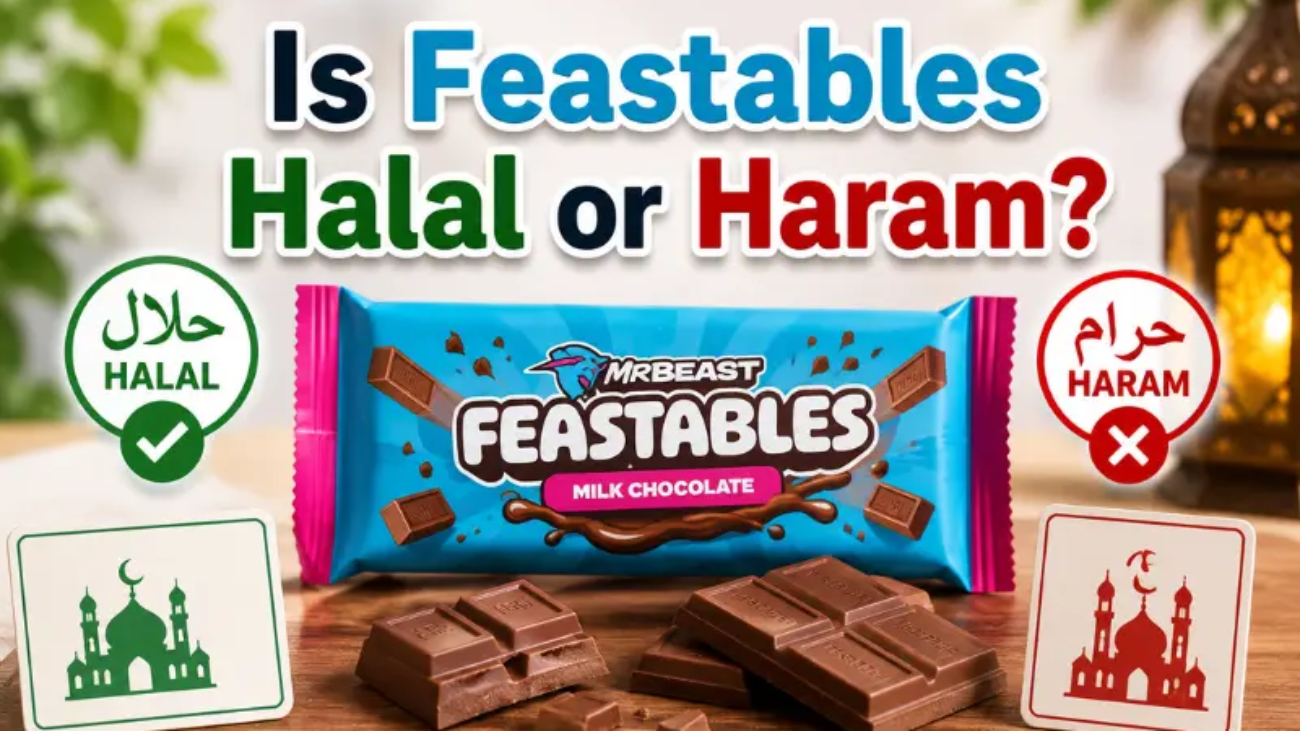
Is Feastables Halal or Haram? the short answer: Feastables is generally considered doubtful (mushbooh) because it has no official halal certification and some ingredients are not fully verified as halal.
This is an important question for Muslims who love chocolate and snacks. Since Islam teaches us to eat halal food, checking ingredients carefully is always the right step. Because Feastables does not carry halal certification, many Muslims study its ingredients before deciding to eat it.
In this guide, we will explain Feastables ingredients, halal concerns, and safer alternatives so you can make the best halal choice.
Is Feastables Halal or Haram?
Feastables is a popular chocolate and snack brand, but it does not currently have official halal certification. Most of its products contain simple ingredients like cocoa, sugar, and milk, which are generally halal. However, because the company does not confirm halal sourcing or certification, many scholars consider Feastables doubtful (mushbooh) rather than clearly halal. Muslims who prefer strict halal-certified foods may choose to avoid it or look for certified halal chocolate alternatives.
What Are Feastables?
Feastables is a snack brand created by famous YouTuber MrBeast. The brand became popular very quickly because of its simple ingredients and fun marketing. Feastables mostly sells chocolate bars and sweet snacks that are designed to feel “cleaner” and more natural compared to many other candy brands.
Feastables products usually focus on:
- Simple ingredients
- Fewer additives
- Natural flavors
- Ethical cocoa sourcing
Because of this “clean ingredient” idea, many Muslims feel hopeful that the products may be halal. But we still need to carefully check every ingredient before deciding.
Why Muslims Must Check Chocolate Carefully
Many people think chocolate is always halal. Chocolate comes from cocoa beans, which are plants, and plants are halal. However, modern chocolate is not just cocoa. Companies add many extra ingredients to improve taste, texture, and shelf life.
Chocolate may contain:
- Emulsifiers
- Flavorings
- Dairy ingredients
- Sugar processed with bone char
- Cross-contamination risks
Because of these hidden details, chocolate can become halal, doubtful, or haram. This is why checking the ingredient list is always important.
How Modern Chocolate Is Made Today
Chocolate today is very different from traditional chocolate made hundreds of years ago. In the past, chocolate was simply made from cocoa beans that were crushed and mixed with a small amount of sugar. The process was simple, natural, and easy to understand. Today, chocolate production is a large global industry, and modern factories produce millions of chocolate bars every day using complex machinery and global ingredient supply chains.
Modern chocolate companies focus on taste, texture, shelf life, and global transportation. To achieve this, they use special processing methods, emulsifiers, stabilizers, and flavor enhancers. These additions help chocolate stay smooth and fresh for longer periods of time. While many of these ingredients are plant-based and halal, the complexity of modern manufacturing makes it more important than ever for Muslims to check ingredient lists carefully.
Another important factor is globalization. Ingredients are sourced from many countries and mixed in large factories. This means that even a simple chocolate bar may contain ingredients from different continents. Because of this, halal certification has become more important in modern times than ever before.
Main Feastables Products
Feastables currently focuses mainly on chocolate bars. Some popular products include:
- Original Chocolate Bar
- Almond Chocolate Bar
- Peanut Butter Chocolate Bar
- Milk Chocolate Variations
These products look simple, but we must examine the ingredients carefully.
Basic Ingredients in Feastables Chocolate
| Ingredient | Purpose | Halal Concern |
| Cocoa beans | Main chocolate base | Halal |
| Sugar | Sweetness | ⚠️ Bone char concern |
| Cocoa butter | Texture | Halal |
| Milk powder (some bars) | Creaminess | Usually halal |
| Natural flavors | Taste | Source must be checked |
| Emulsifier (lecithin) | Smooth texture | Usually halal |
The biggest concerns are sugar processing and flavor sources.
Sugar and Halal Concerns
Sugar sounds simple, but it can be confusing. In some countries, white sugar is processed using bone char, which comes from animal bones. These bones are usually from cows, and they are often not slaughtered in a halal way.
This makes sugar a mashbooh (doubtful) ingredient in some cases. Not all sugar is processed this way, but companies do not always explain the source.
This does not automatically make chocolate haram. However, it creates a small area of doubt, and Muslims who want strict halal food may prefer halal-certified sugar.
What Is Bone Char and Why It Matters
Bone char is a material made by heating animal bones at very high temperatures. In some sugar industries, bone char is used to filter and whiten sugar. This process removes color from sugar and makes it bright white.
The important point is that bone char is used only as a filter and does not remain in the final sugar product. Many scholars consider this process permissible because the bone char does not stay in the sugar. However, some scholars prefer to avoid it due to its animal origin.
This difference of scholarly opinion is why sugar is often placed in the mashbooh category rather than clearly halal or haram. For Muslims who prefer caution, halal-certified sugar provides peace of mind.
Are Feastables Ingredients Simple and Clean?
Feastables is known for using fewer ingredients compared to many candy brands. This is good news because fewer ingredients mean fewer halal risks.
Many Feastables bars contain only:
- Cocoa
- Sugar
- Cocoa butter
- Milk (in some products)
- Natural flavors
Compared to many candies filled with additives and E-numbers, this ingredient list is simple and easier to check.
The Philosophy Behind Feastables Brand
Feastables was created with a focus on simplicity and transparency. The brand promotes the idea of using fewer ingredients and avoiding artificial additives that are commonly found in many snack products. This philosophy has made the brand very popular among young consumers and families who want snacks that feel more natural.
The company emphasizes ethically sourced cocoa and simpler recipes. Ethical cocoa sourcing means the company works to ensure fair treatment of farmers and sustainable farming practices. While this is not directly related to halal status, ethical sourcing aligns with Islamic values of fairness, honesty, and responsibility.
This “simple ingredient philosophy” is one reason many Muslims feel more comfortable researching the halal status of Feastables compared to highly processed candy brands.
Comparing Feastables vs Regular Candy
| Feature | Feastables | Regular Candy |
| Artificial colors | No | Often yes |
| Gelatin | No | Often yes |
| Long additive list | No | Yes |
| Ingredient transparency | Higher | Lower |
This comparison shows why Muslims feel more comfortable checking Feastables.
Do Feastables Contain Gelatin?
Good news 😊
Feastables chocolate does not contain gelatin.
Gelatin is often the biggest halal concern in candy, but chocolate bars usually do not need gelatin. This removes a major worry for Muslims.
This makes Feastables safer than many gummy or chewy snacks.
What About Alcohol in Flavoring?
Sometimes “natural flavors” may use alcohol during processing. The alcohol usually evaporates during production and does not remain in the final product.
Many scholars say:
- Trace processing alcohol is allowed
- Drinking alcohol is haram, but processing traces are treated differently
Because Feastables uses natural flavors, the product is generally considered permissible by many scholars, but still not officially halal certified.
Is Feastables Halal Certified?
Currently, Feastables products are not halal certified.
This does not mean the product is haram. It simply means no halal organization has officially verified the ingredients and factory process.
This places Feastables in the doubtful (mashbooh) category for strict halal eaters.
Why Halal Certification Takes Time
Many people wonder why companies do not immediately get halal certification. The certification process is detailed and requires multiple inspections. Halal organizations must verify ingredient sources, factory cleaning processes, storage systems, and transportation methods.
This process can take months or even years. Companies must also pay certification fees and adjust manufacturing procedures to meet halal standards. Because Feastables is still a relatively new brand, it is possible that halal certification may happen in the future as the company expands globally.
Halal Status Categories
| Category | Meaning | Feastables Status |
| Halal Certified | Verified by halal authority | ❌ No |
| Clearly Haram | Contains pork/alcohol | ❌ No |
| Mashbooh (Doubtful) | No certification but simple ingredients | ⚠️ Yes |
Cross-Contamination in Factories
Another important topic is factory production. Sometimes halal ingredients are made in factories that also produce non-halal products.
Possible cross-contamination risks:
- Shared machines
- Shared storage
- Shared transport
Without halal certification, we cannot fully confirm factory separation.
Why Many Scholars Consider It Permissible
Even without halal certification, many scholars say simple chocolate with plant ingredients is permissible unless proven haram.
Reasons:
- No gelatin
- No alcohol in final product
- No pork ingredients
- Mostly plant-based ingredients
Because of this, many Muslims consider Feastables permissible but not fully guaranteed halal.
Table: Scholar Opinion Summary
| Opinion Type | View |
| Strict scholars | Prefer halal certification |
| Moderate scholars | Consider it permissible |
| Very cautious Muslims | Avoid doubtful products |
How to Decide as a Muslim Consumer
Islam teaches us a beautiful rule:
Avoid doubtful things if possible.
So Muslims can choose based on comfort level:
- Comfortable → Can eat Feastables
- Very strict → Prefer halal certified chocolate
Both choices are valid and respected.
Benefits of Choosing Halal Certified Chocolate
Halal certification gives:
- Peace of mind
- Ingredient verification
- Factory inspection
- Trust in production process
This is why halal logos are so helpful.
Halal Chocolate Alternatives
If you want 100% peace of mind, you can choose:
- Halal certified chocolate brands
- Vegan chocolate
- Organic chocolate with certification
Many halal chocolate brands exist today.
Teaching Kids About Halal Chocolate
Parents can teach children:
- Read ingredient lists together
- Look for halal logos
- Understand halal vs haram
- Choose halal treats together
This builds strong halal habits.
Final Verdict
| Question | Answer |
| Do Feastables contain gelatin? | No |
| Contains alcohol? | No drinking alcohol |
| Halal certified? | No |
| Overall ruling | Mashbooh (doubtful but likely permissible) |
We have more guides on halal haram foods, You can check here:
FAQs
Is Feastables halal?
It is not certified but likely permissible.
Does it contain gelatin?
No.
Does it contain pork?
No.
Is it halal certified?
No.
Is chocolate usually halal?
Yes, if there are no haram ingredients.
Is sugar always halal?
Sometimes doubtful due to processing.
Can Muslims eat doubtful food?
Better to avoid if possible.
Is vegan chocolate halal?
Yes.
Is milk chocolate halal?
Usually yes.
Should Muslims check labels?
Always.
Is halal certification important?
Yes, for confidence.
Is Feastables safer than gummies?
Yes, much safer.
Conclusion
Feastables chocolate does not contain gelatin or obvious haram ingredients. Because of its simple ingredient list, many scholars consider it permissible for Muslims. However, the brand is not halal certified, which makes it doubtful for very strict halal eaters.
If you prefer complete certainty, choose halal-certified chocolate. If you are comfortable with simple ingredients and scholar opinions, Feastables can be considered permissible.