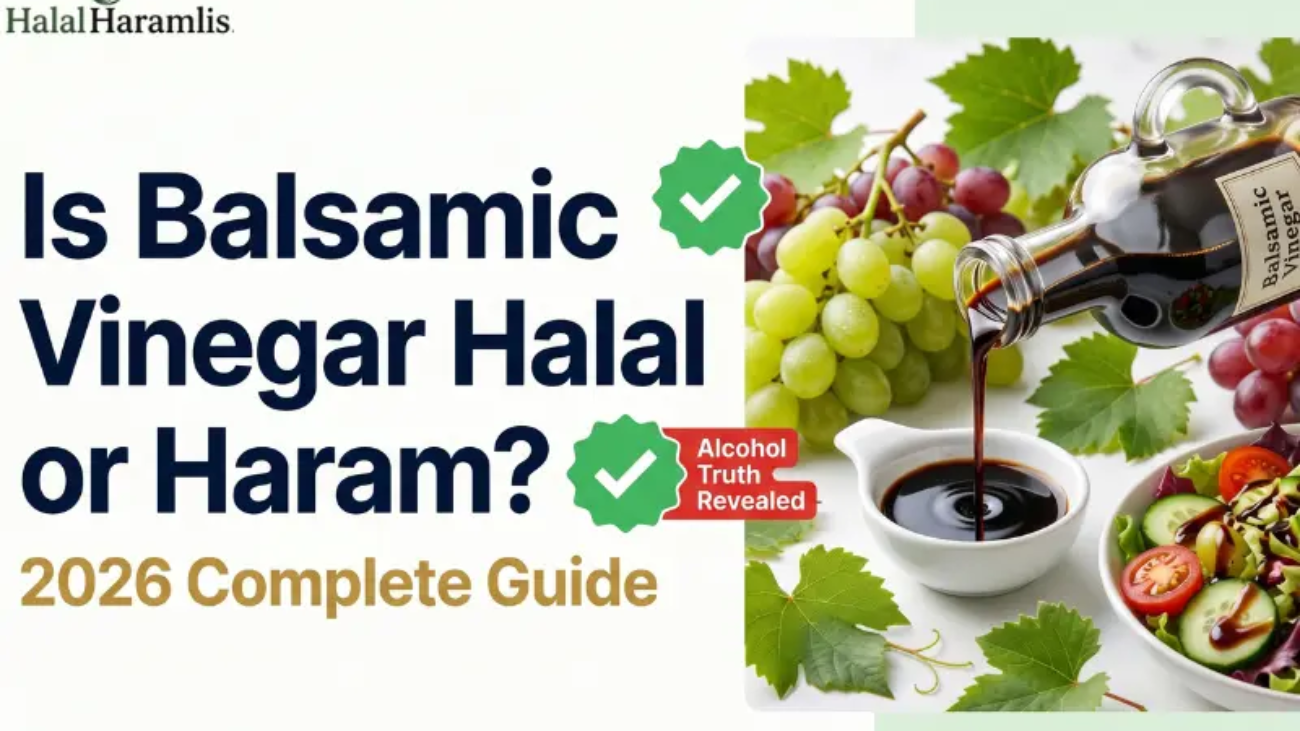
Is Balsamic Vinegar Halal or Haram? Balsamic vinegar is generally considered halal by many Islamic scholars because the alcohol produced during fermentation transforms into vinegar and is no longer intoxicating. This process is known as transformation or istihalah.
However, the halal status can depend on the manufacturing process, the amount of residual alcohol, and individual scholarly opinions. If you are wondering “Is Balsamic Vinegar Halal?”, most Muslims consider it permissible, but checking halal certification can provide extra confidence.
Yes, balsamic vinegar is generally halal according to many scholars because it is vinegar, not an alcoholic drink. Although alcohol may be produced naturally during fermentation, the final product is vinegar and is not consumed for intoxication.
Many Muslims still ask “Balsamic Vinegar Halal or Haram?” because vinegar is made through a fermentation process involving grapes. Some people worry about alcohol content, while others wonder whether all balsamic vinegars are the same.
In this complete guide, we will explain Is Balsamic Vinegar Halal or Haram? Complete Guide 2026, analyze ingredients, reveal the truth about alcohol in balsamic vinegar, discuss country-specific halal status, explore Islamic opinions, and answer the most common questions Muslims ask.
What Is Balsamic Vinegar?
Balsamic vinegar is a dark-colored vinegar traditionally made from grape must, which is freshly crushed grape juice containing skins, seeds, and stems.
The grape must is cooked and aged over time to develop its unique flavor.
Balsamic vinegar is commonly used in:
- Salad dressings
- Marinades
- Sauces
- Roasted vegetables
- Meat dishes
- Italian cuisine
Its sweet and tangy flavor makes it one of the most popular vinegars in the world.
Quick Answer Table
| Question | Answer |
| Is Balsamic Vinegar Halal? | Usually Yes |
| Contains Alcohol During Production? | Yes |
| Intoxicating? | No |
| Contains Pork? | No |
| Suitable for Muslims? | Generally Yes |
| Halal Certification Recommended? | Yes |
Is Balsamic Vinegar Halal?
The answer is generally yes.
Most Islamic scholars consider balsamic vinegar halal because the final product is vinegar rather than alcohol.
During production:
- Grapes are crushed.
- Natural fermentation occurs.
- Alcohol may form temporarily.
- Alcohol converts into acetic acid.
- Vinegar is produced.
Since the end product is vinegar and not an intoxicating beverage, many scholars permit its consumption.
However, some Muslims prefer certified halal balsamic vinegar to avoid doubts.
Ingredients Analysis
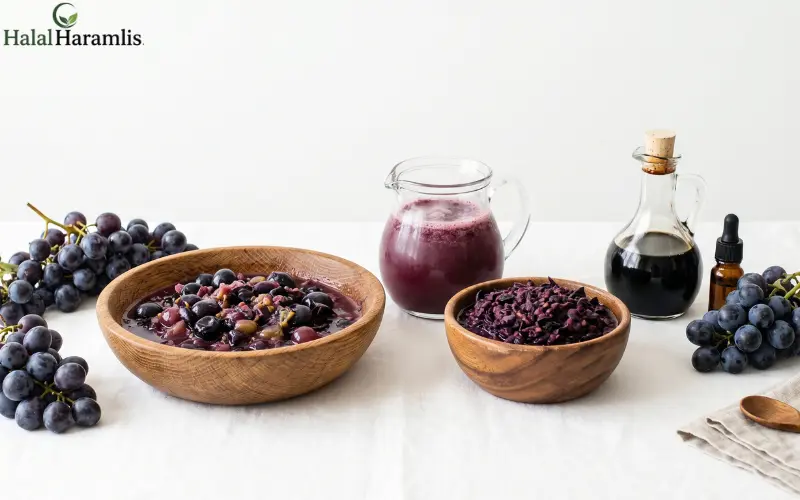
Understanding the ingredients helps determine the halal status.
Typical balsamic vinegar ingredients include:
- Grape must
- Wine vinegar
- Concentrated grape juice
- Natural flavor compounds
- Acetic acid
Most ingredients are plant-based.
Ingredient Analysis Table
| Ingredient | Halal Status | Notes |
| Grape Must | Halal | Fruit-based |
| Wine Vinegar | Usually Halal | Depends on scholarly opinion |
| Acetic Acid | Halal | Vinegar component |
| Concentrated Grape Juice | Halal | Fruit source |
| Natural Flavors | Requires Verification | Source may vary |
The main concern usually involves wine vinegar and fermentation.
Why Do Muslims Question Balsamic Vinegar?
Many Muslims become concerned when they learn that balsamic vinegar undergoes fermentation.
Common concerns include:
Alcohol Production
Alcohol naturally forms during fermentation.
Wine Vinegar
Some products contain wine vinegar as an ingredient.
Different Scholarly Opinions
Not all scholars interpret vinegar production in exactly the same way.
Imported Products
Different countries may use different recipes and production methods.
Because of these factors, many Muslims search for information before consuming balsamic vinegar.
Balsamic Vinegar Halal or Haram? Alcohol Truth Revealed
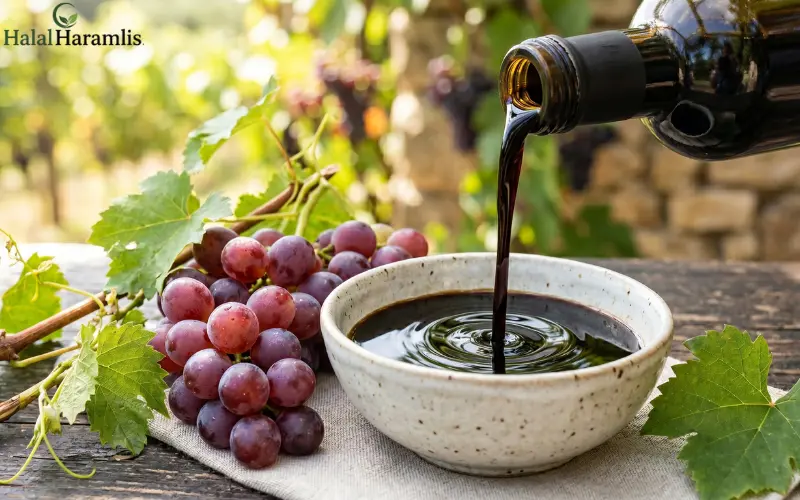
This is the most important part of the discussion.
Many people see the word “wine vinegar” and assume the product is haram.
However, vinegar is chemically different from wine.
During fermentation:
- Sugar becomes alcohol.
- Alcohol becomes acetic acid.
- Acetic acid creates vinegar.
The final vinegar is sour and non-intoxicating.
Alcohol Status Table
| Stage | Status |
| Fresh Grapes | Halal |
| Fermentation Begins | Alcohol Forms |
| Alcohol Converts | Transformation Occurs |
| Final Vinegar | Usually Considered Halal |
| Consumption Purpose | Food Ingredient |
For this reason, many scholars permit vinegar products, including balsamic vinegar.
Does Balsamic Vinegar Contain Alcohol?
This is one of the most searched questions.
The answer depends on the product.
Most balsamic vinegars may contain trace amounts of naturally occurring residual alcohol because of fermentation.
However:
- The amount is usually very small.
- The product is not intoxicating.
- It is consumed as vinegar, not alcohol.
Most halal certification bodies consider these small residual amounts acceptable when the product functions as vinegar.
Does Balsamic Vinegar Contain Pork?
No.
Traditional balsamic vinegar does not contain pork.
Its ingredients are primarily grape-based.
However, flavored balsamic products should always be checked because additional ingredients may vary.
Country-Wise Halal Status
The halal status may vary depending on certification and local standards.
Country Comparison Table
| Country | Status | Notes |
| USA | Generally Halal | Check certification |
| UK | Generally Halal | Review ingredients |
| Canada | Generally Halal | Verify manufacturer |
| Australia | Generally Halal | Check labels |
| UAE | Often Halal Certified | Many certified options |
| Malaysia | Widely Accepted | Strong halal standards |
Is Balsamic Vinegar Halal in USA?
Many products sold in the USA are considered halal by Muslim consumers and scholars.
Checking labels remains important.
Is Balsamic Vinegar Halal in UK?
Most UK products are also viewed as halal, especially when used as food vinegar rather than alcoholic beverages.
Islamic Perspective on Balsamic Vinegar
Islam encourages Muslims to consume lawful and pure foods.
Many scholars rely on the principle of transformation (istihalah).
According to this view:
- Wine is not halal.
- Vinegar is halal.
- Complete transformation changes the ruling.
This is why many scholars permit vinegar products made through natural fermentation.
However, some scholars recommend caution and encourage Muslims to choose certified products if uncertain.
How to Verify Halal Status
If you want extra confidence, follow these steps.
Check Ingredients
Look for:
- Grape must
- Vinegar
- Flavorings
Check Halal Certification
A halal logo can provide reassurance.
Contact the Manufacturer
Ask about:
- Production methods
- Alcohol levels
- Certification status
Review Scholarly Guidance
Different scholars may offer different perspectives.
Following trusted scholars can help you make an informed decision.
Popular Uses of Balsamic Vinegar
Balsamic vinegar is used in many foods, including:
- Salads
- Pasta dishes
- Grilled vegetables
- Chicken recipes
- Beef marinades
- Sandwiches
- Pizza toppings
Its sweet and acidic flavor makes it a favorite ingredient worldwide.
Halal Alternatives to Balsamic Vinegar
If you prefer alternatives, consider:
Halal Alternatives Table
| Alternative | Halal Status | Notes |
| Apple Cider Vinegar | Halal | Popular choice |
| White Vinegar | Halal | Widely available |
| Rice Vinegar | Usually Halal | Check ingredients |
| Lemon Juice | Halal | Natural option |
| Date Vinegar | Halal | Traditional choice |
These alternatives can provide similar acidity without raising concerns.
Tips for Muslims
When buying balsamic vinegar:
- Read labels carefully.
- Look for halal certification.
- Verify flavor ingredients.
- Choose trusted brands.
- Contact manufacturers if unsure.
- Follow reliable scholarly guidance.
These simple steps can help Muslims make confident choices.
See Also
FAQs
Is Balsamic Vinegar Halal?
Yes, it is generally considered halal by many scholars.
Is Balsamic Vinegar Halal or Haram?
Most scholars consider it halal because it is vinegar, not an intoxicating beverage.
Does Balsamic Vinegar Contain Alcohol?
Small residual amounts may naturally occur, but it functions as vinegar rather than alcohol.
Is Balsamic Vinegar Halal in Islam?
Many Islamic scholars permit it due to the transformation process.
Is Balsamic Vinegar Halal in USA?
Most products are generally regarded as halal.
Is Balsamic Vinegar Halal in UK?
Yes, many Muslims consider it halal in the UK.
Does Balsamic Vinegar Contain Pork?
No, traditional balsamic vinegar does not contain pork.
What Is Wine Vinegar?
Wine vinegar is vinegar produced from fermented wine.
Why Do Muslims Question Balsamic Vinegar?
Because fermentation can involve alcohol formation during production.
Can Muslims Use Balsamic Vinegar in Salads?
Many scholars say yes.
Is Aged Balsamic Vinegar Halal?
Generally yes, provided it is genuine vinegar.
Should Muslims Choose Halal-Certified Balsamic Vinegar?
Halal certification provides additional peace of mind.
Conclusion
So, Is Balsamic Vinegar Halal or Haram? (2026) The answer is that balsamic vinegar is generally considered halal by many scholars because the alcohol formed during fermentation transforms into vinegar and is no longer intoxicating.
The biggest concern for Muslims is the presence of alcohol during production. However, many Islamic scholars apply the principle of transformation and view the final vinegar as a different substance from the original alcohol. This is why balsamic vinegar is widely consumed by Muslims around the world.
Still, Muslims should remember that products can vary by brand and country. Reading labels, checking halal certification, and consulting trusted scholars remain the best ways to make informed choices.
Overall, if you are asking “Balsamic Vinegar Halal or Haram? Alcohol Truth Revealed”, the answer is that most balsamic vinegar products are generally regarded as halal, though individual preferences and scholarly opinions may differ.