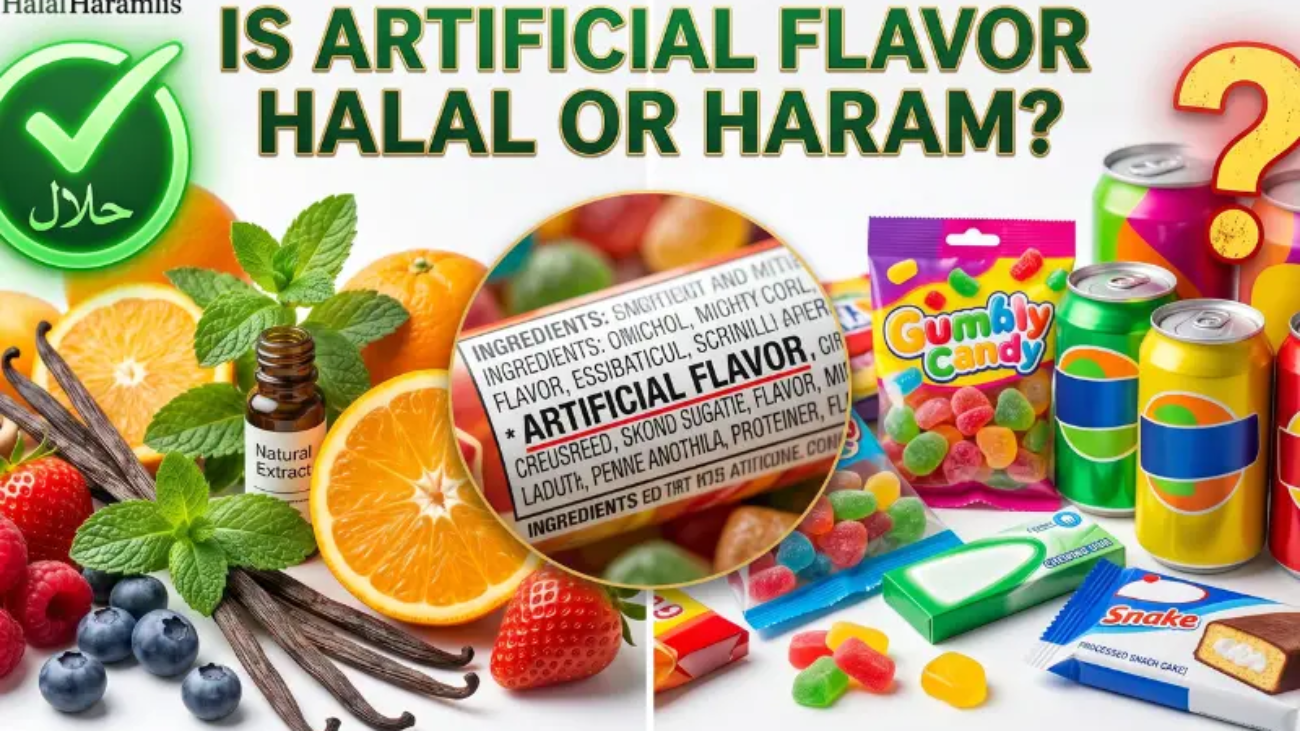
Is artificial flavor halal or haram?
Artificial flavor is usually halal, but it depends on how it is made. Many artificial flavors are created from synthetic chemicals and plant-based ingredients, making them halal. However, some artificial flavors may use alcohol as a carrier or contain ingredients derived from non-halal animal sources. Muslims should check ingredient labels and halal certifications when possible.
Is Artificial Flavor Halal or Haram?
If you live in the USA or UK, you’ve probably seen “artificial flavor” or “artificial flavouring” listed on food labels. It appears in soft drinks, candies, chewing gum, ice cream, cereals, medicines, protein bars, and even vitamins.
Many Muslims become concerned when they read this ingredient because the term sounds vague. Unlike sugar or salt, artificial flavor does not tell consumers exactly what substances are being used. This creates confusion about whether artificial flavor is halal or haram.
The good news is that many artificial flavors are produced from synthetic or plant-based sources. However, some flavoring systems may involve alcohol carriers or ingredients that require further checking. Understanding how artificial flavors are made can help Muslim consumers make better food choices.
Table : Ingredients Breakdown of Artificial Flavor
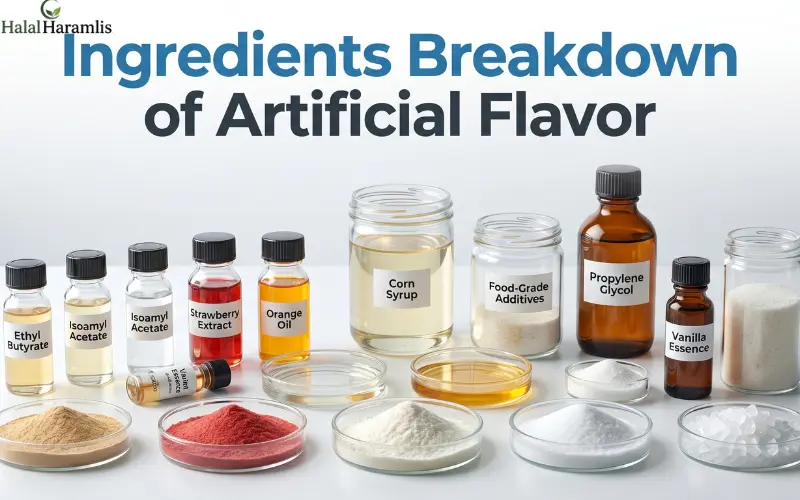
| Component | Purpose | Halal Status |
| Synthetic Chemicals | Create flavor profile | Usually Halal |
| Flavor Compounds | Mimic natural taste | Usually Halal |
| Solvents | Dissolve flavor ingredients | Requires Checking |
| Alcohol Carrier | Helps flavor distribution | Questionable |
| Propylene Glycol | Common flavor carrier | Generally Halal |
| Vegetable-Based Ingredients | Flavor production | Halal |
| Preservatives | Maintain stability | Usually Halal |
| Processing Aids | Manufacturing support | Requires Verification |
What Is Artificial Flavor?
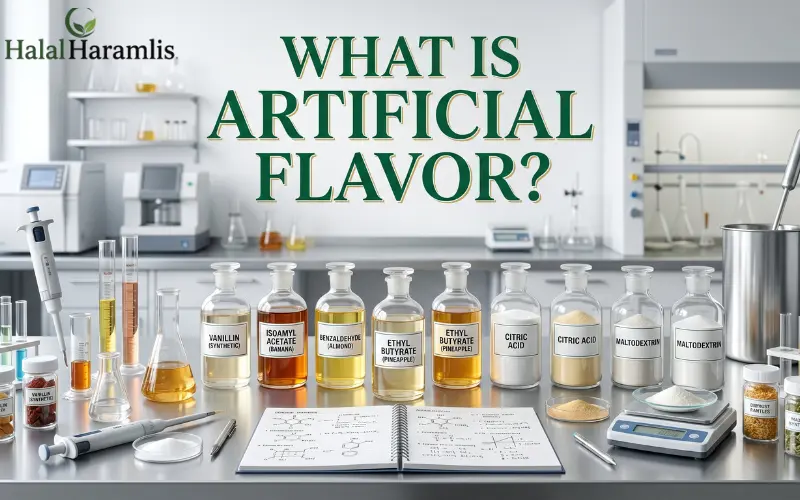
Artificial flavor is a manufactured flavoring designed to imitate natural tastes.
For example:
- Artificial strawberry flavor may not contain strawberries.
- Artificial vanilla flavor may not contain vanilla beans.
- Artificial banana flavor may not contain bananas.
Instead, scientists combine approved flavor compounds to create a taste that resembles the original food.
Why Food Companies Use Artificial Flavor
Manufacturers use artificial flavors because they:
- Cost less than natural ingredients
- Provide consistent taste
- Extend shelf life
- Work well in processed foods
- Improve flavor intensity
Without artificial flavoring, many packaged foods would be more expensive.
Common Foods That Use Artificial Flavor
Artificial flavor is commonly found in:
- Candy
- Soda
- Energy drinks
- Chewing gum
- Ice cream
- Breakfast cereals
- Protein powders
- Yogurts
- Snack foods
- Children’s medicines
Table : Halal vs Haram Sources of Artificial Flavor
| Source | Halal or Haram? | Notes |
| Synthetic Chemicals | Halal | Most common source |
| Plant-Based Ingredients | Halal | Widely accepted |
| Fruit-Based Flavoring | Halal | Safe source |
| Vegetable-Derived Flavoring | Halal | Generally halal |
| Alcohol-Based Carriers | Questionable | Requires checking |
| Non-Halal Animal Sources | Haram | Avoid |
| Pork-Derived Ingredients | Haram | Not permissible |
| Unknown Flavor Systems | Questionable | Verify before consuming |
Why It Matters for Muslims in USA & UK
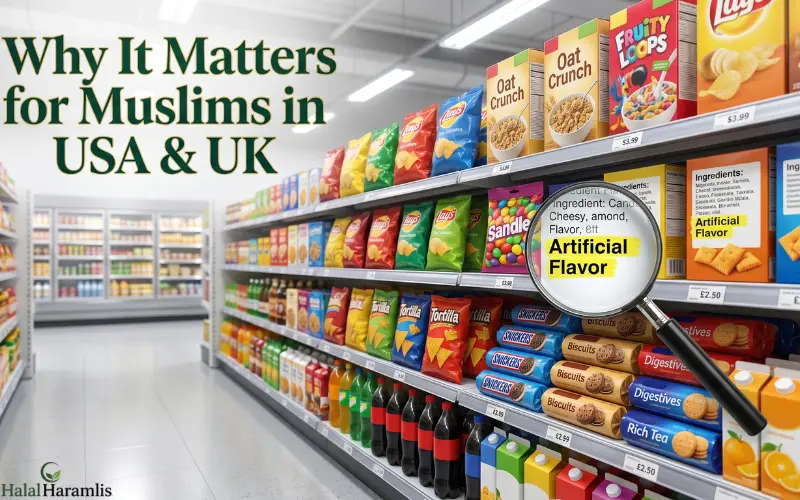
Artificial flavor is one of the most common ingredients in Western food products.
When shopping in supermarkets like:
- Tesco
- Asda
- Sainsbury’s
- Walmart
- Target
- Costco
Muslims regularly encounter products containing artificial flavor.
Unlike ingredients such as sugar or flour, artificial flavor does not clearly explain its source. This lack of transparency often creates concern among Muslim consumers.
Real-Life Examples
A Muslim parent may buy:
- Children’s vitamins
- Fruit gummies
- Breakfast cereal
These products may contain artificial flavoring.
Similarly, many adults consume:
- Protein shakes
- Sports drinks
- Energy drinks
- Diet sodas
All of these may include artificial flavor compounds.
Understanding whether these ingredients are halal helps Muslims make informed purchasing decisions.
Table : Products and Brands That Commonly Contain Artificial Flavor
| Product Category | Example Brands |
| Soft Drinks | Coca-Cola, Pepsi |
| Energy Drinks | Monster, Red Bull |
| Candy | Skittles, Nerds |
| Gum | Extra, Orbit |
| Cereals | Kellogg’s, General Mills |
| Ice Cream | Various supermarket brands |
| Protein Bars | Quest, Grenade |
| Vitamins | Centrum, Nature Made |
Ingredients can change over time, so always check current packaging.
Halal vs Haram Detailed Breakdown
When Artificial Flavor Is Halal
Artificial flavor is generally halal when:
- Made from synthetic chemicals
- Produced from plant-based sources
- Free from animal ingredients
- Free from haram processing substances
- Manufactured without contamination
This covers a large percentage of artificial flavors used worldwide.
Common Halal Sources
Many manufacturers use:
- Laboratory-created compounds
- Plant extracts
- Vegetable-based ingredients
These sources are generally acceptable for halal-conscious consumers.
When Artificial Flavor May Be Questionable
Not all artificial flavors are automatically halal.
Alcohol Carriers
Some flavoring systems use alcohol as a carrier.
Examples include:
- Vanilla flavor systems
- Beverage flavor concentrates
- Certain confectionery flavorings
Although the final amount may be very small, some Muslims prefer products that use alcohol-free flavor systems.
Unknown Sources
Food labels often simply state:
“Artificial Flavor”
without providing additional details.
This can make verification difficult.
Imported Products
Imported products may use different regulations and ingredient disclosures.
Consumers should be extra careful when purchasing products from unfamiliar markets.
Artificial Flavor and E-Codes
Many flavor ingredients are connected with E-number additives.
Examples include:
- E1520 (Propylene Glycol)
- E1518 (Triacetin)
These ingredients are often used within flavor systems.
Most are considered halal, but consumers should evaluate the entire ingredient list.
Artificial Flavor in Soft Drinks
Artificial flavors are extremely common in:
- Cola drinks
- Lemon-lime sodas
- Energy drinks
- Flavored waters
Major brands use flavor formulas to create consistent taste worldwide.
In most cases, the artificial flavor compounds themselves are synthetic and generally halal.
Artificial Flavor in Candy
Many candies contain:
- Artificial fruit flavors
- Artificial coloring
- Flavor enhancers
The flavor itself may be halal while other ingredients such as gelatin may create halal concerns.
Always review the complete ingredient list.
Artificial Flavor in Vitamins
Many vitamins contain:
- Artificial orange flavor
- Artificial cherry flavor
- Artificial berry flavor
The flavoring may be halal, but gummy vitamins often contain gelatin that requires verification.
Table : Safer Halal Alternatives
| Product Category | Safer Halal Choice |
| Soft Drinks | Halal-certified beverages |
| Candy | Halal-certified sweets |
| Vitamins | Halal-certified vitamins |
| Gummies | Plant-based gummies |
| Ice Cream | Halal-certified brands |
| Protein Bars | Halal-certified nutrition bars |
| Energy Drinks | Certified halal beverages |
| Snacks | Products displaying halal logos |
Common Mistakes People Make
Mistake 1: Assuming All Artificial Flavor Is Haram
Most artificial flavoring is produced from synthetic or plant-based sources and is not automatically haram.
Mistake 2: Assuming All Artificial Flavor Is Halal
Some flavor systems may contain alcohol carriers or questionable ingredients.
Mistake 3: Ignoring the Full Ingredient List
The flavor may be halal while another ingredient in the product is not.
Mistake 4: Confusing Artificial and Natural Flavor
Natural flavor does not automatically mean halal.
Artificial flavor does not automatically mean haram.
Mistake 5: Not Checking Halal Certification
Certified products provide extra confidence for Muslim consumers.
FAQs
Is artificial flavor halal or haram?
Artificial flavor is usually halal but depends on its ingredients and manufacturing process.
Is artificial flavouring halal?
Many artificial flavourings are halal because they are made from synthetic or plant-based compounds.
Does artificial flavor contain alcohol?
Some artificial flavor systems may use alcohol carriers.
Is artificial flavor halal in the USA?
Most artificial flavors used in American food products are generally halal, but verification is recommended.
Is artificial flavor halal in the UK?
Many UK products use halal-friendly artificial flavors, though ingredient checking remains important.
Is artificial vanilla flavor halal?
It depends on whether alcohol is used in the flavoring system.
Is artificial strawberry flavor halal?
Most artificial strawberry flavors are synthetic and generally halal.
Can artificial flavor come from animals?
Some flavor compounds may originate from animal sources, requiring verification.
Is artificial flavor vegan?
Many artificial flavors are vegan, but not all.
Is artificial flavor found in soft drinks?
Yes, many sodas and flavored beverages use artificial flavors.
Is artificial flavor safe for Muslims?
Usually yes, provided no haram ingredients are involved.
Should Muslims avoid artificial flavor?
Not necessarily. Muslims should evaluate the source, ingredients, and halal certification of the product.
Conclusion
Artificial flavor is one of the most common ingredients in modern food products sold throughout the USA and UK. It appears in drinks, candies, cereals, medicines, vitamins, and snacks. In many cases, artificial flavor is made from synthetic or plant-based compounds and is considered halal. However, some flavoring systems may use alcohol carriers or ingredients from non-halal sources, making verification important. Muslims should read ingredient labels carefully and choose halal-certified products whenever possible. The final verdict is simple: artificial flavor is usually halal, but checking the source and overall product ingredients is always the safest approach.