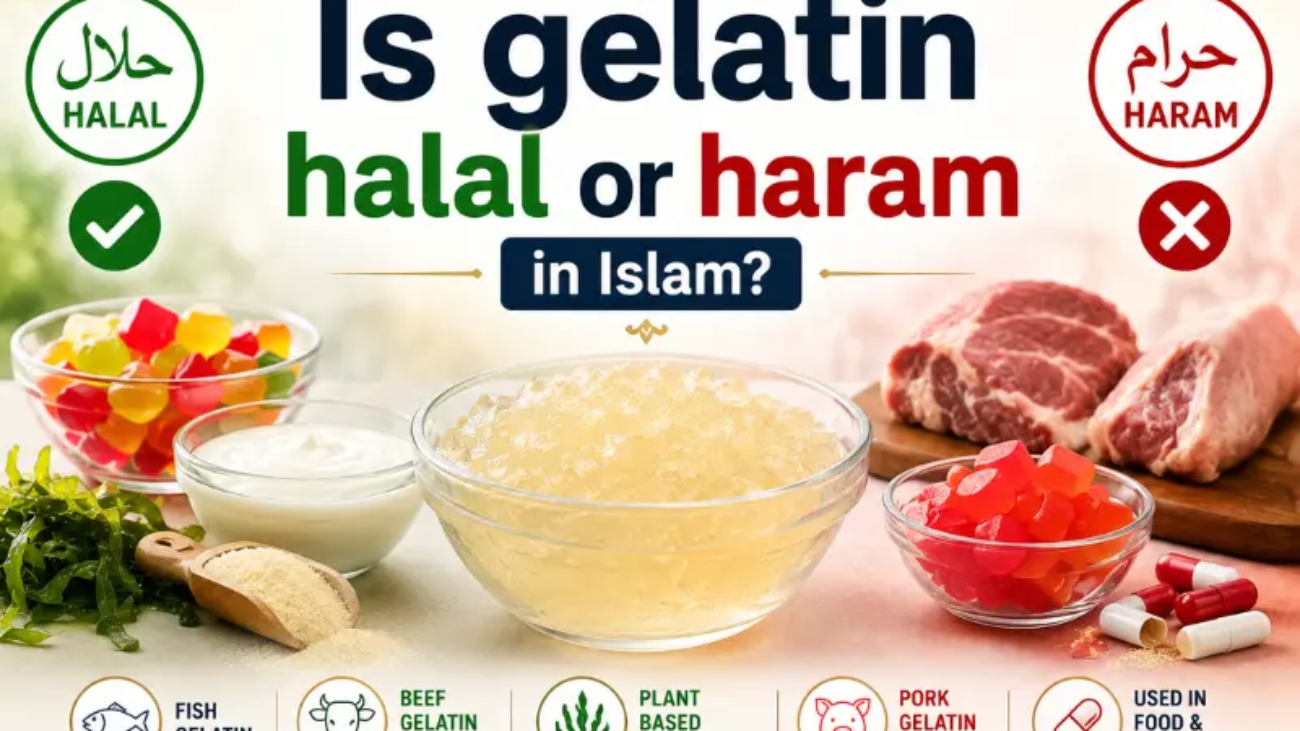
Is gelatin halal or haram? This is one of the most searched food questions by Muslims around the world. Gelatin is hidden inside many sweet and tasty foods that children and adults love. From gummies and marshmallows to yogurt and vitamins, gelatin is everywhere. Because Muslims must always eat halal food, it becomes very important to understand gelatin in a simple and clear way.
Many people eat gelatin every day without knowing where it comes from. Some gelatin is halal, and some gelatin is haram. In this easy and friendly guide, we will learn everything step-by-step so even a child can understand what gelatin is, where it comes from, and how Muslims can choose safe foods.
Why Gelatin Is So Common in Modern Food
Gelatin is used in many foods because it is cheap and very useful. Food companies love gelatin because it helps food stay fresh longer and look more attractive. It also makes food feel soft and fun to eat, especially for children.
Today, thousands of products contain gelatin without people even noticing. That is why Muslims must learn how to recognize it.
What Is Gelatin? (Simple Explanation)
Gelatin is a soft, jelly-like ingredient that helps food become bouncy, chewy, and wiggly. It has no color and no taste, but it changes the texture of food.
Food companies love using gelatin because it makes foods fun and soft.
You can find gelatin in many daily foods:
- Gummy candies
- Marshmallows
- Jelly desserts
- Cheesecake and mousse
- Yogurt and ice cream
- Cake toppings
- Capsules and vitamins
- Some juices and dairy products
Most people never notice gelatin because it is usually written in small text on the ingredients label.
Foods That Usually Contain Gelatin
Many people only think about candy, but gelatin is in many surprising foods.
Common foods that may contain gelatin:
- Marshmallows
- Gummies and jelly candy
- Cheesecake
- Yogurt and pudding
- Ice cream
- Cake toppings and frosting
- Some breakfast cereals
This shows why checking ingredients is very important.
Why Muslims Must Check Gelatin Carefully
Islam teaches Muslims to eat Halal (allowed) and avoid Haram (forbidden) foods.
Two important Islamic food rules:
- Pork and pig products are completely haram
- Halal animals must be slaughtered in the Islamic way (Zabiha)
Since gelatin is made from animal bones and skin, we must check the animal source. This is why gelatin becomes a very important ingredient to understand.
Where Does Gelatin Come From?
Gelatin is made by boiling animal bones, skin, and connective tissues for many hours. This process turns animal collagen into gelatin powder.
Main Gelatin Sources Table
| Source | Animal | Where Used | Halal Risk |
| Porcine gelatin | Pig | Candy, marshmallows | Very High ❌ |
| Bovine gelatin | Cow | Yogurt, desserts | Medium ⚠️ |
| Fish gelatin | Fish skin/bones | Halal sweets | Low ✅ |
| Plant alternatives | Seaweed/Fruit | Vegan desserts | No risk ✅ |
Why Pork Gelatin Is Haram
Pork is clearly forbidden in Islam. Allah has forbidden pork in the Quran. This means every part of the pig is haram.
Pork Ingredients Table
| Ingredient | Halal Status |
| Pork gelatin | Haram ❌ |
| Pork fat (lard) | Haram ❌ |
| Pork enzymes | Haram ❌ |
| Pork collagen | Haram ❌ |
Even a small amount makes the food haram.
This is why most regular gummy candies and marshmallows are not halal.
Why Food Labels Can Be Confusing
Food labels do not always clearly explain gelatin sources. Many products only write the word “gelatin” without saying if it comes from pork, beef, or fish.
This makes it difficult for Muslims to know if the product is halal. Because of this confusion, scholars often recommend avoiding products when the source is unknown.
Understanding Beef Gelatin (Very Important)
Many Muslims get confused about beef gelatin.
Cows are halal animals, but the slaughter method matters.
Beef Gelatin Table
| Type of Beef Gelatin | Halal Status |
| Halal slaughtered cow | Halal ✅ |
| Non-halal slaughter | Haram ❌ |
| Unknown source | Doubtful ⚠️ |
If the product does not clearly say Halal Certified, it is better to avoid it.
Islam teaches us:
“Leave what makes you doubt.”
Why Fish Gelatin Is the Safest Animal Gelatin
Fish is very simple in Islam.
Most scholars agree:
- Fish does not need Islamic slaughter
- All fish are halal to eat
So fish gelatin is considered safe and halal.
Many halal candy companies now use fish gelatin.
Hidden Foods That May Contain Gelatin
Many people think gelatin is only in candy. But it is hidden in many foods!
Surprise Gelatin Foods Table
| Food | Why Gelatin Is Used |
| Yogurt | Makes it thick |
| Ice cream | Improves texture |
| Cheesecake | Helps it set |
| Cake frosting | Adds stability |
| Juice | Used for filtering |
| Medicine capsules | Makes capsule shell |
Always check labels carefully.
Gelatin in Medicine and Vitamins
This is a very common question.
Many medicines use gelatin capsules because they dissolve easily.
Scholars say:
- If no halal medicine exists → Allowed due to necessity
- If halal/vegetarian option exists → Choose halal option
Today, many companies make vegetable capsules, which is great for Muslims.
Halal Plant Alternatives to Gelatin
Amazing news! Many halal substitutes exist.
Halal Alternatives Table
| Alternative | Made From | Used In |
| Agar Agar | Seaweed | Jelly desserts |
| Pectin | Fruits | Jam & candy |
| Carrageenan | Seaweed | Dairy products |
| Konjac | Plant root | Vegan gummies |
These are 100% halal and very popular today.
Why Many Companies Now Offer Halal Gelatin
The halal food market is growing very fast around the world. Millions of Muslims want halal sweets and snacks, so food companies are starting to produce halal-certified gelatin products.
Today, you can find:
- Halal marshmallows
- Halal gummies
- Halal vitamins
- Halal desserts
This makes halal eating easier than before.
How to Identify Halal Gelatin Products
When shopping, look for these labels:
- Halal certification logo
- Fish gelatin
- Halal beef gelatin
- Vegan or Vegetarian label
Avoid products that only say “gelatin” with no details.
Tips for Muslims When Buying Snacks
Helpful tips:
✔ Choose halal-certified brands
✔ Buy vegan or vegetarian sweets
✔ Read ingredient labels slowly
✔ Avoid doubtful products
✔ Teach children to check labels too
This makes halal eating easy and safe.
Final Verdict Table
| Type of Gelatin | Ruling |
| Pork gelatin | Haram ❌ |
| Beef gelatin (non-halal) | Haram ❌ |
| Beef gelatin (halal) | Halal ✅ |
| Fish gelatin | Halal ✅ |
| Plant gelatin | Halal ✅ |
FAQs
Is gelatin always haram?
No. It depends on the source.
Why is pork gelatin haram?
Because pork is forbidden in Islam.
Can Muslims eat gummy bears?
Only halal or vegan gummies.
Is halal gelatin available?
Yes, many brands now sell it.
Is vegetarian gelatin halal?
Yes, it is completely halal.
Can Muslims eat marshmallows?
Only halal-certified marshmallows.
Is gelatin in yogurt halal?
Check the label first.
Is fish gelatin safe?
Yes, fish gelatin is halal.
Is gelatin in medicine allowed?
Allowed in necessity.
What is the safest gelatin?
Plant-based gelatin like agar agar.
Should Muslims avoid doubtful gelatin?
Yes, Islam encourages avoiding doubt.
Is vegan candy halal?
Yes, vegan candy is halal.
Conclusion
Gelatin is not always haram, but it is not always halal either. The ruling depends completely on where the gelatin comes from. Pork gelatin and non-halal beef gelatin must always be avoided by Muslims.
The safest choice is halal-certified gelatin, fish gelatin, or plant-based alternatives. By checking labels and choosing wisely, Muslims can enjoy sweets and snacks while staying faithful to halal guidelines.