Is Alligator Halal or Haram (2026)

Is Alligator Halal or Haram? (2026)

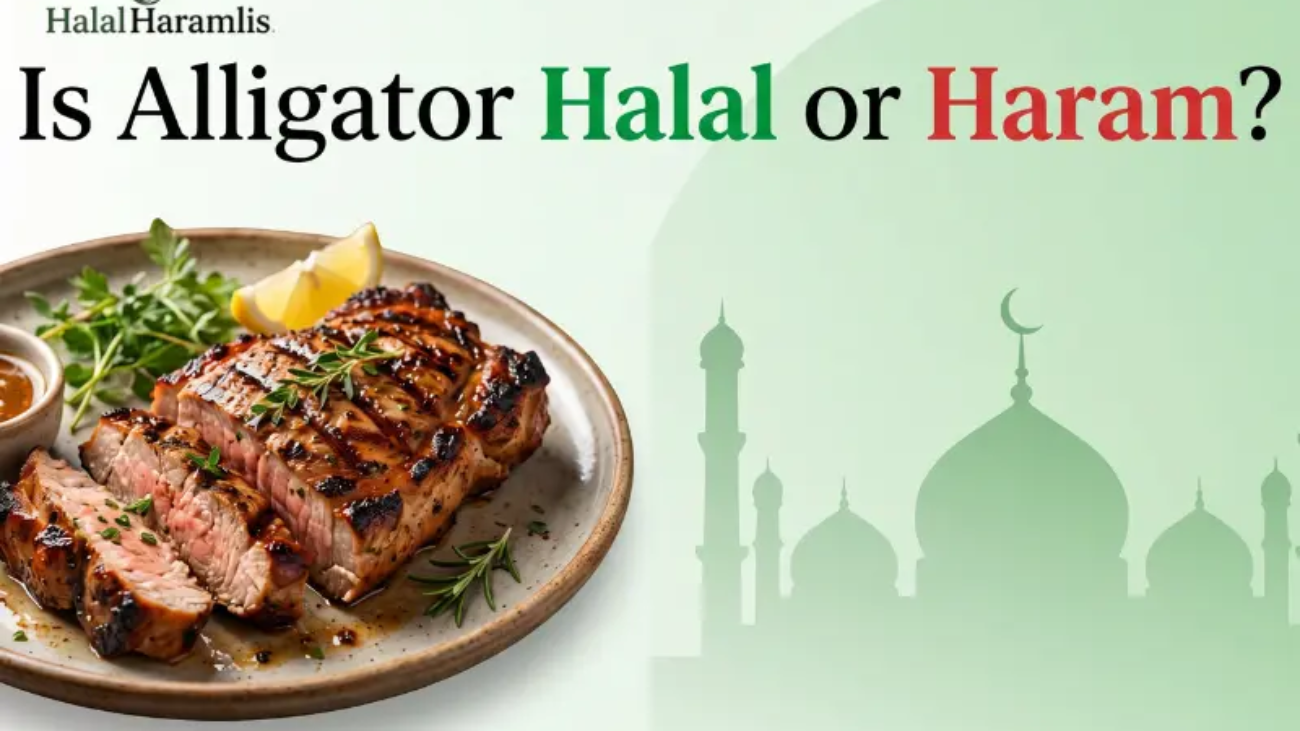
The ruling on “Is Alligator Halal or Haram?” is not fully agreed upon in Islamic scholarship, but the majority of scholars consider alligator meat haram or highly doubtful (makruh tahrimi). The main reason is that alligators are predatory reptiles with sharp teeth that hunt and kill other animals, which places them in the category of forbidden land predators in most Islamic interpretations.

A small minority of scholars allow certain aquatic animals in general, but this does not strongly apply to alligator due to its mixed land-water nature and carnivorous behavior. Therefore, most Muslims avoid it to stay on the safe side.

Alligator meat is considered an exotic food in some parts of the world, especially in the United States where it is served in dishes like grilled alligator, fried bites, and sausages. Because it is not a common meat in Muslim countries, many Muslims become confused and search: Is alligator halal or haram in Islam?

In Islam, food rules are very important and clearly defined. Muslims are encouraged to eat what is pure, safe, and permissible. Since alligator is not a traditional farm animal and has characteristics of wild predators, scholars carefully analyze its nature before giving a ruling.

This article explains everything in a simple way so that even a beginner can understand the Islamic perspective on alligator meat, its ingredients, and whether it can be eaten safely by Muslims.

What is an Alligator?

An alligator is a large reptile found mainly in freshwater environments such as swamps, rivers, and lakes. It is often confused with a crocodile, but both are different species.

Key Features of Alligator:

  • Lives in both water and land (semi-aquatic)
  • Strong jaw and sharp teeth
  • Carnivorous predator (eats meat)
  • Hunts fish, birds, and mammals
  • Common in North America (especially USA)

Because of these traits, Islamic scholars compare it to other predatory animals when determining its ruling.

Islamic Rules for Eating Animals (Basic Foundation)

Islamic dietary law (Halal and Haram rules) is based on Quran, Hadith, and scholarly interpretation.

Generally Halal Animals:

  • Sheep, goat, cow, camel
  • Chicken, turkey
  • Most fish and sea animals (depending on school of thought)

Generally Haram Animals:

  • Predators with fangs (lion, tiger, wolf)
  • Birds of prey (eagle, hawk)
  • Reptiles in most opinions
  • Animals that are harmful or impure

The classification of alligator depends on how scholars interpret its nature—sea creature or land predator.

Is Alligator Halal or Haram in Islam?

Majority Scholarly Opinion (Most Accepted View)

Most Islamic scholars from Hanafi, Hanbali, and many Shafi’i interpretations consider alligator haram due to the following reasons:

  • It is a predator with sharp teeth
  • It hunts and kills other animals
  • It is similar to crocodile, which is widely considered haram
  • It is not a standard “seafood animal”

According to this view, any animal that behaves like a wild predator is not allowed for consumption.

Minority Scholarly Opinion

Some scholars who have a broader interpretation of seafood rules argue:

  • All creatures living in water are halal unless harmful
  • Therefore, some aquatic reptiles may be allowed

However, even in this view, many scholars still exclude crocodile-like reptiles due to their predatory nature. This means even the permissive opinion is not strong for alligator.

Alligator Meat Halal or Haram – Detailed Breakdown

Is Alligator Halal or Haram (2026)

Biological Nature

Alligator is not a domesticated animal. It is a wild predator that actively hunts other animals. In Islamic law, this strongly influences prohibition.

Physical Structure

It has:

  • Sharp teeth
  • Strong jaws
  • Hunting behavior

These characteristics match animals that are generally considered haram.

Food Chain Position

Alligator sits at a high level in the food chain, meaning it eats meat rather than plants. This makes it similar to other forbidden predators.

Final 

Based on majority view, alligator meat is haram or strongly discouraged (doubtful category).

Ingredient & Processing Analysis of Alligator Meat

Even though alligator is natural meat, the way it is prepared also matters in Islam.

Common Alligator Products:

Many people assume meat is automatically halal if it is “just meat,” but in Islam, both source and preparation matter.

Alcohol, Gelatin, and Additives in Alligator Food

In modern restaurants, alligator dishes are often processed or flavored. This creates additional halal concerns.

Common Hidden Ingredients:

  • Alcohol-based marinades (wine, beer sauces)
  • Gelatin used in processed meat binding
  • Enzyme-based tenderizers (non-halal sources)
  • Artificial flavor enhancers

Even if someone considers raw alligator doubtful but acceptable, these additives make it more clearly non-halal in practice.

Slaughter Method Issue in Islam

For land animals to be halal, they must be slaughtered according to Zabiha rules.

Problem with Alligator:

  • It is not typically slaughtered in Islamic way
  • Often hunted or killed in industrial methods
  • No halal-certified slaughter system widely exists

This is a major issue because even permissible animals become haram if not properly slaughtered.

Halal Certification Status

Current Situation:

  • No widely recognized halal certification for alligator meat
  • Most halal authorities avoid certifying exotic reptiles
  • Lack of standard slaughter system

Why Certification is Missing:

  • High disagreement among scholars
  • Ethical and safety concerns
  • Difficulty in controlling slaughter process

Because of this, Muslims have no reliable halal-certified source for alligator meat.

Scholar Opinions Summary

Strong Majority Opinion:

  • Alligator is haram
  • Reason: predator + reptile classification

Secondary View:

  • Some water animals are halal
  • But reptiles like alligator are still excluded

Final Scholarly Balance:

Overall ruling leans strongly toward haram or at least makruh tahrimi (strongly disliked/doubtful)

Muslim Consumer Guide

Is Alligator Halal or Haram (2026)

If you are unsure about exotic foods like alligator, follow this simple Islamic approach:

Safe Rules:

  • Avoid doubtful meats
  • Eat certified halal chicken, beef, lamb
  • Prefer known halal seafood

When eating abroad:

  • Always ask restaurant about halal certification
  • Avoid “wild game” or exotic meat menus unless confirmed halal

Islamic Principle:

Leave what makes you doubt for what does not make you doubt.”

Halal Alternatives to Alligator Meat

If you are curious about texture or taste, here are safer substitutes:

These options give similar culinary experience without religious doubt.

Unusual Halal Foods (Safe Exotic Options)

Muslims who enjoy exotic foods can try:

  • Grilled lamb ribs
  • Spiced shrimp skewers
  • Duck meat dishes
  • Camel meat (Middle East regions)
  • Fish curry and seafood grills

These are widely accepted halal options with strong scholarly support.

See Also

FAQs

Is alligator halal in Islam?

Most scholars say no, it is haram or doubtful.

Can Muslims eat alligator meat?

Generally, it is not recommended.

Is alligator a seafood animal?

No, it is a semi-aquatic predator.

Is alligator similar to crocodile?

Yes, and both are usually considered haram.

Is grilled alligator halal?

Not guaranteed; depends on ingredients.

Is alligator tail halal?

Same ruling as whole animal.

Why is alligator haram?

Because it is a carnivorous predator.

Is any scholar allowing it?

Very few opinions exist, but not widely accepted.

Is swamp meat halal?

Usually doubtful unless certified.

Is alligator used in halal restaurants?

Rare and generally avoided.

What is safest meat for Muslims?

Chicken, beef, lamb, and fish.

Should Muslims avoid exotic meats?

Yes, unless clearly halal certified.

Conclusion

The question “Is Alligator Halal or Haram?” does not have a simple universal agreement, but the dominant Islamic scholarly opinion clearly leans toward haram or highly doubtful status. The main reasons include its predatory nature, sharp teeth, and classification as a wild reptile.

Although some general seafood interpretations exist in Islamic law, alligator does not comfortably fit into the category of commonly accepted halal animals. Combined with the absence of halal certification and uncertain slaughter methods, it becomes a risky choice for Muslims.

For this reason, most Muslim consumers prefer to avoid alligator meat and instead choose safe, well-established halal foods.

In Islamic dietary guidance, when something is doubtful, the safest and most rewarding choice is always to avoid it.

Is Olive Garden Halal or Haram

Is Olive Garden Halal or Haram? (2026)

Olive Garden is generally considered haram or not halal-certified for Muslims because the restaurant does not offer officially halal-certified meat in the USA. While some menu items may contain no pork or alcohol ingredients, cross-contamination and non-halal meat sourcing make most Olive Garden meals unsuitable for Muslims seeking strict halal food.

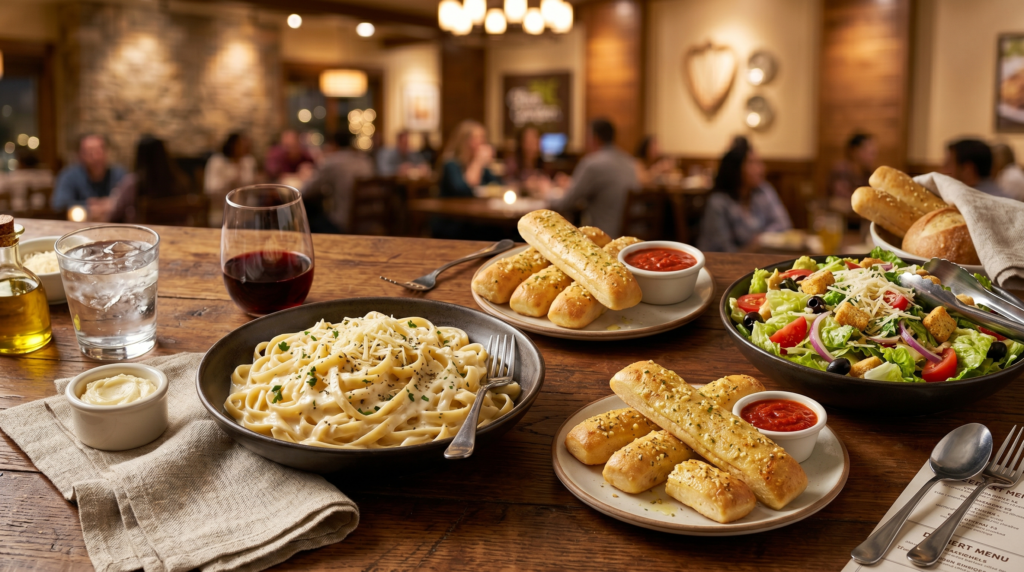
Is Olive Garden Halal?  because it is one of the most popular Italian restaurant chains in America. The restaurant serves pasta, soups, salads, chicken dishes, seafood, and desserts. However, halal status depends not only on ingredients but also on meat sourcing, preparation methods, and halal certification.

In this guide, we will explain Olive Garden’s ingredients, meat sourcing, halal concerns, alcohol usage, cross-contamination risks, and safer halal-friendly options so you can make an informed decision.

Is Olive Garden Halal or Haram?

Olive Garden is not a halal-certified restaurant in the United States. The company does not state that its chicken, beef, or other meats are sourced from halal-certified suppliers. Because Islamic dietary laws require halal slaughter and halal-certified meat, most Muslim scholars consider Olive Garden’s meat dishes non-halal.

Some vegetarian or seafood items may be permissible depending on their ingredients, but Muslims should still check for alcohol-based sauces, cheese enzymes, and cross-contamination risks.

What Is an Olive Garden?

Olive Garden is a famous American-Italian restaurant chain known for:

  • Pasta dishes
  • Breadsticks
  • Soups
  • Salads
  • Chicken entrées
  • Seafood meals
  • Desserts

The restaurant operates hundreds of locations across the USA and attracts millions of customers every year.

Many Muslims wonder whether they can safely eat there because Italian food often contains ingredients that require halal verification.

Why Muslims Must Check Restaurant Food Carefully

Restaurant food can be more complicated than packaged food because many ingredients come from different suppliers.

Possible halal concerns include:

  • Non-halal meat
  • Pork ingredients
  • Alcohol in sauces
  • Animal-based cheese enzymes
  • Cross-contamination
  • Shared cooking equipment

This is why checking restaurant ingredients is always important.

How Large Restaurant Chains Source Their Food

Is Olive Garden Halal or Haram

Large restaurant chains buy ingredients from multiple suppliers across the country. These ingredients are transported to restaurants and prepared according to company recipes.

Because suppliers may change over time, halal status can also change. This is one reason why halal certification is valuable—it provides independent verification that ingredients and preparation methods meet Islamic requirements.

Without halal certification, Muslims often have limited information about sourcing practices.

Is Olive Garden Halal in the USA?

The simple answer is no.

Olive Garden halal in USA is currently not confirmed because the restaurant does not advertise halal-certified meat or halal-certified kitchens.

Halal Status of Olive Garden in the USA

Because pork and alcohol are present in many locations, Muslims should exercise caution.

Main Olive Garden Menu Categories

Olive Garden serves:

  • Chicken pasta
  • Beef dishes
  • Seafood meals
  • Soups
  • Salads
  • Breadsticks
  • Desserts

Each category requires separate halal analysis.

Meat Sourcing at Olive Garden

One of the biggest halal concerns is meat sourcing.

Islam requires animals to be:

  • Slaughtered according to Islamic guidelines
  • Dedicated to Allah
  • Properly drained of blood
  • Free from prohibited methods

Olive Garden does not claim that its chicken or beef follows halal slaughter standards.

Meat Halal Analysis

This is why most meat dishes are not considered halal.

Does Olive Garden Serve Pork?

Yes.

Olive Garden serves several pork-containing items.

Examples may include:

  • Italian sausage
  • Bacon toppings
  • Pork-based ingredients in some recipes

Since pork is clearly prohibited in Islam, Muslims must avoid any dish containing pork.

Pork Status

Pork ingredients automatically make a dish haram.

Does Olive Garden Use Alcohol?

Is Olive Garden Halal or Haram

Alcohol is another important concern.

Many restaurant chains use wine or cooking alcohol in:

  • Pasta sauces
  • Marinades
  • Cream sauces
  • Specialty dishes

Although cooking may reduce alcohol content, many scholars still advise Muslims to avoid dishes prepared with alcohol.

Alcohol Concern Table

Always ask staff about ingredients before ordering.

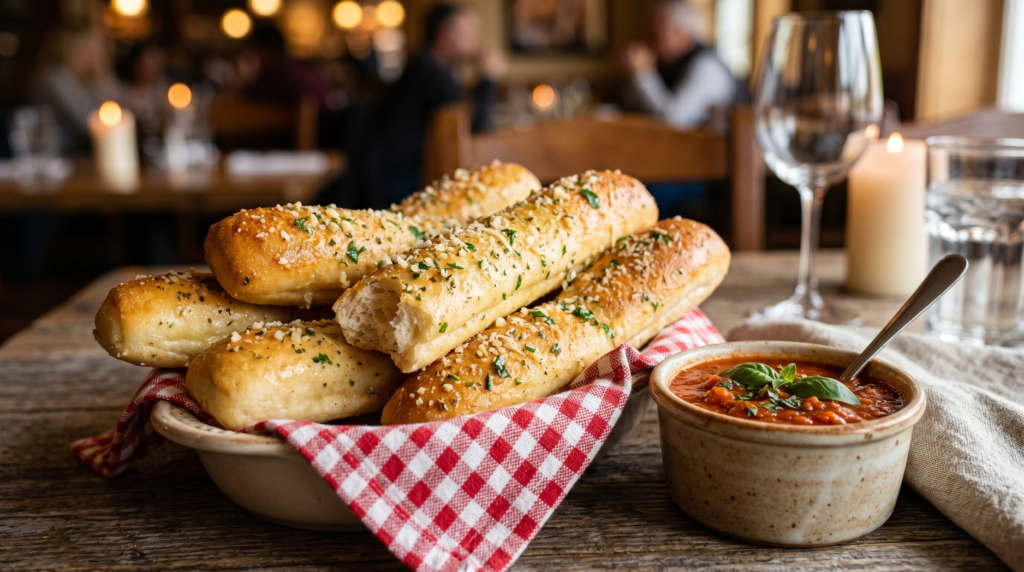
Are Olive Garden Breadsticks Halal?

Olive Garden breadsticks are among the restaurant’s most popular items.

The basic ingredients generally include:

  • Flour
  • Water
  • Yeast
  • Salt
  • Vegetable oils

These ingredients are usually halal.

However, cross-contamination in shared kitchens remains a consideration.

Breadsticks Analysis

Many Muslims consider the breadsticks one of the safer menu options.

Is Olive Garden Salad Halal?

The famous house salad contains mostly plant-based ingredients.

Typical ingredients include:

  • Lettuce
  • Tomatoes
  • Onions
  • Olives
  • Peppers

These ingredients are naturally halal.

The dressing, however, should be checked for possible additives or cheese-based ingredients.

Cheese and Enzyme Concerns

Many Italian dishes contain cheese.

Some cheeses use animal-derived enzymes during production.

Cheese Analysis

Without ingredient verification, cheese-based dishes may remain doubtful.

Are Olive Garden Seafood Dishes Halal?

Many scholars consider seafood halal.

Seafood menu items may include:

  • Shrimp
  • Fish
  • Shellfish

However, Muslims should still verify:

  • Sauce ingredients
  • Cooking methods
  • Cross-contamination risks

Seafood can sometimes be a safer option than meat dishes.

Cross-Contamination Concerns

Cross-contamination happens when halal-friendly foods come into contact with non-halal ingredients.

Possible risks include:

  • Shared grills
  • Shared fryers
  • Shared utensils
  • Shared preparation areas

Since Olive Garden is not a halal restaurant, separate halal preparation areas are generally unavailable.

Cross-Contamination Risks

This creates additional concerns for strict halal eaters.

Why Olive Garden Does Not Have Halal Certification

Halal certification requires:

  • Ingredient inspections
  • Supplier verification
  • Kitchen audits
  • Ongoing monitoring

Restaurant chains must invest significant time and resources to obtain certification.

Currently, Olive Garden does not advertise halal certification in the USA.

Why Some Muslims Still Eat Certain Olive Garden Items

Some Muslims avoid all non-certified restaurants.

Others choose menu items that:

  • Contain no meat
  • Contain no alcohol
  • Contain no pork

Examples may include:

  • Plain salad
  • Breadsticks
  • Certain vegetarian pasta dishes

This approach depends on personal comfort level and scholarly guidance.

Scholar Opinion Summary

Many scholars recommend choosing halal-certified restaurants whenever possible.

How to Decide as a Muslim Consumer

Islam encourages Muslims to avoid doubtful matters whenever practical.

You can choose:

Strict Approach

  • Eat only halal-certified restaurants.
  • Avoid Olive Garden completely.

Moderate Approach

  • Avoid meat dishes.
  • Avoid alcohol-containing dishes.
  • Choose vegetarian items carefully.

Both approaches are followed by Muslims around the world.

Benefits of Choosing Halal-Certified Restaurants

Halal-certified restaurants provide:

  • Verified ingredients
  • Halal meat sourcing
  • Cleaner transparency
  • Greater peace of mind

This makes dining decisions much easier.

Halal Alternatives to Olive Garden

If you want complete confidence, consider:

  • Local halal Italian restaurants
  • Halal-certified pizza chains
  • Halal-certified pasta restaurants
  • Muslim-owned Italian eateries

Many American cities now have excellent halal Italian food options.

Teaching Kids About Halal Restaurant Choices

Parents can teach children to:

  • Read ingredients carefully
  • Ask questions about meat sourcing
  • Look for halal certification
  • Understand halal and haram foods

These habits help children make better food choices as they grow.

See Also

FAQs

Is Olive Garden halal?

No, Olive Garden is not halal certified.

Is Olive Garden halal in USA?

No, Olive Garden does not provide halal-certified meat in the USA.

Does Olive Garden serve pork?

Yes, many locations serve pork products.

Does Olive Garden use alcohol?

Some dishes and sauces may contain alcohol-based ingredients.

Is Olive Garden chicken halal?

No halal certification has been provided for its chicken.

Is Olive Garden beef halal?

No halal certification has been provided for its beef.

Are Olive Garden breadsticks halal?

Generally yes, but cross-contamination concerns remain.

Is Olive Garden salad halal?

Usually yes, but dressing ingredients should be checked.

Can Muslims eat seafood at Olive Garden?

Many scholars permit seafood, but sauces and preparation methods should be verified.

Does Olive Garden have a halal menu?

No official halal menu is available.

Is Olive Garden vegetarian food halal?

Many vegetarian items may be halal-friendly, but ingredients should still be checked.

Should Muslims choose halal-certified restaurants?

Yes, halal-certified restaurants provide the highest level of confidence.

Conclusion

Olive Garden is not a halal-certified restaurant, and its meat products are not confirmed to be halal slaughtered. The restaurant also serves pork and alcohol, which creates additional concerns for Muslim consumers. Because of these factors, most scholars do not consider Olive Garden a halal restaurant.

Some vegetarian items, breadsticks, salads, and certain seafood dishes may be permissible depending on ingredients and preparation methods. However, Muslims seeking complete certainty should choose halal-certified restaurants whenever possible. Halal certification provides peace of mind, ingredient transparency, and confidence that food complies with Islamic dietary guidelines.

Is Calamari Halal or Haram

Is Calamari Halal or Haram? Guide for Muslim Consumers

Is Calamari Halal or Haram? Calamari is generally considered halal by many Islamic scholars because it is made from squid, a type of seafood. According to several Islamic schools of thought, seafood is permissible to eat, making calamari halal for most Muslims.

However, the final halal status may depend on how the calamari is prepared, the ingredients used in the batter, and whether alcohol or non-halal additives are added during cooking. If you are asking “Is calamari halal or haram in Islam?”, the answer is usually halal, but Muslims should always check the preparation method and ingredients.

Yes, calamari is generally halal because it is made from squid, which many scholars consider a permissible seafood. This makes calamari different from foods that contain pork, non-halal meat, or questionable animal ingredients.

Many Muslims still search for “Calamari halal or haram 2026” because restaurant recipes and processed seafood products can vary. Some people worry about cooking methods, batter ingredients, alcohol-based sauces, or cross-contamination with non-halal foods.

In this guide, we will explain Is Calamari Halal or Haram? Guide for Muslim Consumers, discuss whether squid is halal for Muslims, analyze calamari ingredients, examine pork and alcohol concerns, review Islamic opinions, and answer the most common halal questions.

What Is Calamari?

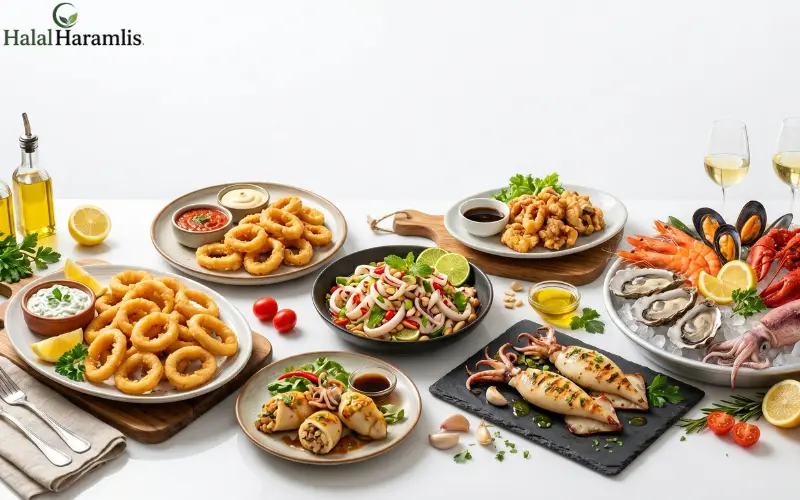
Calamari is a seafood dish made from squid.

The squid is usually:

  • Cleaned
  • Cut into rings
  • Coated with batter or breadcrumbs
  • Fried until crispy

Calamari is popular in:

  • Seafood restaurants
  • Mediterranean cuisine
  • Italian dishes
  • Asian cuisine
  • Fast-food seafood menus

Many people enjoy calamari because of its mild taste and crispy texture.

Quick Answer Table

Is Calamari Halal?

The short answer is yes.

Since calamari comes from squid, many Islamic scholars consider it halal.

Seafood is generally viewed as permissible in Islam, especially by scholars who allow all forms of sea creatures.

Because calamari comes directly from squid and not from pork or land animals, many Muslims consume it without concern.

However, the halal status may change if:

  • Non-halal ingredients are added.
  • Alcohol-based sauces are used.
  • Cross-contamination occurs during cooking.

Therefore, checking the complete dish remains important.

Is Squid Halal for Muslims?

This is one of the most common questions.

Is squid halal for Muslims?

Most scholars consider squid halal because it is a sea creature.

Several Islamic schools of thought permit seafood broadly, including:

  • Fish
  • Shrimp
  • Squid
  • Octopus
  • Lobster
  • Crab (scholarly differences may exist)

As a result, squid itself is generally regarded as halal.

Seafood Halal Status Table

Because calamari is simply prepared squid, it is usually considered halal as well.

Calamari Ingredients Halal Check

Understanding the ingredients is important.

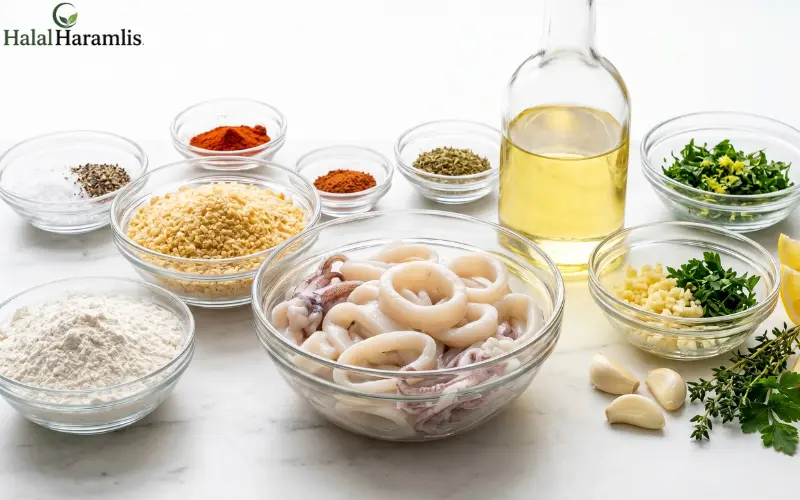
A typical calamari dish may contain:

  • Squid
  • Flour
  • Breadcrumbs
  • Salt
  • Pepper
  • Vegetable oil
  • Seasonings

Most of these ingredients are halal.

However, Muslims should still review ingredient lists carefully.

Ingredient Analysis Table

The biggest concerns often come from sauces and flavorings rather than the squid itself.

Why Do Muslims Question Calamari?

Is Calamari Halal or Haram

Although squid is generally halal, Muslims may still have concerns.

Cooking Methods

Some restaurants fry calamari in shared fryers.

Sauce Ingredients

Certain sauces may contain alcohol or non-halal flavorings.

Cross-Contamination

Halal seafood may come into contact with non-halal foods.

Processed Products

Frozen calamari products may contain additional ingredients.

Because of these factors, many Muslims prefer checking ingredients before consuming calamari.

Does Calamari Have Pork or Alcohol?

This is one of the most searched questions.

Does calamari have pork?

Normally, calamari itself does not contain pork.

It is made from squid, which is seafood.

However, processed products should always be checked because recipes vary.

Does calamari have alcohol?

The squid itself does not contain alcohol.

However, alcohol may appear in:

  • Marinades
  • Sauces
  • Restaurant recipes
  • Specialty seafood dishes

For this reason, Muslims should ask about preparation methods when dining out.

Pork and Alcohol Concerns Table

Is Calamari Halal or Haram in Islam?

Most scholars consider calamari halal because it originates from squid, which is a sea creature.

Islam generally permits seafood.

Many scholars cite the principle that the sea and its provisions are lawful for believers.

However, Muslims should remember that scholarly opinions can vary slightly regarding certain sea creatures.

The majority opinion still supports the permissibility of squid and calamari.

Country-Wise Halal Status

The halal status of calamari is generally similar worldwide because the source remains squid.

Country Comparison Table

Is Calamari Halal in USA?

Most calamari served in the USA is considered halal if it contains only squid and halal ingredients.

However, restaurant preparation methods should be checked.

Is Calamari Halal in UK?

The UK status is similar.

Most Muslims consider calamari halal, but ingredients and cooking methods should still be verified.

Islamic Perspective on Calamari

Islam encourages Muslims to consume lawful and pure food.

When scholars evaluate seafood, they often focus on:

  • Source of the food
  • Presence of haram ingredients
  • Preparation method
  • Contamination risks

Since calamari comes from squid, many scholars classify it as halal.

The main concern is usually not the squid itself but what is added during cooking.

How to Verify Calamari Halal Status

Follow these simple steps:

Ask About Ingredients

Check:

  • Batter
  • Breadcrumbs
  • Seasonings
  • Sauces

Ask About Cooking Oil

Shared fryers may raise concerns.

Verify Sauces

Some sauces may contain alcohol-based ingredients.

Review Product Labels

Frozen calamari products should always be checked.

Choose Halal-Friendly Restaurants

Restaurants familiar with halal requirements often provide more transparency.

Halal Alternatives to Calamari

If you cannot verify the ingredients, consider:

  • Grilled fish
  • Halal shrimp
  • Halal seafood platters
  • Baked squid
  • Certified halal seafood dishes

These options may provide additional confidence.

Tips for Muslim Consumers

When ordering calamari:

  • Check ingredient lists.
  • Ask about sauces.
  • Verify cooking methods.
  • Confirm there is no alcohol in marinades.
  • Avoid unclear ingredients.
  • Choose trusted restaurants.

These steps can help Muslims make informed choices.

See Also

FAQs

Is Calamari Halal?

Yes, calamari is generally considered halal because it comes from squid.

Is Calamari Halal or Haram in Islam?

Most scholars consider calamari halal.

Is Squid Halal for Muslims?

Yes, squid is generally regarded as halal seafood.

Does Calamari Have Pork?

No, calamari itself does not contain pork.

Does Calamari Have Alcohol?

Not normally, but some sauces or marinades may contain alcohol.

Is Calamari Halal in USA?

Usually yes, provided no non-halal ingredients are added.

Is Calamari Halal in UK?

Generally yes, but preparation methods should be checked.

Can Muslims Eat Fried Calamari?

Yes, if the ingredients and cooking process are halal.

Does Calamari Contain Gelatin?

No, calamari does not normally contain gelatin.

Is Frozen Calamari Halal?

Usually yes, but ingredient labels should be reviewed.

Why Do Muslims Question Calamari?

Concerns usually involve sauces, alcohol, and cross-contamination.

Should Muslims Verify Restaurant Calamari?

Yes, especially when ingredients and preparation methods are unclear.

Conclusion

So, Is Calamari Halal or Haram? Guide for Muslim Consumers The answer is that calamari is generally considered halal because it comes from squid, which many Islamic scholars classify as permissible seafood.

The main halal concerns do not usually involve the squid itself. Instead, Muslims should pay attention to additional ingredients, sauces, marinades, cooking oils, and possible cross-contamination. These factors can affect the final halal status of a prepared calamari dish.

Overall, if you are asking “Calamari halal or haram 2026”, the majority view is that calamari is halal for Muslims. Still, checking ingredients and preparation methods remains the best way to ensure the food meets your personal halal standards.

Is Bonchon Halal or Haram (2026)

Is Bonchon Halal or Haram? (2026)

Is Bonchon Halal or Haram? The answer depends on the country, location, and supplier used by the restaurant. Some Bonchon branches use halal-certified chicken and ingredients, while many others do not carry halal certification.

If you are asking “Is Bonchon Halal?”, the safest answer is that Bonchon is not universally halal worldwide. Muslims should verify the halal status of their local branch before ordering. The answer may be different in the USA, UK, Asia, or the Middle East.

Bonchon is not automatically halal everywhere. Some locations may serve halal-certified chicken, while others may use conventional chicken without halal certification. This is why Muslims often ask, “Does Bonchon use halal chicken?”

Bonchon is famous for its Korean-style fried chicken, crispy wings, and flavorful sauces. However, halal-conscious Muslims need to look beyond the menu and examine chicken sourcing, certification, cooking methods, and possible cross-contamination.

In this guide, we will answer Is Bonchon Halal or Haram? (2026), explore whether Bonchon uses halal chicken, discuss Bonchon halal certification, compare the USA and UK status, examine ingredients, and explain what Muslims should know before eating at Bonchon.

What Is Bonchon?

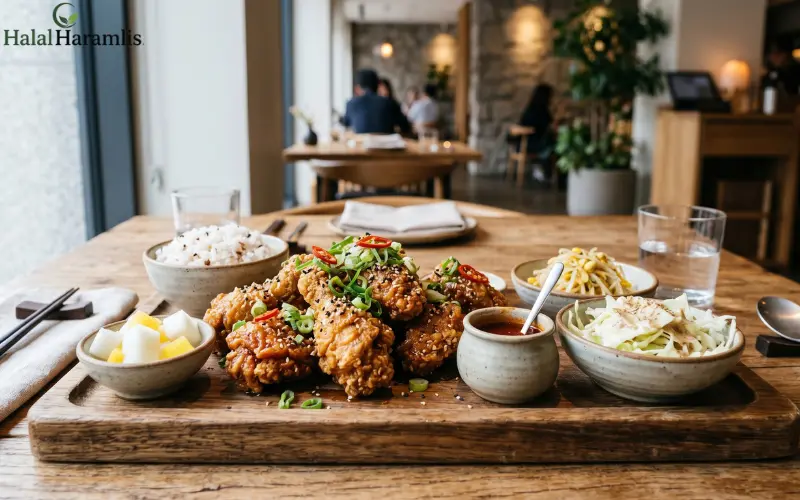
Bonchon is a Korean fried chicken restaurant chain known for its crispy double-fried chicken and Korean-inspired flavors.

The restaurant serves:

  • Fried chicken
  • Wings
  • Tenders
  • Rice dishes
  • Fries
  • Korean sauces
  • Side dishes

Bonchon has expanded globally and now operates in many countries.

The halal status of Bonchon can vary because each country and franchise location may use different suppliers and certification standards.

Quick Answer Table

Is Bonchon Halal?

The answer depends on where you are eating.

Many Muslims assume that a large restaurant chain follows the same standards worldwide. However, Bonchon operates through franchises, and each location may have different suppliers.

A branch may be:

  • Fully halal certified
  • Partially halal compliant
  • Not halal certified
  • Using conventional chicken

Because of this, one Bonchon restaurant may be halal while another may not be.

This is why checking the specific branch remains important.

Does Bonchon Use Halal Chicken?

Is Bonchon Halal or Haram (2026)

This is one of the most searched questions.

Does Bonchon use halal chicken?

The answer is some locations do and some do not.

Several Bonchon branches in Muslim-majority countries use halal-certified chicken because local regulations and customer demand require it.

However, many branches in Western countries may source conventional chicken.

Before ordering, ask:

  • Is the chicken halal-certified?
  • Which supplier is used?
  • Can staff provide certification details?

The answer may vary even within the same country.

Chicken Source Table

Why Do Muslims Question Bonchon?

There are several reasons Muslims research Bonchon before eating there.

Chicken Slaughter Method

Islam requires halal slaughter according to Islamic guidelines.

Certification Concerns

Some locations may not display halal certification.

Shared Cooking Equipment

Cross-contamination can occur when halal and non-halal foods share equipment.

Sauce Ingredients

Some sauces may contain ingredients requiring verification.

Franchise Differences

Not all Bonchon branches operate under identical food sourcing systems.

Because of these concerns, Muslims often investigate before dining.

Bonchon Halal Certified

Many people ask whether Bonchon is halal certified.

The answer depends entirely on the branch.

Some locations proudly display:

  • Halal certificates
  • Approved supplier information
  • Local halal authority approvals

Other locations may not have halal certification.

Certification Status Table

If halal certification is important to you, ask staff directly or review the restaurant’s official information.
Bonchon Haram

Is Bonchon Halal or Haram (2026)

Some Muslims ask whether Bonchon is haram.

The answer is not that simple.

Bonchon is not automatically haram.

However, a location may become problematic if:

  • Chicken is not halal-certified.
  • Non-halal ingredients are used.
  • Cross-contamination is significant.
  • Verification is unavailable.

This is why many scholars recommend investigating individual locations rather than making a blanket ruling about the entire chain.

Is Bonchon Chicken Halal in USA?

The USA has many Bonchon branches.

However, not all locations follow the same sourcing practices.

Important Points

  • Some locations may use halal suppliers.
  • Many locations are not officially halal-certified.
  • Verification should be done branch by branch.

Because policies can change, checking directly with your local restaurant is recommended.

USA Status

Many Muslim customers contact local branches before ordering.

This remains the most reliable approach.

Is Bonchon Chicken Halal in UK?

The UK also has a growing Muslim population and stronger demand for halal food.

Some UK restaurants may provide halal options, while others may not.

Always verify:

  • Halal certification
  • Supplier information
  • Cross-contamination policies

Do not assume that all UK locations follow the same standard.

Country Comparison Table

Ingredients Analysis

Even if chicken is halal, Muslims should review other ingredients.

Common Bonchon menu ingredients include:

  • Chicken
  • Flour
  • Seasonings
  • Soy sauce
  • Garlic
  • Sugar
  • Oil
  • Korean sauces

Most ingredients are generally halal.

However, concerns may arise regarding:

  • Flavor enhancers
  • Sauce ingredients
  • Vinegar sources
  • Cooking oils
  • Cross-contamination

The final halal status depends on the complete preparation process.

Islamic Perspective on Bonchon

Islam encourages Muslims to consume food that is lawful and pure.

When evaluating restaurants, scholars often consider:

  • Source of meat
  • Slaughter method
  • Ingredient list
  • Preparation process
  • Cross-contamination risk

If a Bonchon branch uses halal-certified chicken and halal ingredients, many Muslims would consider the food permissible.

If verification cannot be obtained, some Muslims prefer avoiding uncertainty.

How to Verify Bonchon Halal Status

Follow these simple steps:

Ask Staff Directly

Request information about:

  • Chicken supplier
  • Halal certification
  • Slaughter method

Check Official Certification

Look for:

  • Halal logos
  • Certification documents
  • Approved halal authorities

Contact Customer Service

Corporate customer support may provide updated information.

Review Local Muslim Community Feedback

Many Muslims share their experiences regarding halal restaurants.

Verify Regularly

Restaurant suppliers can change over time.

Halal Alternatives to Bonchon

If you cannot verify Bonchon’s halal status, consider alternatives.

  • Halal Korean fried chicken restaurants
  • Certified halal fast food chains
  • Local Muslim-owned restaurants
  • Halal-certified Korean restaurants
  • Homemade Korean fried chicken

These options may provide greater confidence.

Tips for Muslims

When eating at restaurant chains:

  • Never assume halal status.
  • Ask questions politely.
  • Request certification proof.
  • Verify ingredients.
  • Check community reviews.
  • Contact management if needed.

Taking a few minutes to verify information can help avoid uncertainty.

FAQs

Is Bonchon Halal?

Some Bonchon locations are halal, while others are not.

Does Bonchon Use Halal Chicken?

Certain locations use halal-certified chicken, but not all branches do.

Is Bonchon Haram?

Not necessarily. It depends on the ingredients and chicken source used by the location.

Is Bonchon Halal Certified?

Some locations have halal certification, while others do not.

Is Bonchon Chicken Halal in USA?

The answer varies by location and supplier.

Is Bonchon Chicken Halal in UK?

Some branches may offer halal options, but verification is required.

Does Bonchon Serve Pork?

Some locations may offer menu items containing pork.

Can Muslims Eat at Bonchon?

They can if the location meets halal requirements.

How Can I Verify Bonchon Halal Status?

Ask staff, review certifications, and contact customer service.

Does Bonchon Use Alcohol in Sauces?

Sauce ingredients may vary, so checking directly is recommended.

Are All Bonchon Locations the Same?

No. Franchise locations often use different suppliers.

Should Muslims Check Every Branch Individually?

Yes. The halal status can differ from one location to another.

See Also

Conclusion

So, Is Bonchon Halal or Haram? (2026) The answer depends on the specific branch, country, and supplier. Bonchon is not universally halal worldwide, and Muslims should not assume that every location follows the same standards.

The most important question is “Does Bonchon use halal chicken?” Some branches use halal-certified suppliers, while others may use conventional chicken. This means the halal status can change depending on where you dine.

If you are looking for certainty, ask staff about chicken sourcing, request halal certification information, and verify ingredients before ordering. This simple step can help you make an informed decision.

Overall, Bonchon cannot be labeled completely halal or completely haram worldwide. The safest approach is to verify the status of your local branch and follow the guidance that best aligns with your understanding of halal dietary requirements.

Is Balsamic Vinegar Halal or Haram (2026)

Is Balsamic Vinegar Halal or Haram? (2026)

Is Balsamic Vinegar Halal or Haram? Balsamic vinegar is generally considered halal by many Islamic scholars because the alcohol produced during fermentation transforms into vinegar and is no longer intoxicating. This process is known as transformation or istihalah.

However, the halal status can depend on the manufacturing process, the amount of residual alcohol, and individual scholarly opinions. If you are wondering “Is Balsamic Vinegar Halal?”, most Muslims consider it permissible, but checking halal certification can provide extra confidence.

Yes, balsamic vinegar is generally halal according to many scholars because it is vinegar, not an alcoholic drink. Although alcohol may be produced naturally during fermentation, the final product is vinegar and is not consumed for intoxication.

Many Muslims still ask “Balsamic Vinegar Halal or Haram?” because vinegar is made through a fermentation process involving grapes. Some people worry about alcohol content, while others wonder whether all balsamic vinegars are the same.

In this complete guide, we will explain Is Balsamic Vinegar Halal or Haram? Complete Guide 2026, analyze ingredients, reveal the truth about alcohol in balsamic vinegar, discuss country-specific halal status, explore Islamic opinions, and answer the most common questions Muslims ask.

What Is Balsamic Vinegar?

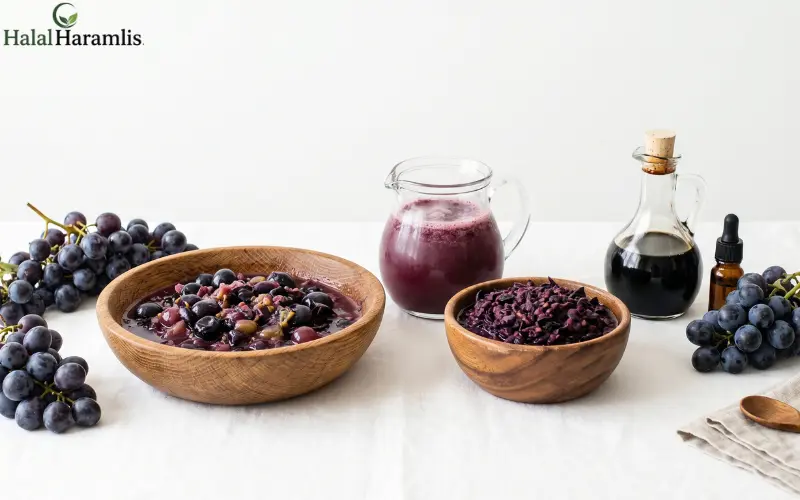
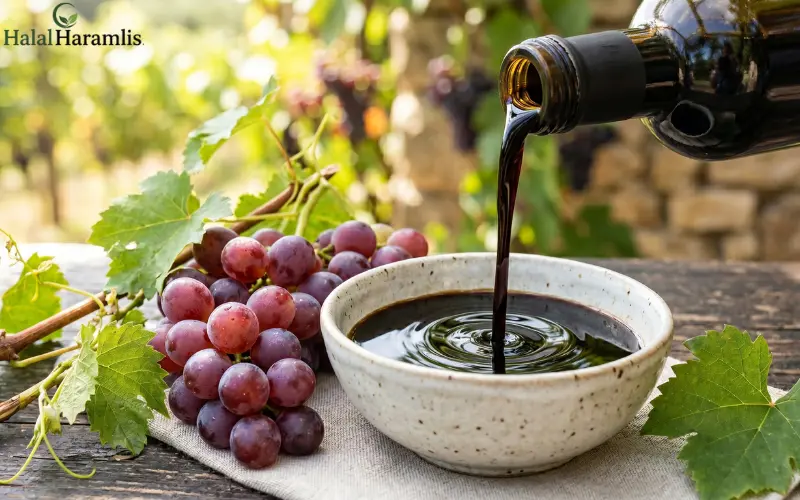
Balsamic vinegar is a dark-colored vinegar traditionally made from grape must, which is freshly crushed grape juice containing skins, seeds, and stems.

The grape must is cooked and aged over time to develop its unique flavor.

Balsamic vinegar is commonly used in:

  • Salad dressings
  • Marinades
  • Sauces
  • Roasted vegetables
  • Meat dishes
  • Italian cuisine

Its sweet and tangy flavor makes it one of the most popular vinegars in the world.

Quick Answer Table

Is Balsamic Vinegar Halal?

The answer is generally yes.

Most Islamic scholars consider balsamic vinegar halal because the final product is vinegar rather than alcohol.

During production:

  1. Grapes are crushed.
  2. Natural fermentation occurs.
  3. Alcohol may form temporarily.
  4. Alcohol converts into acetic acid.
  5. Vinegar is produced.

Since the end product is vinegar and not an intoxicating beverage, many scholars permit its consumption.

However, some Muslims prefer certified halal balsamic vinegar to avoid doubts.

Ingredients Analysis

Is Balsamic Vinegar Halal or Haram (2026)

Understanding the ingredients helps determine the halal status.

Typical balsamic vinegar ingredients include:

  • Grape must
  • Wine vinegar
  • Concentrated grape juice
  • Natural flavor compounds
  • Acetic acid

Most ingredients are plant-based.

Ingredient Analysis Table

The main concern usually involves wine vinegar and fermentation.

Why Do Muslims Question Balsamic Vinegar?

Many Muslims become concerned when they learn that balsamic vinegar undergoes fermentation.

Common concerns include:

Alcohol Production

Alcohol naturally forms during fermentation.

Wine Vinegar

Some products contain wine vinegar as an ingredient.

Different Scholarly Opinions

Not all scholars interpret vinegar production in exactly the same way.

Imported Products

Different countries may use different recipes and production methods.

Because of these factors, many Muslims search for information before consuming balsamic vinegar.

Balsamic Vinegar Halal or Haram? Alcohol Truth Revealed

Is Balsamic Vinegar Halal or Haram (2026)

This is the most important part of the discussion.

Many people see the word “wine vinegar” and assume the product is haram.

However, vinegar is chemically different from wine.

During fermentation:

  • Sugar becomes alcohol.
  • Alcohol becomes acetic acid.
  • Acetic acid creates vinegar.

The final vinegar is sour and non-intoxicating.

Alcohol Status Table

For this reason, many scholars permit vinegar products, including balsamic vinegar.

Does Balsamic Vinegar Contain Alcohol?

This is one of the most searched questions.

The answer depends on the product.

Most balsamic vinegars may contain trace amounts of naturally occurring residual alcohol because of fermentation.

However:

  • The amount is usually very small.
  • The product is not intoxicating.
  • It is consumed as vinegar, not alcohol.

Most halal certification bodies consider these small residual amounts acceptable when the product functions as vinegar.

Does Balsamic Vinegar Contain Pork?

No.

Traditional balsamic vinegar does not contain pork.

Its ingredients are primarily grape-based.

However, flavored balsamic products should always be checked because additional ingredients may vary.

Country-Wise Halal Status

The halal status may vary depending on certification and local standards.

Country Comparison Table

Is Balsamic Vinegar Halal in USA?

Many products sold in the USA are considered halal by Muslim consumers and scholars.

Checking labels remains important.

Is Balsamic Vinegar Halal in UK?

Most UK products are also viewed as halal, especially when used as food vinegar rather than alcoholic beverages.

Islamic Perspective on Balsamic Vinegar

Islam encourages Muslims to consume lawful and pure foods.

Many scholars rely on the principle of transformation (istihalah).

According to this view:

  • Wine is not halal.
  • Vinegar is halal.
  • Complete transformation changes the ruling.

This is why many scholars permit vinegar products made through natural fermentation.

However, some scholars recommend caution and encourage Muslims to choose certified products if uncertain.

How to Verify Halal Status

If you want extra confidence, follow these steps.

Check Ingredients

Look for:

  • Grape must
  • Vinegar
  • Flavorings

Check Halal Certification

A halal logo can provide reassurance.

Contact the Manufacturer

Ask about:

  • Production methods
  • Alcohol levels
  • Certification status

Review Scholarly Guidance

Different scholars may offer different perspectives.

Following trusted scholars can help you make an informed decision.

Popular Uses of Balsamic Vinegar

Balsamic vinegar is used in many foods, including:

  • Salads
  • Pasta dishes
  • Grilled vegetables
  • Chicken recipes
  • Beef marinades
  • Sandwiches
  • Pizza toppings

Its sweet and acidic flavor makes it a favorite ingredient worldwide.

Halal Alternatives to Balsamic Vinegar

If you prefer alternatives, consider:

Halal Alternatives Table

These alternatives can provide similar acidity without raising concerns.

Tips for Muslims

When buying balsamic vinegar:

  • Read labels carefully.
  • Look for halal certification.
  • Verify flavor ingredients.
  • Choose trusted brands.
  • Contact manufacturers if unsure.
  • Follow reliable scholarly guidance.

These simple steps can help Muslims make confident choices.

See Also

FAQs

Is Balsamic Vinegar Halal?

Yes, it is generally considered halal by many scholars.

Is Balsamic Vinegar Halal or Haram?

Most scholars consider it halal because it is vinegar, not an intoxicating beverage.

Does Balsamic Vinegar Contain Alcohol?

Small residual amounts may naturally occur, but it functions as vinegar rather than alcohol.

Is Balsamic Vinegar Halal in Islam?

Many Islamic scholars permit it due to the transformation process.

Is Balsamic Vinegar Halal in USA?

Most products are generally regarded as halal.

Is Balsamic Vinegar Halal in UK?

Yes, many Muslims consider it halal in the UK.

Does Balsamic Vinegar Contain Pork?

No, traditional balsamic vinegar does not contain pork.

What Is Wine Vinegar?

Wine vinegar is vinegar produced from fermented wine.

Why Do Muslims Question Balsamic Vinegar?

Because fermentation can involve alcohol formation during production.

Can Muslims Use Balsamic Vinegar in Salads?

Many scholars say yes.

Is Aged Balsamic Vinegar Halal?

Generally yes, provided it is genuine vinegar.

Should Muslims Choose Halal-Certified Balsamic Vinegar?

Halal certification provides additional peace of mind.

Conclusion

So, Is Balsamic Vinegar Halal or Haram? (2026) The answer is that balsamic vinegar is generally considered halal by many scholars because the alcohol formed during fermentation transforms into vinegar and is no longer intoxicating.

The biggest concern for Muslims is the presence of alcohol during production. However, many Islamic scholars apply the principle of transformation and view the final vinegar as a different substance from the original alcohol. This is why balsamic vinegar is widely consumed by Muslims around the world.

Still, Muslims should remember that products can vary by brand and country. Reading labels, checking halal certification, and consulting trusted scholars remain the best ways to make informed choices.

Overall, if you are asking “Balsamic Vinegar Halal or Haram? Alcohol Truth Revealed”, the answer is that most balsamic vinegar products are generally regarded as halal, though individual preferences and scholarly opinions may differ.

Is Swedish Fish Halal or Haram (2026)

Is Swedish Fish Halal or Haram? (2026)

Is Swedish Fish Halal or Haram? Swedish Fish are generally considered halal by many Muslims because they do not contain pork gelatin, which is one of the biggest concerns in gummy candies. Most versions sold in the USA and UK use ingredients that are typically regarded as halal-friendly.

However, the final halal status depends on the ingredient list, manufacturing process, possible cross-contamination, and individual scholarly opinions. If you are asking “Are Swedish Fish Halal 2026?”, the answer is that they are usually considered halal, but checking the latest ingredients and halal certification is always recommended.

Yes, Swedish Fish are generally considered halal because they do not contain gelatin and are usually made from sugar, corn syrup, modified starch, and flavorings. This makes them different from many gummy candies that use pork-derived gelatin.

Many Muslims still ask, “Is Swedish Fish Candy Halal? 2026 Update” because candy ingredients can change over time and may vary between countries. Some consumers are concerned about artificial flavors, food colorings, sugar processing, or cross-contamination during manufacturing.

In this guide, we will explore Swedish Fish Halal or Haram? Ingredients & Status, examine the ingredient list, discuss halal concerns, compare UK and USA versions, review Islamic perspectives, and answer the most common questions Muslims ask about Swedish Fish.

What Are Swedish Fish?

Swedish Fish are chewy fish-shaped candies that have been popular for decades. They are known for their soft texture, fruity flavor, and bright colors.

The candy was originally developed in Sweden and later became popular in many countries, including the United States, Canada, and the United Kingdom.

Today, Swedish Fish are sold in:

  • Supermarkets
  • Convenience stores
  • Candy shops
  • Online retailers
  • Movie theaters

Unlike many gummy candies, Swedish Fish do not usually rely on gelatin to achieve their chewy texture.

Quick Answer Table

Is Swedish Fish Halal?

The short answer is that Swedish Fish are generally considered halal.

The biggest reason is that Swedish Fish do not normally contain gelatin. Since gelatin is often derived from pork or non-halal animal sources, its absence removes one of the largest halal concerns.

Many Muslims who avoid traditional gummy candies choose Swedish Fish because of their gelatin-free recipe.

However, halal consumers should still review:

  • Ingredient labels
  • Manufacturing processes
  • Country-specific formulas
  • Halal certifications

Even when a product appears halal, checking current information remains important because recipes can change.

Swedish Fish Ingredients Analysis

Is Swedish Fish Halal or Haram (2026)

To understand whether Swedish Fish are halal, we need to examine their ingredients.

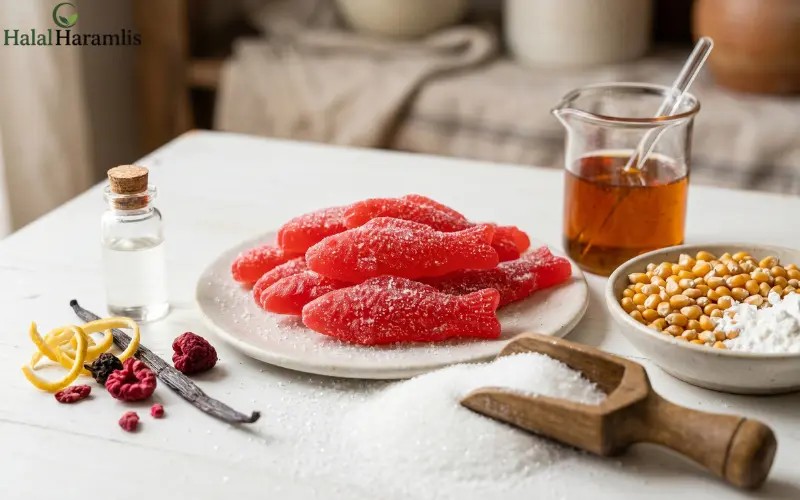
Common ingredients include:

  • Sugar
  • Corn syrup
  • Modified corn starch
  • Citric acid
  • Natural and artificial flavors
  • Mineral oil
  • Carnauba wax
  • Food colorings

Most of these ingredients are generally considered halal.

Ingredient Analysis Table

The main ingredient that sometimes raises questions is artificial flavoring because flavor ingredients may vary between manufacturers.

Why Do Muslims Question Swedish Fish?

Many Muslims ask about Swedish Fish because candy products often contain ingredients that may not be halal.

Common concerns include:

Gelatin

Many gummy candies use gelatin made from pork or non-halal cattle.

Fortunately, Swedish Fish generally do not contain gelatin.

Artificial Flavors

Some artificial flavors may use ingredients that require further verification.

Sugar Processing

Certain Muslims prefer checking whether sugar was processed using animal-derived filtration methods.

Cross-Contamination

A halal ingredient can become questionable if manufactured on equipment that also processes non-halal products.

Because of these concerns, Muslims often research candy products before consuming them.

Do Swedish Fish Contain Gelatin?

No, Swedish Fish are widely known for being gelatin-free.

This is one reason they are popular among:

  • Muslims
  • Vegetarians
  • Vegans
  • People avoiding pork products

Swedish Fish vs Regular Gummies

Because Swedish Fish do not use gelatin, they are often considered a better option for halal-conscious consumers.

Do Swedish Fish Contain Alcohol?

There is no obvious alcohol ingredient listed in most Swedish Fish products.

However, Muslims sometimes ask whether flavorings contain alcohol during manufacturing.

In most cases:

  • No alcohol is listed on the label.
  • Flavoring sources are not always fully disclosed.
  • Most consumers consider Swedish Fish acceptable.

Those seeking maximum certainty may contact the manufacturer directly.

Swedish Fish Halal UK / USA

Is Swedish Fish Halal or Haram (2026)

One of the most common questions is whether Swedish Fish are halal in different countries.

The answer is generally similar because the core formula remains largely gelatin-free.

Country Comparison Table

Is Swedish Fish Halal in USA?

Most Swedish Fish sold in the USA are considered halal-friendly because they do not contain gelatin or pork ingredients.

However, Muslims should still review ingredient labels because manufacturers can change formulas.

Is Swedish Fish Halal in UK?

The UK versions are generally similar and are often regarded as halal by many consumers.

Checking the packaging remains the safest approach.

Islamic Perspective on Swedish Fish

Islam teaches Muslims to consume foods that are lawful and pure.

Scholars generally evaluate products by examining:

  • Ingredient sources
  • Manufacturing methods
  • Presence of intoxicants
  • Animal-derived ingredients

Since Swedish Fish are generally:

  • Gelatin-free
  • Pork-free
  • Non-intoxicating

Many Muslims view them as permissible.

However, some Muslims prefer products with official halal certification for additional confidence.

How to Verify Whether Swedish Fish Are Halal

Follow these simple steps:

Check the Ingredient List

Look for:

  • Gelatin
  • Alcohol-based ingredients
  • Animal-derived additives

Look for Halal Certification

A halal logo can provide additional reassurance.

Contact the Manufacturer

Ask about:

  • Flavor sources
  • Production methods
  • Cross-contamination policies

Stay Updated

Recipes can change over time. Always review the latest packaging.

Halal Alternatives to Swedish Fish

If you prefer certified halal candy, consider these alternatives.

Halal Alternatives Table

These products may provide additional peace of mind for Muslims seeking certified options.

Tips for Muslim Consumers

When buying candies:

  • Read labels carefully.
  • Look for halal certification.
  • Avoid products with unclear ingredients.
  • Stay updated on recipe changes.
  • Contact manufacturers when necessary.
  • Compare products across countries.

These habits can help Muslims make informed choices.

See Also

FAQs

Is Swedish Fish Halal?

Yes, Swedish Fish are generally considered halal because they do not contain gelatin.

Are Swedish Fish Halal 2026?

Most versions remain generally halal-friendly in 2026.

Do Swedish Fish Contain Pork?

No, Swedish Fish do not normally contain pork.

Is Swedish Fish Candy Halal?

Many Muslims consider Swedish Fish candy halal due to its gelatin-free recipe.

Do Swedish Fish Contain Gelatin?

No, Swedish Fish are generally gelatin-free.

Is Swedish Fish Halal in USA?

Most Swedish Fish sold in the USA are considered halal-friendly.

Is Swedish Fish Halal in UK?

The UK versions are generally regarded as halal by many consumers.

Do Swedish Fish Contain Alcohol?

No obvious alcohol ingredient is typically listed.

Are Swedish Fish Vegetarian?

Yes, they are generally suitable for vegetarians.

Are Swedish Fish Vegan?

Many versions are considered vegan-friendly because they do not contain gelatin.

Why Do Muslims Question Swedish Fish?

Muslims often check candies for gelatin, alcohol, and animal-derived ingredients.

Should Muslims Check the Ingredients Every Time?

Yes. Manufacturers can change recipes, so checking labels is always recommended.

Conclusion

So, Is Swedish Fish Halal or Haram? (2026) The answer is that Swedish Fish are generally considered halal by many Muslims because they do not contain pork gelatin and are usually made with plant-based ingredients.

The biggest reason Swedish Fish receive a positive halal assessment is their gelatin-free formula. Unlike many gummy candies that use animal-derived gelatin, Swedish Fish rely on other ingredients to create their chewy texture.

Still, Muslims should remember that halal decisions can depend on ingredient sourcing, flavoring methods, manufacturing practices, and personal levels of caution. While many consumers view Swedish Fish as halal-friendly, reviewing ingredient labels and looking for halal certification remains the best approach.

Overall, if you are asking “Is Swedish Fish Candy Halal? 2026 Update”, the candy is generally considered halal by many Muslims, but verifying the latest ingredient information is always a wise choice.

Is Catfish Halal or Haram (2026)

Is Catfish Halal or Haram? (2026)

Is Catfish Halal or Haram? Catfish is generally considered halal and is widely consumed in many countries around the world. However, some people question its permissibility because of its feeding habits and bottom-dwelling nature. These concerns have led many individuals to search for answers to questions such as “Is Catfish Halal” and “why is catfish haram.” Understanding what catfish is, how it lives, and why opinions differ can help clear up much of the confusion surrounding this popular fish.

Catfish is one of the most popular freshwater fish consumed in many parts of the world. Its mild flavor, affordability, and versatility make it a common choice in homes and restaurants alike. However, many people still ask questions such as “Is Catfish Halal or Haram?” and “Is Catfish Halal?” before adding it to their diet.

The confusion often comes from the fish’s feeding habits and bottom-dwelling behavior. As a result, some individuals search for “why is catfish haram” to understand the concerns surrounding its consumption. This article explores the facts about catfish, the reasons behind the debate, its nutritional value, and other important information to help readers make an informed decision.

What Is Catfish?

Catfish is a type of fish recognized by the whisker-like barbels around its mouth. These barbels help the fish locate food, especially in muddy or low-visibility water. The fish gets its name because these barbels resemble the whiskers of a cat.

There are hundreds of catfish species found across the world. Some species live in freshwater environments such as rivers, lakes, ponds, and reservoirs, while others can survive in saltwater habitats. Catfish are highly adaptable and can thrive in a variety of aquatic conditions.

Because of its mild taste and tender texture, catfish is commonly used in fried, grilled, baked, steamed, and stewed dishes. It is also a popular choice for fish tacos, sandwiches, curries, and soups.

Common Characteristics of Catfish

Types of Catfish

Some of the most common catfish varieties include:

  • Channel Catfish
  • Blue Catfish
  • Flathead Catfish
  • Walking Catfish
  • African Catfish
  • Mekong Giant Catfish

Each species differs in size, habitat, and feeding behavior, but they all belong to the catfish family.

Is Catfish Halal?

The question “Is Catfish Halal?” is frequently searched by people who want to better understand different seafood options.

Catfish is generally classified as a fish and is commonly accepted as halal by many consumers worldwide. Since it spends its life in water and belongs to the fish family, it is often grouped alongside other popular seafood choices such as salmon, tuna, cod, and tilapia.

Its widespread availability in seafood markets and restaurants has contributed to its popularity among people looking for affordable and nutritious fish options. Catfish farming has also increased significantly over the years, making it one of the most accessible fish products in many countries.

For many consumers, catfish is simply viewed as another fish species that can be included in a balanced diet. However, questions continue to arise because of certain characteristics associated with the fish.

Why Do Some People Ask “Why Is Catfish Haram?”

Many individuals search for “why is catfish haram” because they have heard concerns regarding the fish’s feeding behavior or living environment.

In most cases, these concerns are based on observations about the fish rather than its classification.

Feeding Habits

Catfish eat a variety of foods, including:

  • Aquatic plants
  • Insects
  • Small fish
  • Algae
  • Organic matter found in water
  • Crustaceans
  • Worms

Because catfish can consume different types of food, some people become uncertain about whether it should be eaten.

Bottom-Dwelling Behavior

Catfish spend much of their time near the bottom of lakes, rivers, and ponds. They often search for food in areas where organic material accumulates.

Some people associate bottom-feeding fish with scavenging behavior, which often leads to questions about their suitability as food.

Cultural Beliefs

In certain communities, catfish is avoided due to local traditions and food preferences rather than any universal dietary rule. Cultural habits can strongly influence how people view specific foods.

Appearance

The unusual appearance of catfish, particularly its whiskers and broad head, sometimes causes people to question whether it differs significantly from other fish species.

Lack of Information

Many people simply want clarification before consuming a food item they are unfamiliar with, leading them to search for information online.

Common Reasons Behind the Debate

Catfish Compared With Other Popular Fish

Many people compare catfish with other commonly consumed fish before deciding whether to include it in their meals.

Catfish is generally grouped with other popular fish species that are commonly sold around the world.

Comparison of Taste and Texture

Catfish is often preferred by people who enjoy fish with a mild flavor that can easily absorb seasonings and marinades.

Nutritional Benefits of Catfish

Apart from discussions about whether catfish is halal or haram, it is also valued for its nutritional profile.

High in Protein

Catfish contains quality protein that supports:

  • Muscle growth
  • Tissue repair
  • Daily body functions
  • Recovery after physical activity

Low in Calories

Many catfish varieties are relatively low in calories, making them suitable for balanced meal plans and weight-conscious diets.

Rich in Important Nutrients

Supports a Balanced Diet

Catfish can be included in a healthy eating plan when prepared using nutritious cooking methods such as grilling, baking, steaming, or air frying.

Farm-Raised vs Wild Catfish

Consumers often compare farm-raised and wild catfish before making a purchase.

Farm-Raised Catfish

Benefits include:

  • Consistent quality
  • Controlled feeding
  • Reliable availability
  • Predictable size

Wild Catfish

Benefits include:

  • Natural habitat
  • Diverse diet
  • Distinct flavor
  • Greater variety

Comparison Table

How Catfish Is Commonly Prepared

Catfish is one of the most versatile fish available and can be cooked in numerous ways.

Popular preparation methods include:

  • Fried catfish
  • Grilled catfish
  • Baked catfish
  • Smoked catfish
  • Catfish curry
  • Catfish stew
  • Air-fried catfish

The mild flavor of catfish allows it to pair well with herbs, spices, vegetables, and sauces.

Factors to Consider Before Eating Catfish

When purchasing catfish, consider the following factors.

Freshness

Look for fish that has:

  • Firm flesh
  • Clear appearance
  • Mild smell
  • Proper packaging

Source

Knowing where the fish comes from can help you assess quality and freshness.

Storage

Proper refrigeration helps maintain freshness and food safety.

Cooking Method

Popular preparation methods include:

  • Grilling
  • Baking
  • Steaming
  • Air frying

Sustainability

Some consumers prefer catfish sourced from farms or fisheries that follow responsible environmental practices.

See Also

FAQs

Is Catfish Halal or Haram?

Catfish is generally considered halal and is commonly consumed in many parts of the world.

Is Catfish Halal?

Yes, catfish is widely regarded as a halal seafood option by many consumers.

Why Is Catfish Haram According to Some People?

Some people question catfish because of its feeding habits, bottom-dwelling behavior, appearance, or local traditions.

Is Farm-Raised Catfish Different From Wild Catfish?

Yes. Farm-raised catfish are raised in controlled environments, while wild catfish live in natural waterways.

Is Catfish Healthy?

Catfish contains protein, vitamins, minerals, and beneficial fatty acids that can support a balanced diet.

What Does Catfish Taste Like?

Catfish has a mild flavor and tender texture, making it suitable for a variety of recipes.

Is Catfish a Freshwater Fish?

Most catfish species live in freshwater environments, although some species can tolerate saltwater conditions.

Why Is Catfish So Popular?

Catfish is popular because it is affordable, widely available, easy to cook, and has a mild flavor.

Does Catfish Have a Strong Fishy Taste?

No. Catfish generally has a mild taste compared to many other seafood options.

Can Catfish Be Grilled?

Yes. Grilling is one of the most popular ways to prepare catfish.

Is Catfish High in Protein?

Yes. Catfish is an excellent source of protein and can help support muscle maintenance and overall health.

What Nutrients Are Found in Catfish?

Catfish contains protein, vitamin B12, selenium, phosphorus, vitamin D, and omega fatty acids.

Conclusion

The question “Is Catfish Halal or Haram?” continues to attract attention because many consumers want to make informed food choices. Catfish is widely consumed around the world and is generally regarded as a popular seafood option. While concerns about feeding habits and bottom-dwelling behavior often lead people to search for “why is catfish haram,” catfish remains one of the most commonly eaten fish species globally.

Understanding its characteristics, habitat, nutritional benefits, and the reasons behind the debate can help individuals make a more informed decision. Whether farm-raised or wild-caught, catfish continues to be a widely available and nutritious seafood choice enjoyed by millions of people across different cultures and regions.

Is Pectin Halal or Haram

Is Pectin Halal or Haram?

Is Pectin Halal or Haram? In most cases, pectin is halal because it is usually made from fruits such as apples, citrus peels, and other plant sources. Since pectin is generally plant-based, most Islamic scholars consider it permissible for Muslims to consume.

However, the pectin halal status 2026 may still depend on manufacturing processes, additives, and whether the final product contains any non-halal ingredients. Checking halal certification is always recommended.

Is Pectin Halal or Haram?” because pectin is commonly found in jams, candies, yogurts, desserts, medicines, and many packaged foods. Since pectin is often used as a thickening or gelling agent, consumers want to know whether it is suitable for a halal diet.

The good news is that pectin is usually extracted from fruits, making it different from gelatin, which may come from animal sources. Still, understanding Pectin Halal or Haram requires looking at its ingredients, production process, and possible halal concerns. This guide covers everything Muslims need to know about pectin halal status in 2026.

Pectin has become increasingly popular in the food industry because it helps improve texture and consistency in many products. As more Muslims pay attention to ingredient labels, questions about food additives continue to grow. Fortunately, pectin is one of the ingredients that is generally viewed positively from a halal perspective due to its plant-based origin.

What Is Pectin?

Pectin is a natural fiber found in the cell walls of fruits. Food manufacturers extract it mainly from:

  • Apples
  • Citrus fruits
  • Oranges
  • Lemons
  • Limes
  • Grapefruits

Pectin is widely used as a thickener, stabilizer, and gelling agent in foods.

Common products containing pectin include:

  • Fruit jams
  • Jellies
  • Gummies
  • Yogurts
  • Ice creams
  • Fruit fillings
  • Medicines
  • Dietary supplements

Because it comes from fruits, pectin is generally considered one of the safest food additives for halal-conscious consumers.

Pectin plays an important role in food production. Without it, many jams and jellies would not have their familiar texture. It helps liquids become thicker and creates the gel-like consistency that consumers expect in many fruit-based products.

Quick Answer Table

QuestionAnswer
Is Pectin Halal?Usually Yes
Plant-Based Source?Yes
Contains Pork?No
Contains Alcohol?Generally No
Suitable for Muslims?Usually Yes
Halal Certification Needed?Recommended

Is Pectin Halal?

Yes, pectin is generally halal.

Most commercial pectin is derived from fruit peels and fruit pulp. Since fruits are naturally halal, the resulting pectin is usually halal as well.

Islamic scholars generally permit ingredients that:

  • Come from halal plant sources
  • Are free from haram additives
  • Are not contaminated during production

Therefore, pectin itself is typically considered halal.

The majority of halal certification organizations around the world also recognize fruit-derived pectin as a halal ingredient. This is one reason why pectin is commonly used in halal-certified foods and beverages.

However, Muslims should remember that while pectin itself may be halal, the final product containing pectin may include other ingredients that require verification.

Ingredient Analysis

Is Pectin Halal or Haram

How Pectin Is Made

Manufacturers usually follow these steps:

  1. Collect fruit peels.
  2. Extract natural pectin using water and acid.
  3. Filter and purify the extract.
  4. Dry it into powder form.
  5. Package it for food production.

Because the source is usually fruit, the process rarely raises major halal concerns.

The extraction process is designed to isolate the natural pectin found in fruit skins and pulp. Citrus peels are among the most common sources because they contain high amounts of pectin and are readily available as by-products of juice production.

Ingredient Analysis Table

Ingredient ComponentHalal StatusNotes
Apple PectinHalalPlant source
Citrus PectinHalalPlant source
Lemon PectinHalalPlant source
Orange PectinHalalPlant source
Fruit FiberHalalNatural source

Additional Ingredient Considerations

Although pectin itself is usually halal, some products containing pectin may also include:

  • Artificial flavors
  • Preservatives
  • Colorings
  • Sweeteners
  • Stabilizers

These ingredients should be reviewed separately because the halal status of the final product depends on all ingredients combined.

Why Do Muslims Question Pectin?

Many Muslims confuse pectin with gelatin.

Gelatin often comes from:

  • Pork
  • Non-halal cattle
  • Mixed animal sources

Pectin is different because it comes mainly from fruits.

However, Muslims may still question pectin because:

  • Ingredient labels are sometimes unclear.
  • Manufacturing methods vary.
  • Some products contain multiple additives.
  • Cross-contamination may occur.
  • Imported products may follow different standards.

This is why checking halal certification remains important.

Another reason for confusion is that pectin and gelatin often perform similar functions in food products. Both can create a gel-like texture, which leads some consumers to assume they are the same ingredient. In reality, their sources are completely different.

Does Pectin Contain Gelatin?

Normally, pectin does not contain gelatin.

These are completely different ingredients.

Pectin vs Gelatin Table

FeaturePectinGelatin
SourceFruitsAnimals
Vegan FriendlyYesNo
Usually HalalYesDepends
Pork RiskNoPossible
Plant BasedYesNo

Therefore, pectin is often preferred by Muslims and vegetarians.

Many candy manufacturers now use pectin instead of gelatin to appeal to a wider audience, including Muslims, vegetarians, and vegans. Products labeled as vegan often use pectin because it provides similar texture benefits without animal ingredients.

Does Pectin Contain Alcohol?

Pectin itself does not normally contain alcohol.

The extraction process generally uses fruit materials and food-grade processing methods.

However, Muslims should check:

  • Flavored products
  • Medicines
  • Supplements
  • Candy products

Sometimes alcohol may appear in other ingredients rather than the pectin itself.

Alcohol Concern Table

Product TypeAlcohol Risk
Pure Pectin PowderVery Low
Jam ProductsLow
GummiesLow
SupplementsMedium
MedicinesMedium

In most food applications, alcohol is not part of the pectin ingredient. Nevertheless, some flavored products may use alcohol-based flavor extracts, which is why reviewing the complete ingredient list remains important.

Country-Wise Halal Status

Is Pectin Halal or Haram

The halal status of pectin is generally similar worldwide because the ingredient is mostly fruit-derived.

Country Comparison Table

CountryPectin StatusNotes
USAUsually HalalCheck certification
UKUsually HalalCheck ingredients
CanadaUsually HalalVerify manufacturer
AustraliaUsually HalalReview labels
MalaysiaCommonly HalalStrong halal standards
UAECommonly HalalMany certified products

Is Pectin Halal in USA?

In the USA, most pectin products are plant-based and generally halal. However, Muslims should still review ingredient labels and halal certifications.

Many American food companies use citrus or apple pectin. Products carrying halal certification provide additional confidence for Muslim consumers.

Is Pectin Halal in UK?

In the UK, pectin is usually extracted from fruits and is generally considered halal. Certified halal products provide additional assurance.

The UK also has many halal certification organizations that help consumers identify suitable products.

Is Pectin Halal in Malaysia?

Malaysia has one of the strongest halal certification systems in the world. Most pectin used in certified products is carefully reviewed to ensure compliance with halal standards.

Islamic Perspective on Pectin

Islam encourages Muslims to consume foods that are lawful and pure.

Since pectin is generally:

  • Plant-based
  • Non-intoxicating
  • Free from animal sources

Most scholars view it as halal.

However, scholars also encourage Muslims to:

  • Read labels carefully.
  • Verify ingredients.
  • Choose certified halal products when possible.

The basic Islamic principle is that plant-based foods are permissible unless there is clear evidence showing otherwise. Since pectin comes from fruits, it falls within the category of ingredients that are generally accepted by scholars.

Different scholars may emphasize different levels of caution regarding processing methods, but the overall view remains that pectin itself is halal.

How to Verify Halal Status

Follow these simple steps:

Read the Ingredient List

Look for:

  • Pectin
  • Fruit pectin
  • Citrus pectin

Check Halal Certification

A halal logo provides additional confidence.

Contact the Manufacturer

Ask:

  • Source of pectin
  • Production process
  • Cross-contamination controls

Review Other Ingredients

Even if pectin is halal, the final product may contain:

  • Alcohol flavorings
  • Non-halal gelatin
  • Animal-derived additives

Use Trusted Halal Resources

Many halal organizations maintain databases of approved products. These resources can help consumers make informed decisions.

Popular Products That Use Pectin

Pectin is commonly found in:

  • Fruit jams
  • Jellies
  • Marmalades
  • Fruit candies
  • Yogurts
  • Ice creams
  • Baking products
  • Medicines

Most of these products use pectin as a natural thickener.

Pectin is especially popular in fruit spreads because it helps create a smooth texture while maintaining the natural flavor of the fruit. It is also commonly used in reduced-sugar products because it can help improve consistency.

Halal Alternatives to Pectin

Although pectin is generally halal, some people seek alternatives.

Halal Alternatives Table

AlternativeHalal StatusSource
Agar AgarHalalSeaweed
CarrageenanHalalSeaweed
Guar GumHalalPlant
Xanthan GumUsually HalalFermentation
Locust Bean GumHalalPlant

These alternatives are commonly used in food manufacturing and can provide similar thickening or stabilizing functions.

Tips for Muslims

When buying products containing pectin:

  • Read ingredient labels.
  • Choose trusted brands.
  • Look for halal certification.
  • Verify supplements and medicines.
  • Check imported products carefully.
  • Contact manufacturers when unsure.
  • Stay informed about ingredient updates.
  • Use reliable halal resources.

These simple steps can help Muslims make informed choices.

See Also

FAQs

Is Pectin Halal?

Yes, pectin is generally halal because it is usually derived from fruits.

Is Pectin Halal or Haram?

Most scholars consider pectin halal due to its plant-based source.

Does Pectin Contain Pork?

No, pectin does not normally contain pork.

Is Pectin Vegan?

Yes, pectin is usually vegan and plant-based.

Is Citrus Pectin Halal?

Yes, citrus pectin is generally halal.

Is Apple Pectin Halal?

Yes, apple pectin is normally halal.

Does Pectin Contain Gelatin?

No, pectin and gelatin are different ingredients.

Does Pectin Contain Alcohol?

Pure pectin generally does not contain alcohol.

Is Pectin Halal in USA?

Most pectin products in the USA are considered halal.

Is Pectin Halal in UK?

Yes, pectin is generally halal in the UK.

Why Do Muslims Ask About Pectin?

Many people confuse pectin with gelatin, which can sometimes come from non-halal animal sources.

What Is the Pectin Halal Status 2026?

The pectin halal status 2026 remains generally halal because commercial pectin continues to be derived primarily from fruits.

Conclusion

So, Is Pectin Halal or Haram? The answer is that pectin is generally considered halal because it is usually extracted from fruits such as apples and citrus peels. Unlike gelatin, pectin does not normally come from animal sources, making it suitable for most Muslims.

The pectin halal status 2026 remains positive, and most scholars regard pectin as permissible. Nevertheless, Muslims should remember that the halal status of a finished product depends on all ingredients, not just pectin. Flavorings, additives, preservatives, and manufacturing practices can sometimes introduce concerns.

Overall, pectin is one of the least controversial food additives from a halal perspective. Its plant-based origin, widespread use, and acceptance by halal certification bodies make it a preferred ingredient in many foods consumed by Muslims around the world.

For the greatest peace of mind, choose products with halal certification, read ingredient labels carefully, and contact manufacturers if needed. By taking these simple precautions, Muslims can confidently enjoy products containing pectin while remaining faithful to halal dietary guidelines.

Is Squid Halal or Haram

Is Squid Halal or Haram?

Yes, squid is generally considered halal by the majority of Islamic scholars. Since squid is a sea creature that lives entirely in the ocean, most scholars from the Maliki, Shafi’i, and Hanbali schools permit eating it. However, some Hanafi scholars have a stricter view on certain seafood, which is why Muslims often ask, “Is squid halal or haram?” In most cases, squid and calamari are considered halal as long as they are prepared with halal ingredients and are not mixed with alcohol or pork products.

Is squid halal or haram? This is a common question among Muslims who enjoy seafood but want to make sure their food follows Islamic dietary rules. Squid is a popular seafood served in many forms, including grilled squid, fried squid, and calamari, but its halal status can sometimes cause confusion because it is not a traditional fish.

The good news is that the majority of Islamic scholars consider squid halal because it comes from the sea and falls under the general permissibility of seafood in Islam. However, differences of opinion among scholars and concerns about restaurant preparation methods make it important to understand the issue in detail.

What Is Squid?

Squid is a marine animal belonging to the cephalopod family. It has a soft body, tentacles, and lives in oceans around the world. Squid is commonly consumed in many countries and is often served as:

  • Calamari rings
  • Fried squid
  • Grilled squid
  • Stuffed squid
  • Seafood pasta
  • Asian seafood dishes

Squid is rich in protein and is considered a nutritious seafood option.

Islamic Ruling on Seafood

Allah says in the Quran:

“Lawful to you is game from the sea and its food as provision for you and the travelers.”

This verse is often cited by scholars when discussing seafood.

Many scholars understand this verse as a general permission for sea creatures, while others apply certain restrictions based on their school of thought.

Scholarly Opinions on Squid

Majority Opinion (Maliki, Shafi’i, and Hanbali)

The majority of scholars believe:

  • All sea creatures are halal.
  • Squid lives entirely in water.
  • Squid falls under permissible seafood.
  • No specific evidence prohibits squid.

Therefore, squid is considered halal.

Hanafi Opinion

Some Hanafi scholars hold that:

  • Only fish are fully permissible seafood.
  • Squid is not technically classified as a fish.
  • Therefore, squid may be considered makruh or impermissible according to some Hanafi interpretations.

However, modern Hanafi scholars may differ in their views.

Halal Status by School of Thought

Why Do Most Scholars Consider Squid Halal?

Is Squid Halal or Haram

Several reasons support the permissibility of squid:

1. It Is a Sea Creature

Squid spends its entire life in water.

2. Quranic Permission

The Quran broadly permits seafood.

3. No Explicit Prohibition

There is no direct Islamic text prohibiting squid.

4. Historical Scholarship

Many classical scholars accepted marine animals as halal.

Squid Ingredients Analysis

Fresh squid itself contains only one ingredient:

However, processed squid products may contain additional ingredients.

Ingredients That Can Affect Halal Status

When buying squid products, check for:

  • Alcohol-based flavorings
  • Non-halal seasonings
  • Pork-derived additives
  • Animal fats
  • Non-halal sauces

The squid itself may be halal, but added ingredients can change the ruling.

Common Squid Product Ingredients

Is Calamari Halal?

Many people ask whether calamari is halal.

Calamari is simply a culinary term for squid dishes, especially fried squid rings.

Therefore:

  • If squid is halal according to your scholarly view, calamari is generally halal.
  • The coating, seasoning, and frying process must also be halal.

Is Fried Squid Halal?

Fried squid is usually halal if:

  • The squid itself is halal.
  • It is cooked in halal oil.
  • It is not fried with pork products.
  • The batter does not contain haram ingredients.

Cross-contamination is important to consider, especially in restaurants.

Is Squid Halal in the USA?

Yes, generally.

Squid sold in the United States is usually seafood-grade squid without prohibited ingredients.

However, Muslims should verify:

  • Restaurant preparation methods.
  • Shared fryers.
  • Alcohol-containing sauces.
  • Halal certification when available.

Is Squid Halal in the USA?

Is Squid Halal in the UK?

Yes, generally.

Squid available in UK supermarkets is typically halal in its natural form.

Consumers should check:

  • Ingredient labels
  • Marinades
  • Flavorings
  • Restaurant cooking methods

Many UK seafood products contain only squid and basic seasonings.

Squid and Cross-Contamination

Is Squid Halal or Haram

Even when squid is halal, contamination can occur through:

  • Shared cooking surfaces
  • Shared fryers
  • Pork products
  • Non-halal meats
  • Alcohol-based marinades

Muslims concerned about strict halal compliance should ask restaurants about preparation practices.

Nutritional Benefits of Squid

Squid is not only considered halal by many scholars but is also nutritious.

Benefits include:

  • High protein content
  • Low carbohydrates
  • Vitamin B12
  • Selenium
  • Copper
  • Omega-3 fatty acids

Nutritional Benefits of Squid

Can Muslims Eat Squid at Restaurants?

Yes, but it is wise to check:

  1. Is the squid cooked separately?
  2. Are alcohol-based sauces used?
  3. Is the fryer shared with non-halal foods?
  4. Are ingredients clearly listed?

These questions help ensure halal compliance.

Difference Between Squid and Other Seafood

Many Muslims compare squid with other seafood.

Some schools may differ on specific creatures.

Common Misconceptions About Squid

Squid Is Haram Because It Is Not a Fish

Many scholars allow all sea creatures, not just fish.

Squid Must Be Slaughtered

Seafood generally does not require slaughter like land animals.

All Calamari Is Halal

Preparation methods and ingredients matter.

Squid Is Mentioned as Haram

No authentic Islamic text specifically prohibits squid.

When Could Squid Become Haram?

Squid may become haram if:

  • Cooked with pork.
  • Mixed with non-halal meat.
  • Prepared using alcohol-based ingredients.
  • Contaminated through cooking processes.

The issue is often the preparation rather than the squid itself.

Best Halal Alternatives to Squid

If you prefer other seafood options:

  • Halal-certified fish
  • Salmon
  • Tuna
  • Cod
  • Haddock
  • Halal shrimp
  • Halal prawns

These are widely accepted by scholars.

See Also

FAQs

Is squid halal or haram?

The majority of Islamic scholars consider squid halal.

Is squid halal in Islam?

Yes, according to most scholars and schools of Islamic jurisprudence.

Is squid halal in the USA?

Generally yes, provided no haram ingredients are added.

Is squid halal in the UK?

Generally yes, if prepared using halal ingredients.

Is calamari halal?

Usually yes, because calamari is squid.

Can Hanafi Muslims eat squid?

There are differing opinions among Hanafi scholars.

Does squid need Islamic slaughter?

No, seafood generally does not require slaughter.

Is fried squid halal?

Yes, if cooked using halal ingredients and methods.

Can squid become haram?

Yes, if mixed with pork, alcohol, or non-halal ingredients.

Is frozen squid halal?

Usually yes if no prohibited additives are included.

Is grilled squid halal?

Generally yes when halal seasonings are used.

Is squid healthier than some meats?

Squid is high in protein and contains beneficial nutrients.

Conclusion

Squid is generally considered halal by the majority of Islamic scholars, including those from the Maliki, Shafi’i, and Hanbali schools of thought. Because squid is a marine creature that lives entirely in the sea, many scholars include it within the broad Quranic permission for seafood. As a result, most Muslims around the world consume squid and calamari without concern.

However, there is a difference of opinion within some Hanafi interpretations, where only fish are considered fully permissible seafood. Muslims who follow Hanafi rulings closely may wish to consult a trusted scholar for guidance based on their specific school of thought.

In practical terms, the biggest halal concern is usually not the squid itself but how it is prepared. Alcohol-based sauces, pork-derived ingredients, and cross-contamination in restaurants can affect the halal status of a squid dish. Therefore, checking ingredient labels and asking about preparation methods remains important.

For most Muslims, fresh squid, frozen squid, and properly prepared calamari are considered halal choices. When prepared with halal ingredients and cooked separately from haram foods, squid can be enjoyed as a nutritious and protein-rich seafood option while remaining consistent with Islamic dietary guidelines.

Are Pop Tarts Halal or Haram

Are Pop Tarts Halal or Haram?

Pop-Tarts are generally considered Haram or not fully Halal in most cases because many flavors contain gelatin, alcohol-based flavorings, or non-halal enzymes, and they are not officially halal-certified in most countries. However, some flavors may be accidentally suitable but still not certified halal, so caution is needed.

 If you are wondering “Are Pop Tarts Halal or Haram?”, the simple concern is whether these popular toaster pastries are safe for a halal diet. The quick reality is that most Pop-Tarts available in the USA, UK, and other countries are not officially halal-certified, which makes them questionable for Muslim consumers.

Pop-Tarts are widely eaten as a quick breakfast snack, but their ingredients vary by flavor and region. Many versions may include gelatin (from animal sources), emulsifiers, and flavoring agents that can contain alcohol or non-halal derivatives. Because of this uncertainty, Islamic dietary guidelines generally classify them as haram or doubtful (shubha) unless verified halal certification is clearly shown on the packaging.

What Are Pop-Tarts?

Pop-Tarts are toaster pastries produced by Kellogg’s (now Kellanova). They consist of:

  • A baked pastry crust
  • Sweet fruit or dessert filling
  • Frosting on many varieties
  • Sprinkles or toppings on some flavors

They are commonly eaten as:

Popular flavors include:

Because each flavor uses different ingredients, the halal status can vary significantly.

Are Pop-Tarts Halal or Haram?

Overall Verdict

The biggest concern is that Pop-Tarts are generally not halal-certified, and some flavors contain ingredients that may come from non-halal animal sources.

Why Muslims Question Pop-Tarts

Many Muslims assume Pop-Tarts are halal because they look like simple pastries.

However, several ingredients create concerns:

  • Gelatin
  • Artificial flavors
  • Emulsifiers
  • Food colorings
  • Frosting ingredients
  • Cross-contamination risks

This is why the question “Are Pop-Tarts halal or haram?” continues to be searched by Muslims worldwide.

History of Pop-Tarts

Pop-Tarts were introduced in the 1960s and quickly became one of America’s favorite breakfast products.

Originally, only a few flavors existed:

  • Strawberry
  • Blueberry
  • Brown Sugar Cinnamon

Over time, hundreds of limited-edition flavors were released.

Today Pop-Tarts are sold in:

  • USA
  • UK
  • Canada
  • Australia
  • Europe
  • Many international markets

As ingredients changed over the years, halal concerns increased.

How Are Pop-Tarts Made?

The production process includes:

  1. Mixing dough ingredients
  2. Preparing fillings
  3. Filling pastry shells
  4. Baking
  5. Applying frosting
  6. Adding toppings
  7. Packaging

The frosting and filling stages are where many questionable ingredients may be introduced.

Gelatin in Pop-Tarts Halal Analysis

One of the biggest concerns is gelatin.

What Is Gelatin?

Are Pop Tarts Halal or Haram

Gelatin is a protein derived from animal collagen.

It is commonly produced from:

  • Pork skin
  • Beef bones
  • Animal tissues
  • Fish sources

It is widely used in food products because it helps create texture and stability.

Is Gelatin in Pop-Tarts Halal?

The answer depends entirely on the source.

Since most Pop-Tarts do not publicly specify halal gelatin sources, many Muslims choose caution.

Why Gelatin Creates a Problem

Islam requires that animal-derived ingredients come from halal sources.

For gelatin to be halal:

  • The animal must be halal
  • The animal must be slaughtered according to Islamic rules
  • Processing must remain halal

If these conditions are not met, gelatin becomes haram.

Do All Pop-Tarts Contain Gelatin?

No.

Some flavors contain gelatin while others may not.

However:

  • Recipes change regularly
  • Ingredients differ by country
  • New flavors may contain additional additives

Therefore, Muslims should never assume all Pop-Tarts have the same halal status.

Strawberry Pop-Tarts Halal or Haram?

One of the most searched questions is:

Are Strawberry Pop-Tarts Halal or Haram?

The answer is not completely straightforward.

Positive Factors

Strawberry filling generally contains:

  • Strawberries
  • Sugar
  • Corn syrup
  • Food starches

These ingredients are usually halal.

Concerns

The concerns may include:

  • Frosting ingredients
  • Artificial flavors
  • Possible emulsifiers
  • Manufacturing processes

Strawberry Pop-Tarts Halal Status

Because there is usually no halal certification, many Muslims classify Strawberry Pop-Tarts as doubtful rather than clearly halal.

Pop-Tarts Ingredients Halal Analysis

Let’s examine common ingredients.

Most ingredients appear halal, but a few key ingredients create uncertainty.

Artificial Flavors in Pop-Tarts

Artificial flavors can be complicated.

Some flavorings may use:

  • Alcohol carriers
  • Animal-derived compounds
  • Synthetic ingredients

Not every artificial flavor is haram, but their sources are often undisclosed.

This is why some scholars classify them as doubtful when information is unavailable.

Are Frosted Pop-Tarts Halal?

Are Pop Tarts Halal or Haram

Frosted varieties create additional concerns.

Frosting may contain:

  • Emulsifiers
  • Artificial flavorings
  • Gelatin-based ingredients
  • Decorative toppings

Therefore, frosted varieties often require more investigation than unfrosted versions.

Frosted vs Unfrosted Pop-Tarts

Generally speaking, unfrosted varieties are often safer choices.

Are Pop-Tarts Halal in the USA?

Many Muslims ask:

Are Pop-Tarts Halal USA?

In the United States:

  • Pop-Tarts are not marketed as halal-certified
  • Ingredient sourcing varies
  • Some flavors contain questionable ingredients

USA Halal Concerns

As a result, many American Muslims avoid questionable flavors.

Are Pop-Tarts Halal in the UK?

UK formulations sometimes differ from American products.

However:

  • Most UK Pop-Tarts are not halal-certified
  • Ingredients should still be checked
  • Certain flavors may have different recipes

Never assume USA and UK versions are identical.

USA vs UK Pop-Tarts Comparison

Cross-Contamination Concerns

Even if ingredients appear halal, manufacturing facilities may process:

  • Non-halal products
  • Animal-derived ingredients
  • Dairy and meat products

This creates cross-contamination concerns for stricter Muslims.

What Do Islamic Scholars Say?

Islamic scholars generally divide foods into three categories:

Many Pop-Tarts fall into the third category because ingredient sources are not always fully disclosed.

Hadith About Doubtful Matters

In both Sahih al-Bukhari and Sahih Muslim, the Prophet Muhammad ﷺ taught:

“Whoever avoids doubtful matters protects his religion and honor.”

This principle is often applied to products with uncertain ingredient sources.

Can Muslims Eat Pop-Tarts?

The answer depends on:

  • The specific flavor
  • The ingredient list
  • Personal level of caution
  • Scholarly opinion followed

Some Muslims eat gelatin-free flavors.

Others avoid all Pop-Tarts because there is no halal certification.

Ingredients Muslims Should Watch For

Always check for:

These ingredients often require further investigation.

Best Halal Alternatives to Pop-Tarts

If you prefer safer options, consider:

These options provide greater confidence for Muslim consumers.

Why Many Muslims Avoid Pop-Tarts

The main reasons include:

  • No halal certification
  • Possible gelatin
  • Artificial flavor concerns
  • Unknown ingredient sourcing
  • Cross-contamination concerns

For many Muslims, avoiding doubtful foods provides peace of mind.

Are Pop-Tarts Vegetarian?

Not always.

Some flavors may contain:

  • Gelatin
  • Animal-derived ingredients

Therefore, not all Pop-Tarts are vegetarian-friendly.

Are Pop-Tarts Kosher?

Some varieties may carry kosher certifications.

However, kosher does not automatically mean halal.

Muslims should still review ingredients carefully.

Country-Wise Halal Status

Final Verdict: Are Pop-Tarts Halal or Haram?

Final Answer

Overall, Pop-Tarts cannot generally be considered fully halal because some flavors contain gelatin and other questionable ingredients. Since Pop-Tarts are not typically halal-certified, Muslims should carefully examine ingredient labels and choose safer alternatives when possible.

See Also

FAQs

Are Pop-Tarts Halal?

Some flavors may be halal-friendly, but many are considered doubtful because of gelatin and ingredient concerns.

Does Gelatin in Pop-Tarts Make Them Haram?

If the gelatin comes from pork or non-halal animals, it is haram.

Are Strawberry Pop-Tarts Halal or Haram?

They may be halal-friendly if they do not contain questionable ingredients, but they are generally not halal-certified.

Do All Pop-Tarts Contain Gelatin?

No. Some flavors contain gelatin while others do not.

Are Pop-Tarts Halal in USA?

Most are not halal-certified and may contain doubtful ingredients.

Are Pop-Tarts Halal in UK?

They are generally not halal-certified, and ingredients should be checked individually.

Can Muslims Eat Frosted Pop-Tarts?

Only after verifying the ingredient list.

Are Unfrosted Pop-Tarts Better?

Generally yes, because they contain fewer questionable ingredients.

Do Pop-Tarts Contain Pork?

Some gelatin-containing varieties may potentially use non-halal sources.

Are Pop-Tarts Vegetarian?

Not all varieties are vegetarian.

What Is the Safest Alternative?

Halal-certified pastries and homemade fruit pastries.

Should Muslims Avoid Doubtful Foods?

Many scholars recommend avoiding doubtful foods whenever possible.

Conclusion

Pop-Tarts are one of the most popular toaster pastries in the world, but their halal status is not always clear. While many ingredients such as flour, sugar, fruit fillings, and vegetable oils are generally halal, concerns arise from gelatin, artificial flavorings, emulsifiers, and the lack of halal certification.

The biggest issue is that different flavors use different recipes. Some varieties may be relatively halal-friendly, while others contain ingredients that Muslims should avoid. This is especially true for marshmallow-flavored, heavily frosted, and dessert-inspired Pop-Tarts. Because ingredient formulas can change over time and vary by country, Muslims should always read labels carefully before purchasing.

If you strictly follow halal dietary rules, the safest choice is to select products with clear halal certification or choose halal-certified bakery alternatives. When ingredient sources remain uncertain, following the Islamic principle of avoiding doubtful matters can help ensure confidence in your food choices and keep your diet aligned with halal guidelines.