
Burger King is not halal worldwide, but it can be halal in certain countries depending on local suppliers, certification, and kitchen practices. In Muslim-majority regions, Burger King usually adapts its entire supply chain to meet halal requirements. However, in many Western countries the menu is not halal due to pork products, shared grills, alcohol-based ingredients, and lack of halal certification. This means the halal status of Burger King depends entirely on where you eat it.
The reason this question is confusing is simple: Burger King is not a single restaurant company operating one global kitchen. It is a massive franchise network where thousands of independent operators run restaurants under one brand name. Each country sources its own meat, follows local food laws, and chooses whether to pursue halal certification. Because of this, the halal answer changes from country to country and even from branch to branch.
Why This Question Is So Important Globally
Halal fast-food searches have exploded over the last decade. Millions of Muslims travel, study abroad, relocate for work, and interact daily with global food brands. Fast food is convenient, affordable, and everywhere. Naturally, people want to know whether they can eat at major chains without compromising their beliefs.
Burger King is one of the largest fast-food chains on Earth. When a brand is this global, halal confusion becomes inevitable. Many websites give a simple “yes” or “no,” but the real answer is far more detailed. This guide gives the most complete global explanation so readers can make informed decisions anywhere in the world.
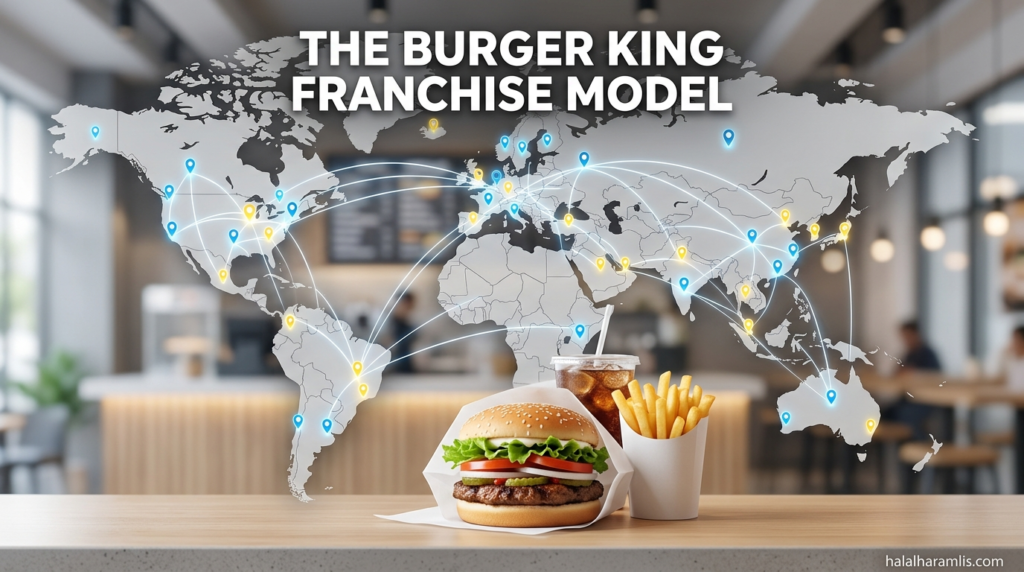
The Burger King Franchise Model
To understand halal status, you must first understand how the company operates.
Burger King follows a franchise business model. This means:
- The brand provides recipes, branding, and standards
- Independent companies operate restaurants locally
- Each region chooses its own suppliers
- Local food laws determine ingredient sourcing
This system allows Burger King to adapt to local cultures and regulations, but it also means food practices differ dramatically between countries.
Why This Matters for Halal Status
Because suppliers and kitchens differ, the halal status cannot be universal. A halal Burger King in one country does not automatically make Burger King halal everywhere else.
What Makes Fast Food Halal or Haram?
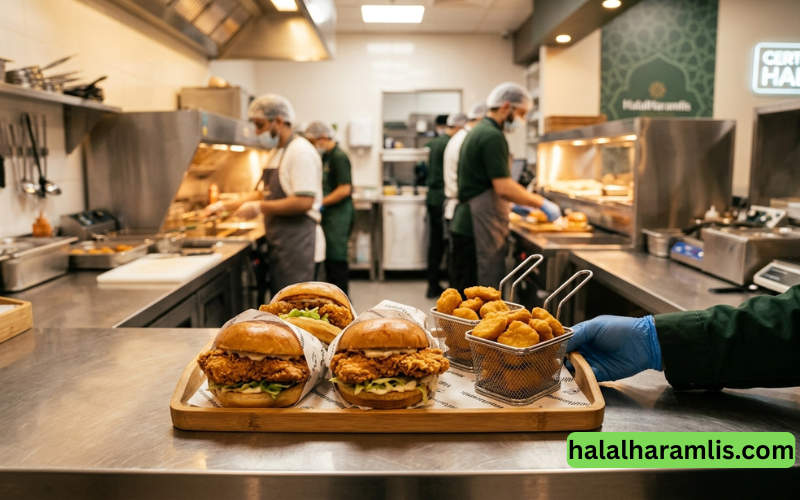
Many people assume halal simply means “no pork.” In reality, halal food involves several strict requirements.
Core Halal Requirements
- Animals must be slaughtered according to Islamic law
- Pork and pork derivatives must be completely avoided
- Alcohol ingredients must not be used
- Cross-contamination must be prevented
Fast-food kitchens are fast, busy, and highly industrialized, which makes maintaining these standards difficult.
Global Burger King Halal Categories
Burger King locations can be divided into three major categories.
Worldwide Halal Classification
| Category | Description | Halal Confidence |
| Fully Halal Countries | Entire supply chain halal certified | High |
| Partially Halal Countries | Some branches halal | Medium |
| Non-Halal Countries | No certification and pork present | Low |
Let’s explore each category in detail.
Fully Halal Burger King Countries
In Muslim-majority countries, halal compliance is often required by law or market demand. Burger King adapts its entire system in these regions.
What Changes in Halal Countries
- Halal-certified slaughterhouses supply meat
- Pork products are removed from the menu
- Halal certification bodies inspect suppliers
- Separate halal supply chains are created
These changes are not optional marketing decisions. They are essential for operating successfully in Muslim markets.
Examples of Fully Halal Regions
| Region Type | Typical Situation |
| Middle East | Fully halal menus and suppliers |
| Southeast Asia | Government halal certification |
| Some South Asian markets | Halal supply chains |
In these countries, Burger King menus are designed specifically for Muslim consumers.
Partially Halal Countries: The Confusing Middle Ground
Some countries offer halal options only in selected branches. This is where confusion is highest.
Why partial halal exists:
- Growing Muslim population
- Limited halal demand in certain cities
- Testing halal menus before expansion
The challenge is that not every branch follows the same standards.
Partial Halal Risks
| Issue | Why It Matters |
| Limited halal branches | Not all locations are certified |
| Shared kitchens | Cross-contamination risk |
| Inconsistent labeling | Hard to verify |
When traveling, always check the specific branch.
Non-Halal Countries
In many Western markets, Burger King does not offer halal meat.
Reasons include:
- Pork products are core menu items
- No legal halal requirement
- Shared cooking equipment
- No halal certification system
This makes most menu items unsuitable for halal diets.
Cross-Contamination: The Biggest Halal Concern
Even when meat is halal, cross-contamination can make food doubtful or haram.
Real Kitchen Scenarios
- Bacon cooked on the same grill as beef patties
- Fries cooked in shared oil
- Utensils reused across different meats
- Shared preparation surfaces
This is one of the most important factors scholars discuss when evaluating fast food.
Hidden Ingredients That Can Make Food Haram
Fast food often contains processed ingredients that customers cannot see. Cheese may use animal rennet, sauces can include alcohol-based flavorings, and bread may contain animal-derived emulsifiers. Even desserts sometimes use gelatin from pork or non-halal beef.
Because global fast-food supply chains are complex, these hidden additives make it difficult to assume halal status without clear certification or transparency from the restaurant.
Hidden Ingredients Risks
| Ingredient | Possible Concern |
| Cheese | May contain animal rennet |
| Sauces | Alcohol-based flavoring |
| Bread | Animal-derived emulsifiers |
| Desserts | Gelatin sources |
These ingredients are rarely visible to customers but are critical in halal decisions.
Fries seem vegetarian, but fryer systems matter.
Fries may be halal if:
- Cooked in dedicated oil
- No cross-frying with meat products
In non-halal countries, shared fryers often make fries doubtful.
Are Burger King Chicken Items Halal?
Chicken can be halal in certified regions but doubtful elsewhere.
Factors affecting chicken halal status:
- Slaughter method
- Supplier certification
- Fryer separation
Are Burger King Beef Burgers Halal?
Beef burgers are the most debated item.
Key concerns:
- Shared grills with bacon
- Unknown slaughter methods
- Cross-contamination
In Western countries, beef burgers are generally not halal.
Safest Menu Options When Unsure
When halal status is unclear, safer choices include:
- Vegetarian burgers
- Fish burgers (if separate fryer)
- Salads without dressing
- Coffee and soft drinks
These options reduce risk when certification is unavailable.
We hope you guys find this guide helpful ,here we have more for you:
- Is Jelly Halal or Haram?
- Is KFC Halal or Haram?
- Is Wingstop Halal or Haram?
- Are Takis Halal or Haram?
- Are Nerds Gummy Clusters Halal or Haram?
- Is Sushi Halal or Haram?
FAQs
Is Burger King halal worldwide?
No, halal status depends on the country and branch.
Is Burger King halal in Muslim countries?
Yes, usually fully halal.
Is Burger King halal in the USA?
No, it is not halal.
Are Burger King fries halal?
Depends on fryer separation.
Is Burger King chicken halal?
Only in certified regions.
Are Burger King burgers halal?
Only where halal meat is used.
Does Burger King serve pork?
Yes, in many Western countries.
Is Burger King cheese halal?
Sometimes doubtful due to rennet.
Is Burger King fish burger halal?
Often safer but check fryer use.
Do all branches follow the same rules?
No, franchise locations differ.
Can Muslims eat vegetarian items?
Usually the safest option.
How can I confirm halal status?
Check certification or ask the branch.
Conclusion
Burger King’s halal status depends entirely on geography. The global franchise system allows the brand to adapt to local cultures, laws, and consumer demand. In halal-focused regions, Burger King operates fully halal supply chains. In many Western countries, the presence of pork products, shared cooking equipment, and lack of certification make most menu items unsuitable for halal diets.
For Muslims living or traveling abroad, the best strategy is awareness. Understanding how global fast-food supply chains work empowers you to make confident, informed choices. Always verify local certification, ask questions when unsure, and remember that halal status is never universal for global restaurant chains.