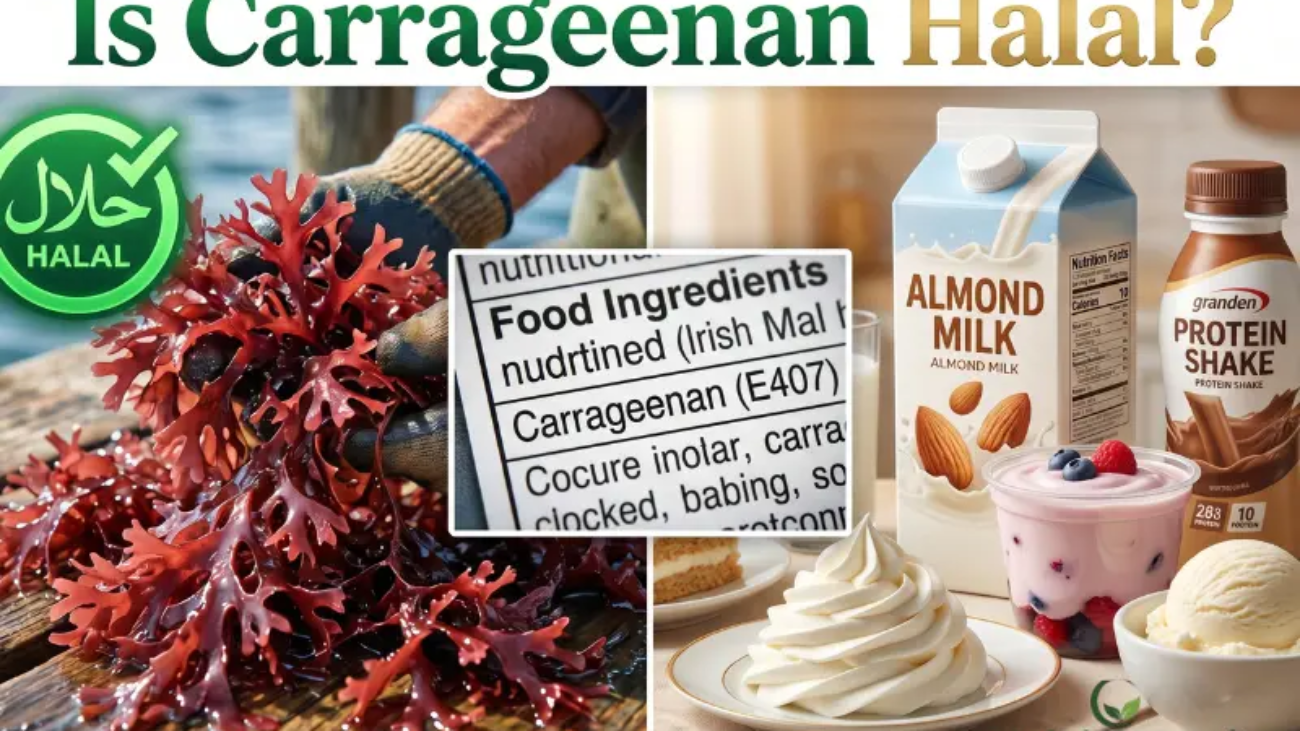
Is carrageenan halal or haram?
Carrageenan is generally halal because it is extracted from red seaweed, a plant-based marine source. It does not come from pork, meat, animal fat, or other non-halal ingredients. Most halal certification organizations consider carrageenan permissible for Muslim consumption.
However, Muslims should still check the entire ingredient list of a product. While carrageenan itself is usually halal, the food containing it may include other ingredients that are questionable or non-halal.
If you regularly buy food in the USA or UK, chances are you have consumed carrageenan many times without realizing it. It is commonly found in almond milk, chocolate milk, protein shakes, yogurt, ice cream, whipped cream, desserts, and many packaged foods. When reading labels, many Muslims notice unfamiliar ingredients like carrageenan and wonder whether they are halal or haram.
This concern is understandable because modern food products often contain additives with scientific names that do not clearly explain their source. Some additives come from plants, while others may come from animals or involve complicated manufacturing processes. The good news is that carrageenan is usually derived from seaweed and is widely regarded as a halal ingredient. Understanding how it is made and where it is used can help Muslims make informed choices when shopping for food.
Table : Ingredients Breakdown of Carrageenan
| Component | Purpose | Halal Status |
| Red Seaweed | Main source | Halal |
| Water | Extraction process | Halal |
| Potassium Salts | Stabilization | Generally Halal |
| Sodium Salts | Processing aid | Generally Halal |
| Plant-Based Compounds | Texture support | Halal |
| Food Grade Minerals | Manufacturing | Usually Halal |
| Processing Aids | Production support | Requires verification |
What Is Carrageenan?
Carrageenan is a natural food additive extracted from certain types of red seaweed found in coastal waters around the world.
Food manufacturers use carrageenan because it acts as:
- A thickener
- A stabilizer
- A gelling agent
- A texture enhancer
Without carrageenan, many products would separate, become watery, or lose their smooth consistency.
For example, chocolate milk naturally separates over time. Carrageenan helps keep the cocoa evenly mixed throughout the drink.
How Carrageenan Is Made
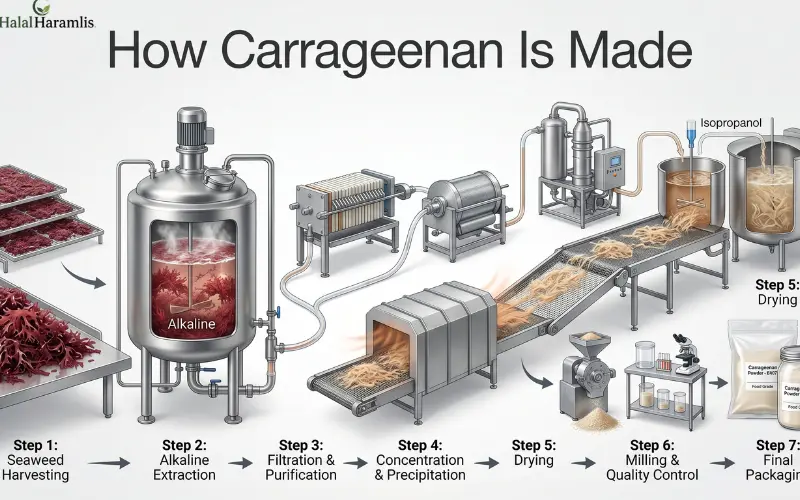
The manufacturing process usually involves:
- Harvesting red seaweed
- Cleaning and drying the seaweed
- Extracting carrageenan using water-based methods
- Filtering impurities
- Drying and processing into powder form
The final product becomes a white or slightly yellow powder that food manufacturers add to various products.
Why Food Companies Use Carrageenan
Food manufacturers prefer carrageenan because it:
- Improves texture
- Prevents ingredient separation
- Extends shelf life
- Creates a creamy mouthfeel
- Works in dairy and plant-based products
Table : Halal vs Haram Sources of Carrageenan
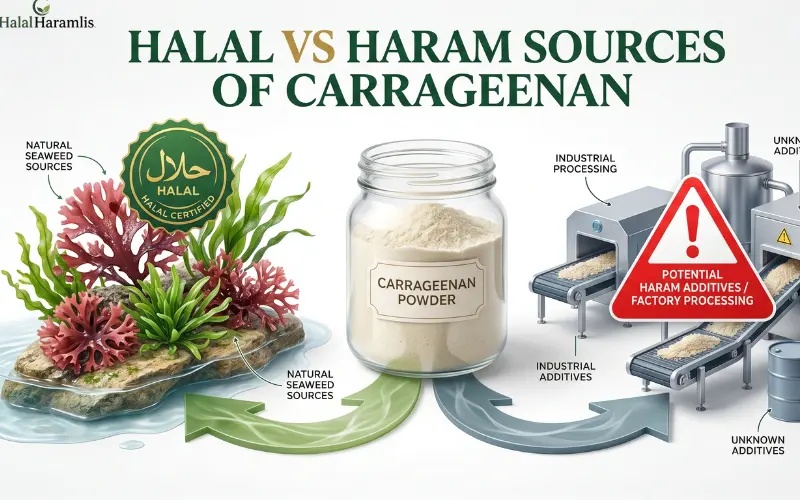
| Source | Halal or Haram? | Explanation |
| Red Seaweed | Halal | Natural source |
| Marine Algae | Halal | Plant-based |
| Seaweed Extraction | Halal | Standard process |
| Water-Based Processing | Halal | Common method |
| Plant-Derived Ingredients | Halal | Acceptable source |
| Alcohol-Based Processing | Questionable | Needs verification |
| Cross-Contaminated Production | Questionable | Depends on facility |
| Unknown Additives | Questionable | Product-specific review needed |
Why It Matters for Muslims in USA & UK
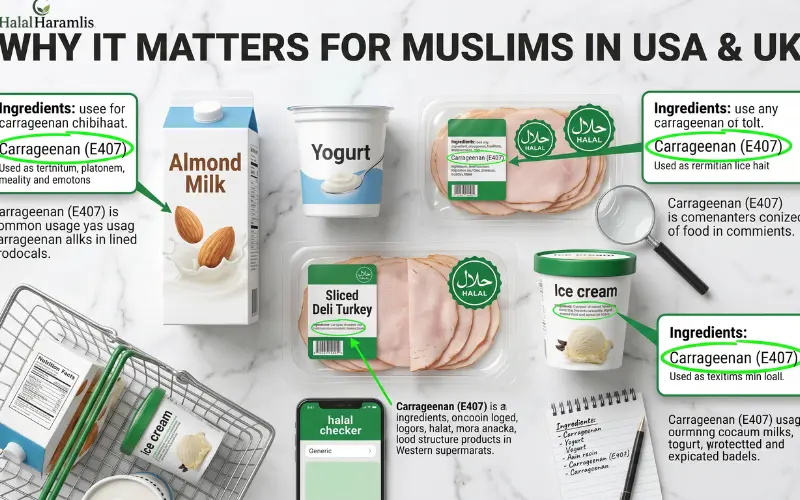
Muslims living in the USA and UK consume a large number of processed foods every week.
Common products include:
- Coffee creamers
- Protein drinks
- Plant-based milk
- Frozen desserts
- Yogurt products
- Dairy alternatives
Many consumers do not realize that carrageenan is present in these foods.
Because Muslims are encouraged to be careful about ingredients, understanding food additives becomes important. While carrageenan itself is generally halal, consumers often encounter it alongside ingredients such as:
- Gelatin
- Mono and diglycerides
- Natural flavors
- Artificial flavors
Therefore, understanding carrageenan helps Muslims evaluate products more confidently.
Carrageenan in Everyday Foods
You may find carrageenan in:
- Starbucks bottled drinks
- Protein shakes
- Almond milk
- Coconut milk
- Ice cream
- Whipped toppings
This makes carrageenan one of the most common food additives in Western supermarkets.
Table : Products and Brands That Contain Carrageenan
| Product Type | Example Brands |
| Almond Milk | Almond Breeze, Silk |
| Coconut Milk | Various brands |
| Chocolate Milk | Popular dairy brands |
| Protein Shakes | Ensure, Boost |
| Ice Cream | Ben & Jerry’s, supermarket brands |
| Yogurt | Various dairy brands |
| Coffee Creamers | International Delight |
| Whipped Cream | Various supermarket brands |
Always check labels because recipes can change over time.
Carrageenan and E407
Many Muslims encounter carrageenan under its European E-number.
E407
Carrageenan is commonly listed as:
E407
Many Muslims become worried whenever they see E-numbers on ingredient labels.
However, E407 is generally considered halal because it comes from seaweed rather than animal sources.
Why E407 Is Used
Manufacturers use E407 because it:
- Thickens liquids
- Improves texture
- Creates creaminess
- Stabilizes food products
As a result, E407 is extremely common in dairy and non-dairy products.
Halal vs Haram Detailed Breakdown
When Carrageenan Is Halal
Carrageenan is considered halal when:
- Derived from seaweed
- Produced through standard extraction methods
- Free from haram additives
- Manufactured in a halal-compliant environment
Most commercial carrageenan falls into this category.
Why Most Scholars Accept Carrageenan
Carrageenan:
- Comes from plants
- Contains no pork
- Contains no animal fat
- Contains no meat derivatives
- Is naturally sourced
These factors make it generally acceptable for Muslim consumers.
When Carrageenan May Become Questionable
Although carrageenan itself is halal, certain situations may require extra caution.
Cross-Contamination
If manufacturing facilities process non-halal products on shared equipment, some consumers may seek additional verification.
Imported Products
Imported foods may use different production standards, making halal certification more important.
Additional Ingredients
The biggest concern is often not carrageenan itself but other ingredients in the same product.
For example:
- Gelatin
- Alcohol flavorings
- Certain emulsifiers
These ingredients may affect the halal status of the final food product.
Carrageenan in Plant-Based Milk
Plant-based milk products often contain carrageenan because it helps maintain texture.
Examples include:
- Almond milk
- Oat milk
- Coconut milk
- Cashew milk
Since these beverages naturally separate during storage, carrageenan helps keep them smooth and consistent.
Most carrageenan used in plant-based milk is halal.
Carrageenan in Ice Cream and Desserts
Ice cream manufacturers frequently use carrageenan to improve texture.
Benefits include:
- Smoother consistency
- Better stability
- Reduced ice crystal formation
Common products include:
- Ice cream
- Frozen yogurt
- Pudding
- Custard desserts
The carrageenan itself is generally halal.
Carrageenan in Protein Drinks
Many athletes and fitness enthusiasts consume protein drinks daily.
These products often contain carrageenan because it:
- Prevents separation
- Improves texture
- Enhances creaminess
Examples include:
- Ready-to-drink protein shakes
- Meal replacement beverages
- Nutrition supplements
Again, the main halal concern is usually the overall product rather than carrageenan itself.
Table : Safer Halal Alternatives
| Product Category | Safer Halal Option |
| Plant Milk | Halal-certified brands |
| Yogurt | Halal-certified yogurt |
| Ice Cream | Halal-certified desserts |
| Protein Drinks | Halal-certified supplements |
| Whipped Toppings | Halal-certified products |
| Dairy Products | Products with halal logos |
| Desserts | Halal-certified puddings |
| Beverages | Certified halal drinks |
Common Mistakes People Make
Mistake 1: Assuming Carrageenan Is Animal-Based
Carrageenan comes from red seaweed, not animals.
Mistake 2: Thinking Every E-Number Is Haram
Many E-numbers are completely halal, including E407.
Mistake 3: Confusing Carrageenan with Gelatin
Gelatin often comes from animals, while carrageenan comes from seaweed.
Mistake 4: Ignoring the Full Ingredient List
A product may contain halal carrageenan but other questionable ingredients.
Mistake 5: Not Looking for Halal Certification
Halal-certified products provide extra peace of mind.
See Also:
Is Citric Acid Halal or Haram?
Is Artificial Flavor Halal or Haram?
Is Natural Flavor Halal or Haram?
Are Mono and Diglycerides Halal or Haram?
Is Pectin Halal or Haram?
Is Xanthan Gum Halal or Haram?
Is Guar Gum Halal or Haram?
Is Locust Bean Gum Halal or Haram?
Is E407 (Carrageenan) Halal or Haram?
FAQs
Is carrageenan halal or haram?
Carrageenan is generally considered halal because it is extracted from red seaweed.
Is carrageenan halal?
Yes, carrageenan is usually halal and plant-based.
What is carrageenan made from?
Carrageenan is made from red seaweed.
Does carrageenan contain pork?
No, carrageenan does not contain pork.
Is E407 halal?
Yes, E407 is carrageenan and is generally considered halal.
Is carrageenan vegan?
Yes, carrageenan is typically vegan.
Is carrageenan used in almond milk?
Yes, many almond milk brands use carrageenan.
Is carrageenan found in ice cream?
Yes, it is commonly used in ice cream and frozen desserts.
Is carrageenan safe for Muslims?
Generally yes, because it comes from seaweed.
Can Muslims consume products containing carrageenan?
In most cases, yes.
Is carrageenan used in protein shakes?
Yes, many protein drinks contain carrageenan.
Should Muslims avoid carrageenan?
Most Muslims do not need to avoid carrageenan itself.
Conclusion
Carrageenan is one of the most widely used food additives in the USA and UK. It is commonly found in dairy products, plant-based milk, protein shakes, desserts, and beverages. Unlike some controversial food additives, carrageenan is derived from red seaweed, making it a plant-based ingredient rather than an animal-derived one. It contains no pork, meat, or animal fat and is generally regarded as halal by Muslim consumers and halal certification bodies. While Muslims should always review the complete ingredient list of any product, carrageenan itself is usually not a halal concern. Final Verdict: Carrageenan is generally halal and permissible for Muslims to consume.