Is baking soda halal or haram?
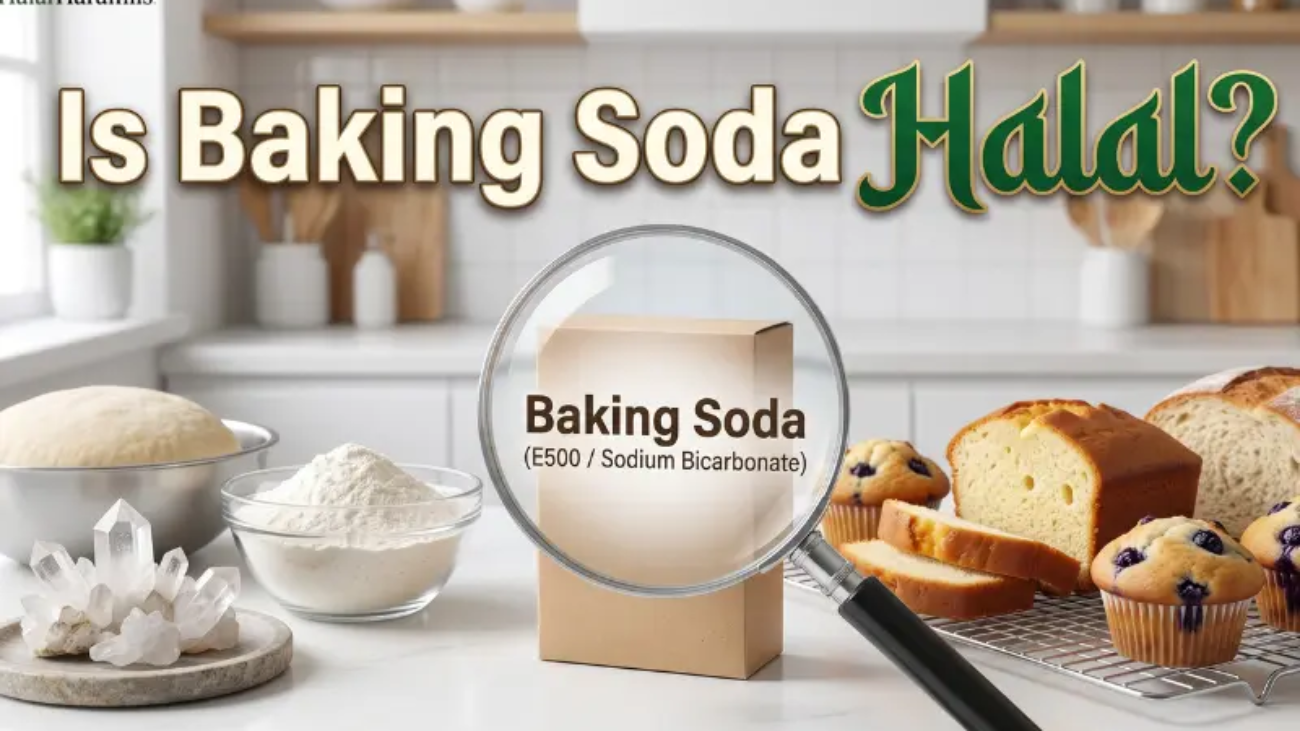
Baking soda is generally considered halal because it is a naturally occurring chemical compound known as sodium bicarbonate. It is not derived from pork, animal fat, meat by-products, or alcoholic ingredients. Most baking soda sold in supermarkets across the USA and UK comes from natural mineral deposits or is produced through a synthetic mineral-based process.
For the vast majority of Muslim consumers, pure baking soda is completely permissible to use in cooking, baking, cleaning, and even certain medicinal products. However, Muslims should still check products that contain baking soda as one ingredient among many, such as baking powders, cake mixes, biscuits, and processed foods, because additional ingredients may affect the overall halal status.
If you live in the USA or UK, there is a good chance that baking soda is already present in your kitchen. It is one of the most common household ingredients and is used in everything from cakes and cookies to bread, pancakes, muffins, and pastries. Beyond food, baking soda is also found in toothpaste, cleaning products, deodorants, and antacid medicines.
Many Muslims become concerned when they see unfamiliar ingredient names such as sodium bicarbonate or food codes like E500 on packaging. Since modern food labels often contain scientific terminology, it is understandable that consumers want to verify whether an ingredient is halal before purchasing a product.
The good news is that baking soda is one of the least controversial food additives from a halal perspective. Unlike gelatin, certain emulsifiers, or flavorings that may come from animal sources, baking soda is mineral-based. It is usually extracted from natural deposits or manufactured through chemical processes that do not involve animal ingredients.
However, understanding where baking soda is used remains important. While the ingredient itself is halal, products containing baking soda may also include flavorings, enzymes, emulsifiers, or preservatives that require further investigation. This guide explains everything Muslims in the USA and UK need to know about baking soda halal status.
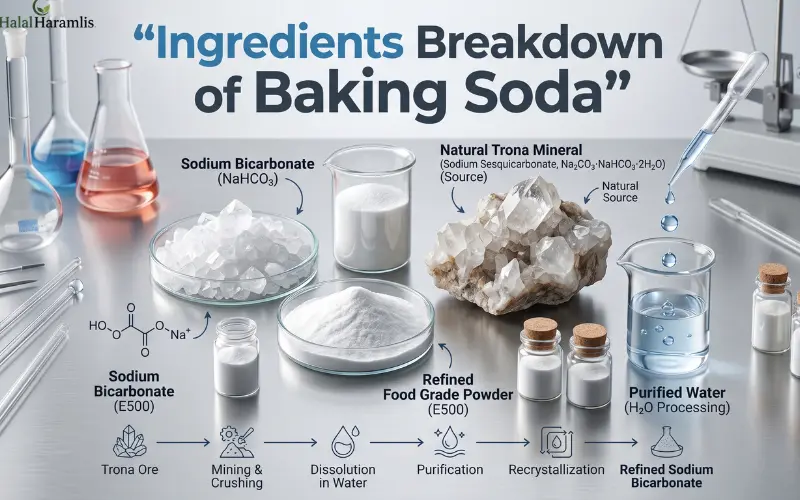
Table : Ingredients Breakdown of Baking Soda
| Component | Description | Halal Status |
| Sodium Bicarbonate | Main active ingredient | Halal |
| Mineral Sources (Trona) | Natural mineral deposit | Halal |
| Carbon Dioxide | Byproduct in production | Halal |
| Water | Used in processing | Halal |
| Industrial Processing Aids | Refining process | Usually Halal |
| Anti-caking Agents (in some brands) | Prevent clumping | Requires checking |
What Is Baking Soda?
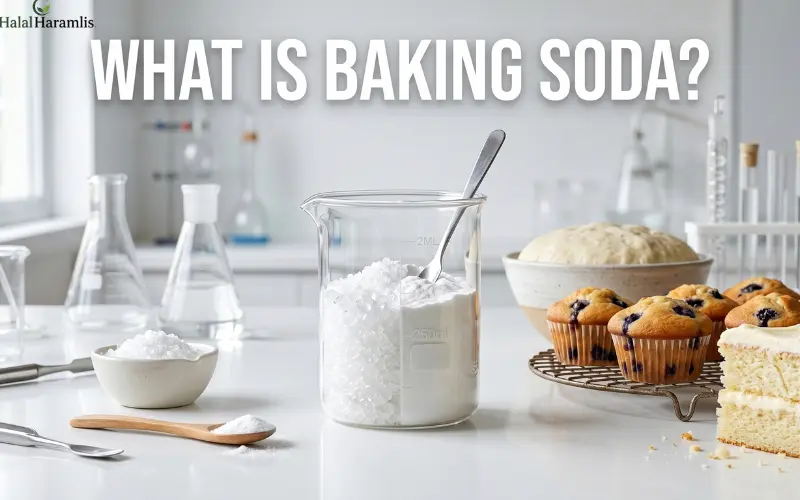
Baking soda is a white crystalline powder scientifically known as sodium bicarbonate. It is a naturally alkaline compound that has been used for decades in food preparation and household applications.
When baking soda comes into contact with acidic ingredients such as lemon juice, vinegar, yogurt, or buttermilk, it produces carbon dioxide gas. These tiny gas bubbles become trapped inside dough or batter, causing baked goods to rise and develop a light texture.
Because of this reaction, baking soda is considered one of the most important raising agents in baking.
Why Baking Soda Is Used
Food manufacturers and home bakers use baking soda for many purposes, including:
- Helping cakes rise properly
- Creating soft and fluffy muffins
- Improving cookie texture
- Making pancakes lighter
- Reducing acidity in recipes
- Improving the appearance of baked goods
In commercial food production, baking soda is valued because it is inexpensive, effective, and safe.
Other Uses of Baking Soda
Apart from food, baking soda is commonly used in:
- Toothpaste
- Mouthwash products
- Household cleaners
- Laundry products
- Deodorants
- Antacid medicines
- Personal care products
Its versatility is one reason why it is found in millions of homes worldwide.
Table : Halal vs Haram Sources of Baking Soda
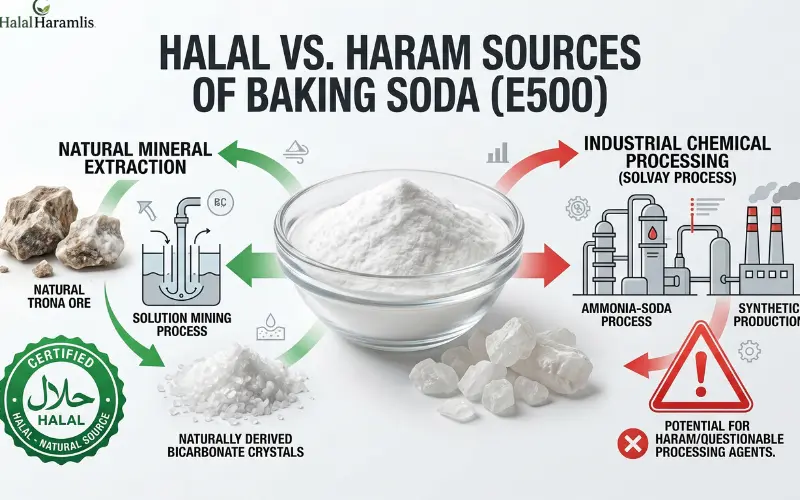
| Source | Halal or Haram? | Explanation |
| Natural Mineral (Trona) | Halal | Most common source |
| Synthetic Production | Halal | Lab-based process |
| Sea Mineral Extraction | Halal | Natural source |
| Industrial Refining | Halal | Standard purification |
| Animal-Based Processing | Rare / Haram risk | Not commonly used |
| Alcohol-Based Additives | Questionable | Depends on usage |
| Contaminated Equipment | Questionable | Facility dependent |
Why It Matters for Muslims in USA & UK
Muslims living in Western countries consume a large amount of packaged and processed food. Baking soda is present in countless products sold in supermarkets such as Walmart, Costco, Tesco, Asda, Morrisons, Aldi, and Sainsbury’s.
Common foods containing baking soda include:
- Cakes
- Biscuits
- Bread
- Pancakes
- Muffins
- Cookies
- Crackers
- Pastries
On ingredient labels, baking soda may appear under different names:
- Baking soda
- Sodium bicarbonate
- Bicarbonate of soda
- E500
- Sodium hydrogen carbonate
For Muslim consumers, the concern is usually not the baking soda itself. Instead, the concern is the other ingredients found alongside it.
For example:
- Cakes may contain emulsifiers from unknown sources.
- Cookies may contain mono and diglycerides.
- Bread may contain enzymes.
- Snack foods may contain flavor enhancers.
- Dessert products may contain questionable additives.
Therefore, while baking soda itself is halal, Muslims should always evaluate the complete ingredient list before making a final decision.
Table : Products and Brands That Commonly Contain Baking Soda
| Product Category | Example Brands |
| Cakes | Betty Crocker, Tesco bakery |
| Cookies | Oreo-style biscuits, supermarket brands |
| Bread | Wonder Bread, supermarket loaves |
| Pancake Mix | Pearl Milling Company |
| Baking Mixes | Pillsbury, Betty Crocker |
| Crackers | Ritz-style crackers |
| Toothpaste | Colgate, Sensodyne |
| Antacids | Eno, Gaviscon |
Always check ingredient labels because formulations can change over time.
Halal vs Haram Detailed Breakdown
When Baking Soda Is Halal
Baking soda is halal when:
- It is pure sodium bicarbonate.
- It comes from mineral sources.
- It is produced through standard industrial processes.
- It contains no animal-derived additives.
- It is free from alcohol contamination.
These conditions apply to nearly all major baking soda brands sold in the USA and UK.
Because baking soda is fundamentally a mineral compound, halal concerns are minimal compared to ingredients such as gelatin, rennet, or certain emulsifiers.
Why Baking Soda Is Considered Safe
Several factors make baking soda one of the safest ingredients from a halal perspective:
- It is mineral-based.
- It is not derived from animals.
- It is not intoxicating.
- It contains no pork ingredients.
- It has a simple chemical structure.
- It is widely accepted by halal certification organizations.
For these reasons, halal authorities generally classify baking soda as permissible.
When Baking Soda May Be Questionable
Although pure baking soda is halal, certain situations may require additional verification.
1. Baking Powder (Important Difference)
Many people mistakenly assume baking powder and baking soda are identical.
Baking powder usually contains:
- Baking soda
- Acid salts
- Cornstarch
- Anti-caking agents
While most baking powders are halal, the additional ingredients should still be reviewed.
2. Processed Foods
Baking soda is often used in processed foods that contain many other ingredients.
Examples include:
- Enzymes
- Flavorings
- Emulsifiers
- Preservatives
- Colorings
These ingredients may require halal verification even though the baking soda itself remains halal.
3. Industrial Food Manufacturing
In rare situations, manufacturing facilities may process both halal and non-halal products. While this does not automatically make baking soda haram, some consumers prefer products from facilities with halal certification or strict quality controls.
Baking Soda vs Baking Powder
Many Muslims confuse these two ingredients because they are both used in baking.
Baking Soda
- Pure sodium bicarbonate
- Mineral-based ingredient
- Generally halal
- Requires an acidic ingredient to activate
- Commonly sold in simple boxed form
Baking Powder
- Contains baking soda plus additional ingredients
- Includes acid compounds
- Often contains starch
- Requires more ingredient checking
- May vary between manufacturers
As a result, baking soda is usually easier to verify from a halal perspective than baking powder.
Table : Safer Halal Alternatives
| Product Type | Safer Choice |
| Cakes | Halal-certified bakery products |
| Bread | Halal-certified bread brands |
| Cookies | Simple ingredient halal cookies |
| Baking Mix | Certified halal baking mixes |
| Toothpaste | Halal-certified oral care products |
| Antacids | Verified halal medicines |
| Snacks | Clean-label halal snacks |
Common Mistakes People Make
Mistake 1: Thinking Baking Soda Is Haram
Many consumers assume that any ingredient with a scientific name must be questionable. In reality, sodium bicarbonate is simply the chemical name for baking soda and is generally halal.
Mistake 2: Confusing Baking Soda and Baking Powder
These products serve similar purposes but are not identical. Baking powder contains additional ingredients that may require further investigation.
Mistake 3: Ignoring the Entire Product
Even if baking soda is halal, the finished food product may contain other ingredients that are not halal-certified.
Mistake 4: Assuming All E-Numbers Are Haram
Many E-numbers are completely halal. E500, which refers to sodium bicarbonate, is generally considered permissible.
Mistake 5: Not Reading Ingredient Labels
Food formulations frequently change. A product that was halal last year may contain different ingredients today.
See Also:
Is Citric Acid Halal or Haram?
Is Artificial Flavor Halal or Haram?
Is Natural Flavor Halal or Haram?
Is Gelatin Halal or Haram?
Are Mono and Diglycerides Halal or Haram?
Is Xanthan Gum Halal or Haram?
Is Guar Gum Halal or Haram?
Is Pectin Halal or Haram?
Is E500 (Baking Soda) Halal or Haram?
FAQs
Is baking soda halal or haram?
Baking soda is generally halal because it is a mineral-based compound and does not come from animal sources.
Is baking soda halal in Islam?
Yes. Pure sodium bicarbonate is widely regarded as halal.
Is baking soda plant-based?
No. It is mineral-based rather than plant-based or animal-based.
Does baking soda contain pork?
No. Baking soda contains no pork ingredients.
Is baking soda E500?
Yes. Baking soda is commonly listed as E500 on food labels.
Is baking soda used in bread halal?
Yes. However, other bread ingredients should also be checked.
Is baking soda safe for Muslims?
Yes. It is generally considered safe and halal.
Is baking soda the same as baking powder?
No. Baking powder contains additional ingredients besides baking soda.
Is baking soda used in cakes halal?
Yes. Baking soda itself is halal, although cake ingredients should still be reviewed.
Is baking soda vegan?
Yes. Baking soda is vegan-friendly because it contains no animal ingredients.
Is baking soda found in toothpaste halal?
In most cases, yes. Baking soda used in toothpaste is generally halal.
Should Muslims avoid baking soda?
No. There is usually no reason for Muslims to avoid pure baking soda.
Conclusion
Baking soda is one of the most common and widely used ingredients in modern food production. Whether you are baking cakes at home, purchasing bread from a supermarket, or using toothpaste containing sodium bicarbonate, you are likely encountering baking soda regularly.
From a halal perspective, baking soda is considered permissible because it is derived from natural minerals or produced through synthetic mineral-based processes. It does not originate from pork, animal fats, meat by-products, or intoxicating substances. This makes it one of the safest food ingredients for Muslim consumers.
The only area where caution is needed is when baking soda appears as part of a larger processed product. Cakes, cookies, baking mixes, and packaged foods may contain additional ingredients that require halal verification. Therefore, Muslims should always read ingredient labels carefully and choose halal-certified products whenever possible.