
Crab is Halal according to the majority of Islamic scholars, while the Hanafi school considers it Makruh (disliked) or doubtful.
This difference of opinion is the main reason Muslims around the world still ask: Is crab halal or haram?
The reality is that the ruling of the crab is not black and white. It involves Quranic verses, authentic hadith, classical fiqh opinions, modern scientific classification, and even today’s global seafood industry. In this detailed guide, we will explore every angle so that Muslims can make an informed and confident decision.
Why This Question Is So Common Among Muslims
Seafood is usually the easiest halal category, yet crab creates confusion. The confusion comes from the nature of this creature itself. Unlike fish, crab has a hard shell, walks sideways, and can survive outside water for some time. Because of this unusual nature, early scholars debated whether crab should be treated like fish or like land animals.
Over time, the discussion became more complex because Muslims migrated across the world and started eating seafood in countries where cooking methods include alcohol, cross-contamination, and processed ingredients. As a result, the simple question “Is crab halal?” turned into a detailed fiqh discussion that still continues today.
The Quranic Foundation Of Seafood Rulings
The foundation of this topic begins with a powerful Quranic verse:
“Lawful to you is the game of the sea and its food as provision for you and the travelers.” (Surah Al-Ma’idah 5:96)
This verse is extremely important because it provides a general permission for seafood. Classical scholars spent centuries explaining this verse and many concluded that Allah made sea creatures permissible as a mercy for humanity. Historically, coastal communities relied heavily on seafood for survival, and requiring slaughter for sea animals would have been extremely difficult.
Because of this verse, most scholars say seafood falls into a special halal category different from land animals.
Hadith Evidence That Strengthened Seafood Permission
The Prophet Muhammad ﷺ was asked about sea water and he replied:
“Its water is pure and its dead are lawful.”
This hadith has enormous implications. It means that sea animals do not require slaughter and remain halal even if found dead. This ruling is unique because no other animal category in Islam has this level of ease.
From this hadith, many scholars concluded that seafood has been given a special status in Islamic law. This special status is the main reason the majority of scholars consider crab halal.
Why Scholars Disagreed About Crab Specifically
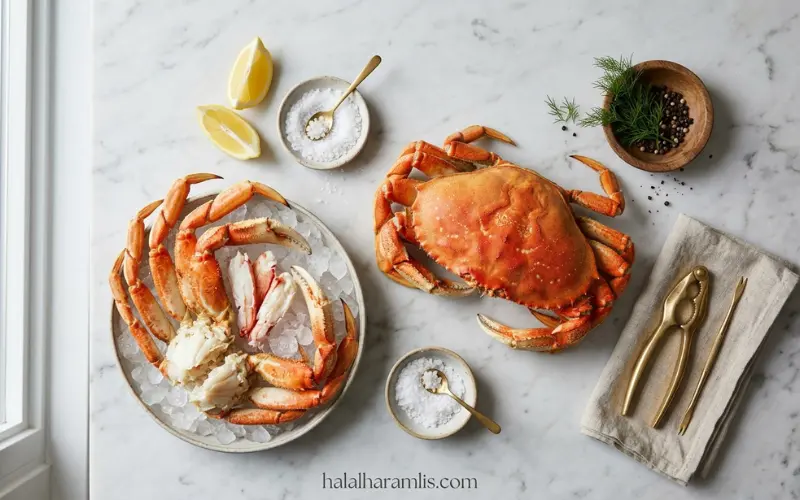
Despite the general permission of seafood, scholars still debated crab because it does not perfectly fit the category of fish. Crab belongs to a group called crustaceans, which includes shrimp, lobster, and prawns. Early scholars did not have modern scientific classification, so they relied on observation.
Some scholars saw crab walking on land and believed it was not purely a sea creature. Others focused on its marine origin and concluded it falls under the general seafood permission.
This difference in classification created the famous difference of opinion between Islamic schools of thought.
Opinions Of The Four Major Madhabs
Hanafi School Opinion
The Hanafi school historically allowed only fish from the sea. Their reasoning was based on linguistic interpretation and cautious legal methodology. Since crab is not technically fish, some Hanafi scholars classified it as Makruh. However, Makruh does not mean haram. It means better to avoid but not sinful if eaten.
Many modern Hanafi scholars have revisited this opinion using scientific knowledge and now allow crab, especially when living in coastal regions where seafood is a staple.
Shafi’i School Opinion
The Shafi’i school holds one of the clearest positions. They consider all sea creatures halal without restriction. According to their interpretation of Quran 5:96, anything that lives in the sea falls under halal seafood. For them, crab is fully permissible.
Maliki School Opinion
The Maliki school takes an even broader approach. They consider all sea creatures halal regardless of form or type. This includes crab, lobster, squid, and other marine animals.
Hanbali School Opinion
The Hanbali school also considers all sea creatures halal. Their scholars rely heavily on the hadith about sea water and its dead being lawful.
Modern Scientific Classification And Its Impact On Fiqh
Modern science has provided new insights that many contemporary scholars consider when issuing fatwas. Scientists classify the crab as a marine animal that cannot survive long outside water. Its biology, respiration, and life cycle are deeply connected to the ocean.
Because Islamic law encourages the use of knowledge, many scholars say scientific classification strengthens the argument that crab falls under halal seafood.
The Difference Between Makruh And Haram
Many Muslims misunderstand the Hanafi opinion because they confuse Makruh with Haram. Haram means strictly forbidden and sinful. Makruh means disliked or better avoided, but not sinful.
Even according to the strict Hanafi interpretation, eating crab is not considered haram. This distinction is extremely important because it removes unnecessary fear and confusion.
Crab In The Modern Global Food Industry
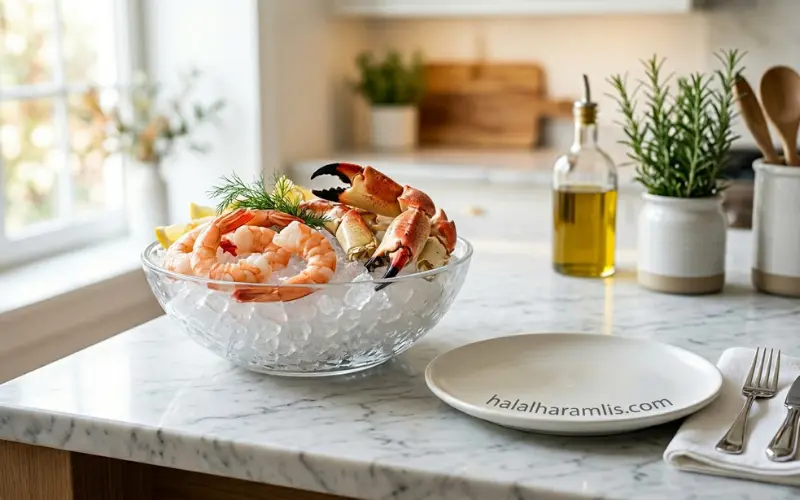
Today, crab is eaten worldwide and is part of many cuisines. In Muslim countries, crab is commonly served in seafood restaurants, hotels, and homes. Countries like Saudi Arabia, Malaysia, Indonesia, and the UAE widely accept seafood as halal.
The real challenge today is not the crab itself but how it is prepared. Many restaurants cook seafood with wine, beer batter, or pork-based ingredients. These additions can turn a halal seafood dish into a haram meal.
When Crab Becomes Haram
Crab becomes haram only when it is mixed with prohibited ingredients. For example, cooking crab with wine sauce or serving it alongside pork contamination changes the ruling entirely. The issue here is not the animal but the cooking process.
This is why Muslims are encouraged to ask questions in restaurants and choose simple cooking methods such as steaming or grilling.
Imitation Crab And Processed Seafood
One of the most important modern issues is imitation crab. This product is often made from processed fish paste mixed with flavorings and additives. Some of these additives may contain alcohol or non-halal gelatin. Because of this, imitation crab must always be checked carefully before consumption.
Health And Nutrition Benefits Of Crab
Crab is not only permissible according to most scholars but also extremely nutritious. It is rich in protein, vitamins, and omega-3 fatty acids. These nutrients support heart health, brain function, and the immune system. Islam encourages the consumption of wholesome and beneficial foods, and seafood is often included in this category.
Why Seafood Has Special Ease In Islam
Islam recognizes the difficulty of slaughtering sea animals and the importance of seafood for coastal communities. Because of this, Allah granted special ease for seafood consumption. This ease demonstrates the flexibility and practicality of Islamic law.
The Practical Halal Approach For Muslims
Muslims who want to stay cautious can follow a simple approach. Choose halal-certified seafood restaurants, avoid dishes cooked with alcohol, and prefer simple preparation methods. This ensures the meal remains pure and permissible.
We hope you guys find this guide helpful ,here we have more for you:
- Is Gelatin Halal or Haram?
- Is Jollibee Halal or Haram?
- Is Perdue Chicken Halal?
- Is Starburst Halal?
- Is Feastables Halal or Haram?
- Is Chipotle Halal or Haram?
FAQs
Is crab halal or haram in Islam?
Crab is considered halal by many scholars (Maliki, Shafi’i, Hanbali) because it is sea life. However, some Hanafi scholars consider it makruh or doubtful.
Is crab halal for Muslims to eat?
Most scholars allow Muslims to eat crab because it lives in the sea and falls under the general Quranic permission of seafood.
Are crabs halal or haram in the Hanafi school?
Hanafi scholars traditionally allow only fish as fully halal seafood. Because crab is not classified as fish, some Hanafi scholars consider it makruh tahrimi (strongly disliked).
Do Shafi’i scholars consider crab halal?
Yes, the Shafi’i school considers all sea creatures halal, including crab, lobster, shrimp, and octopus.
Is crab halal according to the Maliki school?
The Maliki school is the most permissive and considers all seafood halal, including crab and shellfish.
Is crab halal according to the Hanbali school?
Yes, Hanbali scholars generally permit eating crab as part of halal seafood.
Is crab halal in the USA and Western countries?
Yes, crab itself is halal, but Muslims should check how it is cooked, because restaurants may use alcohol or non-halal ingredients.
Does crab need halal slaughter?
No. Seafood does not require Islamic slaughter, which is why most seafood is considered halal.
Is imitation crab halal?
Imitation crab may contain flavorings, additives, or alcohol-based ingredients, so it should be checked carefully before consuming.
Is soft-shell crab halal?
Yes, soft-shell crab is halal according to scholars who permit seafood, as it is simply a crab in a molting stage.
Can Muslims eat crab in restaurants?
Yes, but Muslims should ensure the crab is not cooked with alcohol, pork products, or cross-contaminated with non-halal foods.
What is the safest opinion about crab in Islam?
The safest approach is to follow your madhab. However, the majority of scholars consider crab halal, making it permissible for most Muslims.
Conclusion
After examining Quranic verses, authentic hadith, classical scholarship, modern fatwas, scientific classification, and real-world food practices, the conclusion becomes clear. Crab is halal according to the majority of Islamic scholars, and even the cautious Hanafi opinion does not classify it as haram. The real concern for Muslims today is not the crab itself but how it is prepared and what ingredients are added.
By choosing halal cooking methods and remaining aware of restaurant practices, Muslims can enjoy crab confidently while staying within the boundaries of Islamic dietary law.