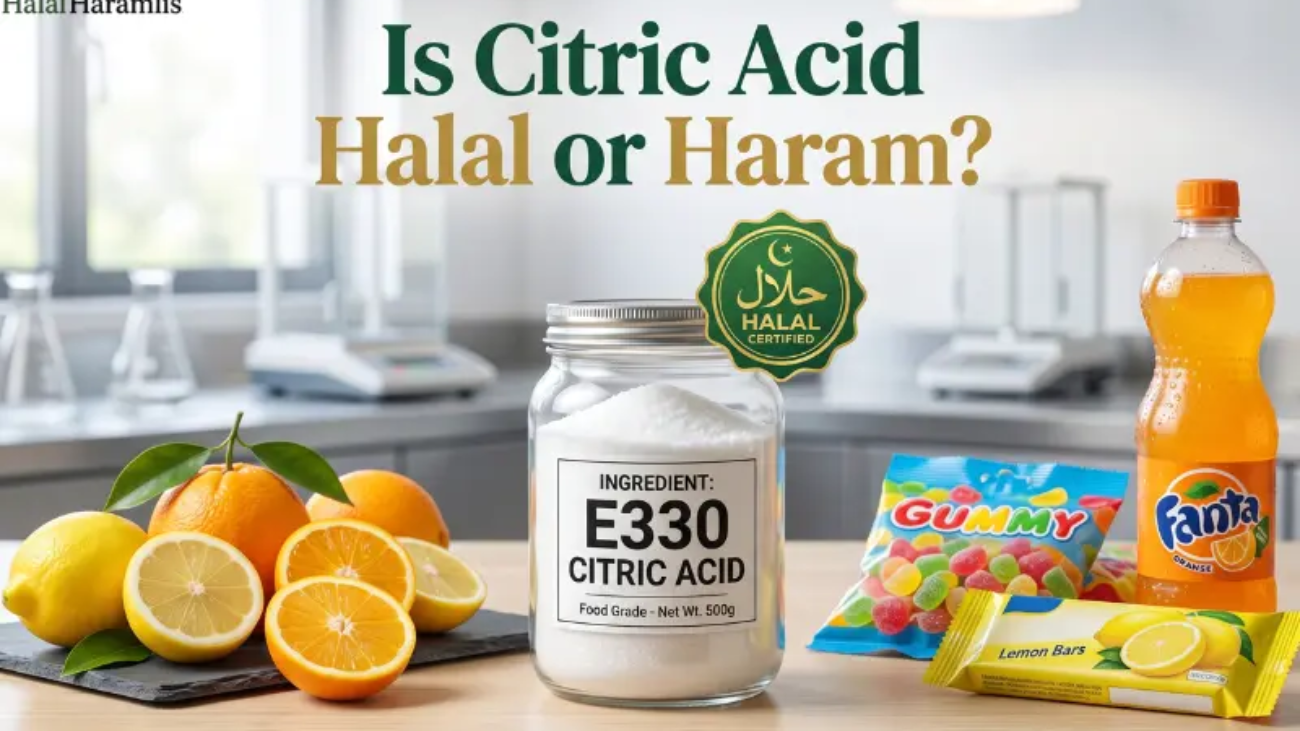
Is citric acid halal or haram?
In most cases, citric acid is halal. It is usually made from sugar, corn syrup, molasses, or fruits through a fermentation process. Citric acid itself does not contain pork, meat, or alcohol ingredients. However, Muslims should still check certified products because manufacturing methods can vary between brands and countries.
Is Citric Acid Halal or Haram?
Citric acid is found almost everywhere in daily life. If you live in the USA or UK, you probably consume it regularly without realizing it. It is present in soft drinks, candies, chewing gum, vitamins, medicines, sauces, frozen foods, and packaged snacks.
Many Muslims become concerned when reading food labels and seeing “citric acid” listed among ingredients. Since it is used in thousands of products, people often wonder whether it comes from fruits or from a process that may involve non-halal substances. Understanding what citric acid is and how it is produced can help Muslims make informed food choices while shopping in supermarkets, pharmacies, and convenience stores.
Table : Ingredients Breakdown of Citric Acid
| Component | Description | Halal Status |
| Corn Syrup | Common fermentation source | Usually Halal |
| Sugar | Used to grow microorganisms | Halal |
| Molasses | By-product of sugar production | Halal |
| Citrus Fruits | Natural source of citric acid | Halal |
| Water | Used during processing | Halal |
| Fermentation Culture | Produces citric acid | Usually Halal |
| Processing Aids | Used during manufacturing | Requires verification |
What Is Citric Acid?
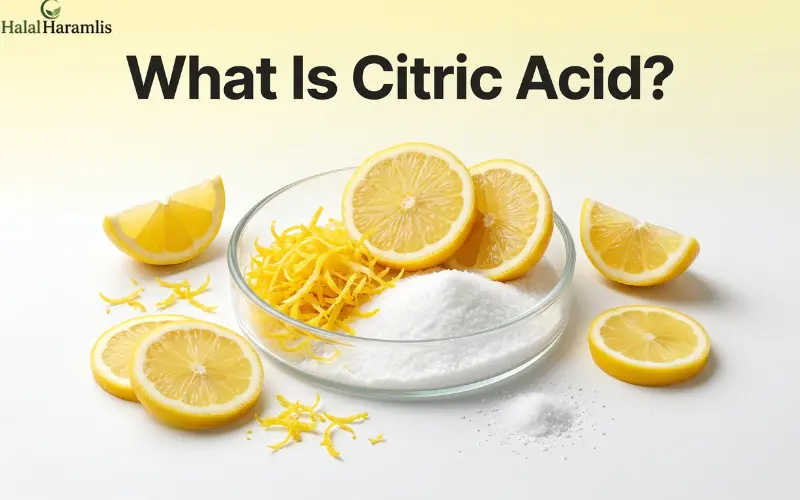
Citric acid is a naturally occurring acid found in citrus fruits such as:
- Lemons
- Limes
- Oranges
- Grapefruits
It gives fruits their sour taste.
Although citric acid naturally exists in fruits, most commercial citric acid today is not directly extracted from lemons. Instead, manufacturers produce it through a fermentation process using sugars and beneficial microorganisms.
This method is cheaper, faster, and allows food companies to manufacture large quantities for global markets.
Why Is Citric Acid Used?
Food companies add citric acid because it:
- Improves flavor
- Adds a tangy taste
- Preserves freshness
- Prevents spoilage
- Balances acidity
- Extends shelf life
Without citric acid, many beverages and packaged foods would spoil more quickly.
Common Foods Containing Citric Acid
You may find citric acid in:
- Soft drinks
- Energy drinks
- Sports drinks
- Candies
- Chocolates
- Ice cream
- Yogurt
- Sauces
- Salad dressings
- Frozen meals
- Vitamin supplements
- Medicines
Table : Halal vs Haram Sources of Citric Acid
| Source | Halal or Haram? | Explanation |
| Citrus Fruits | Halal | Natural fruit source |
| Corn Fermentation | Halal | Most common commercial source |
| Sugar Fermentation | Halal | Widely accepted |
| Molasses Fermentation | Halal | Generally halal |
| Synthetic Production | Usually Halal | Depends on ingredients used |
| Alcohol-Based Processing | Questionable | Requires verification |
| Contaminated Equipment | Questionable | Depends on factory practices |
| Animal-Derived Additives | Potentially Haram | Requires checking |
Why Citric Acid Matters for Muslims in USA & UK
Muslims in the USA and UK consume thousands of packaged products every year.
When reading labels, ingredients can often appear confusing:
- Citric acid
- Lactic acid
- Malic acid
- Mono and diglycerides
- Natural flavors
Citric acid is one of the most common ingredients that raises questions.
The good news is that most citric acid sold in North America and Europe comes from plant-based fermentation methods. Major food manufacturers use industrial fermentation systems that rely on corn sugar or similar plant sources.
However, Muslims who follow a strict halal diet still prefer checking:
- Halal certifications
- Manufacturer statements
- Product ingredients
- Country-specific certifications
This is especially important when buying imported foods.
Everyday Products That May Contain Citric Acid
In the USA:
- Sodas
- Gummies
- Vitamins
- Breakfast cereals
In the UK:
- Fizzy drinks
- Sweets
- Medicines
- Ready meals
Because citric acid is everywhere, understanding its halal status helps consumers shop with confidence.
Table : Products and Brands That Commonly Contain Citric Acid
| Product Type | Example Brands |
| Soft Drinks | Coca-Cola, Pepsi |
| Sports Drinks | Gatorade, Powerade |
| Candy | Skittles, Sour Patch Kids |
| Vitamins | Centrum, Nature Made |
| Energy Drinks | Monster, Red Bull |
| Sauces | Heinz products |
| Flavored Water | Various supermarket brands |
| Frozen Foods | Many packaged meals |
Always verify current ingredients because formulations can change.
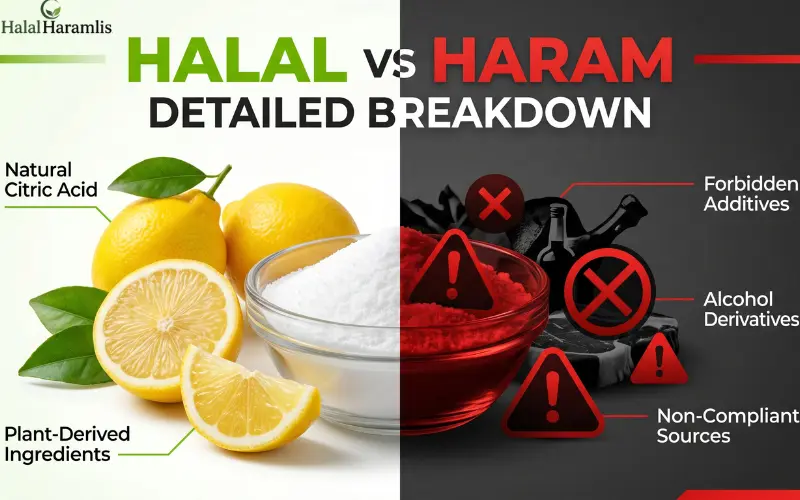
Halal vs Haram Detailed Breakdown
When Citric Acid Is Halal
Citric acid is considered halal when:
- Produced from fruits
- Made from corn syrup
- Produced from sugar fermentation
- Manufactured without haram additives
- Free from contamination
This covers the majority of citric acid used worldwide.
Why Scholars Commonly Consider It Halal
Most commercial citric acid:
- Is plant-based
- Contains no meat ingredients
- Contains no pork derivatives
- Contains no intoxicating substances
As a result, it is generally accepted as halal.
When Citric Acid May Be Questionable
Certain situations may require additional verification.
1. Manufacturing Concerns
Some Muslims prefer checking whether:
- Shared equipment is used
- Cross-contamination exists
- Processing agents are halal
2. Imported Products
Products imported from countries with different food regulations may require more careful review.
3. Complex Ingredient Lists
Sometimes citric acid appears alongside ingredients that may themselves be questionable, such as:
- Gelatin
- Natural flavors
- Emulsifiers
In such cases, the concern is not usually the citric acid itself but the accompanying ingredients.
Citric Acid and E-Numbers
Many Muslims in Europe encounter citric acid under its E-number.
E330
Citric acid is known as:
E330
E330 is generally considered halal because it is typically derived from plant-based fermentation.
Many halal organizations classify E330 as permissible.
Citric Acid in Medicines and Vitamins
Citric acid is frequently used in:
- Effervescent tablets
- Vitamin gummies
- Children’s medicine
- Supplements
The citric acid itself is usually halal.
However, always examine other ingredients such as:
- Gelatin capsules
- Flavorings
- Colorings
These ingredients may affect the overall halal status of the product.
Citric Acid in Soft Drinks
Many Muslims ask about citric acid in beverages.
Examples include:
- Coca-Cola products
- Pepsi products
- Sprite
- Fanta
- Energy drinks
The citric acid used in these beverages is generally produced through industrial fermentation and is typically considered halal.
Still, consumers should evaluate the entire ingredient list rather than focusing only on citric acid.
Table : Safer Halal Alternatives
| Product Category | Safer Halal Choice |
| Soft Drinks | Halal-certified beverages |
| Vitamins | Halal-certified supplements |
| Candy | Halal-certified sweets |
| Gummies | Halal gelatin alternatives |
| Medicines | Halal-certified medicines |
| Snacks | Products with halal logos |
| Sauces | Halal-certified brands |
| Desserts | Halal-certified desserts |
Common Mistakes People Make
Many Muslims misunderstand citric acid because of its name.
Mistake 1: Assuming It Comes from Alcohol
The word “acid” does not automatically mean alcohol or intoxication.
Mistake 2: Thinking All E-Numbers Are Haram
Many E-numbers are completely halal, including E330.
Mistake 3: Confusing Citric Acid with Other Acids
Citric acid differs from:
- Acetic acid
- Lactic acid
- Malic acid
Each ingredient has its own production method.
Mistake 4: Ignoring Other Ingredients
Sometimes consumers focus only on citric acid while ignoring ingredients that may be more important from a halal perspective.
Mistake 5: Assuming Every Product Is the Same Worldwide
Manufacturers can change recipes between countries, so always read current labels.
See Also:
- Is Vanilla Extract Halal or Haram?
- Is Pectin Halal or Haram?
- Is Gelatin Halal or Haram?
- Is Beef Gelatin Halal or Haram?
- Is Rennet Halal or Haram?
- Is Balsamic Vinegar Halal or Haram?
FAQs
Is citric acid halal or haram in Islam?
Citric acid is generally considered halal because it is usually produced from plant-based fermentation.
Is citric acid halal in the USA?
Most citric acid used in the USA comes from corn-based fermentation and is generally halal.
Is citric acid halal in the UK?
Yes, most citric acid used in UK food products is considered halal.
Is E330 halal?
E330 is citric acid and is generally regarded as halal.
Does citric acid contain pork?
No, citric acid itself does not contain pork.
Is citric acid made from alcohol?
Commercial citric acid is typically made through fermentation of sugars rather than alcohol ingredients.
Is citric acid vegan?
Most commercial citric acid is vegan and plant-based.
Can Muslims eat foods containing citric acid?
In most cases, yes, Muslims can consume foods containing citric acid.
Is citric acid found in Coca-Cola?
Yes, citric acid is commonly used in many soft drinks.
Is citric acid safe for halal diets?
Generally yes, provided the overall product contains halal ingredients.
Why is citric acid added to food?
It improves flavor, preserves freshness, and extends shelf life.
Should Muslims avoid citric acid?
Most Muslims do not need to avoid citric acid because it is generally considered halal.
Conclusion
Citric acid is one of the most common food additives used throughout the USA and UK. It appears in drinks, sweets, medicines, vitamins, sauces, and many packaged foods. In the vast majority of cases, citric acid is produced from plant-based sources such as corn, sugar, or molasses through fermentation. Because it contains no pork, meat, or intoxicating ingredients, it is generally considered halal. Muslims should still read ingredient labels carefully and check halal certifications when available. Overall, the final verdict is clear: citric acid is usually halal and permissible for Muslim consumers to consume.