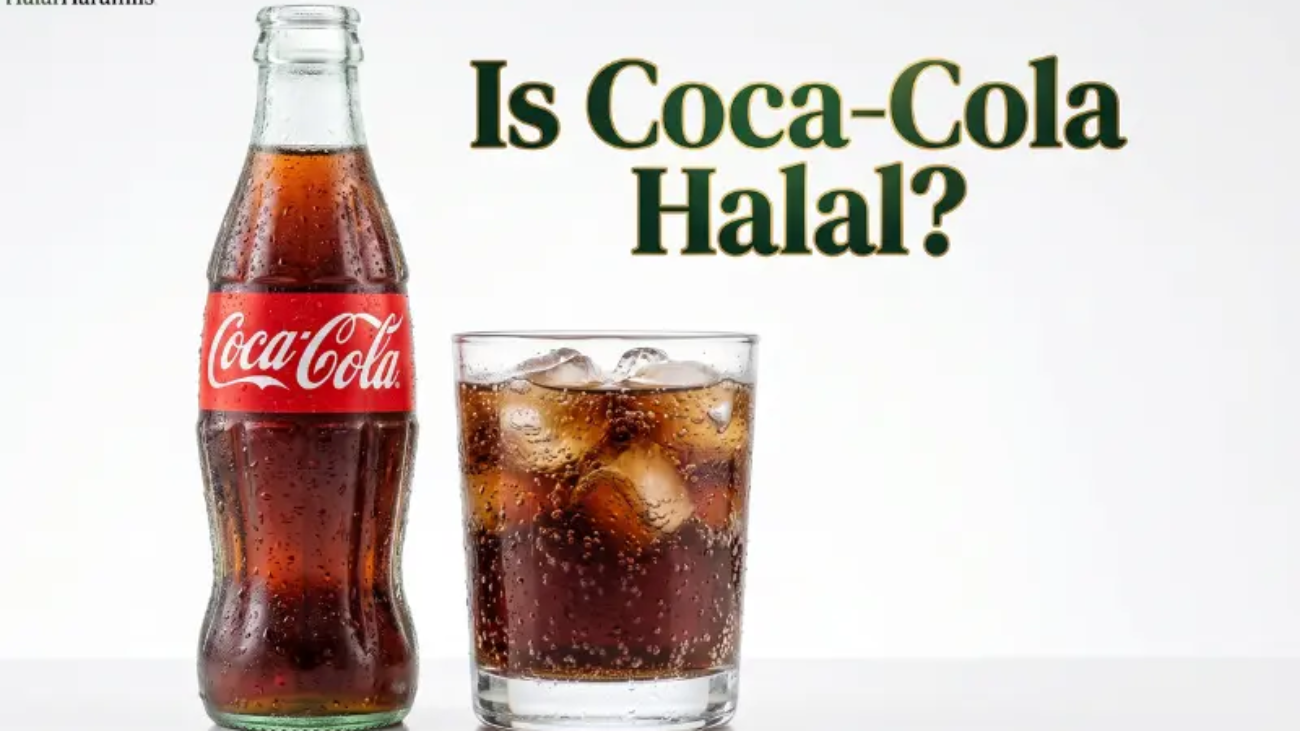
Is Coca-Cola halal or haram? For most Muslims in the USA, UK, and many other countries, regular Coca-Cola is generally considered halal. The drink does not contain pork, gelatin, animal fat, or alcoholic ingredients that make it an intoxicating beverage.
If you are asking “Is Coca-Cola halal?”, the answer is usually yes for standard Coca-Cola products. However, some Muslims still prefer to check ingredient lists, local halal certifications, and country-specific formulas because ingredients can sometimes vary between regions.
In simple words, regular Coca-Cola is widely accepted as halal by many Muslim consumers around the world.
Imagine you are having lunch at a restaurant in London, Manchester, New York, or Chicago. You order a burger, fish and chips, fried chicken, or a pizza. The waiter asks a simple question: “Would you like a Coke with that?”
For many people, Coca-Cola is just another soft drink. It is available almost everywhere, from supermarkets and convenience stores to airports and sports stadiums. Millions of people drink it every day without thinking about what is inside the bottle or can.
However, Muslims living in the USA and UK often pay close attention to ingredients. Questions about halal and haram foods have become more common because modern food products contain flavorings, additives, preservatives, and ingredients that are not always easy to understand.
Many Muslims wonder:
- Is Coca-Cola halal?
- Does Coke contain alcohol?
- Does Coca-Cola contain pork ingredients?
- Are Coca-Cola flavorings halal?
- Is Coca-Cola halal in the USA and UK?
These are reasonable questions because Muslims want confidence that the products they consume align with their dietary requirements. In this guide, we will explain Coca-Cola’s ingredients, discuss common concerns, and help you understand whether Coca-Cola is halal or haram.
Coca-Cola Ingredients Breakdown
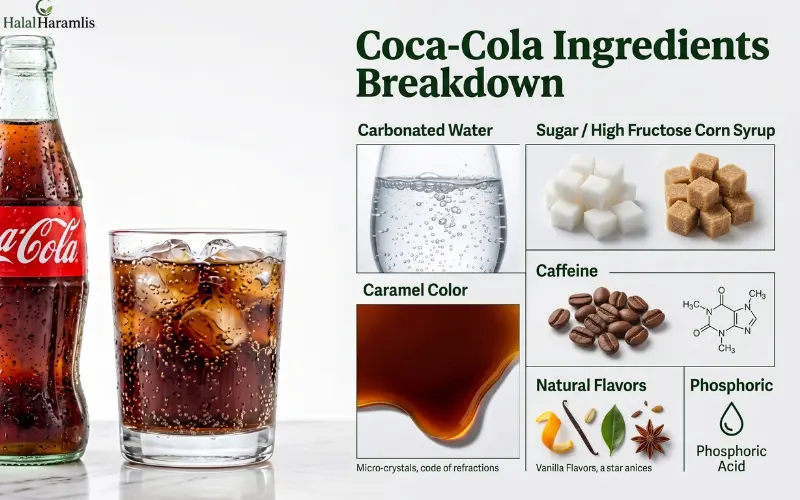
The exact formula of Coca-Cola is a closely guarded company secret, but the main ingredients are publicly listed.
| Ingredient | Purpose | Halal Concern |
| Carbonated Water | Base ingredient | Generally Halal |
| Sugar or Sweetener | Sweet taste | Usually Halal |
| Caramel Color | Gives dark color | Usually Halal |
| Phosphoric Acid | Adds acidity | Generally Halal |
| Natural Flavors | Signature taste | Source may be questioned |
| Caffeine | Flavor and stimulation | Halal |
Understanding These Ingredients
Carbonated Water
This is simply water mixed with carbon dioxide gas to create the fizzy bubbles. There are no halal concerns with carbonated water.
Sugar
Sugar provides sweetness. Standard sugar is generally considered halal.
Caramel Color
Caramel color gives Coca-Cola its famous dark brown appearance. It is usually produced from heated carbohydrates and is generally considered halal.
Phosphoric Acid
This ingredient creates the slightly tangy taste that Coca-Cola is known for. It is commonly used in soft drinks and is generally halal.
Natural Flavors
This is the ingredient that creates the most questions among consumers because Coca-Cola does not publicly reveal its complete flavor formula.
Caffeine
Caffeine is naturally found in coffee, tea, and many beverages. It is generally considered halal.
What Is Coca-Cola?
Coca-Cola is one of the most famous soft drinks in the world. It was first introduced in the United States in the late 1800s and has since become a global brand sold in more than 200 countries.
The drink is known for:
- Sweet flavor
- Fizzy carbonation
- Dark caramel color
- Unique taste profile
- Caffeine content
Today, Coca-Cola products can be found almost everywhere, including:
- Restaurants
- Fast-food chains
- Grocery stores
- Airports
- Cinemas
- Sports venues
- Convenience stores
Because Coca-Cola is consumed by millions of Muslims worldwide, questions about its halal status naturally arise.
Is Coca-Cola Halal?
For most Muslims, the answer is yes, Coca-Cola is generally considered halal.
The main reasons include:
- No pork ingredients
- No gelatin
- No animal fat
- No meat-derived ingredients
- Not sold as an alcoholic beverage
Many halal organizations and Muslim consumers consider regular Coca-Cola permissible because its listed ingredients do not contain obvious haram substances.
However, some Muslims remain cautious because the company’s flavor formula is proprietary and not fully disclosed to the public.
This does not automatically make Coca-Cola haram. It simply means some consumers prefer additional reassurance through halal certification or local ingredient verification.
Halal vs Haram Sources in Coca-Cola
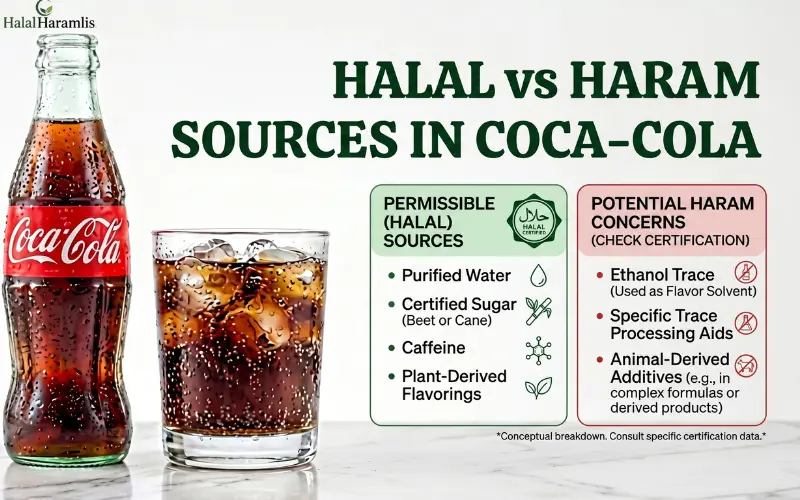
The halal status often depends on the source of ingredients.
| Ingredient Source | Halal Status |
| Carbonated Water | Halal |
| Sugar | Halal |
| Plant-Based Flavorings | Halal |
| Artificial Flavorings | Usually Halal |
| Mineral Ingredients | Halal |
| Caffeine | Halal |
| Pork-Derived Ingredients | Haram |
| Animal Fat from Non-Halal Sources | Haram |
| Intoxicating Alcoholic Ingredients | Haram |
Why Source Matters
Many food ingredients can come from different sources.
For example:
- Flavorings may be plant-based or synthetic.
- Additives may come from animal or plant sources.
- Processing methods may vary.
This is why Muslims often investigate ingredient origins before deciding whether a product is halal.
Why It Matters for Muslims in the USA and UK
Living in the USA or UK means regularly consuming packaged and processed foods.
Unlike homemade meals, packaged products often contain:
- Flavorings
- Preservatives
- Stabilizers
- Sweeteners
- Food additives
Many Muslims therefore ask questions before purchasing products.
Common concerns include:
- Hidden animal ingredients
- Alcohol-based flavorings
- Manufacturing processes
- Cross-contamination
- Lack of halal certification
Since Coca-Cola is one of the most consumed beverages in Western countries, understanding its halal status helps Muslims make informed choices.
Real-Life Examples
A Muslim student buying lunch at school may choose Coca-Cola.
A family ordering takeaway may include Coke with their meal.
A traveler at an airport may purchase Coca-Cola because halal options are limited.
In all these situations, knowing whether Coca-Cola is halal becomes important.
Products Under the Coca-Cola Brand
The Coca-Cola Company owns many beverage brands.
| Product | Generally Considered Halal? |
| Coca-Cola Classic | Usually Yes |
| Diet Coke | Usually Yes |
| Coca-Cola Zero Sugar | Usually Yes |
| Cherry Coke | Usually Yes |
| Vanilla Coke | Usually Yes |
| Sprite | Usually Yes |
| Fanta | Usually Yes |
| Minute Maid | Depends on Product |
| Powerade | Usually Yes |
Important Note
Different countries may use slightly different formulas.
Always check:
- Local ingredient labels
- Manufacturer information
- Halal certification where available
Does Coca-Cola Contain Alcohol?
This is probably the most frequently asked question.
Why People Ask This Question
Some food flavorings in the food industry may use alcohol during manufacturing or extraction processes.
Because of this, consumers sometimes worry that Coca-Cola contains alcohol.
The Reality
Regular Coca-Cola is not marketed or sold as an alcoholic beverage.
It does not function as an intoxicating drink.
Millions of Muslims around the world consume Coca-Cola because it is generally regarded as a non-alcoholic soft drink.
Should Muslims Be Concerned?
Most halal authorities and Muslim consumers do not classify standard Coca-Cola as an alcoholic beverage.
Therefore, regular Coca-Cola is generally considered halal.
Does Coca-Cola Contain Pork?
Another common concern is pork.
Many processed foods contain hidden pork ingredients such as:
- Gelatin
- Pork enzymes
- Pork fat
- Pork-derived additives
However, standard Coca-Cola products do not typically contain these ingredients.
Ingredients Not Found in Regular Coca-Cola
- Pork gelatin
- Pork fat
- Pork enzymes
- Pork protein
Because of this, pork is generally not considered a concern in standard Coca-Cola products.
Detailed Halal vs Haram Breakdown
Reasons Coca-Cola Is Considered Halal
No pork ingredients
No gelatin
No animal fat
No meat derivatives
Not sold as an alcoholic beverage
Widely consumed by Muslims globally
Reasons Some Consumers Remain Cautious
Proprietary flavor formula
Ingredient variations between countries
Preference for halal certification
Concerns about flavor extraction methods
For most Muslims, these concerns do not automatically make Coca-Cola haram. They simply encourage consumers to verify information when needed.
Safer Halal Alternatives
If you prefer beverages with halal certification, there are many alternatives available.
| Beverage | Halal-Friendly Option |
| Water | Excellent Choice |
| Sparkling Water | Usually Halal |
| Fruit Juice | Usually Halal |
| Halal-Certified Soft Drinks | Best Option |
| Lemonade | Usually Halal |
| Flavored Water | Usually Halal |
Tips for Choosing Alternatives
- Look for halal certification.
- Read ingredient labels.
- Avoid unknown additives.
- Check manufacturer information.
Common Mistakes People Make
Many consumers make assumptions without checking facts.
Mistake #1: Assuming Every Soft Drink Is Halal
Not all beverages have the same ingredients.
Always verify ingredients before consuming.
Mistake #2: Assuming Every Coca-Cola Product Is Identical Worldwide
Formulas can vary between countries.
A product sold in one country may differ slightly from another.
Mistake #3: Ignoring Ingredient Labels
Reading labels helps identify potential concerns.
Mistake #4: Believing Internet Rumors
Many online claims about Coca-Cola are unsupported.
Always rely on ingredient information and official sources.
Mistake #5: Assuming Halal Certification Is Always Present
Some products are halal but may not carry halal certification.
Related Halal Drink Guides
FAQs
Is Coca-Cola halal?
Yes, regular Coca-Cola is generally considered halal by many Muslims.
Is Coca-Cola haram?
Standard Coca-Cola is generally not considered haram.
Does Coca-Cola contain pork?
No, regular Coca-Cola does not typically contain pork ingredients.
Does Coca-Cola contain gelatin?
No, standard Coca-Cola does not contain gelatin.
Is Coca-Cola halal in the UK?
Yes, Coca-Cola sold in the UK is generally considered halal.
Is Coca-Cola halal in the USA?
Yes, standard Coca-Cola products in the USA are generally considered halal.
Does Coca-Cola contain alcohol?
It is not sold as an alcoholic beverage and is generally considered halal.
Is Diet Coke halal?
Diet Coke is generally considered halal.
Is Coca-Cola Zero Sugar halal?
Yes, it is generally considered halal.
Are Coca-Cola flavorings halal?
Most consumers consider them halal, although some prefer additional verification.
Is Cherry Coke halal?
Cherry Coke is generally considered halal.
Should Muslims check local ingredients?
Yes. Checking local labels is always a good practice because formulas can vary.
Conclusion
For most Muslims living in the USA, UK, and many other countries, Coca-Cola is generally considered halal. The drink does not contain pork, gelatin, animal fat, or ingredients commonly associated with haram foods. It is also not sold as an intoxicating alcoholic beverage, which is one of the main reasons many halal organizations and Muslim consumers accept it.
While some people remain cautious about proprietary flavorings and regional ingredient differences, these concerns do not automatically make Coca-Cola haram. Reading labels and checking local product information is always a smart habit.