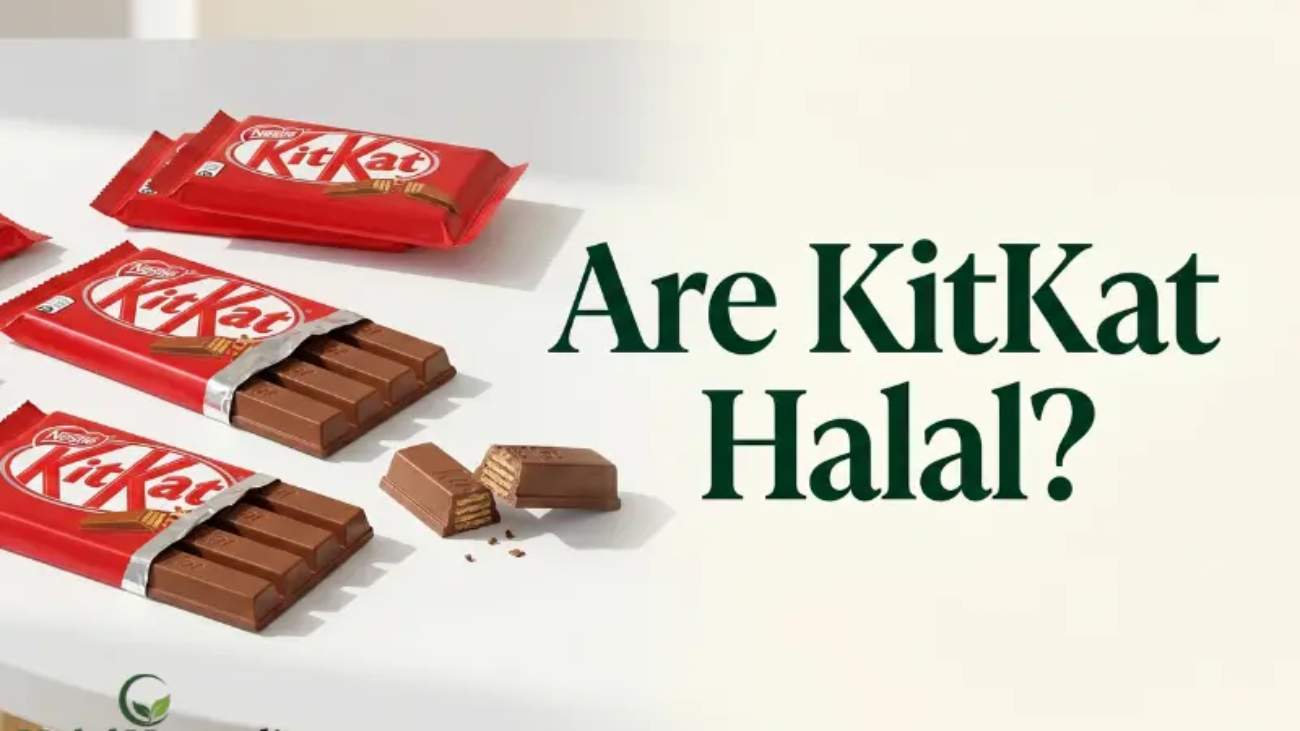
Most standard KitKat bars are generally considered halal because they are made from ingredients such as sugar, cocoa, milk, wheat flour, and vegetable fats that do not usually contain haram substances. However, the halal status can vary depending on the country, flavor, and manufacturing process.
Some special KitKat varieties may contain ingredients that require additional verification, such as flavorings, emulsifiers, or other additives. Therefore, Muslims should always check the ingredient label and halal certification when available.
KitKat is one of the most famous chocolate bars in the world. Produced by Nestlé in many countries, KitKat is known for its crispy wafer layers covered in smooth milk chocolate. Over the years, hundreds of KitKat flavors have been introduced, including chocolate, caramel, hazelnut, matcha, strawberry, and limited-edition varieties.
Because KitKat is so popular, many Muslims ask questions such as “Are KitKat halal or haram?”, “Can Muslims eat Kit Kats?”, “Is KitKat chocolate halal?”, “Is KitKat halal?”, and “Does KitKat contain gelatin?”
The answer is not always as simple as yes or no. The halal status depends on the ingredients used, the country where the product is manufactured, and whether any questionable additives are present.
This guide explains the halal status of KitKat, analyzes its ingredients, discusses gelatin concerns, and helps Muslim consumers make informed choices.
What Makes Chocolate Halal?
Chocolate is generally halal unless it contains ingredients that are prohibited in Islam.
Common halal concerns include:
- Pork-derived ingredients
- Gelatin
- Alcohol-based flavorings
- Animal-derived emulsifiers
- Cross-contamination during manufacturing
Halal Requirements for Chocolate
| Requirement | Needed for Halal? |
| No pork ingredients | Yes |
| No haram gelatin | Yes |
| No alcohol ingredients | Yes |
| Halal additives | Yes |
| Clean manufacturing process | Preferred |
If these conditions are met, chocolate products are generally considered halal.
Is KitKat Halal?
In many countries, standard KitKat bars are generally considered halal-friendly.
The basic ingredients found in traditional KitKat products usually include:
- Sugar
- Cocoa
- Milk solids
- Wheat flour
- Vegetable fats
- Emulsifiers
- Flavorings
Most of these ingredients are generally halal.
However, special flavors and regional recipes may contain additional ingredients that require verification.
Standard KitKat Overview
| Ingredient | Halal Status |
| Sugar | Halal |
| Cocoa | Halal |
| Milk Solids | Halal |
| Wheat Flour | Halal |
| Vegetable Fats | Halal |
| Emulsifiers | Usually Halal |
| Flavorings | May Vary |
Because recipes differ by country, consumers should always review the local ingredient label.
Is KitKat Chocolate Halal?
Most standard KitKat chocolate products are generally considered halal.
The chocolate coating usually contains:
- Cocoa mass
- Cocoa butter
- Milk ingredients
- Sugar
These ingredients do not normally create halal concerns.
The main issues arise when special flavorings, fillings, or additives are introduced into limited-edition products.
Can Muslims Eat Kit Kats?
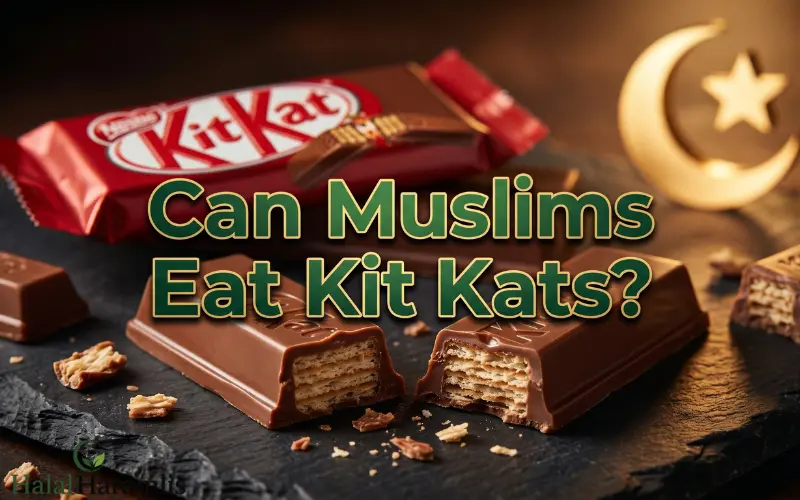
Many Muslims around the world regularly consume KitKat bars.
If the product contains only halal ingredients and does not include haram additives, it is generally considered permissible.
However, Muslims who follow stricter halal standards may prefer products that carry official halal certification.
Factors Muslims Consider
| Factor | Importance |
| Ingredient List | High |
| Halal Certification | High |
| Gelatin Content | High |
| Alcohol-Based Flavorings | High |
| Manufacturing Process | Medium |
Checking these factors helps consumers make informed decisions.
Does KitKat Contain Gelatin?
One of the most common questions is:
Does KitKat contain gelatin?
Most standard KitKat bars do not typically contain gelatin as a regular ingredient.
Traditional milk chocolate KitKat products usually rely on ingredients such as sugar, cocoa, milk solids, flour, and vegetable fats rather than gelatin.
Gelatin Analysis
| Product Type | Gelatin Present? |
| Original KitKat | Usually No |
| Standard Milk Chocolate | Usually No |
| Dark Chocolate KitKat | Usually No |
| Limited Editions | Check Label |
| Specialty Products | Check Label |
Because recipes can change, consumers should always read the packaging before purchasing.
KitKat Ingredients Analysis
Understanding the ingredients helps determine whether a product is halal.
Common Ingredients
| Ingredient | Halal Status |
| Sugar | Halal |
| Cocoa Butter | Halal |
| Cocoa Mass | Halal |
| Milk Powder | Halal |
| Wheat Flour | Halal |
| Vegetable Oils | Halal |
| Lecithin | Usually Halal |
| Flavorings | May Vary |
Most of these ingredients are widely accepted as halal.
What About Emulsifiers?
Emulsifiers help chocolate maintain its texture and consistency.
The most common emulsifier found in KitKat products is soy lecithin.
Emulsifier Overview
| Emulsifier | Halal Status |
| Soy Lecithin | Halal |
| Sunflower Lecithin | Halal |
| Plant-Based Emulsifiers | Halal |
| Animal-Based Emulsifiers | Verify Source |
Most emulsifiers used in standard KitKat products are plant-based.
Are Flavored KitKats Halal?
Flavored KitKat products require more attention than regular varieties.
Examples include:
- Strawberry KitKat
- Matcha KitKat
- Hazelnut KitKat
- Caramel KitKat
- Specialty Seasonal Flavors
These products may contain additional ingredients that require verification.
Flavored KitKat Status
| Flavor Type | Status |
| Original | Generally Halal |
| Dark Chocolate | Generally Halal |
| Strawberry | Check Ingredients |
| Caramel | Check Ingredients |
| Matcha | Check Ingredients |
| Limited Editions | Verify First |
The more complex the flavor, the more important it becomes to review the ingredient list.
Is KitKat Halal in the USA?
Many Muslims in America regularly buy KitKat products and wonder whether they are halal.
Most standard KitKat bars sold in the United States are generally considered halal-friendly because they do not typically contain pork-derived ingredients or gelatin. The ingredients mainly consist of chocolate, milk solids, sugar, wheat flour, and vegetable fats.
However, some seasonal and limited-edition varieties may contain additional ingredients that require verification.
KitKat USA Status
| Product Type | Status |
| Original KitKat | Generally Halal |
| Dark Chocolate KitKat | Generally Halal |
| Mini KitKat | Generally Halal |
| Seasonal Flavors | Check Ingredients |
| Limited Editions | Verify First |
Reading the ingredient label remains the safest approach.
Is KitKat Halal in the UK?
KitKat products sold in the United Kingdom may have slightly different recipes than those sold in other countries.
Many standard KitKat bars in the UK are generally considered halal-friendly because they do not usually contain gelatin or obvious haram ingredients. However, recipe changes can occur, and some specialty flavors may use ingredients that require additional review.
KitKat UK Status
| Product Type | Status |
| Original KitKat | Generally Halal |
| Two Finger KitKat | Generally Halal |
| Chunky KitKat | Generally Halal |
| Seasonal Products | Check Label |
| Specialty Flavors | Verify First |
Consumers should always review the packaging available in their own country.
Does KitKat Contain Alcohol?
Most regular KitKat bars do not list alcohol as an ingredient.
However, some specialty chocolates and limited-edition products may use flavorings that require additional verification. Certain flavor extracts used in the food industry can sometimes involve alcohol during processing.
This does not automatically make every flavored KitKat haram, but Muslims who follow strict halal standards may prefer products with halal certification.
Alcohol Concern Overview
| Product Type | Alcohol Concern |
| Original KitKat | Very Low |
| Standard Chocolate | Very Low |
| Flavored Varieties | Check Ingredients |
| Seasonal Editions | Verify First |
What Do Islamic Scholars Say?
Many Islamic scholars follow the principle that foods are considered halal unless there is clear evidence showing that they contain haram ingredients.
When evaluating products like KitKat, scholars usually examine:
- Gelatin sources
- Emulsifier sources
- Flavoring ingredients
- Alcohol content
- Manufacturing practices
If a product contains doubtful ingredients whose source cannot be confirmed, some scholars recommend avoiding it until more information becomes available.
This follows the Islamic principle of avoiding doubtful matters.
Cross-Contamination Concerns
Some Muslims also consider manufacturing practices when determining whether a food product is halal.
Potential concerns include:
- Shared production lines
- Shared equipment
- Contact with non-halal ingredients
- Manufacturing of products containing gelatin
For many consumers, these concerns are secondary if the ingredients themselves are halal. Others prefer products carrying halal certification for additional assurance.
Manufacturing Considerations
| Concern | Importance |
| Shared Equipment | May Matter |
| Shared Production Lines | May Matter |
| Ingredient Contact | Depends on Process |
| Halal Certification | Helpful |
Why Some Muslims Avoid Certain KitKat Products
Although many KitKat bars are generally considered halal-friendly, some Muslims still choose to avoid certain varieties.
Common reasons include:
- Unclear flavoring sources.
- Lack of halal certification.
- Questions about emulsifiers.
- Concerns regarding manufacturing processes.
- Uncertainty about specialty ingredients.
Because of these concerns, many Muslims prefer standard KitKat bars over limited-edition products.
Which KitKat Products Are Usually the Safest?
The simplest varieties are often considered the easiest to evaluate.
Many Muslims feel comfortable choosing:
- Original KitKat
- Two Finger KitKat
- Standard Milk Chocolate KitKat
- Dark Chocolate KitKat
These products generally contain fewer specialty ingredients than seasonal or flavored editions.
Commonly Preferred Options
| Product | Generally Considered |
| Original KitKat | Halal-Friendly |
| Standard Milk Chocolate | Halal-Friendly |
| Dark Chocolate | Halal-Friendly |
| Specialty Flavors | Verify First |
| Seasonal Editions | Verify First |
Halal-Friendly Chocolate Alternatives
If you are uncertain about a specific KitKat flavor, there are many halal-certified chocolate brands available.
Alternative Options
| Product Type | Alternative |
| Chocolate Bars | Halal-Certified Chocolate |
| Wafer Chocolates | Halal-Certified Wafer Bars |
| Milk Chocolate | Certified Halal Brands |
| Family Snacks | Halal Snack Brands |
Choosing certified products can remove much of the uncertainty.
See Also:
- Is Feastables Halal or Haram?
- Are Oreos Halal or Haram?
- Is Starburst Halal?
- Are Skittles Halal or Haram?
- Is Haribo Halal or Haram?
- Is Sour Patch Kids Halal or Haram?
FAQs
Are KitKat halal or haram?
Most standard KitKat bars are generally considered halal-friendly.
Can Muslims eat Kit Kats?
Yes, many Muslims consume standard KitKat products after reviewing the ingredients.
Is KitKat chocolate halal?
Most regular KitKat chocolate products are generally considered halal.
Is KitKat halal?
Many standard KitKat varieties are considered halal-friendly.
Does KitKat contain gelatin?
Most regular KitKat bars do not typically contain gelatin.
Is KitKat halal in the USA?
Most standard KitKat products sold in the USA are generally halal-friendly.
Is KitKat halal in the UK?
Many standard UK KitKat products are generally considered halal-friendly.
Does KitKat contain pork?
Regular KitKat bars do not typically contain pork ingredients.
Does KitKat contain alcohol?
Most standard KitKat products do not list alcohol as an ingredient.
Are flavored KitKats halal?
Some flavored varieties may require ingredient verification.
Why do some Muslims avoid KitKat?
Some consumers prefer halal-certified products and avoid items with unclear ingredients.
What is the safest KitKat option?
Original KitKat is generally considered one of the safest and simplest choices.
Conclusion
KitKat remains one of the most popular chocolate snacks in the world, and most standard varieties are generally considered halal-friendly. Regular KitKat bars typically contain ingredients such as cocoa, sugar, milk solids, wheat flour, and vegetable fats, and they usually do not contain gelatin or pork-derived ingredients. For this reason, many Muslims feel comfortable consuming standard KitKat products.
However, not every KitKat flavor has the same ingredient list. Limited-edition products, seasonal releases, and specialty flavors may contain additional ingredients that require further verification. Since recipes can vary by country and change over time, reading the ingredient label is always recommended. If complete certainty is important, choosing halal-certified chocolate products remains the best option for Muslim consumers.