
Is Red Bull halal or haram? In most cases, Red Bull is generally considered halal because it does not contain pork, gelatin, or intoxicating alcohol. The drink is mainly made from carbonated water, caffeine, taurine, sugar, vitamins, and flavorings.
However, some people still check the source of ingredients such as taurine and natural flavors. For most consumers in the USA and UK, Red Bull is considered a halal-friendly energy drink, but checking current ingredients is always recommended.
Energy drinks have become a normal part of daily life in the USA and UK. Students drink them while studying for exams, office workers use them during long shifts, and drivers often rely on them during road trips. One of the most popular energy drinks in the world is Red Bull.
Because many packaged foods and drinks contain hidden ingredients, people often ask: Is Red Bull halal or haram? This question is important because energy drinks contain ingredients such as taurine, caffeine, vitamins, and flavorings that many consumers do not fully understand. The good news is that Red Bull does not contain obvious haram ingredients like pork or gelatin. Still, understanding every ingredient helps consumers make informed choices.
This guide explains Red Bull ingredients, halal concerns, ingredient sources, USA and UK considerations, and safer alternatives in simple English.
Table : Red Bull Ingredients Breakdown
| Ingredient | Purpose | Halal Status |
| Carbonated Water | Base ingredient | Halal |
| Sugar | Sweetness | Halal |
| Glucose | Energy source | Halal |
| Taurine | Energy support | Generally Halal |
| Caffeine | Alertness | Halal |
| B Vitamins | Nutritional support | Halal |
| Citric Acid | Acidity control | Halal |
| Natural & Artificial Flavors | Taste | Usually Halal |
What Is Red Bull?
Red Bull is a carbonated energy drink that was originally developed in Austria and later became one of the most recognized beverage brands in the world.
Today, Red Bull is sold in:
- United States
- United Kingdom
- Canada
- Australia
- Europe
- Asia
- Middle East
People commonly drink Red Bull when they need extra energy, focus, or alertness.
The company offers several varieties, including:
- Red Bull Original
- Red Bull Sugarfree
- Red Bull Zero
- Red Bull Tropical Edition
- Red Bull Watermelon Edition
- Red Bull Coconut Edition
Although flavors differ, the main ingredients remain similar.
Table : Halal vs Haram Sources of Red Bull Ingredients
| Ingredient Source | Halal or Haram |
| Synthetic Taurine | Halal |
| Plant-Based Ingredients | Halal |
| Synthetic Vitamins | Halal |
| Mineral Acids | Halal |
| Pork-Derived Ingredients | Haram |
| Alcohol-Based Ingredients | Haram |
| Unknown Animal Sources | Questionable |
Is Red Bull Halal?
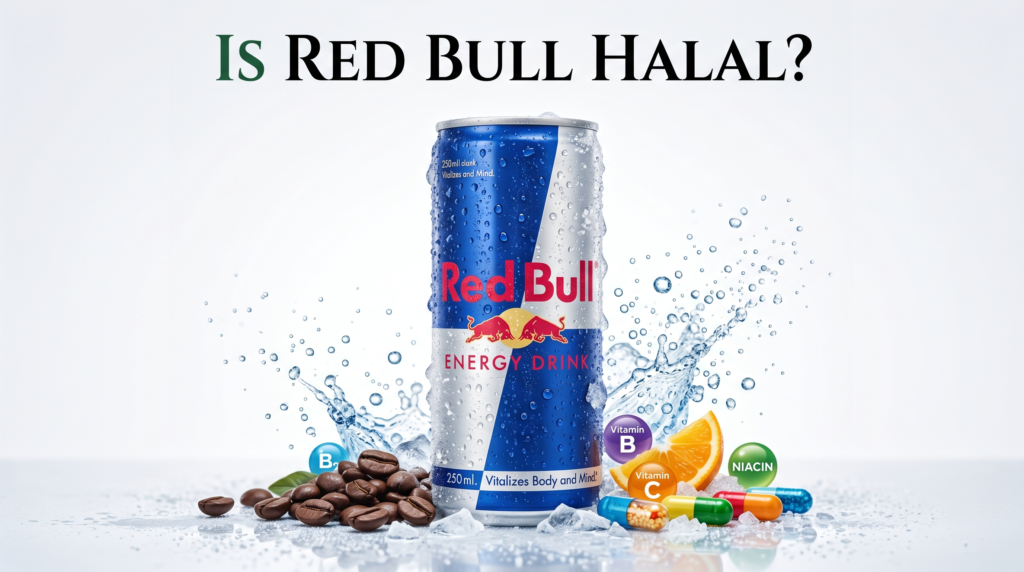
The simple answer is that Red Bull is generally considered halal because its ingredient list does not typically contain pork, gelatin, or alcohol as an intoxicating beverage.
Most ingredients found in Red Bull are either:
- Plant-based
- Synthetic
- Mineral-based
This makes it different from products such as marshmallows, gummies, and gelatin desserts, which often raise halal concerns.
For many consumers, Red Bull is viewed as a halal-friendly option because no obvious haram ingredients appear on the label.
Understanding Taurine in Red Bull
Taurine is one of the most misunderstood ingredients in energy drinks.
Many people hear the word “taurine” and assume it comes from animals.
What Is Taurine?
Taurine is an amino acid naturally found in the human body. It helps support:
- Brain function
- Muscle performance
- Heart function
- Energy production
Is Taurine Halal?
Modern Red Bull uses synthetically produced taurine.
This means it is manufactured in laboratories rather than extracted from animals.
Because synthetic taurine does not come from pork or non-halal meat sources, many consumers consider it halal.
Why Ingredient Sources Matter
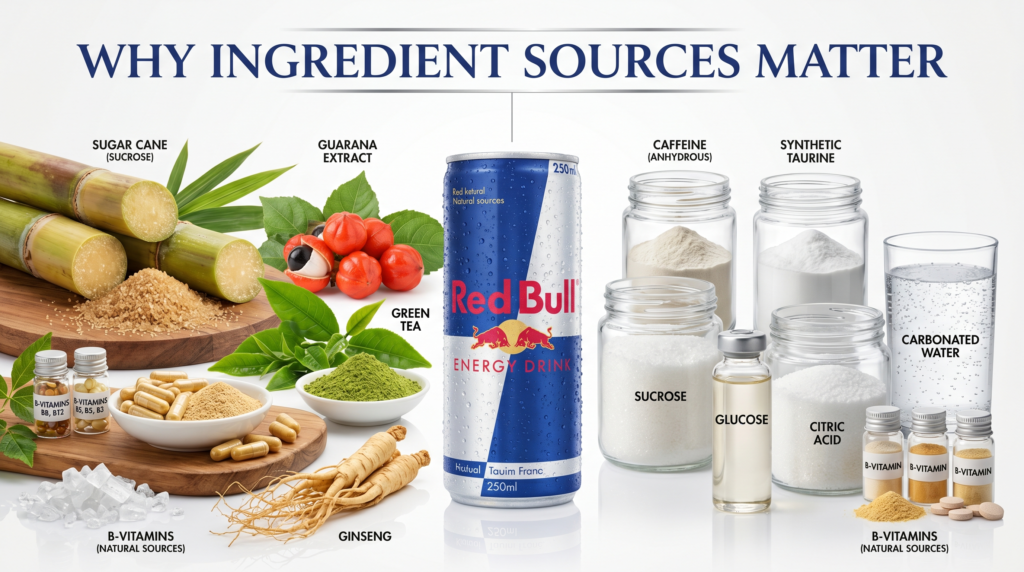
Many consumers focus only on the ingredient name.
However, the source of an ingredient can be just as important as the ingredient itself.
For example:
- Gelatin can come from halal or haram sources.
- Flavorings can come from different production methods.
- Vitamins can be naturally sourced or synthetic.
knowing ingredient origins helps consumers make better halal decisions.
Does Red Bull Contain Alcohol?
One of the most common questions online is:
Does Red Bull contain alcohol?
Red Bull is sold as a non-alcoholic beverage.
It is not designed to intoxicate consumers and is not classified as an alcoholic drink.
Some consumers investigate whether tiny traces may be involved during flavor production, but the drink itself is marketed and sold as a non-alcoholic product.
For most consumers, this is not considered a major halal concern.
Does Red Bull Contain Pork?
Traditional Red Bull products generally do not contain:
- Pork
- Lard
- Animal fat
- Gelatin
This is one of the main reasons many consumers consider Red Bull halal-friendly.
Products such as gummies, marshmallows, and gelatin desserts often raise more concerns than energy drinks because they commonly contain animal-derived ingredients.
Why It Matters in the USA and UK
Consumers in the USA and UK drink millions of cans of energy drinks every year.
Red Bull is commonly consumed by:
- Students
- Office workers
- Gamers
- Drivers
- Athletes
- Shift workers
Because Red Bull is part of everyday life for many people, understanding its halal status becomes important.
Many consumers today are more aware of ingredient labels and food transparency than ever before.
People want to know:
- Where ingredients come from
- How products are made
- Whether hidden animal ingredients exist
- If flavorings raise halal concerns
This increased awareness explains why Red Bull’s halal status is frequently discussed.
Table : Red Bull Products Commonly Sold
| Product | Halal Concern Level |
| Red Bull Original | Low |
| Red Bull Sugarfree | Low |
| Red Bull Zero | Low |
| Red Bull Tropical Edition | Low |
| Red Bull Watermelon Edition | Low |
| Red Bull Coconut Edition | Low |
Ingredient-by-Ingredient Halal Analysis
Carbonated Water
Carbonated water is the main ingredient in Red Bull.
It is generally considered halal.
Sugar
Sugar provides sweetness and energy.
It is generally halal.
Glucose
Glucose is another energy source commonly used in beverages.
It is generally halal.
Taurine
Synthetic taurine is generally considered halal because it is produced without animal extraction.
Caffeine
Caffeine naturally occurs in coffee and tea.
It is generally halal.
B Vitamins
Red Bull contains vitamins such as:
- Vitamin B3
- Vitamin B5
- Vitamin B6
- Vitamin B12
These vitamins are generally considered halal.
Flavorings
Flavorings sometimes create questions because exact formulas are not always publicly disclosed.
However, flavorings used in mainstream beverages are generally considered halal unless there is evidence otherwise.
Is Red Bull Sugarfree Halal?
Red Bull Sugarfree is one of the most popular alternatives to the original version. It contains many of the same ingredients but replaces sugar with artificial sweeteners.
Common ingredients include:
- Carbonated water
- Taurine
- Caffeine
- B vitamins
- Artificial sweeteners
- Flavorings
Because it does not contain pork, gelatin, or intoxicating alcohol, Red Bull Sugarfree is generally considered halal by many consumers.
The main halal discussion remains the same as the original version: ingredient sourcing and flavoring transparency.
Is Red Bull Zero Halal?
Red Bull Zero is another low-calorie energy drink designed for people who want fewer calories without sacrificing taste.
It contains:
- Caffeine
- Taurine
- Vitamins
- Sweeteners
- Flavorings
Like other Red Bull products, it does not typically contain pork or gelatin.
Most consumers consider Red Bull Zero halal-friendly.
Halal vs Haram Detailed Breakdown
Understanding halal status becomes easier when looking at different situations.
When Red Bull Is Considered Halal
Red Bull is generally considered halal when:
- Taurine is synthetic.
- No pork ingredients are used.
- No gelatin is present.
- No intoxicating alcohol is included.
- Ingredients remain plant-based or synthetic.
These conditions apply to most standard Red Bull products sold in the USA and UK.
When Consumers May Have Concerns
Some consumers prefer additional verification when:
- Ingredient formulas change.
- Flavoring sources are unclear.
- Regional manufacturing differs.
- Personal halal standards require certification.
While these concerns exist, they do not automatically make the drink haram.
Table : Safer Halal Alternatives
| Alternative | Why It May Be Preferred |
| Coffee | Natural caffeine source |
| Green Tea | Plant-based energy |
| Black Tea | Simple ingredients |
| Fresh Fruit Smoothies | Natural vitamins and energy |
| Sparkling Water | Minimal processing |
| Halal-Certified Energy Drinks | Additional assurance |
Best Alternatives to Red Bull
Some consumers prefer drinks with simpler ingredient lists.
Coffee
Coffee naturally contains caffeine and is widely available.
Green Tea
Green tea provides a lighter source of energy while containing antioxidants.
Black Tea
Black tea offers caffeine with a simple ingredient profile.
Fresh Smoothies
Fruit smoothies provide natural sugars and vitamins without complex additives.
Halal-Certified Energy Drinks
Some specialty brands offer halal-certified energy drinks for additional confidence.
Common Mistakes People Make
Many people misunderstand energy drinks and their ingredients.
Assuming Taurine Comes From Bulls
This is one of the most common myths.
Modern taurine used in Red Bull is generally synthetic.
Thinking Every Energy Drink Is Haram
Each drink should be evaluated based on its ingredients.
Ignoring Ingredient Labels
Manufacturers can change formulas over time.
Always check current packaging.
Trusting Social Media Rumors
Many claims online are inaccurate or outdated.
Confusing Caffeine With Alcohol
Caffeine and alcohol are completely different substances.
Assuming All Flavorings Are Haram
Most flavorings used in mainstream beverages are generally considered halal unless evidence shows otherwise.
Why Red Bull Remains Popular
Red Bull continues to be one of the world’s leading energy drinks because it is:
- Widely available
- Easy to find
- Consistent in taste
- Available in multiple flavors
- Popular among students and professionals
Its popularity means halal questions will likely continue for years to come.
Related Articles
FAQs
Is Red Bull halal or haram?
Red Bull is generally considered halal because it does not typically contain pork, gelatin, or intoxicating alcohol.
Is Red Bull halal in the USA?
Most consumers consider it halal based on its listed ingredients.
Is Red Bull halal in the UK?
It is generally viewed as halal-friendly in the UK as well.
Does Red Bull contain alcohol?
Red Bull is sold as a non-alcoholic beverage.
Does Red Bull contain pork?
Traditional Red Bull products generally do not contain pork.
Is taurine halal?
Synthetic taurine is generally considered halal.
Is Red Bull Sugarfree halal?
Most consumers consider it halal.
Is Red Bull Zero halal?
It is generally considered halal-friendly.
Does Red Bull contain gelatin?
No gelatin is typically listed in standard Red Bull products.
Why do people question Red Bull’s halal status?
Mainly because of taurine and flavoring ingredients.
Can children drink Red Bull?
Energy drinks contain caffeine, so age recommendations and health considerations should be followed.
What is the safest alternative to Red Bull?
Coffee, tea, fresh smoothies, and halal-certified energy drinks are commonly preferred alternatives.
Conclusion
So, is Red Bull halal or haram? Based on its commonly listed ingredients, Red Bull is generally considered halal because it does not typically contain pork, gelatin, or intoxicating alcohol. The drink is mainly made from carbonated water, sugar or sweeteners, caffeine, taurine, vitamins, and flavorings, which are usually considered halal-friendly.
The biggest concern for many people is taurine, but modern Red Bull uses synthetic taurine, not taurine taken from animals. This makes the ingredient acceptable for many halal-conscious consumers in the USA and UK. While some people prefer products with official halal certification, most consumers view Red Bull as a suitable energy drink based on its ingredient profile.
The final verdict is simple: Red Bull is generally considered halal, but checking the latest ingredient label is always the safest approach since formulas can change over time.