
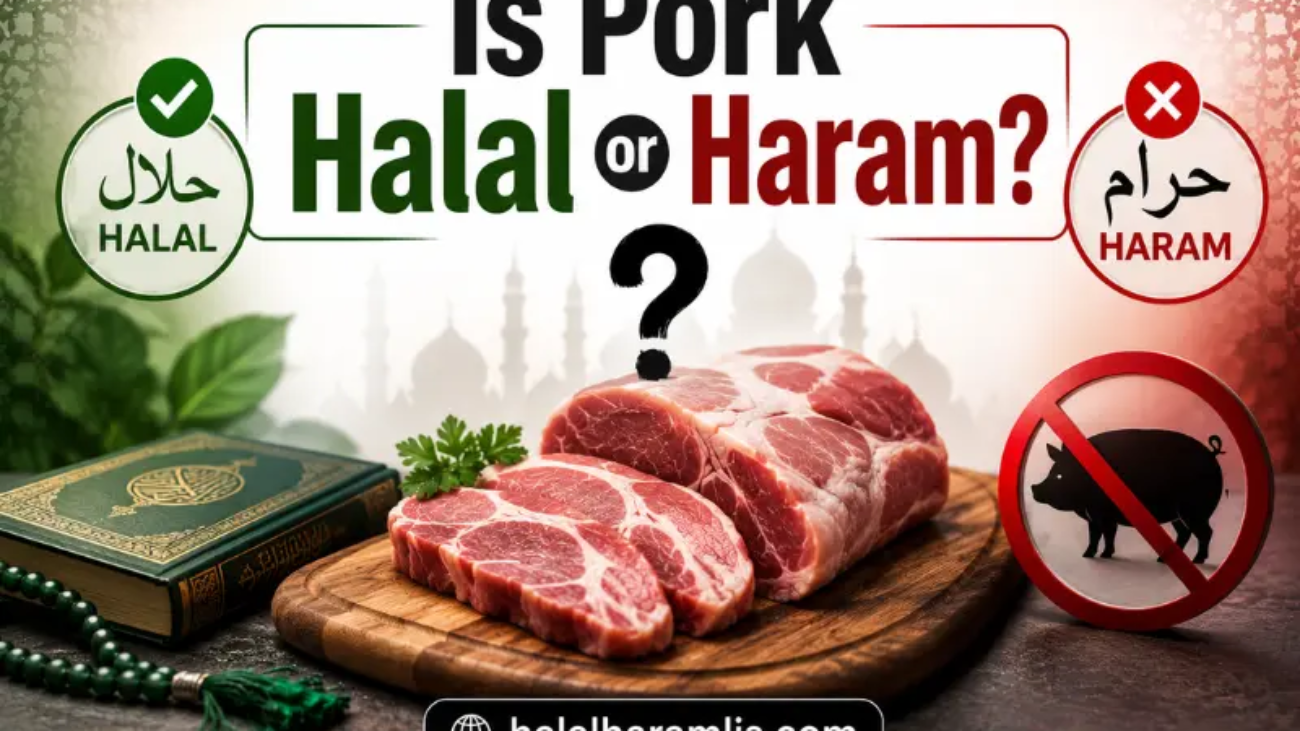
Pork is completely haram (forbidden) in Islam in all situations except life-threatening emergencies where no other food exists. The prohibition is clear in the Qur’an and agreed upon by all Islamic scholars. There are religious, health, spiritual, and scientific reasons why Muslims do not eat pork.
This complete guide explains everything Muslims and non-Muslims need to know — including Islamic rulings, scientific reasons, historical context, common misconceptions, and modern debates.
Why This Question Is So Important
One of the most frequently asked questions about Islam is:
- Why don’t Muslims eat pork?
- Is pork halal in any situation?
- Is the ban only cultural or religious?
- Are there scientific reasons behind the prohibition?
For Muslims, halal food is not a lifestyle trend — it is a religious obligation connected to obedience, purity, and spirituality.
Islamic Ruling: Is Pork Halal or Haram?
The ruling is clear, direct, and unanimous:
👉 Pork is strictly haram in Islam.
There is no disagreement among scholars.
The prohibition appears multiple times in Islamic scripture, making it one of the strongest food prohibitions in Islam.
Why Allah Prohibited Pork
Islam teaches that Allah allows what is pure and beneficial and forbids what is harmful and impure.
Muslims believe that even if humans don’t fully understand every reason, the prohibition exists for wisdom, protection, and spiritual discipline.
Table Foods Clearly Forbidden in Islam
| Food Type | Status | Reason |
| Pork | Haram | Explicitly prohibited |
| Blood | Haram | Considered impure |
| Alcohol | Haram | Intoxicating |
| Carrion (dead animals) | Haram | Not slaughtered properly |
| Animals not slaughtered in Allah’s name | Haram | Religious requirement |
Pork appears in the same category as alcohol and blood, showing the seriousness of the ruling.
Why Muslims Don’t Eat Pork
There are three major categories of reasons:
- Religious reasons
- Spiritual & moral reasons
- Health & scientific reasons
Let’s explore each deeply.
Religious Reasons Why Pork Is Haram
The prohibition is not cultural — it is divine law.
Islam teaches that obedience to God includes following dietary laws.
Muslims avoid pork because:
- It is explicitly forbidden
- It is considered impure
- It is a test of obedience
- It protects spiritual purity
The Islamic view is simple:
If Allah forbids something, it is harmful even if humans do not yet understand why.
Spiritual Wisdom Behind the Prohibition
Islam links food to spiritual behavior and character.
Halal food → purity, discipline, obedience
Haram food → impurity, spiritual harm
Muslims believe food affects:
- Spiritual state
- Moral behavior
- Mental clarity
- Heart purity
This is why halal eating is part of daily worship.
Is Pork Halal in Any Situation?
This is a very important question.
The ONLY Exception
Islam allows eating pork only in life-threatening emergencies.
Conditions:
- Starvation risk
- No halal food available
- Eat only enough to survive
- Not for enjoyment
This shows Islam is practical and merciful, not harsh.
Table Emergency Exception Rule
| Situation | Pork Allowed? |
| Starvation risk | Yes (minimum amount) |
| Lost in desert | Yes |
| No halal food available | Yes |
| Normal hunger | No |
| Craving or desire | No |
This is called the principle of necessity.
Scientific Reasons Why Pork Is Haram
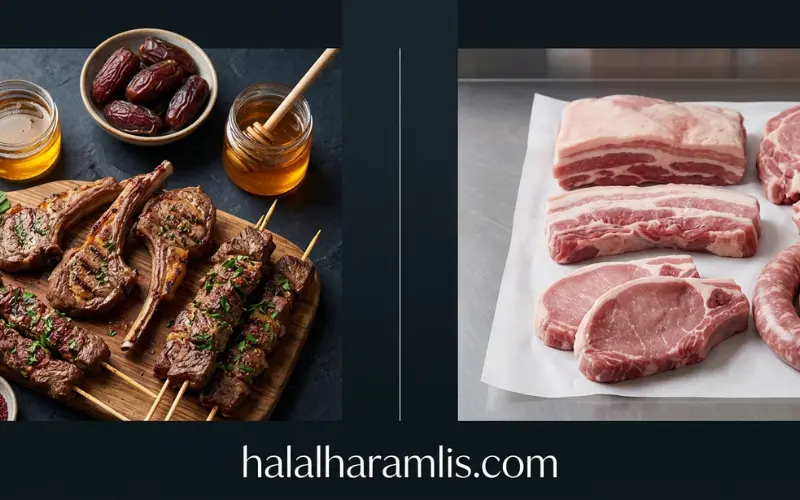
Many people are surprised to learn that modern science has discovered serious health concerns related to pork consumption.
Islam prohibited pork 1400 years ago, long before modern medicine.
Let’s explore the scientific side.
Parasites in Pork
Pigs are known carriers of dangerous parasites.
Common pork parasites:
- Trichinella (Trichinosis)
- Tapeworms
- Toxoplasma
- Roundworms
These parasites can infect humans and cause:
- Muscle pain
- Fever
- Digestive problems
- Brain infections
Even modern cooking cannot eliminate all risks.
Pigs Eat Almost Anything
Pigs are omnivorous scavengers.
They eat:
- Garbage
- Dead animals
- Feces
- Rotting food
This increases toxin accumulation in their bodies.
Islam emphasizes eating clean animals, not scavengers.
High Fat & Disease Risk
Pork is extremely high in fat and cholesterol.
Associated health risks:
- Heart disease
- Obesity
- High blood pressure
- Diabetes
Modern nutrition increasingly warns about processed pork products.
Table Health Risks Linked to Pork
| Health Risk | Explanation |
| Parasites | Trichinella & tapeworm infection |
| Heart disease | High saturated fat |
| Cancer risk | Processed meats classified as carcinogenic |
| High cholesterol | Raises LDL levels |
| Food poisoning | High bacterial contamination |
Many scientists now recommend reducing pork consumption.
Hygiene & Toxicity Concerns
Pigs lack efficient sweat glands, meaning toxins accumulate in fat tissues.
This contributes to:
- High toxin storage
- Increased bacterial growth
- Faster meat spoilage
Islamic teachings emphasize cleanliness and purity — making pork inconsistent with halal principles.
Psychological & Behavioral Arguments
Some scholars discuss symbolic wisdom:
Pigs are known for:
- Lack of cleanliness
- Scavenging behavior
- No natural jealousy (protective instinct)
Islam promotes animals considered clean and noble for food.
Why Pork Is the ONLY Meat Completely Forbidden
Many animals are halal when slaughtered correctly.
But pork is always forbidden, even if slaughtered Islamically.
Why?
Because the prohibition is absolute and permanent.
Table Halal vs Haram Meat Comparison
| Animal | Halal if Slaughtered Properly? |
| Cow | Yes |
| Chicken | Yes |
| Sheep | Yes |
| Fish | Yes |
| Pig | NEVER |
This makes pork unique among forbidden foods.
Misconceptions About Pork in Islam
Myth It’s Only Cultural
False — the prohibition is religious and universal.
Myth It Was Only for Old Times
False — the ruling is permanent.
Myth Modern Pork Is Safe
False — health risks still exist today.
Pork in Other Religions
Interestingly, Islam is not alone.
Pork is also forbidden in:
- Judaism
- Certain early Christian traditions
This shows the prohibition has ancient roots.
Modern Scientific Support
Recent research links processed pork to:
- Colon cancer
- Heart disease
- Chronic inflammation
Many health experts now advise limiting processed meats.
Why the Prohibition Still Matters Today
Modern food industry issues:
- Hormones
- Antibiotics
- Industrial farming
- Processed meat chemicals
These make pork even more questionable today.
The Wisdom Behind Halal Diet
Islam promotes food that is:
- Clean
- Ethical
- Safe
- Spiritually pure
Halal eating promotes discipline and mindfulness.
The History of Pork Prohibition in Human Civilization
Many people think the ban on pork exists only in Islam, but history shows that pork avoidance is ancient and widespread.
Long before modern science, entire civilizations avoided pigs due to hygiene, health risks, and spiritual beliefs.
Historically, pigs were viewed as:
- Scavengers that ate waste and carcasses
- Animals difficult to keep clean in hot climates
- Carriers of disease in ancient societies
In desert and hot environments, pork spoiled quickly and caused illness. This made pork particularly dangerous in regions where Islam later emerged.
This historical reality shows the prohibition was not random — it was consistent with human experience long before modern medicine.
Pork Prohibition in Judaism and Christianity
Islam is not the only religion that forbids pork.
In Judaism
Pork is strictly forbidden in Jewish dietary law (Kosher).
The Torah clearly bans pigs because:
- They do not chew cud
- They are considered unclean animals
Jews have avoided pork for over 3,000 years.
In Early Christianity
Early Christians also avoided pork. Over time, some Christian groups stopped following Old Testament dietary laws, but the historical prohibition remained.
This shared rule across Abrahamic religions shows pork prohibition has deep religious roots.
Environmental and Ethical Reasons
Modern research has revealed environmental concerns about pig farming.
Pig farming contributes to:
- Water pollution
- Soil contamination
- Methane and greenhouse gases
- High waste production
Industrial pig farms produce massive amounts of waste, which can contaminate rivers and groundwater.
Islam encourages ethical and responsible food consumption, which aligns with avoiding animals that create environmental harm.
Modern Industrial Pork Production Concerns
Today’s pork industry is very different from traditional farming.
Modern pork production often involves:
- Growth hormones
- Antibiotics
- Intensive factory farming
- Artificial feed
- Chemical preservatives
This raises serious concerns about food safety and ethics.
Many health experts warn that processed pork products like bacon, sausages, and ham are among the most unhealthy foods in modern diets.
Pork and Processed Meat Dangers
In 2015, the World Health Organization classified processed meats as Group 1 carcinogens (cancer-causing).
Examples of processed pork:
- Bacon
- Sausages
- Hot dogs
- Ham
- Salami
Regular consumption is linked to:
- Colon cancer
- Stomach cancer
- Heart disease
- Chronic inflammation
This scientific discovery shocked many people — but Muslims had already been avoiding pork for 1400 years.
Psychological and Social Wisdom
Islam teaches that halal food influences:
- Character
- Discipline
- Spiritual awareness
Avoiding pork is also a symbol of identity and obedience.
It reminds Muslims daily to:
- Follow divine guidance
- Practice self-control
- Make mindful food choices
This creates a strong connection between faith and daily life.
Pork in Hidden Ingredients
Many people think avoiding pork only means avoiding bacon or ham — but pork exists in hidden ingredients.
Common hidden pork ingredients:
- Gelatin
- Lard
- Animal enzymes
- Emulsifiers
- Flavor enhancers
These appear in:
- Candy
- Marshmallows
- Yogurt
- Chips
- Medicine capsules
This is why Muslims carefully read labels and check halal certification.
Why Pork Gelatin Is Haram
Gelatin is often made from pig skin and bones.
Some people ask:
“Does processing make it halal?”
Major scholars say no, because the source remains haram.
This is why halal-certified gelatin alternatives exist.
Pork in Medicines and Vaccines
Islam prioritizes preservation of life.
If life-saving medicine contains pork and no halal alternative exists, it becomes permissible under necessity.
This shows Islam balances:
- Religious rules
- Practical reality
- Human survival
Pork vs Halal Animals: Behavioral Differences
Islam encourages eating animals considered:
- Clean
- Herbivorous
- Calm and domesticated
Halal animals:
- Cow
- Sheep
- Goat
- Chicken
Pigs are omnivores and scavengers, which historically made them unsafe food sources.
Social Identity and Halal Living
Halal diet creates a unique identity among Muslims.
Avoiding pork:
- Strengthens community bonds
- Encourages ethical food markets
- Promotes halal certification worldwide
Today, the global halal food industry is worth trillions of dollars.
Pork Consumption Around the World
Interestingly, pork consumption varies widely worldwide.
Countries with high pork consumption:
- China
- Germany
- Spain
- USA
Countries with low pork consumption:
- Muslim-majority countries
- Jewish communities
- Some African regions
This shows how culture and religion shape global diets.
Addressing Common Criticism
Some critics ask:
“Why forbid pork but allow other meats?”
Islam answers this clearly:
- Some animals are inherently impure
- Pork prohibition is absolute
- Other animals become halal through proper slaughter
This is a consistent and logical system.
The Wisdom of Obedience in Islam
At its core, avoiding pork teaches submission to God’s guidance.
Even if a Muslim never studies science, the rule remains valid because it comes from divine command.
This builds:
- Faith
- Discipline
- Trust in God
Halal Diet and Modern Wellness Trends
Interestingly, modern wellness trends promote ideas similar to halal eating:
- Clean eating
- Ethical farming
- Organic meat
- Avoiding processed foods
Many health experts now recommend reducing processed meats — aligning with Islamic dietary guidance.
Summary of Key Lessons
Avoiding pork combines:
- Religious obedience
- Health protection
- Ethical eating
- Environmental awareness
- Spiritual discipline
This shows the prohibition is holistic, not random.
We hope you guys find this guide helpful ,here we have more for you:
- Are Jolly Ranchers Halal or Haram?
- Is Chocolate Liquor Halal or Haram?
- Is Shrimp Halal or Haram?
- Is Sushi Halal or Haram?
- Are Nerds Gummy Clusters Halal or Haram?
- Is Wingstop Halal or Haram?
FAQs
Why is pork haram in Islam?
Because it is explicitly forbidden by Allah.
Can Muslims eat pork accidentally?
Yes, if unintentional there is no sin.
Is pork halal in emergencies?
Yes, only to survive.
Is bacon halal?
No.
Is gelatin from pork halal?
No.
Is pork flavoring halal?
No.
Is pork allowed in small amounts?
No.
Why do Muslims avoid pork completely?
Religious command and health wisdom.
Can Muslims sell pork?
No.
Is wild boar halal?
No.
Is pork banned in other religions?
Yes, in Judaism.
Is pork the only forbidden meat?
It is the only meat permanently forbidden.
Conclusion
The prohibition of pork in Islam is one of the clearest and most established dietary laws. It combines religious obedience, spiritual wisdom, health protection, and ethical eating.
Muslims avoid pork not out of culture, but out of faith and trust in divine guidance. Over time, science has begun to reveal health and hygiene concerns that align with this ancient prohibition.
The message is simple:
Pork is haram, always — except in life-threatening necessity.
This clarity makes the Islamic dietary system one of the most structured and disciplined in the world.