Is Shake Shack halal? Shake Shack is not fully halal worldwide. Most locations in the USA, UK, and Europe are not halal-certified, while many branches in the Middle East use halal meat. Because suppliers and kitchen practices change by country, the halal status depends on the exact location. Always verify your local restaurant before eating.
Shake Shack is one of the most popular premium fast-food chains in the world, famous for its burgers, chicken sandwiches, fries, and milkshakes. As the brand expanded globally, many Muslim consumers began asking an important question: Is Shake Shack halal or haram?
The answer is not simple because Shake Shack does not follow one global halal policy. Some countries offer halal-certified meat, while others do not. This guide explains everything clearly so halal-conscious readers can make informed decisions before visiting Shake Shack.
Quick Overview Table
| Category | Halal Status | Best Advice |
| Shake Shack USA/Canada | Not halal-certified | Avoid if strict |
| Shake Shack UK/Europe | Not halal-certified | Avoid if strict |
| Shake Shack Middle East | Often halal-certified | Verify branch |
| Cross-contamination risk | Possible | Ask staff |
| Safest option | Halal-certified restaurants | Confirm locally |
What Is Shake Shack?
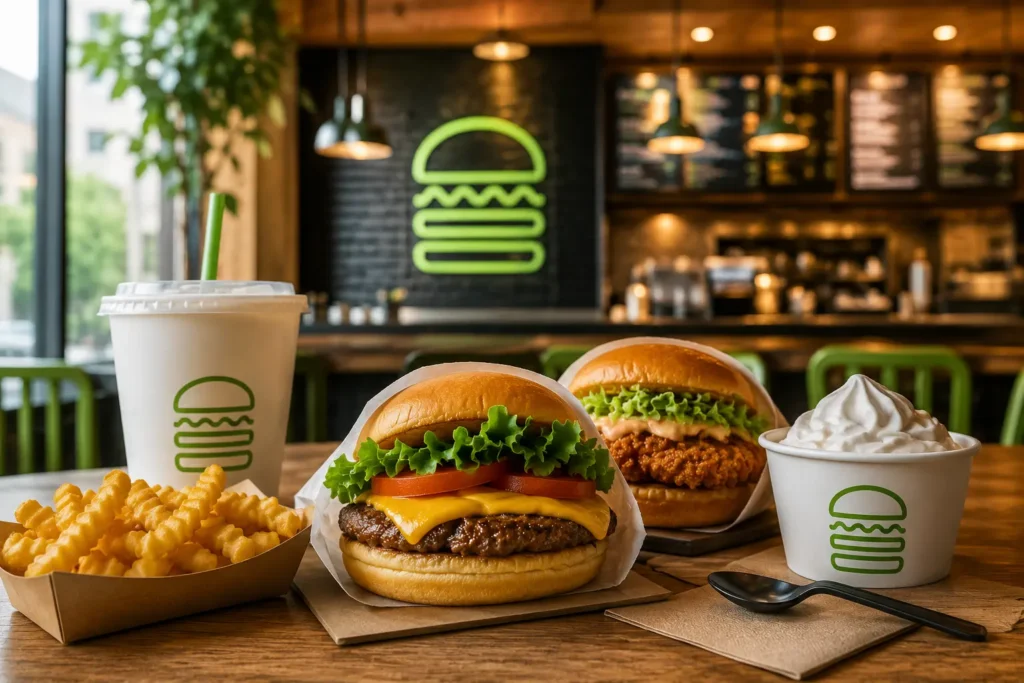
Shake Shack started as a small hot dog cart and quickly grew into a global fast-casual burger chain. Today it operates in dozens of countries and serves millions of customers each year.
The menu focuses on:
- Angus beef burgers
- Chicken sandwiches and nuggets
- Hot dogs and fries
- Frozen custard and milkshakes
Because the brand markets itself as using high-quality beef and fresh ingredients, many Muslim consumers naturally assume the food might be halal. Unfortunately, quality and halal certification are two completely different things.
Global chains rarely use identical suppliers worldwide, which is why halal status must always be checked country by country.
Why Shake Shack Does Not Offer Global Halal Certification
One of the biggest misconceptions is that global restaurant chains operate with a single food policy everywhere. In reality, fast-food brands rely on local supply chains.
There are several reasons Shake Shack does not implement a worldwide halal policy:
First, halal certification requires specific slaughter methods, supplier audits, and kitchen procedures. Implementing these globally would require major changes in Western supply chains.
Second, demand for halal food differs by region. In Muslim-majority countries, halal sourcing is expected and often required by law. In Western countries, halal demand exists but is not the industry standard.
Third, restaurants that serve pork products face separate kitchen and equipment challenges. Many Western Shake Shack branches serve bacon, making halal certification more complex.
Because of these factors, the company adapts its sourcing based on the country.
Why People Ask If Shake Shack Is Halal
The halal status of Shake Shack is a very popular search query worldwide. There are several reasons this question appears so often.
One major reason is growing halal awareness. Muslim consumers today research ingredients and sourcing more carefully than ever before.
Another reason is conflicting information online. Some customers report halal menus in Middle Eastern countries, while others confirm the opposite in Western countries. Both are true, which creates confusion.
Finally, Shake Shack specializes in beef and chicken burgers, foods that require halal slaughter verification. This naturally makes the halal question more important.
Does Shake Shack Use Halal Meat?
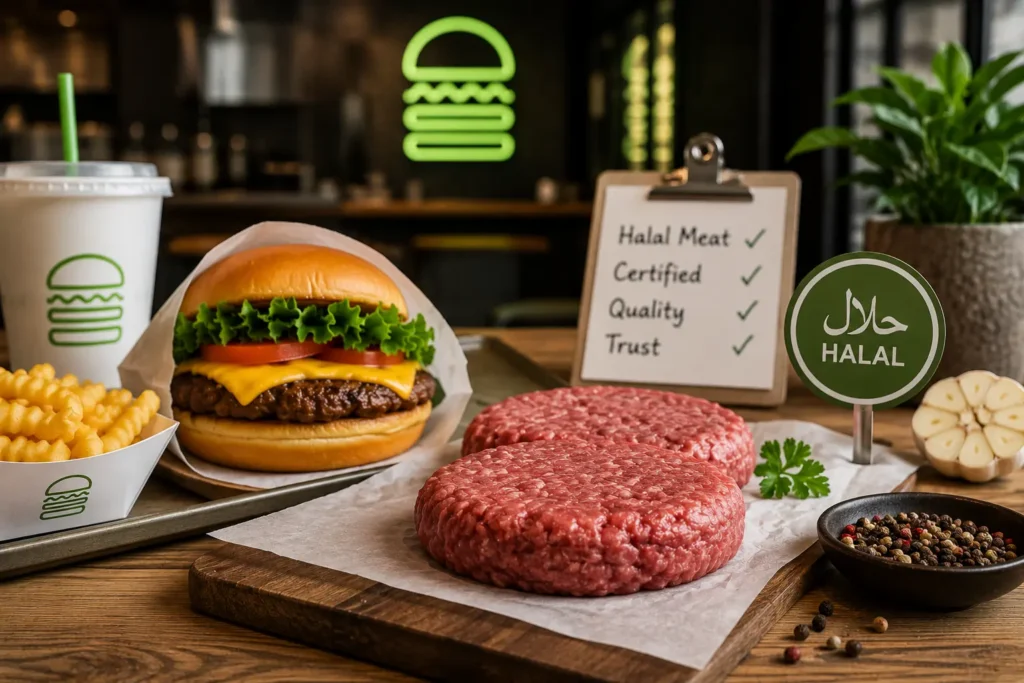
This is the most critical question for halal-conscious diners.
Shake Shack states that its beef is 100% Angus with no hormones or antibiotics, but this statement does not confirm halal slaughter.
For meat to be halal, animals must be slaughtered according to Islamic guidelines and the supply chain must remain free from pork contamination.
Most Western Shake Shack locations do not publicly confirm halal slaughter, which is why strict halal consumers usually avoid them.
However, Middle Eastern branches often work with halal-certified suppliers, which changes the halal status significantly.
Meat Source Comparison Table
| Region | Beef Status | Chicken Status |
| USA | Not halal-certified | Not halal-certified |
| UK | Not halal-certified | Not halal-certified |
| Canada | Not halal-certified | Not halal-certified |
| UAE | Often halal-certified | Usually halal |
| Saudi Arabia | Halal-certified | Halal-certified |
Is Shake Shack Beef Halal?
Beef is the core ingredient in Shake Shack’s menu, making its halal status extremely important.
In Western countries, Shake Shack beef is typically sourced from standard commercial suppliers without halal certification. This means strict halal consumers generally consider it unsuitable.
In Muslim-majority countries, beef is often sourced from halal-certified suppliers due to local demand and regulations.
This difference highlights the most important takeaway:
Shake Shack beef halal status depends entirely on the country.
Cross-Contamination Concerns
Even in locations that may use halal meat, kitchen practices remain a major concern.
Many Shake Shack restaurants serve bacon and other pork products. This means grills, fryers, and utensils may be shared between halal and non-halal items.
For strict halal consumers, cross-contamination is just as important as the meat source. Restaurants that serve pork often cannot guarantee full separation.
This is one reason many halal diners prefer restaurants that serve only halal food.
Is Shake Shack Halal for Different Levels of Halal Practice?
Muslims follow halal guidelines with different levels of strictness.
Some consumers only eat at fully halal-certified restaurants. For them, Western Shake Shack branches are not suitable.
Others take a moderate approach and may consider vegetarian or dessert items acceptable if ingredients are verified.
Understanding your personal comfort level helps you make informed decisions when eating out.
Chicken and Other Meat Items
Shake Shack’s chicken sandwiches and nuggets raise the same halal questions as their beef products.
In Western countries, chicken is usually not halal-certified. Supplier details are rarely publicly verified, making it difficult for strict halal consumers.
In Middle Eastern branches, chicken is often halal-certified due to local sourcing requirements.
Again, location determines everything.
Ingredients Beyond Meat
Halal status is not limited to meat alone. Many fast-food products contain additional ingredients that require verification.
Cheese may contain animal rennet. Sauces can include alcohol-based flavor extracts. Frying oil may be shared with non-halal foods.
These factors make halal verification more complex than many people expect.
Ingredient Concern Table
| Ingredient | Concern Level | Why It Matters |
| Beef | High | Slaughter method |
| Chicken | High | Supplier certification |
| Cheese | Medium | Rennet source |
| Sauces | Medium | Flavorings/alcohol |
| Frying Oil | Medium | Cross contamination |
Are Shake Shack Fries Halal?
Fries often appear halal at first glance because they are potato-based. However, preparation methods matter.
Shared fryers can create cross-contamination. Flavor additives may also introduce halal concerns.
In halal-certified regions, fries are usually safe. In Western branches, strict halal consumers may still avoid them.
Milkshakes and Desserts
Milkshakes and frozen custard are generally lower concern compared to meat products. However, some ingredients still require awareness.
Gelatin toppings, alcohol-based flavor extracts, and cross-contact risks can affect halal suitability.
Many consumers consider plain shakes acceptable, but strict halal eaters still verify ingredients.
Regional Differences in Halal Status
Shake Shack adapts its supply chain based on local markets.
| Region | Halal Availability |
| USA | Not halal |
| UK | Not halal |
| Europe | Usually not halal |
| UAE | Mostly halal |
| Saudi Arabia | Halal |
| Qatar/Kuwait | Often halal |
Why Fast Food Creates Halal Confusion
Global restaurant chains use local suppliers. This means the same brand can be halal in one country and non-halal in another.
Many consumers assume consistency across countries, which leads to confusion.
Understanding regional sourcing helps explain why halal status changes.
Halal Certification and Restaurants
Halal certification provides the highest level of assurance. Certified restaurants undergo audits for ingredient sourcing and kitchen practices.
Certification removes uncertainty and gives consumers confidence when dining out.
How to Check Your Local Branch
The best way to confirm halal status is to contact the restaurant directly or check official announcements for your country.
We hope you guys find this guide helpful ,here we have more for you:
- Is Sushi Halal or Haram?
- Are Nerds Gummy Clusters Halal or Haram?
- Are Takis Halal or Haram?
- Is Wingstop Halal or Haram?
FAQs
Is Shake Shack halal worldwide?
No, halal status depends on the country and branch.
Is Shake Shack halal in the USA?
No, it is not halal-certified in the USA.
Is Shake Shack halal in the UK?
No, UK branches are not halal-certified.
Is Shake Shack halal in the UAE?
Many UAE locations serve halal-certified meat.
Does Shake Shack serve pork?
Yes, many branches serve bacon.
Are Shake Shack fries halal?
Depends on shared fryers and location.
Is Shake Shack chicken halal?
Usually not halal in Western countries.
Are milkshakes halal?
Generally low concern but verify ingredients.
Why does halal status vary by country?
Because suppliers and regulations differ.
Can Muslims eat at Shake Shack?
Only if the local branch is halal-certified.
How can I verify halal status?
Ask staff or check certification.
What is the safest option?
Eat at halal-certified restaurants.
Conclusion
Shake Shack is not globally halal, but some Middle Eastern locations offer halal-certified food. Western branches typically do not provide halal certification and may involve cross-contamination risks.
Because sourcing varies by country, the most important step is always verifying your local branch. When in doubt, halal-certified restaurants remain the safest choice.