
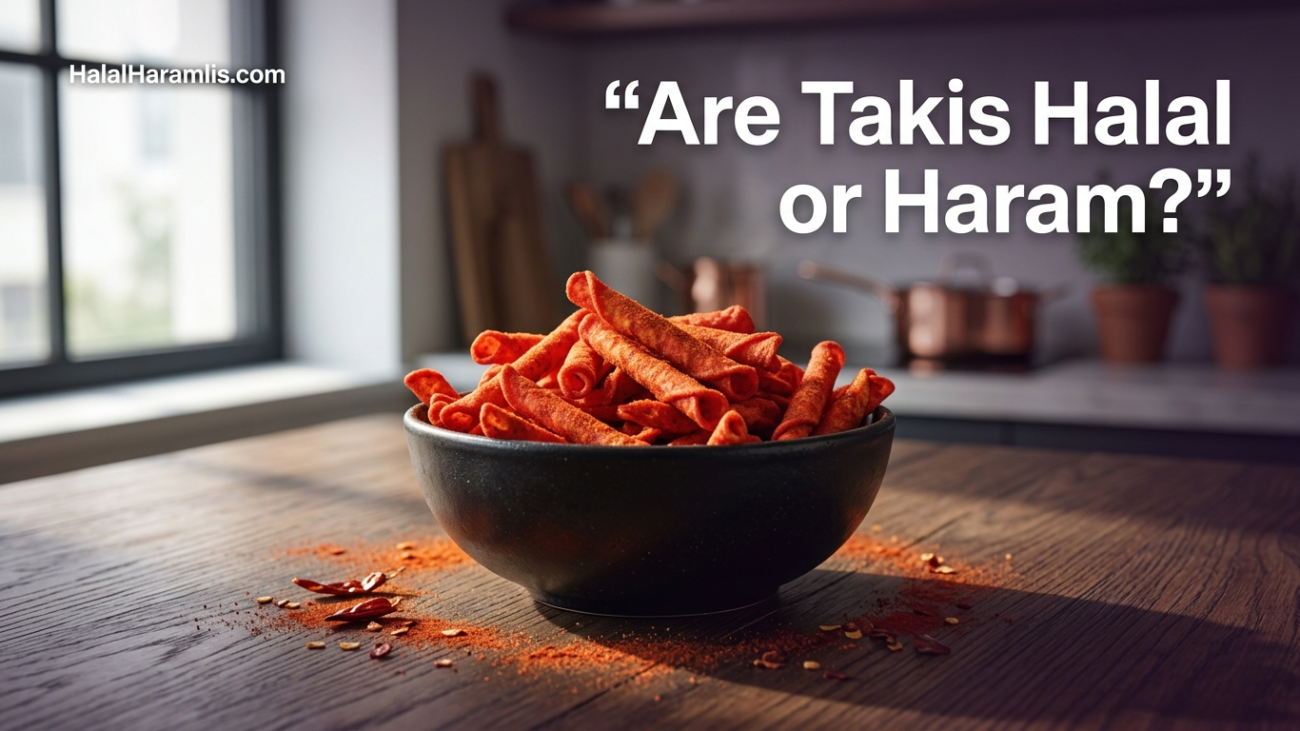
Most scholars say Takis are NOT halal.
They have doubtful flavor ingredients and no halal certification, so Muslims are advised to avoid them.
Takis are bright, spicy, crunchy snacks loved by many young people and adults. They look fun, taste bold, and are easy to find in stores around the world.
But Muslims must always check snacks carefully. Even a small chip can become haram if the ingredients or factory process are not halal. Let’s learn in very simple words whether Takis are halal or haram.
What Are Takis?
Takis are rolled tortilla chips with strong spicy and sour seasoning. They are famous for their fiery taste and colorful look.
They are made by Barcel, a snack company owned by Grupo Bimbo.
Takis became popular because they are fun to eat and very flavorful. Many people enjoy the challenge of eating spicy chips and sharing their reactions online.
Why people love Takis
- Very spicy flavor
- Crunchy rolled shape
- Bright colors
- Trendy snack culture
- Easy availability
Even though Takis are popular, popularity does not mean halal. Muslims must check deeper.
Why Muslims Must Check Snacks Carefully
In Islam, food is not just about taste. Food is about obedience to Allah. Muslims must make sure what they eat is halal and pure.
In Muslim countries, halal food is easier to find. But in Western countries, factories are not built for Islamic dietary rules. That means Muslims must check labels and certifications carefully.
Halal food must follow these rules
- No pork or pork ingredients
- No alcohol in ingredients or processing
- No animal ingredients from non-halal slaughter
- No cross-contamination with haram food
- Certification in non-Muslim countries
Snacks can be tricky because they contain many hidden ingredients that are hard to understand.
Processed Snacks
Takis are not simple food like fruit or bread. They are highly processed snacks.
Highly processed foods go through many factory steps:
- Grinding and mixing ingredients
- Adding flavor chemicals
- Frying in large machines
- Packaging on shared equipment
The more processing a food has, the more chances there are for haram ingredients to enter.
This is why scholars are extra careful about processed snacks.
Ingredients Found in Takis
Let us look at the common ingredients used in Takis.
Main ingredients include
- Corn masa flour
- Vegetable oils
- Spices and seasoning powders
- Artificial colors
- Acid regulators
- Flavor enhancers
- Salt and sugar
At first glance, these ingredients seem safe. But the real concern comes from hidden sources behind these words.
Many ingredients on food labels sound simple, but their sources are not always clear.
The Biggest Halal Concerns
There are three main halal concerns about Takis.
Natural & Artificial Flavors
This is the biggest issue.
Food labels often say “natural flavors” or “artificial flavors.” These words are very broad and can include many things.
Natural flavors can come from:
- Plants
- Animals
- Alcohol extraction processes
Companies are not required to tell the exact source. That means Muslims cannot verify whether the flavors are halal.
When ingredients are hidden, doubt increases.
Enzymes and Processing Aids
Flavor powders often use enzymes during manufacturing.
Enzymes can come from:
- Plants
- Bacteria
- Animal stomachs
- Pork sources
If the source is not clearly stated, the ingredient becomes doubtful.
This is why scholars warn Muslims about flavor powders and seasoning blends.
Cross-Contamination in Factories
Snack factories produce many different foods on the same machines.
Equipment may be shared with:
- Cheese snacks
- Meat snacks
- Pork flavored products
Even if a snack does not contain pork directly, it may touch surfaces that processed pork products.
This creates contamination risk.
Ingredient Risk Check
| Ingredient Type | Halal Status | Why |
| Corn flour | ✅ Halal | Plant based |
| Vegetable oil | ✅ Halal | Usually plant derived |
| Artificial colors | ⚠️ Doubtful | May use alcohol carriers |
| Natural flavors | ❌ Doubtful | Source unknown |
| Seasoning powders | ⚠️ Doubtful | May contain enzymes |
| Flavor enhancers | ⚠️ Doubtful | Source unclear |
Halal Certification Status
Halal certification is very important for Muslims living in non-Muslim countries.
A halal certificate means:
- Muslim inspectors checked the factory
- Ingredients were verified
- Equipment cleanliness was inspected
- Cross-contamination was prevented
Takis currently have:
- No halal logo
- No halal certification body
- No halal slaughter or halal statement
This makes the product doubtful.
Why Certification Is So Important
In Western food systems, companies do not automatically follow Islamic rules.
They focus on:
- Food safety
- Mass production
- Cost efficiency
Halal requirements are religious rules, not food safety rules. That is why certification becomes essential for Muslim consumers.
Without certification, Muslims cannot be sure.
Islamic Rule About Doubtful Food
Islam teaches Muslims to stay away from doubtful food.
The Prophet Muhammad ﷺ taught Muslims to leave anything that causes doubt.
This rule protects Muslims from accidentally eating haram food.
If food is:
- Not clearly halal
- Not clearly haram
Then Muslims should avoid it to stay safe.
Halal Decision Factors
| Rule | Takis Status |
| Contains pork | Unknown |
| Contains alcohol | Possible |
| Halal certified | No |
| Ingredient transparency | Low |
| Scholar certainty | No |
Result: Doubtful → Avoid
Do Takis Flavors Increase Risk?
Takis come in many flavors. Each flavor has its own chemical recipe.
More flavors mean:
- More chemicals
- More flavor enhancers
- More unknown sources
Highly flavored snacks are more risky than plain snacks.
Flavor Risk Level
| Flavor Type | Risk Level |
| Plain corn chips | Low |
| Mild seasoning | Medium |
| Spicy flavors | High |
| Extreme flavors | Very High |
Takis belong to the extreme flavor category, which has the highest risk.
Vegetarian vs Halal Confusion
Many people think vegetarian snacks are halal. This is not always true.
Vegetarian food may still contain:
- Alcohol-based flavor carriers
- Animal enzymes
- Contaminated equipment
Halal is a religious standard, not just a diet type.
What Scholars Say
Most halal scholars agree on one rule:
Processed snacks without halal certification should be avoided.
This is because:
- Hidden ingredients exist
- Companies do not reveal sources
- Factories mix many products
Scholars prefer Muslims to choose food with clear halal certification.
Final Halal Verdict Summary
| Category | Verdict |
| Ingredients clarity | ❌ Low |
| Certification | ❌ None |
| Cross contamination | ⚠️ Possible |
| Scholar opinion | ❌ Avoid |
| Muslim safety level | ❌ Not safe |
Why Avoiding Doubtful Food Is Good
When Muslims avoid doubtful food:
- They protect their faith
- They show obedience to Allah
- They build better habits
- They gain peace of mind
Choosing halal food is an act of worship.
Safer Snack Choices
Muslims can still enjoy snacks happily.
Better snack options include:
- Halal certified chips
- Homemade snacks
- Simple popcorn
- Certified halal brands
There are many delicious halal choices available.
Practical Shopping Tips
When buying snacks, Muslims should:
- Look for halal logos
- Read ingredients carefully
- Avoid unclear labels
- Choose simple foods
- Prefer halal brands
These small habits make a big difference.
we hope you guys find this guide helpful. here we have more guides on Halal products:
FAQs
Are Takis halal in the USA?
No, they are not halal certified.
Do Takis contain pork?
Not confirmed, but possible hidden sources.
Do Takis contain alcohol?
Flavor processing may use alcohol.
Are Takis vegetarian?
Some may be vegetarian but not halal.
Are vegan snacks always halal?
No, vegan does not equal halal.
Are Takis mashbooh?
Yes, they are considered doubtful.
Can Muslims eat Takis sometimes?
Scholars recommend avoiding them.
Are blue Takis halal?
No halal certification exists for any flavor.
Do Takis contain animal enzymes?
Possible in flavor manufacturing.
Are spicy chips halal in general?
Only if halal certified.
Is there a halal Takis version?
No certified halal version exists.
Should Muslims avoid Takis?
Yes, safest choice is to avoid.
Conclusion
Takis are fun, colorful, and exciting snacks that many people enjoy. However, halal food is not about fun or taste — it is about following the guidance of Islam and choosing food that is pure and permissible. When Muslims look closely at Takis, they find many areas of doubt, including hidden flavor sources, lack of halal certification, and possible factory cross-contamination.
Because of these concerns, most scholars advise Muslims to stay away from Takis and choose snacks that are clearly halal. Avoiding doubtful food brings peace of heart and helps Muslims stay closer to their faith. When we leave something doubtful for the sake of Allah, we trust that He will replace it with something better and fully halal.