

Is tuna halal or haram?
Tuna is halal according to the majority of Islamic scholars because it is a fish that lives in water and is widely accepted as permissible seafood. Fresh tuna, frozen tuna, and plain canned tuna are generally considered halal for Muslims.
However, Muslims should check processed tuna products, flavored tuna, tuna sandwiches, and ready meals because additional ingredients may affect the halal status.
Tuna is one of the most popular seafood products in the USA and UK. Whether you shop at Walmart, Costco, Tesco, Aldi, Asda, or Sainsbury’s, you will find tuna in many forms, including fresh steaks, canned tuna, tuna salads, sandwiches, and ready-made meals.
Many Muslims ask whether tuna is halal because modern seafood processing often involves preservatives, flavorings, sauces, and packaged foods. While the fish itself is generally halal, some processed products may contain ingredients that require closer inspection.
The good news is that plain tuna is widely accepted as halal. Understanding where tuna comes from, how it is processed, and what ingredients are commonly added can help Muslim consumers make informed choices when buying seafood products in the USA and UK.
Table : Ingredients Breakdown of Tuna
| Component | Description | Halal Status |
| Tuna Fish | Main ingredient | Halal |
| Fish Protein | Natural protein source | Halal |
| Omega-3 Fatty Acids | Healthy fats | Halal |
| Vitamin D | Natural nutrient | Halal |
| Selenium | Essential mineral | Halal |
| Water | Natural component | Halal |
| Added Flavorings | Processed products | Requires Checking |
What Is Tuna?
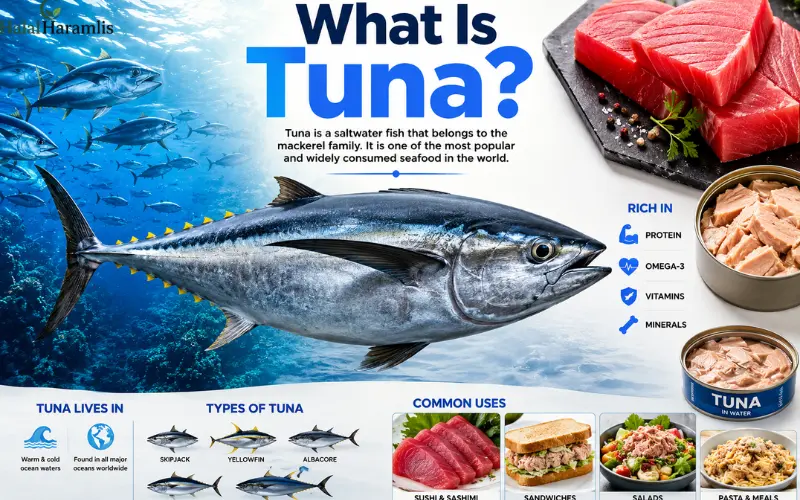
Tuna is a saltwater fish belonging to the mackerel family. It is one of the most commercially important fish species in the world and is consumed in nearly every country.
Tuna is known for its firm texture, rich nutritional profile, and versatility. It can be eaten grilled, baked, canned, smoked, or raw in sushi dishes.
Why Is Tuna So Popular?
Tuna remains one of the most consumed fish species because it:
- Is high in protein
- Contains omega-3 fatty acids
- Is widely available
- Has a mild flavor
- Is easy to prepare
- Can be used in many recipes
Many health-conscious consumers choose tuna as a lean protein source.
Common Types of Tuna
Several species are commonly sold worldwide:
- Skipjack Tuna
- Yellowfin Tuna
- Albacore Tuna
- Bluefin Tuna
- Bigeye Tuna
All of these species are generally considered halal.
Table : Halal vs Haram Sources of Tuna
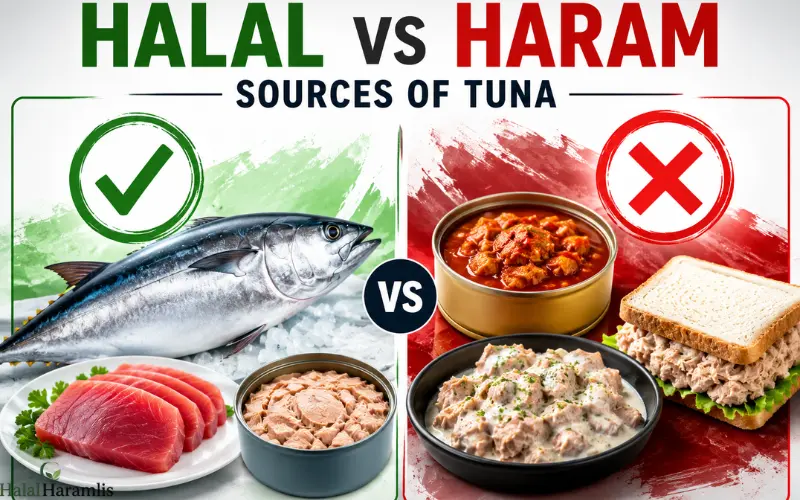
| Source | Halal or Haram? | Explanation |
| Fresh Tuna | Halal | Pure fish |
| Wild-Caught Tuna | Halal | Natural source |
| Frozen Tuna | Halal | Usually permissible |
| Plain Canned Tuna | Halal | Generally halal |
| Tuna in Oil | Halal | Check additional ingredients |
| Flavored Tuna | Requires Checking | Added seasonings |
| Tuna Ready Meals | Requires Checking | Multiple ingredients |
| Alcohol-Flavored Tuna | Questionable | Needs verification |
Why It Matters for Muslims in USA & UK
Muslims living in Western countries consume tuna regularly because it is affordable, nutritious, and easy to find.
Tuna appears in many products such as:
- Tuna sandwiches
- Tuna pasta
- Tuna salads
- Canned tuna
- Sushi rolls
- Frozen meals
Although tuna itself is halal, processed products may contain ingredients that require attention.
Examples include:
- Artificial flavors
- Natural flavors
- Preservatives
- Alcohol-based sauces
- Emulsifiers
Checking ingredient labels helps Muslims avoid questionable additives.
Tuna in Everyday Life
Many families keep canned tuna at home because it is:
- Affordable
- Convenient
- Long-lasting
- High in protein
This makes understanding its halal status especially important.
Table : Products and Brands That Commonly Contain Tuna
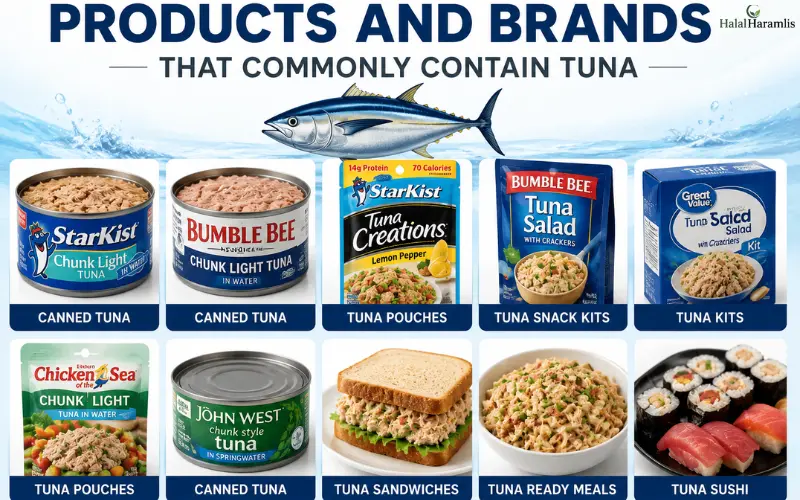
| Product Type | Examples |
| Fresh Tuna Steaks | Seafood counters |
| Canned Tuna | Major supermarket brands |
| Tuna Sandwiches | Delis and cafés |
| Tuna Pasta Meals | Ready-made meals |
| Tuna Sushi | Restaurants and supermarkets |
| Tuna Salads | Prepared food sections |
| Frozen Tuna Products | Frozen seafood brands |
| Tuna Snacks | Packaged seafood snacks |
Is Canned Tuna Halal?
One of the most common questions Muslims ask is whether canned tuna is halal.
In most cases, canned tuna is halal because it contains:
- Tuna fish
- Water
- Salt
- Vegetable oil
However, some specialty products may include:
- Flavor enhancers
- Seasonings
- Sauces
- Preservatives
Always read the ingredient list carefully.
Common Ingredients in Canned Tuna
Many canned tuna products contain:
- Tuna
- Water
- Sunflower oil
- Olive oil
- Salt
These ingredients are generally halal.
Concerns About Tuna Processing
Although tuna itself is halal, processing can sometimes create concerns.
Flavor Additives
Certain flavored tuna products may contain:
- Artificial flavors
- Natural flavors
- Spice blends
These should be reviewed individually.
Ready Meals
Tuna-based ready meals may include:
- Sauces
- Emulsifiers
- Preservatives
- Flavor enhancers
The halal status depends on the complete ingredient list.
Restaurant Foods
Restaurant tuna dishes may include:
- Wine-based sauces
- Cooking alcohol
- Non-halal flavorings
Always ask about preparation methods.
Tuna in Sushi and Japanese Cuisine
Tuna is one of the most popular sushi ingredients worldwide.
Many Muslims enjoy:
- Tuna sashimi
- Tuna rolls
- Spicy tuna rolls
- Tuna nigiri
The tuna itself is halal, but some sushi products may contain:
- Mirin
- Alcohol-based sauces
- Questionable seasonings
Careful ingredient checking is recommended.
Nutritional Benefits of Tuna
Tuna is considered one of the healthiest seafood choices.
Important nutrients include:
- Protein
- Omega-3 fatty acids
- Vitamin D
- Vitamin B12
- Selenium
- Potassium
These nutrients support overall health and wellness.
Halal vs Haram Detailed Breakdown
When Tuna Is Halal
Tuna is halal when:
- It is genuine fish.
- It contains no haram additives.
- It is prepared using halal ingredients.
- It is free from alcohol-based flavorings.
Most plain tuna products meet these requirements.
When Tuna May Become Questionable
Problems usually arise because of added ingredients.
Flavored Tuna Products
Some products contain:
- Barbecue flavor
- Ranch seasoning
- Specialty sauces
These should be checked individually.
Tuna Ready Meals
Ready meals often contain numerous additives that require review.
Restaurant Dishes
Preparation methods and sauces should always be verified.
Table : Safer Halal Alternatives
| Product Category | Safer Choice |
| Fresh Seafood | Plain tuna steaks |
| Frozen Fish | Unseasoned tuna |
| Canned Seafood | Simple ingredient canned tuna |
| Sushi | Halal-certified sushi |
| Restaurant Meals | Halal-friendly seafood restaurants |
| Tuna Salads | Homemade versions |
| Ready Meals | Halal-certified products |
Common Mistakes People Make
Mistake 1: Assuming Every Tuna Product Is Automatically Halal
Additional ingredients may change the halal status.
Mistake 2: Ignoring Sauce Ingredients
Sauces often contain hidden additives.
Mistake 3: Not Reading Canned Food Labels
Different brands use different recipes.
Mistake 4: Forgetting About Restaurant Preparation
Cooking methods can affect halal compliance.
Mistake 5: Confusing Plain Tuna with Processed Tuna
Plain tuna is usually halal, but processed products require checking.
Related Halal Food Guides
FAQs
Is tuna halal or haram?
Tuna is generally considered halal.
Is tuna halal?
Yes, plain tuna is halal.
Is canned tuna halal?
Usually yes, but ingredients should be checked.
Is tuna sushi halal?
The tuna is halal, but additional ingredients should be verified.
Can Muslims eat tuna?
Yes, Muslims can generally eat tuna.
Is tuna fish halal?
Yes, tuna fish is halal.
Is yellowfin tuna halal?
Yes, yellowfin tuna is halal.
Is bluefin tuna halal?
Yes, bluefin tuna is halal.
Is tuna healthy?
Yes, tuna provides protein and omega-3 fatty acids.
Does tuna contain pork?
No, tuna does not contain pork.
Is tuna available in UK supermarkets?
Yes, tuna is widely available throughout the UK.
Should Muslims avoid tuna?
No, plain tuna is generally permissible.
Conclusion
Tuna is one of the most popular seafood choices in the world and is commonly consumed throughout the USA and UK. Because it is a fish that naturally lives in water, the majority of Islamic scholars consider it halal. Fresh tuna, frozen tuna, and most plain canned tuna products are generally permissible for Muslim consumers. The main concerns arise from processed products, flavored tuna, restaurant meals, and ready-made foods that may contain additional ingredients. By checking labels and choosing simple or halal-certified products whenever possible, Muslims can confidently include tuna in their diet.