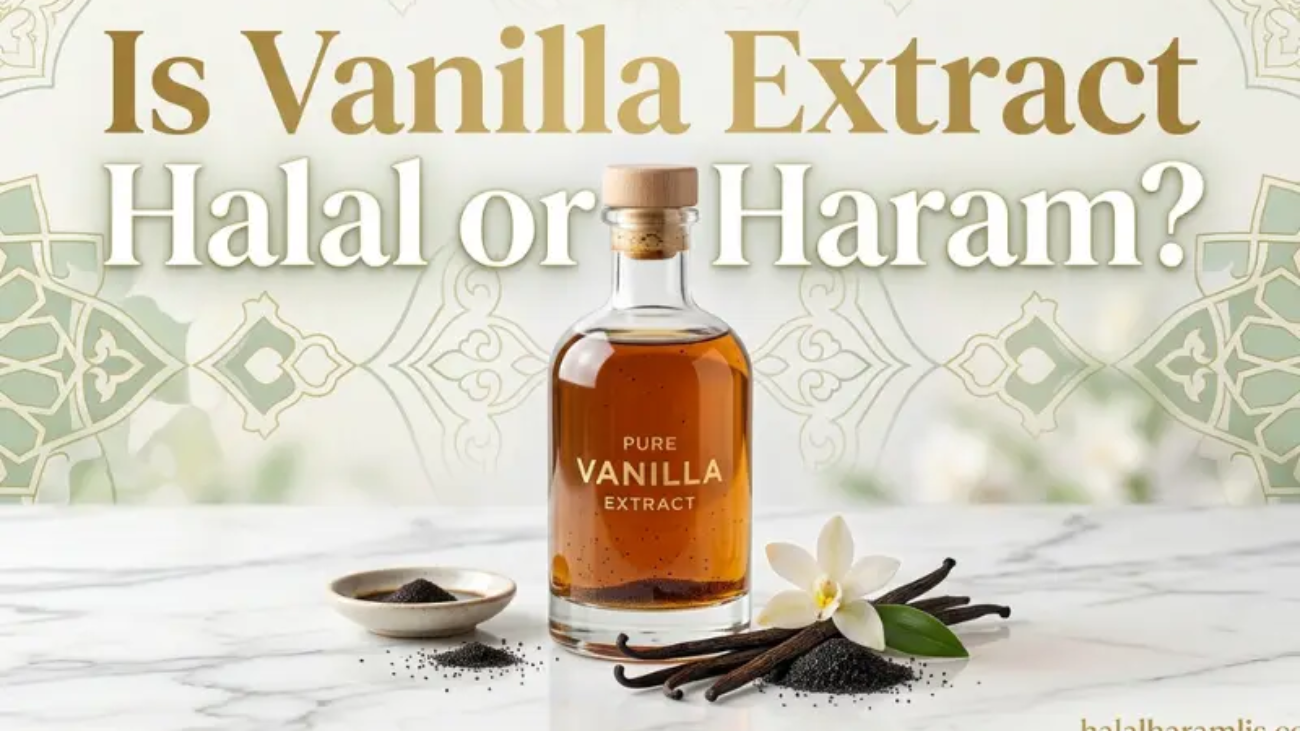
Vanilla extract used in baking, desserts, ice cream, and chocolate is HALAL.
Yes, it contains alcohol, but the amount eaten is extremely tiny, not intoxicating, and used only as a flavoring ingredient — not as a drink. Because of this, most Islamic scholars allow vanilla extract in food.
Muslims in the UK, USA, and worldwide can eat desserts containing vanilla extract with confidence.
Now let’s understand the full story in the simplest way possible.
Why Muslims Are Confused About Vanilla Extract
Vanilla is one of the most popular flavors on Earth. It is used in almost every dessert you can imagine:
• Cakes
• Cookies
• Chocolate
• Ice cream
• Pancakes
• Custards
• Muffins
• Milkshakes
Without vanilla, desserts would taste plain and boring.
But when Muslims read the ingredients label and see the word ALCOHOL, a serious question appears:
👉 Is vanilla extract halal or haram?
This question creates real confusion worldwide.
Many Muslims avoid desserts completely because they are unsure.
Some people say:
• Vanilla extract is haram because it contains alcohol
Others say:
• It is halal because it is used in tiny amounts
So what is the truth?
This guide will give the complete Islamic ruling, scientific explanation, and real-world facts.
What Is Vanilla Extract?
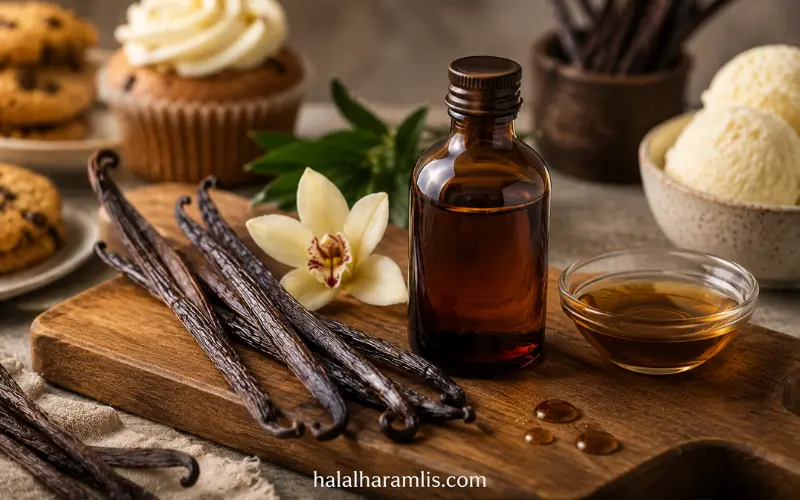
Vanilla extract is a natural liquid flavor made from vanilla beans.
Vanilla beans are long black pods that grow on orchids. Inside them are tiny seeds full of aroma and flavor.
To extract this flavor, manufacturers soak the beans in:
• Alcohol
• Water
After weeks of soaking, the liquid becomes vanilla extract.
This liquid is used in almost every dessert industry worldwide.
Why Alcohol Is Used in Vanilla Extract
This is the MOST important part to understand.
Vanilla beans are:
• Hard
• Oily
• Chemically complex
Their flavor cannot dissolve in water.
Alcohol is the only substance strong enough to pull flavor from the bean.
Alcohol acts as:
• Flavor extractor
• Flavor carrier
• Preservation agent
Without alcohol, vanilla extract would not exist.
Important:
Alcohol is used as a tool, not a drink.
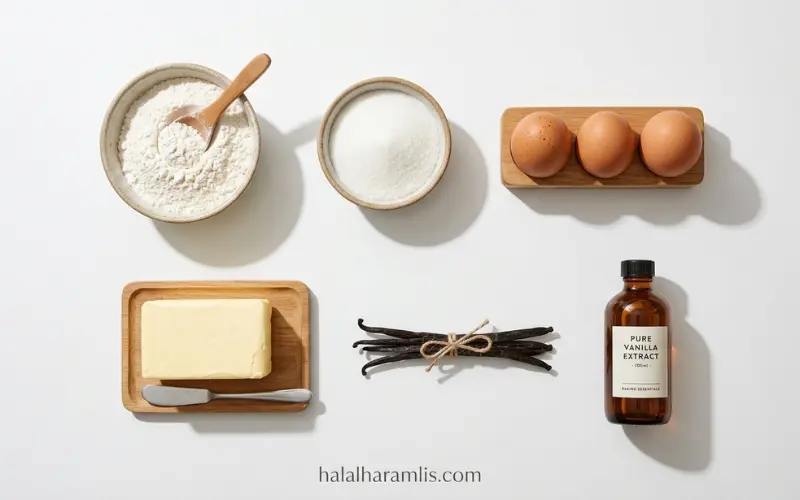
Ingredients of Pure Vanilla Extract
| Ingredient | Purpose | Halal Status |
| Vanilla beans | Flavor source | Halal |
| Ethanol alcohol | Extract flavor | Permissible in food |
| Water | Dilution | Halal |
There are no other ingredients.
The BIG Islamic Question: Alcohol in Food
Islam strictly forbids khamr (intoxicating drinks).
But Islamic scholars explain an important principle:
If alcohol is:
• Not consumed as a drink
• Used in tiny amount
• Cannot intoxicate
• Used in food processing
Then it becomes permissible.
This rule applies to many foods Muslims already eat daily.
Hidden Alcohol in Everyday Halal Foods
Many halal foods naturally contain tiny alcohol levels.
| Food | Natural Alcohol Level |
| Bread | 0.3% |
| Banana | 0.2% |
| Apple juice | 0.5% |
| Yogurt | 0.2% |
| Vinegar | Trace alcohol |
Muslims eat these foods daily.
Vanilla desserts contain even less alcohol.
Does Vanilla Extract Intoxicate?
Short answer: Impossible
Vanilla extract tastes:
• Extremely bitter
• Very strong
• Not drinkable
It is used in drops, not cups.
To feel intoxicated, a person would need to drink multiple bottles — something no one does.
How Much Alcohol Do You Actually Eat?
Let’s calculate.
Typical cake recipe:
• 1 teaspoon vanilla extract
• Serves 10 people
Alcohol per slice = 0.17 ml
This amount is smaller than alcohol found naturally in fruit.
This level cannot intoxicate.
Does Alcohol Burn During Baking?
Yes ✔️
During baking:
• Heat evaporates alcohol
• Vapors disappear
• Only flavor remains
After baking, alcohol becomes almost zero.
Is Vanilla Extract Halal for Baking?
YES ✔️
Muslims can bake:
• Cakes
• Cookies
• Brownies
• Cupcakes
• Muffins
without worry.
This answers the keyword:
Is vanilla extract halal for bakers & Muslims? → YES
Is Vanilla Extract Halal in the UK?
Many Muslims ask:
Is vanilla extract halal in the UK?
UK law requires pure vanilla extract to contain alcohol.
But scholars allow it because:
• Used in tiny amounts
• Not intoxicating
• Used in food only
So the ruling:
Vanilla extract halal UK → YES
Is Vanilla Extract Halal in the USA?
Now the USA question.
FDA law requires:
Pure vanilla extract must contain 35% alcohol.
This sounds scary, but remember:
You eat drops, not bottles.
Therefore:
Vanilla extract halal USA → YES
Pure Vanilla vs Imitation Vanilla
| Type | Alcohol | Halal |
| Pure vanilla extract | Yes | Halal in food |
| Imitation vanilla | Usually no | Halal |
Both are permissible.
Vanilla Extract vs Drinking Alcohol
| Drinking Alcohol | Vanilla Extract |
| Used to intoxicate | Used for flavor |
| Consumed in glasses | Used in drops |
| Haram | Permissible |
Purpose changes the ruling in Islam.
When Vanilla Extract Can Become Haram
Rare situations to avoid:
❌ Drinking vanilla extract directly
❌ Homemade fermented vanilla drinks
❌ Alcohol-based vanilla beverages
Desserts remain halal.
Types of Vanilla Products Muslims Can Use
| Product | Halal Status |
| Vanilla powder | Halal |
| Vanilla sugar | Halal |
| Vanilla beans | Halal |
| Alcohol-free vanilla | Halal |
Why Scholars Allow Vanilla Extract (Key Reasons)
1️⃣ Not consumed as drink
2️⃣ Used in tiny amounts
3️⃣ Cannot intoxicate
4️⃣ Alcohol evaporates in baking
5️⃣ Used globally in food industry
6️⃣ Extremely difficult to replace
Scientific Breakdown: What Happens to Alcohol in Cooking?
This is one of the most searched concerns by Muslims.
Many people think alcohol stays fully inside food forever.
But food science tells a very different story.
When vanilla extract is added to hot desserts, several things happen:
Step-by-Step What Heat Does
- Heat causes alcohol molecules to evaporate fast
- Alcohol has lower boiling point than water
- Vapors escape from the food during cooking
- Only flavor compounds remain behind
Alcohol evaporates at 78°C (173°F)
Most baking temperatures are 160–180°C
That means alcohol starts evaporating long before the cake is finished baking.
Alcohol Evaporation Chart
| Cooking Method | Alcohol Remaining |
| No heat (raw batter) | 100% |
| 15 minutes baking | 40% |
| 30 minutes baking | 10% |
| 1 hour baking | 5% |
| 2 hours cooking | Almost 0% |
Most cakes bake for 30–45 minutes, meaning almost all alcohol disappears.
This is why scholars consider baked vanilla desserts even safer.
Islamic Principle: “Quantity That Cannot Intoxicate”
Islamic law includes a powerful rule:
“If a large amount intoxicates, a small amount is also forbidden — when used as a drink.”
But vanilla extract is not used as a drink.
Scholars apply a different rule for food ingredients:
• Quantity is microscopic
• Purpose is flavor, not intoxication
• No one consumes it directly
Therefore the ruling changes completely.
Fatwa Opinions From Scholars Summary
Across the Muslim world, scholars agree on this topic.
They explain:
• Alcohol used as processing ingredient → permissible
• Alcohol used as drink → haram
• Alcohol evaporated in cooking → permissible
This is why:
• Bread is halal
• Soy sauce is halal
• Vinegar is halal
• Vanilla extract is halal
Why Food Industry Cannot Replace Alcohol Easily
Many Muslims ask:
Why don’t companies remove alcohol completely?
Because vanilla flavor is extremely complex.
Vanilla contains over 250 flavor compounds.
Water cannot dissolve them.
Oil cannot dissolve them.
Only alcohol can extract full flavor.
If alcohol were removed:
• Vanilla extract would be weak
• Shelf life would be short
• Flavor would spoil quickly
This is why global food standards require alcohol.
Is Vanilla Extract Halal in Restaurants?
YES ✔️
Restaurant desserts use tiny vanilla amounts in:
• Cakes
• Cheesecakes
• Brownies
• Pancakes
• Custards
• Milkshakes
Muslims can eat these foods confidently.
Is Vanilla Extract Halal in Packaged Foods?
Vanilla extract is used in thousands of supermarket products.
Examples include:
• Breakfast cereals
• Protein bars
• Biscuits
• Chocolate spreads
• Yogurt desserts
• Ice cream
All remain halal.
Vanilla Extract in Global Food Industry
Vanilla is the second most expensive spice in the world after saffron.
It is used in:
• Europe
• America
• Asia
• Middle East
Billions of desserts use vanilla extract daily.
If vanilla extract were haram, most desserts worldwide would become forbidden — which scholars do not say.
Real Life Muslim Concerns
Many Muslims grow up hearing:
“Anything with alcohol is haram.”
This creates fear when reading food labels.
But Islamic rulings are based on:
• Intention
• Usage
• Quantity
• Effect
Vanilla extract does not intoxicate.
Therefore it does not fall under khamr.
Vanilla Extract in Halal Certified Products
Many halal-certified foods contain vanilla extract.
Examples:
• Halal bakery cakes
• Halal chocolates
• Halal ice creams
Halal certification bodies allow it because:
• It is flavoring ingredient
• It cannot intoxicate
• It is globally accepted in halal industry
Can Muslims Make Desserts at Home?
Yes, and this is important reassurance.
Muslim families can confidently bake:
• Birthday cakes
• Eid desserts
• Cookies for kids
• Cupcakes for school
• Pancakes for breakfast
Vanilla extract is safe for all home baking.
Emotional Reassurance for Muslims
This topic causes unnecessary anxiety.
Many Muslims stop eating desserts due to fear.
Islam is a religion of ease, not hardship.
Allah does not want Muslims to struggle over tiny ingredients used as processing tools.
Understanding this brings peace of mind.
Comparing Vanilla Extract With Vinegar
Many Muslims don’t realize vinegar is made from alcohol.
Alcohol → Ferments → Becomes vinegar.
Yet vinegar is halal.
Why?
Because transformation changes ruling.
Similarly:
Alcohol used as flavor extraction tool → permissible.
Vanilla Extract in Children’s Food
Vanilla flavor is widely used in baby foods:
• Baby biscuits
• Baby custards
• Infant desserts
These products are considered safe worldwide.
The “Fear Word” Problem
The word ALCOHOL creates fear instantly.
But in food science, alcohol has many roles:
• Solvent
• Extractor
• Preservative
• Flavor carrier
Not all alcohol equals khamr.
Why This Question Is Trending
Searches for:
• Is vanilla extract halal in UK
• Is vanilla extract halal in USA
• Alcohol in food halal
are rising fast.
Muslims today read labels more carefully than ever before.
This article answers those modern concerns.
Practical Shopping Guide for Muslims
When buying desserts:
✔ Check ingredient list
✔ Avoid alcohol beverages
✔ Ignore vanilla extract in desserts
Simple rule:
Flavoring alcohol ≠ drinking alcohol
Final Practical Rule Muslims Can Follow
If vanilla extract is:
• Used in food
• Used in tiny drops
• Not consumed as drink
Then it is halal.
Simple and clear.
Final Ruling Summary Table
| Situation | Halal or Haram |
| Vanilla cake | Halal |
| Vanilla cookies | Halal |
| Vanilla ice cream | Halal |
| Drinking vanilla extract | Haram |
We hope you guys find this guide helpful , here we have for you:
- Is Root Beer Halal or Haram?
- Is Haribo Halal or Haram?
- Is Pork Halal or Haram?
- Is McDonald’s Halal or Haram?
- Are Jolly Ranchers Halal or Haram?
- Is Chocolate Liquor Halal or Haram?
FAQs
Is vanilla extract halal or haram?
Halal in food.
Is vanilla extract halal in the UK?
Yes.
Is vanilla extract halal in the USA?
Yes.
Does vanilla contain alcohol?
Yes, as solvent.
Can it intoxicate?
No.
Can Muslims eat vanilla cake?
Yes.
Is imitation vanilla halal?
Yes.
Is vanilla powder halal?
Yes.
Is vanilla sugar halal?
Yes.
Is vanilla ice cream halal?
Yes.
Is vanilla chocolate halal?
Yes.
Should Muslims avoid vanilla desserts?
No.
Conclusion
Vanilla extract is one of the most misunderstood ingredients among Muslims. Seeing the word alcohol on the label creates fear and doubt, but understanding how it is used completely changes the ruling.
Vanilla extract is not a drink. It is a flavoring ingredient used in tiny drops to enhance desserts. The amount consumed is extremely small, cannot intoxicate, and often evaporates during cooking. Because of this, modern Islamic scholars widely agree that vanilla extract used in food is halal and permissible.
Muslims in the UK, USA, and around the world can confidently enjoy cakes, cookies, chocolates, ice cream, and bakery foods made with vanilla extract. The only situation to avoid is drinking vanilla extract or consuming fermented vanilla beverages.