
Is tilapia halal or haram? Tilapia is generally considered halal by the majority of Islamic scholars because it is a fish that lives in water and has scales. Muslims in the USA, UK, and many other countries commonly consume tilapia without halal concerns.
However, Muslims should pay attention to how tilapia is prepared and processed. Breaded, seasoned, marinated, or ready-made tilapia products may contain additional ingredients that require halal verification. While the fish itself is usually permissible, sauces, flavorings, preservatives, and cooking methods can sometimes affect the halal status of the final product.
If you shop at Walmart, Costco, Tesco, Aldi, Asda, Sainsbury’s, Morrisons, or other major supermarkets, you have probably seen tilapia in the seafood section. It is one of the most affordable and widely consumed fish in the USA and UK. Tilapia is commonly sold as fresh fillets, frozen fish, fish fingers, seafood platters, grilled meals, and restaurant dishes.
Many Muslims wonder whether tilapia is halal because modern fish farming practices can be complicated. Questions often arise about fish feed, farming conditions, processing methods, imported seafood products, and packaged frozen meals. Since seafood is a major part of many diets, understanding the halal status of tilapia helps Muslim consumers make informed choices when purchasing seafood products.
The good news is that tilapia is generally recognized as halal by most scholars. Nevertheless, understanding how it is farmed, processed, packaged, and sold remains important for Muslims who want to be confident about their food choices.
As seafood consumption continues to grow worldwide, tilapia has become a staple fish in many households due to its affordability, availability, and nutritional value. This guide explains everything Muslim consumers need to know about tilapia and its halal status.
Table : Ingredients Breakdown of Tilapia

| Component | Description | Halal Status |
| Tilapia Fish | Main ingredient | Halal |
| Natural Fish Protein | Found naturally in fish | Halal |
| Omega-3 Fatty Acids | Natural nutrient | Halal |
| Vitamins & Minerals | Naturally occurring | Halal |
| Water | Fish habitat | Halal |
| Fish Feed | Farming nutrition | Generally Halal |
| Seasonings (processed products) | Added flavorings | Requires checking |
What Is Tilapia?
Tilapia is a freshwater fish that belongs to the cichlid family. It is one of the most widely farmed fish species in the world because it grows quickly, adapts to different environments, and is relatively inexpensive to produce.
Tilapia has a mild taste and firm texture, making it popular among people who do not enjoy strong fish flavors. Unlike some seafood varieties that have a strong smell or taste, tilapia is considered versatile and easy to prepare.
Why Is Tilapia Popular?
Tilapia is popular because it:
- Is affordable
- Has a mild flavor
- Is easy to cook
- Contains protein
- Is widely available
- Works well in many recipes
- Has relatively low fat content
- Can be grilled, baked, fried, or steamed
Many restaurants and supermarkets choose tilapia because it offers a budget-friendly seafood option that appeals to a wide range of consumers.
Where Does Tilapia Come From?
Tilapia is commonly farmed in:
- United States
- China
- Indonesia
- Egypt
- Brazil
- Colombia
- Honduras
Farm-raised tilapia makes up the majority of the global supply. Wild tilapia also exists, but most consumers purchase farm-raised fish due to its availability and lower cost.
Table : Halal vs Haram Sources of Tilapia
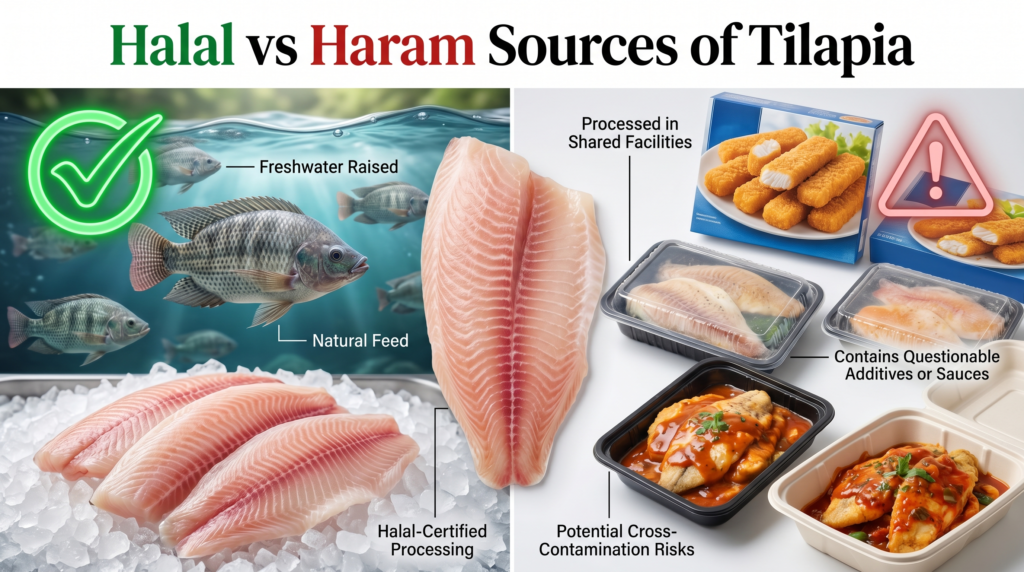
| Source | Halal or Haram? | Explanation |
| Fresh Tilapia Fish | Halal | Natural fish source |
| Wild-Caught Tilapia | Halal | Fish from natural waters |
| Farm-Raised Tilapia | Halal | Generally permissible |
| Frozen Tilapia Fillets | Halal | Usually halal |
| Breaded Tilapia | Requires Checking | Additional ingredients |
| Tilapia with Alcohol-Based Marinades | Questionable | Needs verification |
| Mixed Seafood Products | Requires Checking | Ingredient review needed |
Why It Matters for Muslims in USA & UK
Muslims living in the USA and UK frequently purchase seafood from supermarkets, restaurants, takeaway shops, and online grocery stores. Tilapia is often marketed as a healthy and affordable source of protein.
Many consumers assume all seafood products are automatically halal. While the fish itself may be halal, the final product can contain ingredients that affect its halal status.
For example:
- Fish fingers may contain flavorings.
- Breaded fish may contain emulsifiers.
- Restaurant dishes may contain alcohol-based sauces.
- Frozen meals may include questionable additives.
- Seafood platters may contain mixed ingredients.
Understanding these factors helps Muslims make better purchasing decisions.
Common Places Where Muslims Eat Tilapia
You may find tilapia in:
- Seafood restaurants
- Fast-food fish meals
- Frozen seafood sections
- School cafeterias
- Hospital meals
- Airline meals
- Hotel buffets
- Workplace cafeterias
Because tilapia is so common, understanding its halal status is especially important for Muslim consumers.
Table : Products and Brands That Commonly Contain Tilapia
| Product Type | Examples |
| Fresh Tilapia Fillets | Supermarket seafood counters |
| Frozen Tilapia | Costco, Walmart, Tesco brands |
| Fish Tacos | Restaurant menus |
| Breaded Tilapia | Frozen seafood brands |
| Seafood Platters | Casual dining restaurants |
| Grilled Tilapia Meals | Health-focused restaurants |
| Fish Finger Products | Various brands |
| Frozen Ready Meals | Seafood meal manufacturers |
Is Farm-Raised Tilapia Halal?

One common question concerns farm-raised tilapia.
Most scholars consider farm-raised tilapia halal because:
- It remains a fish.
- It lives in water.
- It retains its natural characteristics.
- It falls under the general permissibility of fish.
Even if fish farms use commercial feed, tilapia generally remains halal according to the majority opinion.
Tilapia Farming and Halal Concerns
Many Muslims ask whether modern fish farming affects the halal status of tilapia. Today, most tilapia sold in the USA and UK comes from fish farms rather than wild rivers or lakes.
Fish farmers raise tilapia in controlled ponds and tanks where they receive commercial feed and veterinary care. Some consumers worry that fish feed may contain ingredients derived from animal by-products. Others question whether farming conditions can affect the halal status of the fish.
According to the majority of scholars, farm-raised tilapia remains halal because it continues to be a fish living in water and does not lose its essential nature. Therefore, the farming method itself generally does not make tilapia haram.
Concerns About Fish Feed
Some Muslims worry that fish feed may contain animal by-products.
However:
- The fish itself remains a fish.
- Most scholars do not classify the fish as haram because of feed.
- Farmed fish are widely accepted as halal.
- Tilapia sold in major supermarkets is generally considered permissible.
For most consumers, the greater concern is the processing and preparation of the fish rather than the feed used during farming.
Nutritional Benefits of Tilapia
Tilapia provides many nutrients, including:
- High-quality protein
- Vitamin B12
- Selenium
- Phosphorus
- Potassium
- Niacin
It is often chosen by people looking for a lean source of protein.
Additional Health Benefits
Tilapia is also valued because it:
- Supports muscle growth through protein intake
- Contains essential minerals
- Can fit into low-calorie diets
- Is easy to digest for many people
- Serves as an alternative to red meat
Because of these benefits, tilapia is commonly recommended as part of a balanced diet.
Tilapia vs Other Popular Halal Fish
Many Muslim consumers compare tilapia with other seafood options before making purchasing decisions.
| Fish Type | Halal Status | Popularity |
| Tilapia | Halal | Very High |
| Salmon | Halal | Very High |
| Cod | Halal | High |
| Haddock | Halal | High |
| Tuna | Halal | Very High |
| Mackerel | Halal | Moderate |
Tilapia remains one of the most affordable halal seafood options available in Western supermarkets. While salmon and tuna are often more expensive, tilapia provides a budget-friendly alternative for families seeking halal seafood.
Halal vs Haram Detailed Breakdown
When Tilapia Is Halal
Tilapia is halal when:
- It is genuine fish.
- It is fresh or frozen without haram additives.
- It is cooked using halal ingredients.
- It is not contaminated with haram substances.
- It is prepared in a halal-compliant manner.
This applies to most plain tilapia products sold in supermarkets.
When Tilapia May Become Questionable
The concern is usually not the fish itself but added ingredients.
1. Breaded Tilapia
Breading may contain:
- Emulsifiers
- Flavorings
- Additives
- Preservatives
These should be reviewed carefully.
2. Restaurant Meals
Restaurant dishes may include:
- Wine sauces
- Alcohol-based marinades
- Questionable seasonings
- Mixed ingredients
Always ask about ingredients when dining out.
3. Frozen Ready Meals
Ready-made seafood meals may contain:
- Artificial flavors
- Preservatives
- Other additives
- Complex seasoning blends
Reading labels is important.
Tilapia in Restaurants and Fast Food
Tilapia is commonly served in restaurants throughout the USA and UK. It is often used in:
- Fish tacos
- Grilled fish platters
- Fish sandwiches
- Seafood pasta dishes
- Rice bowls
- Seafood wraps
While the fish itself may be halal, restaurant preparation methods should be checked carefully.
Potential concerns include:
- Alcohol-based cooking sauces
- Non-halal seasoning blends
- Shared cooking surfaces
- Cross-contamination with non-halal foods
Muslims who frequently eat seafood outside the home should ask restaurants about ingredients and cooking methods before ordering.
Tilapia in Frozen and Processed Foods
Frozen seafood products have become extremely popular because they are convenient and affordable.
Common frozen tilapia products include:
- Breaded fillets
- Fish fingers
- Frozen fish meals
- Seafood platters
- Ready-to-cook fillets
Muslims should pay special attention to ingredient labels because these products may contain:
- Artificial flavors
- Natural flavors
- Emulsifiers
- Preservatives
- Seasoning blends
The fish itself may be halal, but additional ingredients should always be reviewed carefully.
How to Identify Halal Tilapia Products
When shopping in the USA or UK, look for the following signs:
Check the Ingredient List
The shorter the ingredient list, the easier it is to verify halal status.
Look for Halal Certification
A halal logo provides extra confidence and reassurance.
Choose Plain Fillets
Plain tilapia fillets are generally safer than heavily processed products.
Ask Questions
If purchasing from restaurants or fish markets, ask about preparation methods and ingredients.
Buy From Trusted Retailers
Choose reputable supermarkets and seafood suppliers that provide clear ingredient information.
Table : Safer Halal Alternatives
| Product Category | Safer Choice |
| Fresh Fish | Whole fresh tilapia |
| Frozen Seafood | Plain frozen fillets |
| Restaurant Meals | Halal-certified seafood restaurants |
| Fish Fingers | Halal-certified brands |
| Ready Meals | Halal-certified frozen meals |
| Seafood Platters | Restaurants with halal options |
| Breaded Fish | Certified halal products |
Is Tuna Halal or Haram?
Is Shrimp Halal or Haram?
Is Calamari Halal or Haram?
Is Squid Halal or Haram?
Are Oysters Halal or Haram?
Is Lobster Halal or Haram?
Is Crab Halal or Haram?
Is Fish Sauce Halal or Haram?
Complete Halal Seafood Guide for Muslims
FAQs
Is tilapia halal or haram?
Tilapia is generally considered halal by most Islamic scholars.
Is tilapia halal?
Yes, plain tilapia fish is halal.
Is farm-raised tilapia halal?
Yes, farm-raised tilapia is generally considered halal.
Does tilapia have scales?
Yes, tilapia has scales.
Is frozen tilapia halal?
Usually yes, but check additional ingredients.
Can Muslims eat tilapia?
Yes, Muslims can generally eat tilapia.
Is tilapia sold in Walmart halal?
The fish itself is usually halal, but processing should be checked.
Is tilapia healthy?
Yes, it provides protein and important nutrients.
Is grilled tilapia halal?
If prepared with halal ingredients, yes.
Is breaded tilapia halal?
It depends on the ingredients used in the breading.
Is tilapia available in the UK?
Yes, tilapia is sold in many UK supermarkets.
Should Muslims avoid tilapia?
No, plain tilapia is generally considered halal.
Conclusion
Tilapia is one of the most widely consumed fish species in the world and remains a popular choice among Muslim consumers in the USA and UK. Because it is a fish that naturally lives in water and has scales, the majority of scholars consider it halal. Fresh, frozen, and plain tilapia products are generally permissible and can be enjoyed without concern.
However, Muslims should remain cautious when purchasing processed seafood products, breaded fish, frozen meals, or restaurant dishes that may contain additional ingredients. Reading labels, checking certifications, and asking questions about preparation methods can help ensure halal compliance.
Whether purchased from supermarkets, seafood markets, or restaurants, plain tilapia remains one of the safest and most accessible halal seafood choices available today.