
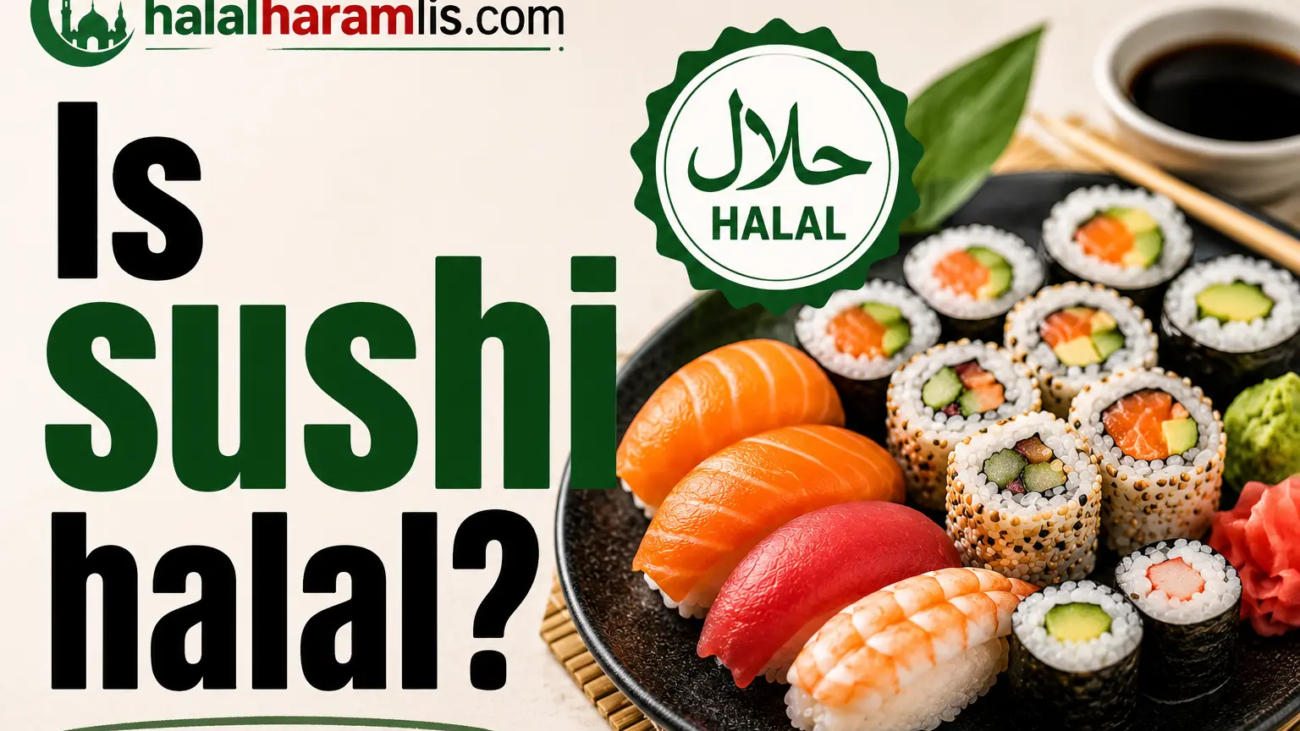
Is Sushi halal? Sushi can be halal, but it is not automatically halal by default. Whether sushi is halal or haram depends on the ingredients used in the rice, sauces, fillings, and the way it is prepared in the kitchen. Plain seafood and vegetable sushi are usually halal, but many popular sushi rolls contain hidden ingredients like alcohol-based rice vinegar, mirin, non-halal imitation crab, and cross-contamination with non-halal meat. Because of these risks, Muslims should never assume sushi is halal unless the restaurant clearly confirms halal ingredients and preparation.
Sushi is popular worldwide and often looks simple and healthy, so many Muslims believe it must be halal because it mainly contains fish, rice, and vegetables. However, modern sushi has evolved and now includes processed ingredients, alcohol seasonings, and shared cooking equipment. This makes it very important to understand what makes sushi halal or haram before eating it, so Muslims can enjoy sushi confidently without doubt.
Why Muslims Are Confused About Sushi
Sushi comes from Japan, where halal dietary rules are not traditionally followed. When sushi spread worldwide, restaurants modified recipes to suit modern tastes. These changes introduced alcohol-based ingredients, sauces, imitation seafood, and non-halal meats.
Because sushi looks light and fish-based, many Muslims assume it is automatically halal. The reality is more complex. Modern sushi includes flavor enhancers, cooking wines, marinades, and sauces that were never part of the original simple fish-and-rice dish.
This confusion is why “Is Sushi Halal?” has become one of the most searched halal food questions globally.
Sushi Properly Before Judging Its Halal Status
To know whether sushi is halal, we must first understand what sushi really is. Sushi does not mean raw fish. Sushi actually means vinegared rice. The rice is the heart of sushi, and the toppings are added afterward. These toppings can include seafood, vegetables, eggs, sauces, and sometimes meat.
Traditional sushi was very simple. It contained rice seasoned with vinegar and topped with fish. Modern sushi is very different. Restaurants now add sweet sauces, spicy mayo, imitation crab, teriyaki chicken, tempura batter, and even cheese. Each of these additions changes the halal ruling.
The halal status of sushi therefore depends on every ingredient and the kitchen environment where it is prepared.
The Main Rule of Halal Seafood in Islam
In Islam, seafood has a special ruling. Most scholars agree that seafood is halal without the need for halal slaughter. This means fish and many sea creatures can be eaten freely.
Because of this rule, plain fish sushi is usually halal. Salmon, tuna, and shrimp sushi without alcohol or haram sauces are generally permissible.
However, the moment alcohol, non-halal meat, or cross contamination enters the preparation process, the halal ruling changes completely.
The Hidden Ingredient That Changes Everything: Alcohol in Sushi Rice
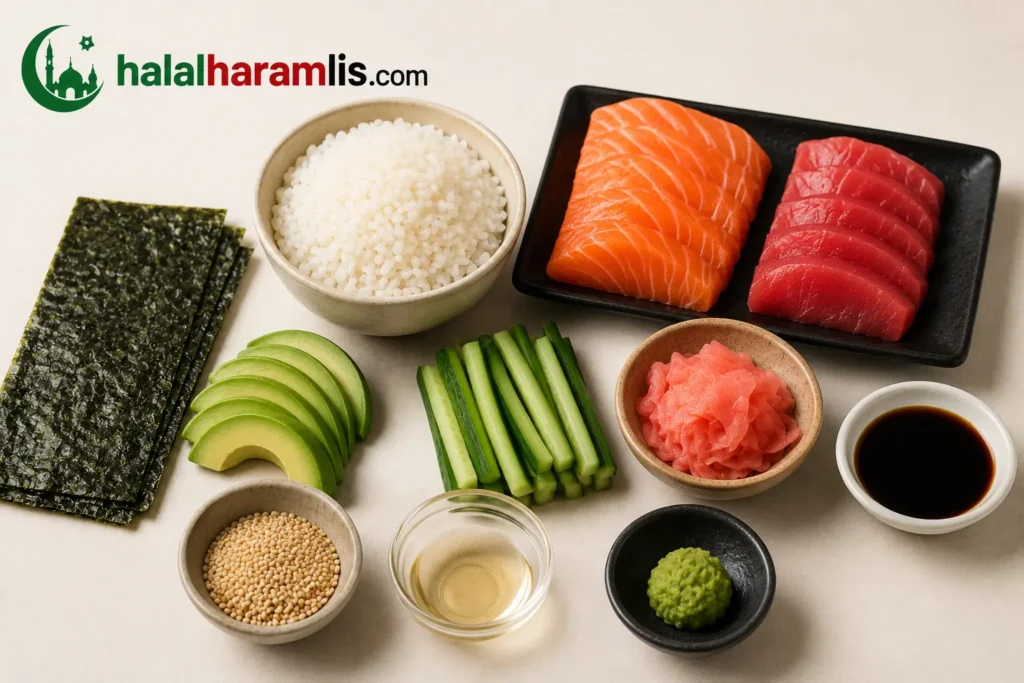
The biggest halal issue in sushi is not the fish. It is the rice.
Traditional sushi rice is seasoned with vinegar, sugar, and salt. But modern restaurant sushi rice often contains mirin or sake. Mirin is a sweet rice wine, and sake is a Japanese alcoholic drink made from rice.
Even small amounts of alcohol used in cooking are considered haram by many scholars. Because mirin is added directly to sushi rice, this makes many restaurant sushi dishes problematic.
This is the single biggest reason why sushi cannot be assumed halal.
Core Sushi Ingredients and Their Halal Status
| Ingredient | Common Use in Sushi | Halal Status |
| Fresh fish (salmon, tuna) | Main topping | Halal |
| Shrimp and seafood | Rolls and nigiri | Halal |
| Rice vinegar | Rice seasoning | Halal |
| Sugar and salt | Rice seasoning | Halal |
| Mirin (sweet rice wine) | Rice and sauces | Haram |
| Sake (rice wine) | Marinades and rice | Haram |
| Soy sauce | Dipping sauce | Usually halal |
| Spicy mayo | Sauce topping | Doubtful |
Why Sushi Sauces Are a Major Halal Concern
Modern sushi is heavily dependent on sauces. These sauces add sweetness and flavor, but many of them contain mirin or alcohol-based flavoring.
Teriyaki sauce, eel sauce, and spicy mayo are extremely popular. Unfortunately, they are also among the most problematic ingredients for Muslims. Mirin is often used to balance flavor, and alcohol-based flavor extracts are commonly added to enhance taste.
Because sauces are poured directly over sushi, even halal seafood becomes doubtful or haram when these sauces are used.
The Problem With Imitation Crab in Sushi
One of the most common sushi ingredients worldwide is imitation crab, also called crab stick. Many people assume it is seafood, but it is actually processed fish paste mixed with starch, sugar, and flavoring.
Some brands use non-halal gelatin, alcohol-based flavoring, or other doubtful additives. Since restaurants rarely disclose the exact brand used, the halal status becomes uncertain.
This is why scholars often classify imitation crab sushi as doubtful unless verified halal.
Popular Sushi Sauces and Their Halal Risk Level
| Sauce Name | Common Ingredients | Halal Risk |
| Soy sauce | Fermented soybeans | Low risk |
| Teriyaki sauce | Soy, sugar, mirin | High risk |
| Eel sauce | Soy, sugar, mirin | High risk |
| Spicy mayo | Mayo + chili sauce | Medium risk |
| Ponzu sauce | Citrus + soy + mirin | High risk |
Chicken and Beef Sushi: The Biggest Red Flag
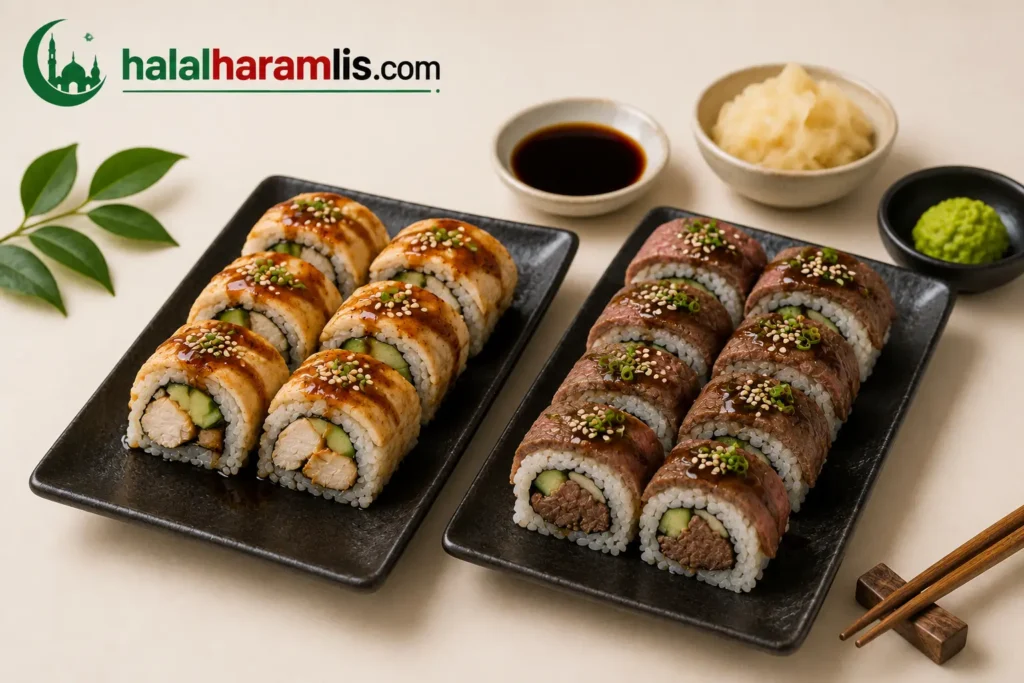
Sushi restaurants now offer chicken rolls, beef rolls, and even steak sushi. While these may look appealing, they are usually not halal.
In most non-Muslim countries, chicken and beef are not slaughtered according to halal standards. Even if the meat is cooked thoroughly, the slaughter method matters in Islam.
Because of this, chicken and beef sushi in regular restaurants are generally considered haram unless the restaurant is halal certified.
Cross Contamination: The Hidden Kitchen Risk
Many Muslims focus only on ingredients and forget the kitchen environment. Sushi chefs use the same knives and cutting boards for all types of sushi. If pork sushi or non-halal meat is prepared in the same space, cross contamination becomes a serious concern.
Islamic dietary rules emphasize cleanliness and separation from pork. If halal sushi touches surfaces used for pork, it can become haram.
This is why halal certification is so important for sushi restaurants.
Halal Status of Popular Sushi Types
| Sushi Type | Typical Ingredients | Halal Status |
| Salmon nigiri | Rice + salmon | Usually halal |
| Tuna nigiri | Rice + tuna | Usually halal |
| Avocado roll | Rice + avocado | Halal |
| Cucumber roll | Rice + cucumber | Halal |
| California roll | Imitation crab | Doubtful |
| Spicy tuna roll | Mayo sauce | Doubtful |
| Chicken teriyaki roll | Non-halal chicken | Usually haram |
| Beef sushi | Non-halal beef | Usually haram |
Is Vegetarian Sushi Always Halal?
Vegetarian sushi seems safe, but sauces can still make it doubtful. Even vegetable rolls may contain spicy mayo or be prepared with alcohol-seasoned rice.
Simple cucumber or avocado rolls without sauces are usually safe options.
How Sushi Became So Different From Traditional Sushi
Traditional sushi in Japan was simple and minimal. Western sushi became bigger, sweeter, and more sauce-heavy. Cream cheese rolls, fried tempura rolls, and sweet sauces changed sushi dramatically.
These changes introduced many halal concerns that did not exist in traditional sushi.
Understanding this evolution helps Muslims make better food choices.
How to Order Halal Sushi Safely
Ordering halal sushi requires asking the right questions. Many Muslims feel shy asking restaurants about ingredients, but it is essential.
You should ask whether mirin or sake is used in the rice and sauces. This single question can determine whether the sushi is halal or not.
Choosing simple seafood or vegetable rolls is the safest approach when halal certification is not available.
Restaurant Questions Every Muslim Should Ask
| Question | Why It Matters |
| Do you use mirin in sushi rice? | Checks alcohol use |
| Is your soy sauce alcohol-free? | Fermentation check |
| Do you serve pork sushi? | Cross contamination risk |
| Is imitation crab halal? | Hidden ingredients |
| Is chicken/beef halal? | Slaughter method |
Is Sushi Halal in Non-Muslim Countries?
In most non-Muslim countries, sushi is not automatically halal. Alcohol in rice and sauces is common, and halal meat is rare in regular sushi restaurants.
However, halal sushi restaurants are growing worldwide. These restaurants avoid alcohol and use halal-certified meat and ingredients.
The Safest Sushi Choices for Muslims
Simple seafood sushi remains the safest option. Salmon, tuna, shrimp, avocado, and cucumber rolls without sauces are usually the best choices.
Avoiding fancy rolls with sauces dramatically reduces halal risk.
We hope you guys find this guide helpful. If you like this one, we have more for you:
- Are Nerds Gummy Clusters Halal?
- Are Takis Halal or Haram?
- Is Wingstop Halal or Haram?
- Is KFC Halal or Haram?
FAQs
Is sushi halal for Muslims?
Sushi can be halal, but it is not automatically halal. Its status depends on the ingredients, sauces, and how it is prepared.
Is sushi rice halal?
Sushi rice is halal if it is made without alcohol. Some restaurants add mirin or sake, which makes it haram.
Is sushi vinegar halal?
Not always. Some sushi vinegar contains alcohol-based seasonings, so you must confirm the ingredients.
Is salmon sushi halal?
Yes, salmon is a halal fish. Salmon sushi is halal if no alcohol sauces or cross-contamination are involved.
Is tuna sushi halal?
Yes, tuna is halal. Plain tuna sushi is usually halal unless prepared with alcohol or non-halal sauces.
Is imitation crab in sushi halal?
Imitation crab is often not halal because it may contain non-halal additives and flavorings.
Is soy sauce halal with sushi?
Some soy sauces contain trace alcohol from fermentation. Halal-certified soy sauce is the safest option.
Is tempura sushi halal?
Not always. Some tempura batter contains beer or alcohol, making it questionable or haram.
Is chicken sushi halal?
Chicken sushi is halal only if the chicken is halal certified and there is no cross-contamination.
Is sushi from Japan halal?
Most sushi in Japan is not automatically halal because alcohol seasonings are commonly used.
Can Muslims eat vegetarian sushi?
Vegetarian sushi is usually halal, but sauces and kitchen cross-contamination must still be checked.
How can I make sure sushi is halal?
Choose halal-certified restaurants, ask about alcohol-free rice and sauces, and confirm how the food is prepared.
Conclusion
Sushi has become a global favorite, but its halal status depends on ingredients and preparation methods. The biggest concern is alcohol in sushi rice and sauces, followed by cross contamination and non-halal meat. Understanding these risks allows Muslims to make informed choices without giving up their favorite foods.
With awareness and careful ordering, halal sushi is possible. Choosing simple seafood rolls, verifying ingredients, and supporting halal-certified restaurants ensures that Muslims can enjoy sushi confidently while staying within Islamic dietary guidelines.