

Is salmon halal or haram?
Salmon is halal according to the majority of Islamic scholars because it is a fish that lives in water and has scales. Fresh, frozen, wild-caught, and farm-raised salmon are generally considered permissible for Muslims to eat.
However, Muslims should still check processed salmon products such as smoked salmon, salmon sandwiches, canned salmon, and ready meals because they may contain additional ingredients, flavorings, or sauces that require halal verification.
Salmon is one of the most popular fish consumed in the USA and UK. Whether you are shopping at Walmart, Costco, Tesco, Aldi, Sainsbury’s, or Asda, you will likely find salmon in fresh, frozen, smoked, and canned forms. It is widely recommended as a healthy food because it contains protein, omega-3 fatty acids, vitamins, and minerals.
Many Muslims wonder whether salmon is halal because modern seafood production involves fish farms, processing facilities, preservatives, and ready-made meals. Questions often arise about farm-raised salmon, smoked salmon, fish feed, and processed seafood products.
The good news is that salmon itself is generally regarded as halal by the majority of scholars. Understanding where salmon comes from, how it is processed, and which products may contain questionable ingredients can help Muslims make informed choices when purchasing seafood in the USA and UK.
Table : Ingredients Breakdown of Salmon
| Component | Description | Halal Status |
| Salmon Fish | Main ingredient | Halal |
| Fish Protein | Natural protein source | Halal |
| Omega-3 Fatty Acids | Natural nutrient | Halal |
| Vitamin D | Naturally occurring | Halal |
| Selenium | Natural mineral | Halal |
| Healthy Fats | Found naturally in fish | Halal |
| Added Seasonings | Processed products | Requires Checking |
What Is Salmon?
Salmon is a type of fish that belongs to the Salmonidae family. It is known for its pink or orange-colored flesh and rich nutritional value.
Salmon naturally lives in both freshwater and saltwater environments during different stages of its life cycle. It is one of the most consumed fish species worldwide.
Why Is Salmon So Popular?
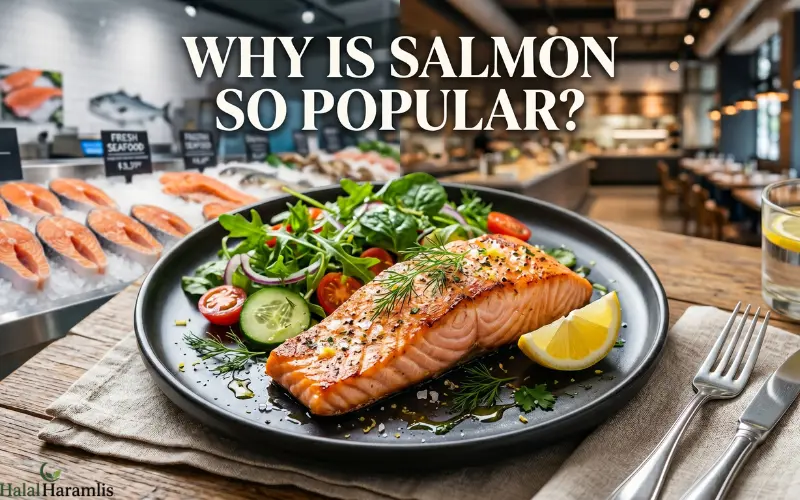
Salmon is popular because it:
- Contains high-quality protein
- Is rich in omega-3 fatty acids
- Has a delicious flavor
- Can be grilled, baked, or smoked
- Is widely available
- Fits many healthy diets
Many doctors and nutritionists recommend salmon because of its health benefits.
Common Types of Salmon
Some of the most common varieties include:
- Atlantic Salmon
- Chinook Salmon
- Sockeye Salmon
- Coho Salmon
- Pink Salmon
- Chum Salmon
All of these salmon species are generally considered halal.
Table : Halal vs Haram Sources of Salmon
| Source | Halal or Haram? | Explanation |
| Wild-Caught Salmon | Halal | Natural fish source |
| Fresh Salmon | Halal | Pure fish |
| Frozen Salmon | Halal | Usually permissible |
| Farm-Raised Salmon | Halal | Majority opinion |
| Smoked Salmon | Requires Checking | Additional processing |
| Flavored Salmon | Requires Checking | Added ingredients |
| Alcohol-Marinated Salmon | Questionable | Needs verification |
| Seafood Ready Meals | Requires Checking | Check ingredients |
Why It Matters for Muslims in USA & UK
Muslims in Western countries consume seafood regularly because it is often viewed as a healthier alternative to red meat.
Salmon is commonly found in:
- Supermarkets
- Restaurants
- Fast-food chains
- Sushi restaurants
- Frozen food sections
- Meal delivery services
While salmon itself is halal, processed salmon products may contain:
- Alcohol-based flavorings
- Non-halal sauces
- Artificial flavors
- Questionable additives
For this reason, Muslims should understand not only the fish itself but also the ingredients used in the final product.
Salmon in Everyday Foods
You may encounter salmon in:
- Salmon sandwiches
- Sushi rolls
- Smoked salmon bagels
- Salmon salads
- Frozen dinners
- Seafood platters
Each product should be evaluated based on its complete ingredient list.
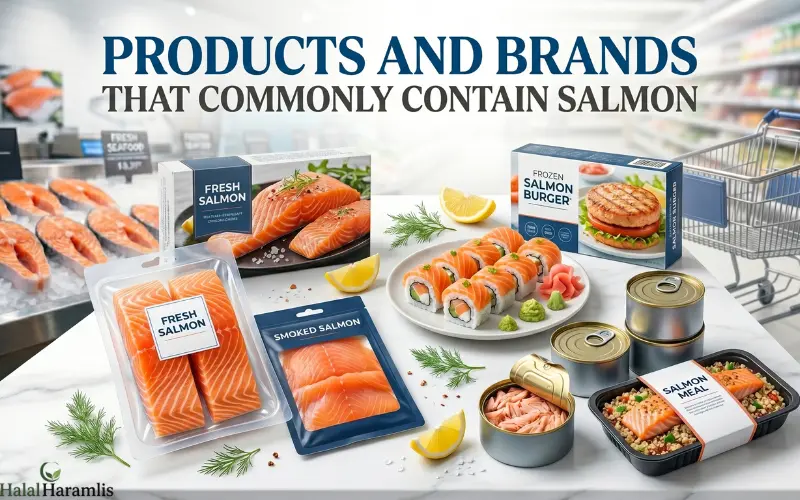
Table : Products and Brands That Commonly Contain Salmon
| Product Type | Examples |
| Fresh Salmon Fillets | Supermarket seafood sections |
| Frozen Salmon | Costco, Walmart, Tesco brands |
| Smoked Salmon | Premium seafood brands |
| Salmon Sushi | Restaurants and supermarkets |
| Canned Salmon | Various canned seafood brands |
| Salmon Burgers | Frozen seafood products |
| Salmon Salads | Ready-made meals |
| Seafood Platters | Restaurant dishes |
Is Farm-Raised Salmon Halal?
One of the most common questions Muslims ask is whether farm-raised salmon is halal.
Today, much of the salmon sold worldwide comes from fish farms.
Most scholars consider farm-raised salmon halal because:
- It remains a fish.
- It lives in water.
- Its natural characteristics remain unchanged.
- Fish farming does not change its species.
Concerns About Fish Feed
Some consumers worry about fish feed used in salmon farming.
Fish feed may contain:
- Fish meal
- Plant proteins
- Marine ingredients
- Nutritional supplements
Despite these concerns, the majority opinion remains that farm-raised salmon is halal.
Wild Salmon vs Farmed Salmon
Many consumers compare wild-caught and farm-raised salmon.
Wild Salmon
Benefits include:
- Natural environment
- Often leaner
- Stronger flavor
Farm-Raised Salmon
Benefits include:
- More affordable
- Widely available
- Consistent supply
From a halal perspective, both are generally permissible.
Nutritional Benefits of Salmon
Salmon is considered one of the healthiest fish available.
Key nutrients include:
- Protein
- Omega-3 fatty acids
- Vitamin B12
- Vitamin D
- Selenium
- Potassium
Many people eat salmon regularly as part of a healthy lifestyle.
Salmon in Sushi and Restaurants
Salmon is one of the most common ingredients used in sushi.
Muslims should be aware that some sushi products may include:
- Alcohol-based sauces
- Mirin
- Cooking wine
- Non-halal seasonings
The salmon itself remains halal, but additional ingredients should be checked.
Restaurant Considerations
When ordering salmon in restaurants, ask about:
- Marinades
- Sauces
- Cooking methods
- Cross-contamination
This helps ensure the meal remains halal.
Halal vs Haram Detailed Breakdown
When Salmon Is Halal
Salmon is halal when:
- It is genuine fish.
- It is fresh or frozen.
- No haram ingredients are added.
- It is prepared using halal ingredients.
This applies to most plain salmon products.
When Salmon May Become Questionable
The concern usually comes from processing rather than the fish itself.
Smoked Salmon
Smoked salmon may contain:
- Flavorings
- Preservatives
- Additional ingredients
Check labels carefully.
Ready Meals
Ready-made salmon meals may include:
- Sauces
- Emulsifiers
- Artificial flavors
Always review the ingredient list.
Restaurant Dishes
Restaurant salmon dishes sometimes contain wine-based sauces or marinades.
Table : Safer Halal Alternatives
| Product Category | Safer Choice |
| Fresh Fish | Plain salmon fillets |
| Frozen Seafood | Unseasoned salmon |
| Sushi | Halal-certified sushi |
| Restaurant Meals | Seafood restaurants with halal options |
| Smoked Fish | Halal-certified smoked salmon |
| Canned Seafood | Simple ingredient canned salmon |
| Ready Meals | Halal-certified products |
Common Mistakes People Make
Mistake 1: Assuming All Salmon Products Are Automatically Halal
The fish may be halal, but added ingredients may not be.
Mistake 2: Ignoring Sauces
Many salmon dishes include sauces that require verification.
Mistake 3: Confusing Fish Type with Product Ingredients
The salmon itself is usually halal, but processing matters.
Mistake 4: Not Reading Labels
Processed seafood products often contain multiple additives.
Mistake 5: Overlooking Restaurant Preparation
Cooking methods and ingredients should always be checked.
See Also:
Is Tuna Halal or Haram?
Is Shrimp Halal or Haram?
Is Sardine Halal or Haram?
Is Mackerel Halal or Haram?
Is Cod Halal or Haram?
Is Fish Oil Halal or Haram?
Is Smoked Salmon Halal or Haram?
Is Sushi Halal or Haram?
Complete Halal Seafood Guide
FAQs
Is salmon halal or haram?
Salmon is generally considered halal.
Is salmon halal?
Yes, salmon is halal according to the majority of scholars.
Is farm-raised salmon halal?
Yes, farm-raised salmon is generally halal.
Is wild salmon halal?
Yes, wild salmon is halal.
Can Muslims eat salmon?
Yes, Muslims can generally eat salmon.
Is smoked salmon halal?
Usually yes, but check added ingredients.
Is salmon sushi halal?
The salmon is halal, but sauces and ingredients should be reviewed.
Is canned salmon halal?
Usually yes, but check labels.
Is Atlantic salmon halal?
Yes, Atlantic salmon is halal.
Is salmon healthy?
Yes, it contains protein and omega-3 fatty acids.
Does salmon contain pork?
No, salmon does not contain pork.
Should Muslims avoid salmon?
No, plain salmon is generally considered halal.
Conclusion
Salmon is one of the most nutritious and widely consumed fish in the world. It is commonly available throughout the USA and UK in fresh, frozen, smoked, canned, and restaurant-prepared forms. Because salmon is a fish with scales that lives in water, the majority of Islamic scholars consider it halal. Both wild-caught and farm-raised salmon are generally permissible for Muslim consumers. The main concern is not the fish itself but the ingredients used in processed products, restaurant meals, and flavored seafood items. By checking labels and choosing simple or halal-certified products whenever possible, Muslims can enjoy salmon with confidence.