
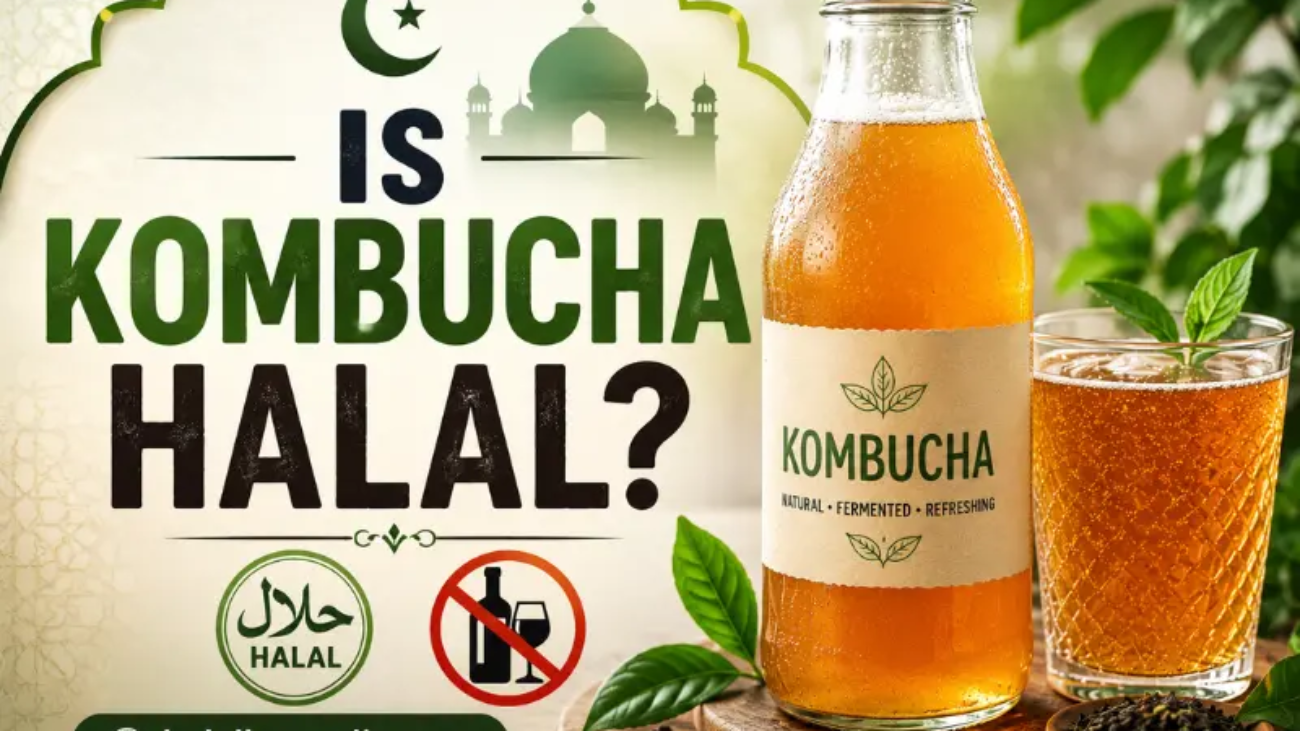
Kombucha is generally considered halal when its alcohol content remains below 0.5% and the drink does not cause intoxication. However, if fermentation increases the alcohol level to an intoxicating amount or the product is intentionally alcoholic (hard kombucha), then it becomes haram. Therefore, kombucha is not universally halal or haram; its ruling depends on alcohol content, fermentation level, and product type.
This topic has become increasingly important as kombucha has grown into a global health drink consumed by millions. Because it is a fermented beverage, many Muslims naturally question whether it falls into the category of alcohol or permissible fermented foods. This detailed guide explains the Islamic ruling by combining modern food science, global regulations, and contemporary scholarly opinions.
What Is Kombucha? A Deep Explanation
Kombucha is a fermented tea beverage that has been consumed for thousands of years. It is believed to have originated in ancient China before spreading to Russia and Europe. Today, it has become a worldwide wellness drink commonly marketed as a healthier alternative to soda.
Modern consumers often call kombucha a “natural soda” because of its fizzy texture and refreshing taste. Unlike soft drinks, however, kombucha is made through fermentation using live cultures. This fermentation process is exactly why many Muslims question whether it is halal.
Kombucha is not simply tea. It is produced using a living culture known as SCOBY, which stands for Symbiotic Culture of Bacteria and Yeast. This culture transforms sweet tea into a tangy, slightly sour, and naturally carbonated beverage. The fermentation process creates beneficial acids and probiotics, which is why kombucha is often associated with digestive health and wellness.
Despite these health benefits, the presence of fermentation raises concerns about alcohol formation, making the halal ruling more complex than many people expect.
Fermentation in Islam
Fermentation itself is not prohibited in Islam. Many everyday halal foods are produced through fermentation, including yogurt, vinegar, sourdough bread, pickles, soy sauce, and cheese. The real concern in Islamic dietary law is intoxication.
Alcohol is prohibited because it affects the mind, impairs judgment, and causes intoxication. If fermentation produces a product that does not intoxicate and is not consumed for intoxication, scholars often place it in a different category from alcoholic beverages.
This distinction is essential for understanding the kombucha debate. The issue is not fermentation itself but whether the final drink can intoxicate.
The Scientific Process of Making Kombucha
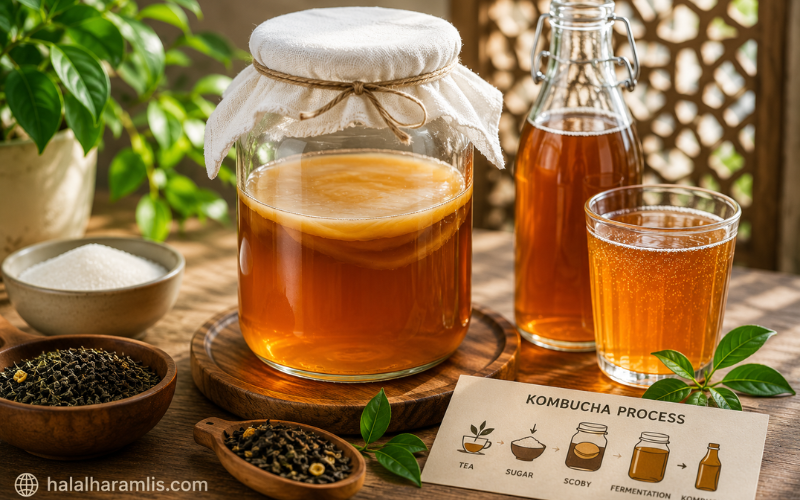
Kombucha production begins with sweetened tea. Once the tea cools, the SCOBY is added, and fermentation begins. During fermentation, yeast first breaks down sugar into ethanol, which is a form of alcohol. Then, beneficial bacteria convert most of that alcohol into organic acids such as acetic acid.
This two-step process explains why kombucha contains trace alcohol even though it is not considered an alcoholic drink. Alcohol appears temporarily during fermentation but is largely reduced as the process continues.
This process is very similar to vinegar production. Vinegar also goes through an alcohol stage before becoming a non-alcoholic final product that is widely accepted as halal.
Why Kombucha Contains Alcohol
Alcohol in kombucha is not intentionally added. It is a natural by-product of fermentation. Whenever yeast breaks down sugar, small amounts of alcohol are produced. This happens in many foods and drinks, including fruit juices and bread.
Scientific research shows that typical kombucha contains between 0.2% and 0.5% alcohol. This amount is extremely low and falls within the legal definition of non-alcoholic beverages in many countries.
At this level, intoxication is practically impossible. This scientific reality plays a major role in modern Islamic rulings about kombucha.
Islamic Fiqh and the Concept of Trace Alcohol
Contemporary scholars have studied modern food science and developed principles to address trace alcohol in foods. One important concept is istihlak, which refers to dilution. If a prohibited substance exists in such a small amount that it does not affect taste, smell, or intoxication, it may be excused.
This principle explains why bread, yogurt, vinegar, and fruit juices are considered halal despite containing trace amounts of naturally occurring alcohol. Kombucha is often discussed under the same principle.
When Does Kombucha Become Haram?
Not all kombucha is halal. If fermentation continues for too long, alcohol levels can rise significantly. Some homemade batches have been found to contain alcohol levels similar to beer.
In Western markets, “hard kombucha” is intentionally brewed to be alcoholic. These products may contain alcohol levels comparable to wine or beer. In such cases, the ruling clearly changes because the drink becomes intoxicating and is produced for alcohol consumption.
This distinction is crucial. The halal ruling applies only to non-intoxicating kombucha.
Can Kombucha Cause Intoxication?
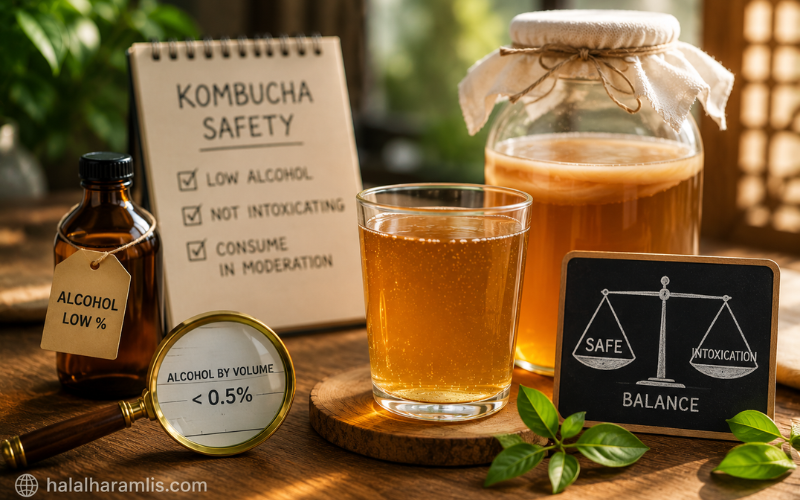
Medical and scientific evidence indicates that intoxication requires significantly higher alcohol levels than those found in standard kombucha. Most alcoholic beverages contain at least 4–5% alcohol. Kombucha typically contains less than 0.5%.
To experience intoxication from kombucha, a person would have to consume an unrealistic quantity in a short period. Therefore, normal kombucha consumption does not lead to intoxication.
This scientific fact strongly influences scholarly opinions.
Commercial vs Homemade Kombucha
Commercial kombucha is usually regulated by food safety laws. In the United States and Europe, non-alcoholic beverages must remain below 0.5% alcohol. Manufacturers regularly test their products to stay within legal limits.
Homemade kombucha, however, is unpredictable. Fermentation conditions such as temperature, sugar levels, and fermentation time can increase alcohol levels significantly. Because of this uncertainty, some scholars advise caution with homemade kombucha unless proper testing is possible.
Can Muslims Drink Kombucha?
Most contemporary scholars agree that non-alcoholic kombucha is permissible because it does not intoxicate and is not consumed as an alcoholic beverage. However, Muslims should avoid hard kombucha and any product labeled alcoholic.
Islam encourages moderation, awareness, and avoiding doubtful matters. Therefore, choosing clearly labeled non-alcoholic kombucha is the safest approach.
Kombucha in the Global Market
The halal availability of kombucha varies by region. In Western countries, halal certification is still rare. In Muslim-majority countries such as Malaysia and Indonesia, halal-certified kombucha is becoming more common due to strong halal certification systems.
This global variation highlights the importance of checking product labels and certification whenever possible.
Contemporary Scholarly Opinions
Many modern scholars compare kombucha to vinegar rather than wine. Wine is produced with the intention of intoxication, while kombucha is produced as a health beverage. Intention and effect both carry significant weight in Islamic law.
For this reason, the majority opinion allows non-intoxicating kombucha while prohibiting alcoholic versions.
we hope you guys find this guide helpful ,here we have more for you:
FAQs
Is kombucha halal or haram?
It is halal if non-intoxicating and below 0.5% alcohol.
Is kombucha alcoholic?
Yes, but only in trace natural amounts.
Can Muslims drink kombucha?
Yes, if it is non-alcoholic.
Is kombucha halal in the USA?
Usually yes if labeled non-alcoholic.
Is hard kombucha halal?
No, it is alcoholic and haram.
Can kombucha make you drunk?
No, normal kombucha cannot cause intoxication.
Is fermentation halal in Islam?
Yes, if the final product is not intoxicating.
Is homemade kombucha halal?
It can be risky due to uncontrolled fermentation.
Does kombucha contain ethanol?
Yes, in very small trace amounts.
Is kombucha like beer?
No, the alcohol level is far lower.
Should Muslims avoid kombucha?
Only avoid alcoholic versions.
Is kombucha safe for a halal lifestyle?
Yes, when non-alcoholic and consumed in moderation.
Conclusion
Kombucha is best described as conditionally halal. The drink is made through fermentation, which naturally creates tiny amounts of alcohol, but standard commercial kombucha stays below the 0.5% level and cannot cause intoxication. Because Islam forbids intoxication rather than fermentation itself, many scholars consider non-alcoholic kombucha permissible when consumed as a health beverage.
The ruling changes when alcohol becomes significant. Hard kombucha, over-fermented homemade batches, or products with unclear alcohol levels should be avoided, as they can move into the category of intoxicants. This is why checking labels and choosing trusted, non-alcoholic brands is important.