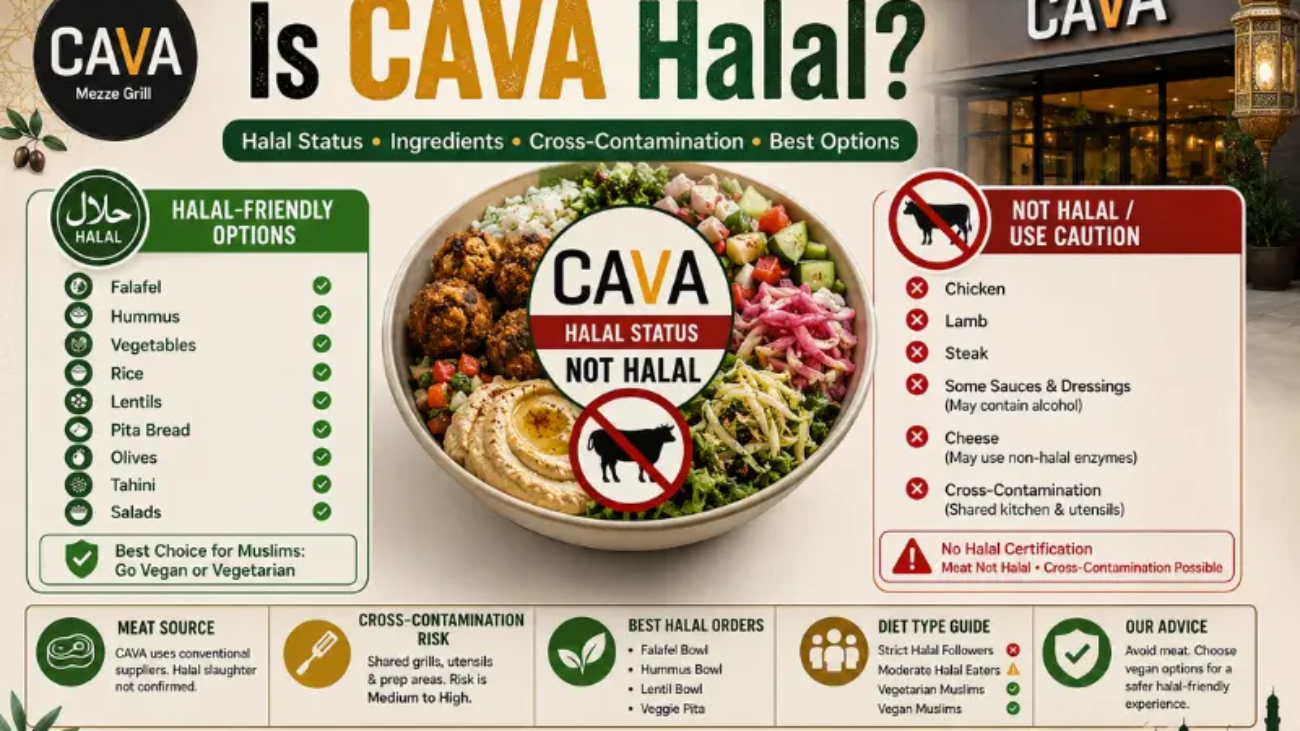
CAVA is not fully halal worldwide, but some locations use halal-certified chicken and lamb depending on regional suppliers and customer demand. Because the restaurant operates with different supply chains in different cities and countries, the halal status cannot be applied globally to every branch.
CAVA has become one of the fastest-growing Mediterranean fast-casual brands, known for customizable bowls, pitas, dips, and grilled proteins. Mediterranean cuisine often overlaps with halal-friendly food, which is why many Muslims naturally assume the restaurant may be halal. However, halal compliance depends on several strict requirements including meat sourcing, slaughter method, kitchen handling, and certification. This means Muslims should always verify their local branch before eating there.
Quick Halal Status Overview
| Category | Halal Status | What It Means |
| USA Locations | Not halal-certified | Most branches use standard suppliers |
| Canada/Europe | Varies | Verification required |
| Muslim Countries | Sometimes halal | Depends on supplier laws |
| Chicken & Lamb | Location dependent | May or may not be halal |
| Falafel & Veg Items | Generally halal-friendly | Cross-contamination still possible |
What Is CAVA?
CAVA is a Mediterranean-inspired fast casual restaurant built around the concept of customizable healthy bowls and pita wraps. Customers can choose a base such as rice or greens, add dips like hummus and tzatziki, then finish with vegetables and grilled protein. The restaurant markets itself as fresh, clean, and wholesome food inspired by Greek and Middle Eastern flavors.
Because its menu includes hummus, olives, tahini, falafel, and lamb, the cuisine naturally overlaps with traditional halal dishes. This strong similarity is one of the biggest reasons many Muslim customers question whether the food is halal. Unfortunately, similarity in cuisine does not guarantee halal compliance, as halal rules extend far beyond ingredients alone.
Why Muslims Ask If CAVA Is Halal
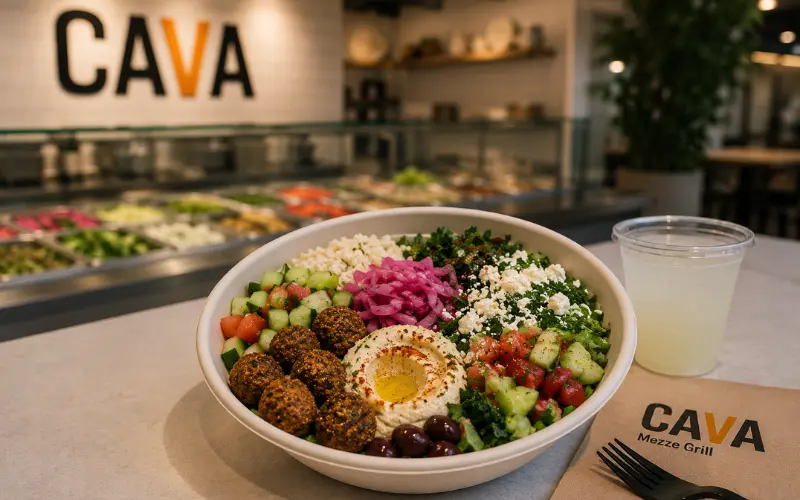
The question exists mainly because Mediterranean food is widely associated with halal cuisine. Many people grow up eating halal shawarma, kebabs, and falafel, which makes a Mediterranean restaurant feel familiar and safe. When customers see similar menu items at CAVA, they assume the preparation follows halal standards.
Another reason is the rise of halal awareness. Muslim consumers today are far more careful about food sourcing than in previous decades. Social media and halal food directories have made it easier to question and verify restaurant practices. When people see mixed online opinions about a brand, curiosity naturally grows.
A third reason is the global nature of restaurant chains. Some branches in Muslim-majority countries may serve halal meat, while branches in Western countries may not. This leads to conflicting experiences and confusion online.
Does CAVA Use Halal Meat?
For meat to be halal, the animal must be slaughtered according to Islamic law. This includes invoking the name of Allah during slaughter, ensuring the animal is healthy, and draining the blood completely. Certification bodies verify these requirements and confirm the meat is halal.
Most CAVA locations in Western countries do not publicly advertise halal certification. Without official confirmation, strict halal consumers generally consider the meat non-halal or doubtful. However, in regions with strong halal demand, restaurants sometimes change suppliers and provide halal-certified meat.
This difference in sourcing is the main reason halal status varies so widely by location.
Meat Source Comparison Table
| Region | Chicken | Lamb | Notes |
| USA | Not halal-certified | Not halal-certified | Standard suppliers |
| Canada | Not confirmed halal | Not confirmed halal | Verify locally |
| UK / Europe | Varies by branch | Varies by branch | Ask restaurant |
| Middle East | Often halal | Often halal | Local regulations |
| Southeast Asia | Often halal | Often halal | Demand-driven |
Is CAVA Chicken Halal?
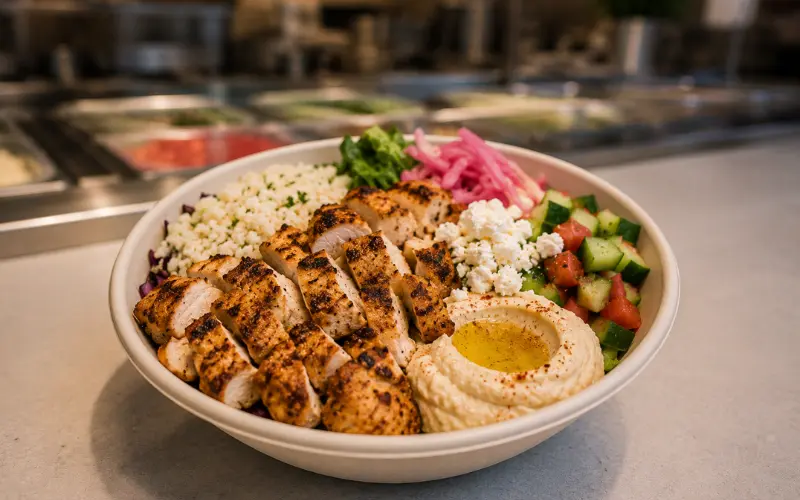
Chicken is one of the most popular protein choices at CAVA. In most Western locations, halal certification is not publicly confirmed. Without certification, many Muslims avoid eating the chicken because the slaughter method is unknown.
However, in some regions where halal demand is high, branches may switch to halal-certified suppliers. This means the halal status can change depending on the city and country. The safest approach is always to ask the specific restaurant.
Is CAVA Lamb Halal?
Lamb is commonly halal in traditional Mediterranean cuisine, but restaurant supply chains do not always follow religious standards. Many customers assume lamb is automatically halal everywhere, which is not always correct.
For lamb to be halal, the slaughter process must follow Islamic rules. Without certification or confirmation, the halal status of lamb remains uncertain in many Western branches.
Cross-Contamination in CAVA Kitchens
Even if halal meat were available, kitchen practices are equally important. Fast-casual restaurants typically use shared preparation areas, grills, and utensils. This creates a risk of cross-contamination between halal and non-halal foods.
For example, if halal meat is cooked on the same grill as non-halal meat, strict halal consumers may consider the food doubtful. Shared fryers and preparation surfaces can also introduce uncertainty.
Ingredient Concerns Beyond Meat
Halal status includes all ingredients, not only meat. Dressings, cheeses, and sauces can sometimes contain hidden animal derivatives or alcohol-based flavor extracts. These ingredients are often overlooked but are important in halal verification.
Even small amounts of non-halal ingredients can make a meal doubtful. This is why certification and ingredient transparency are so important.
Ingredient Risk Table
| Ingredient | Concern Level | Reason |
| Chicken | High | Slaughter method unknown |
| Lamb | High | Certification varies |
| Cheese | Medium | Possible animal rennet |
| Sauces | Medium | Alcohol extracts possible |
| Dressings | Medium | Hidden additives |
| Falafel | Low | Plant-based but shared prep |
Are CAVA Falafel and Vegetarian Items Halal?
Falafel, hummus, rice, pita, and vegetables are naturally halal-friendly foods. For Muslims who follow a flexible approach, vegetarian items may be acceptable options.
However, strict halal consumers still consider cross-contamination risks. Shared utensils and preparation areas may be used for both halal and non-halal items, which creates uncertainty.
Are CAVA Sauces and Dressings Halal?
CAVA is famous for sauces like garlic dressing, tahini, and harissa. Many of these are plant-based, but some dressings may include vinegar or flavor extracts that raise halal concerns.
Without certification, it is difficult to guarantee that every ingredient meets halal standards. This uncertainty is why many Muslims prefer certified restaurants.
Regional Halal Availability
| Region | Halal Availability | Recommendation |
| USA | Rarely halal | Avoid if strict |
| Canada | Rarely halal | Verify branch |
| UK | Sometimes halal | Ask locally |
| UAE / Gulf | Often halal | Confirm certification |
| Malaysia / Indonesia | Often halal | High likelihood |
Why Fast-Casual Chains Cause Halal Confusion
Global restaurant chains rarely operate under one universal supply chain. Each country has different regulations, suppliers, and customer expectations. This means the same restaurant can be halal in one country and non-halal in another.
Because of this, online information often appears contradictory. Both halal and non-halal claims can be true depending on the location being discussed.
Why Halal Certification Matters
Halal certification removes uncertainty by ensuring the entire supply chain follows Islamic dietary rules. Certification bodies verify meat sourcing, ingredient safety, and kitchen practices.
Without certification, halal status often remains unclear. This is why scholars encourage Muslims to choose certified restaurants whenever possible.
How To Verify Your Local Branch
The most reliable way to confirm halal status is direct verification. Customers can ask the restaurant staff, check official announcements, or look for halal certification signage in-store. Since suppliers may change, regular verification is recommended.
Comparison Table: CAVA vs Halal Requirements
| Requirement | Halal Standard | CAVA Status |
| Halal Slaughter | Required | Not confirmed globally |
| No Cross Contamination | Required | Shared kitchens |
| Halal Certification | Recommended | Rare in Western countries |
| Ingredient Transparency | Required | Limited disclosure |
Is CAVA Halal According to Scholars?
Islamic scholars generally advise Muslims to avoid doubtful food. If halal certification is unavailable and sourcing is unclear, the safest choice is to avoid the meat and choose certified alternatives.
We hope you guys find this guide helpful ,here we have more for you:
Are Nerds Gummy Clusters Halal or Haram?
FAQs
Is CAVA chicken halal?
No. CAVA chicken is not halal certified.
Is CAVA lamb halal?
No, lamb is also not halal.
Does CAVA use halal meat anywhere?
Currently, no locations are officially halal.
Can Muslims eat falafel at CAVA?
Yes, falafel is halal-friendly.
Is CAVA hummus halal?
Yes, hummus is generally halal.
Are CAVA sauces halal?
Some are halal; some may contain alcohol traces.
Is CAVA safe for vegetarians?
Yes, very vegetarian-friendly.
Is CAVA safe for vegans?
Yes, many vegan options are available.
Is CAVA similar to halal Mediterranean food?
The taste is similar, but halal status is different.
Is cross-contamination possible?
Yes, kitchen equipment is shared.
Should strict Muslims avoid CAVA?
Yes, especially the meat.
What is the safest halal order at CAVA?
A fully vegan bowl with falafel, rice, and vegetables.
Conclusion
CAVA is not globally halal, and most Western locations do not carry halal certification. While some international branches may offer halal meat, the status depends entirely on the specific location and supplier. Without certification, halal status remains uncertain for strict halal consumers.
For Muslims seeking full confidence, verifying each branch is essential. Choosing halal-certified restaurants remains the safest and most reliable option.