
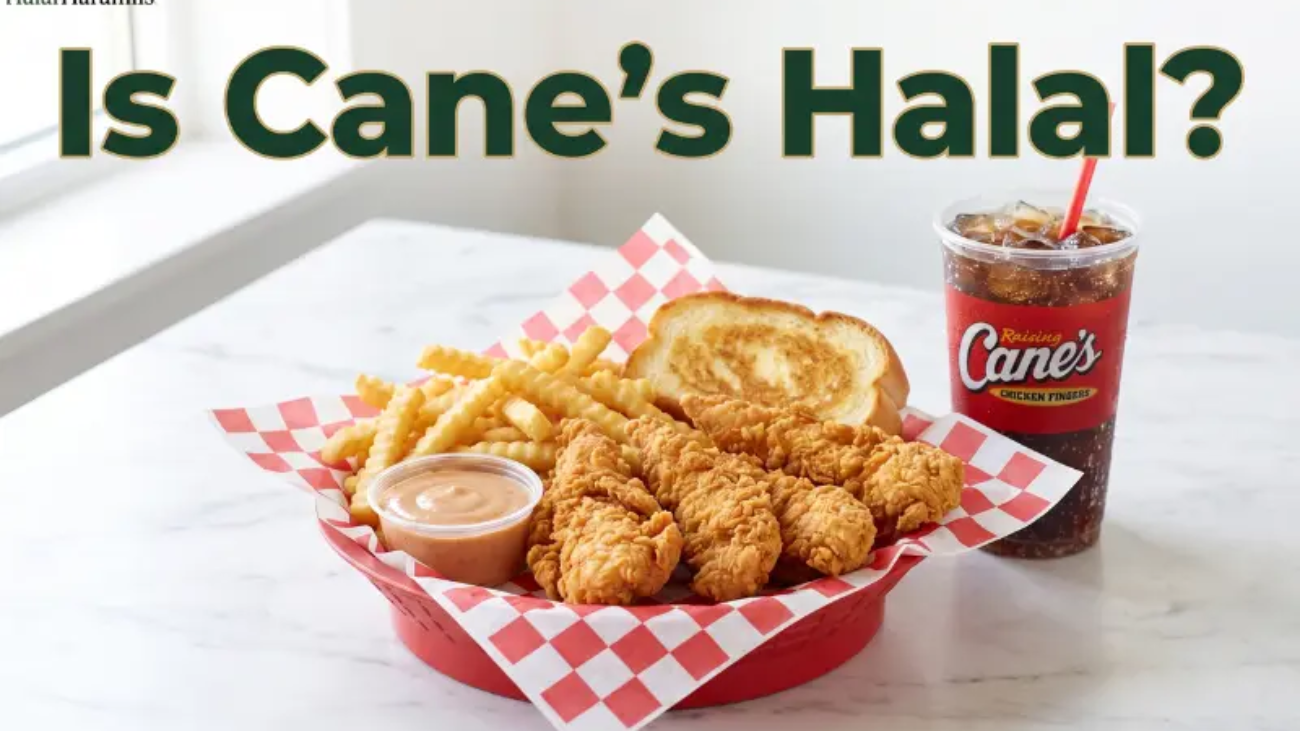
Is Cane’s Halal or Haram? In most locations, Raising Cane’s is generally considered not fully halal because the chicken served is typically not halal-certified and may not follow halal slaughter requirements. However, menu ingredients vary by supplier and region, so consumers should always check local information.
If you are asking “Is Cane’s halal?”, the safest answer is that most Raising Cane’s restaurants in the USA do not advertise halal-certified chicken.
Imagine you are out with friends after work in the USA or UK. Everyone decides to grab chicken fingers, fries, and a soft drink from Raising Cane’s. The food looks delicious, but then an important question comes to mind: Is Cane’s halal or haram?
This question has become increasingly common because more consumers are paying attention to food ingredients, sourcing, and preparation methods. While chicken itself can be halal, the way it is sourced, slaughtered, processed, and cooked determines whether it is permissible.
Many people assume that because Raising Cane’s serves chicken, it must automatically be halal. Unfortunately, it is not that simple. In this guide, we will explore Raising Cane’s ingredients, chicken sourcing, halal concerns, and whether it is suitable for halal-conscious consumers in the USA and UK.
Raising Cane’s Ingredient Overview
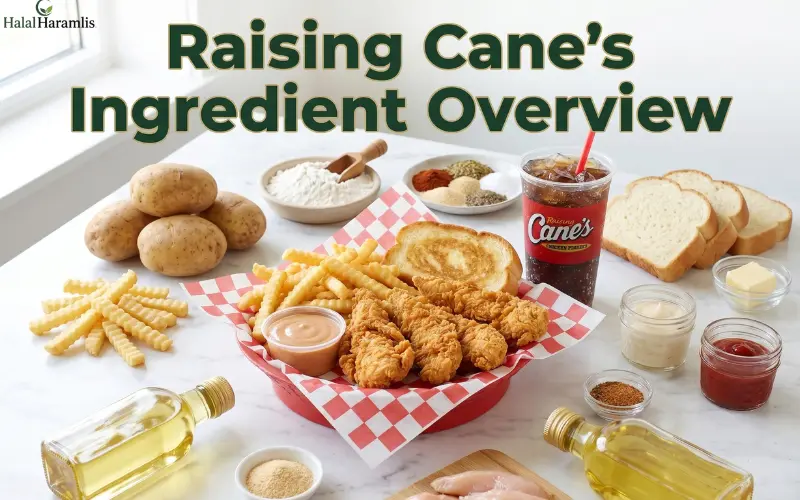
| Item | Main Ingredients | Halal Concern |
| Chicken Fingers | Chicken, flour, seasonings | Chicken source |
| Texas Toast | Bread, butter | Usually halal |
| French Fries | Potatoes, oil | Cooking process |
| Cane’s Sauce | Mayo, spices | Ingredient verification |
| Coleslaw | Cabbage, dressing | Usually halal |
| Soft Drinks | Carbonated beverages | Usually halal |
What Is Raising Cane’s?
Raising Cane’s is a popular fast-food restaurant chain known primarily for its chicken finger meals.
The company focuses on a simple menu that includes:
- Chicken fingers
- French fries
- Texas toast
- Coleslaw
- Cane’s sauce
- Soft drinks
Unlike many large fast-food chains, Raising Cane’s keeps its menu relatively small. This simplicity is one reason the brand has become extremely popular throughout the United States.
Today, Raising Cane’s locations can be found in:
- United States
- Middle East selected regions
- Other international markets
Because chicken is the main menu item, halal questions typically focus on chicken sourcing.
Halal vs Haram Sources of Chicken
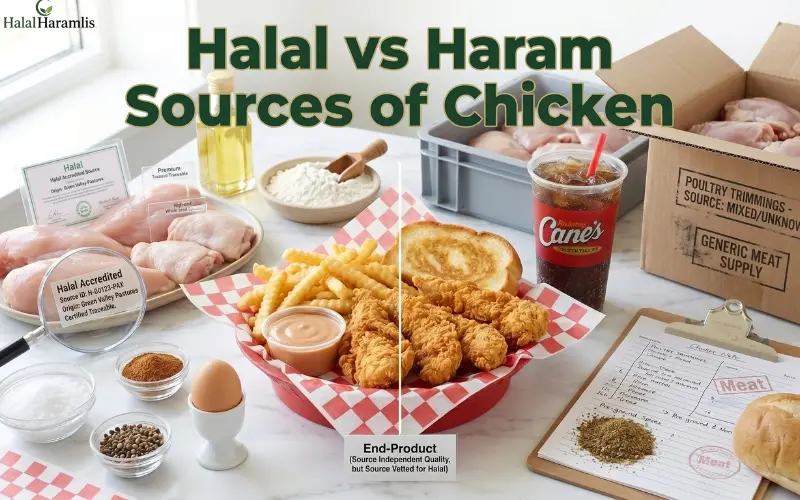
| Source | Halal Status |
| Halal-certified chicken | Halal |
| Properly slaughtered chicken | Halal |
| Chicken with verified halal certification | Halal |
| Non-halal slaughtered chicken | Haram according to many scholars |
| Unknown slaughter source | Questionable |
| Pork-derived ingredients | Haram |
Is Cane’s Halal?
The short answer is usually no in most USA locations.
The primary concern is not the seasoning or breading. Instead, the concern is the source of the chicken itself.
For chicken to be considered halal, many halal consumers look for:
- Halal-certified suppliers
- Proper slaughter methods
- Clear halal verification
- Trusted certification
Most Raising Cane’s restaurants in the United States do not publicly market their chicken as halal-certified.
Because of this, many halal-conscious consumers choose not to eat the chicken.
Why Chicken Source Matters
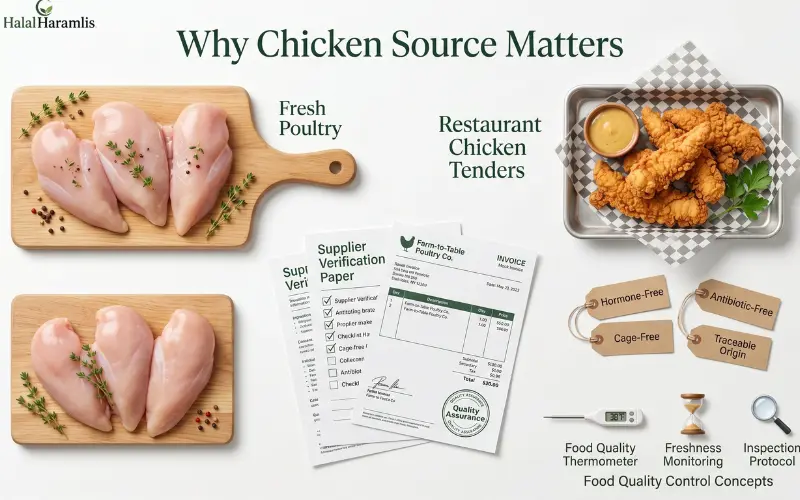
Many people focus only on ingredients and forget about the meat source.
Chicken fingers may contain:
- Chicken breast
- Flour coating
- Seasonings
- Frying oil
Even if every seasoning ingredient is halal, the chicken itself remains the most important factor.
This is why many consumers first ask:
- Is the chicken halal?
- Is the supplier halal-certified?
- Is there a halal logo?
- Does the restaurant verify halal sourcing?
Without clear verification, many people remain cautious.
Why It Matters in the USA and UK
Consumers in the USA and UK often eat fast food regularly.
Popular chains include:
- Raising Cane’s
- KFC
- Popeyes
- Chick-fil-A
- Wingstop
- McDonald’s
The challenge is that halal policies vary significantly between chains.
Some locations may offer halal-certified meat, while others may not.
As a result, consumers cannot assume every chicken restaurant follows the same standards.
Products Sold at Raising Cane’s
| Menu Item | Halal Concern Level |
| Chicken Fingers | High |
| Chicken Sandwich | High |
| Texas Toast | Low |
| French Fries | Low |
| Coleslaw | Low |
| Soft Drinks | Very Low |
Does Cane’s Use Halal Chicken?
This is the most common question.
Most Raising Cane’s locations do not advertise halal-certified chicken.
Because of this:
- Many consumers do not consider Cane’s halal.
- Others seek local confirmation.
- Some international locations may have different suppliers.
The answer can therefore depend on country and restaurant location.
However, for most USA locations, halal certification is generally not promoted.
Ingredient-by-Ingredient Analysis
Chicken
Chicken is the biggest concern.
The halal status depends on:
- Source
- Slaughter method
- Certification
- Supplier verification
Flour Coating
The breading itself is usually not the issue.
Typical flour coatings contain:
- Wheat flour
- Salt
- Spices
These ingredients are generally considered halal.
Cooking Oil
Most vegetable oils are halal.
However, consumers sometimes verify whether shared fryers are used for other products.
Cane’s Sauce
Cane’s Sauce contains several ingredients including mayonnaise and spices.
Most ingredients are generally halal, but consumers who want complete certainty may review the latest ingredient information.
Texas Toast
Texas Toast typically contains:
- Bread
- Butter
- Garlic seasoning
These ingredients are generally considered halal.
Common Reasons People Think Cane’s Is Halal
Some consumers assume:
- Chicken automatically means halal.
- No pork means halal.
- Fast food chains use halal suppliers.
- All international locations follow the same standards.
These assumptions are not always correct.
Halal status depends on sourcing and certification, not just ingredients.
Common Reasons People Avoid Cane’s
Many consumers choose to avoid Cane’s because:
- No clear halal certification
- Chicken sourcing concerns
- Lack of halal labeling
- Regional supplier differences
- Preference for certified halal restaurants
These concerns lead many people to seek alternative restaurants with verified halal meat.
Detailed Halal vs Haram Breakdown
Understanding the halal status of Raising Cane’s requires looking at more than just the ingredients. The biggest issue is the chicken source.
When Cane’s Could Be Considered Halal
A Raising Cane’s meal could potentially be halal if:
- The chicken comes from a halal-certified supplier.
- The chicken is slaughtered according to halal requirements.
- The restaurant clearly verifies halal sourcing.
- Cross-contamination with non-halal products is controlled.
- A recognized halal certification body approves the supply chain.
When Cane’s Would Not Be Considered Halal
Many halal-conscious consumers consider Cane’s non-halal when:
- The chicken is not halal-certified.
- The slaughter method is unknown.
- No halal verification is available.
- Restaurant staff cannot confirm sourcing.
- Official halal certification is absent.
Because most Raising Cane’s locations in the USA do not advertise halal-certified chicken, many consumers choose halal-certified alternatives instead.
Is Cane’s Halal in the USA?
This is one of the most searched questions online.
In the United States, Raising Cane’s generally does not market its chicken as halal-certified. While ingredients such as fries, toast, and soft drinks may not present major halal concerns, the chicken remains the key issue.
For consumers who require verified halal meat, most USA locations are usually not considered suitable without additional confirmation.
Things to Check
- Local restaurant policies
- Supplier information
- Halal certification
- Official statements
- Regional sourcing differences
Is Cane’s Halal in the UK?
Raising Cane’s has a much smaller presence in the UK compared to the USA.
If Cane’s expands further into the UK, consumers should not assume the halal status is identical to American locations. Suppliers and sourcing may differ between countries.
Always check:
- Local restaurant information
- Official company statements
- Halal certifications
- Supplier verification
Are Cane’s Fries Halal?
Many consumers ask about the fries separately.
French fries are typically made from:
- Potatoes
- Vegetable oil
- Salt
These ingredients are generally halal.
However, some consumers also investigate:
- Shared fryers
- Cross-contamination
- Cooking procedures
The fries themselves are usually less concerning than the chicken.
Is Cane’s Sauce Halal?
Cane’s Sauce is one of the chain’s signature menu items.
The sauce typically contains ingredients such as:
- Mayonnaise
- Spices
- Seasonings
- Flavorings
Most consumers focus more on the chicken than the sauce.
Still, those seeking complete certainty often review ingredient information and certification details whenever available.
Why People Search “Is Cane’s Halal?”
The popularity of Raising Cane’s has increased dramatically in recent years.
Consumers search this question because they want to know:
- Whether the chicken is halal
- Whether certification exists
- Whether the restaurant uses halal suppliers
- Whether they can eat there confidently
- Which menu items may be suitable
As halal awareness grows in the USA and UK, these questions continue to become more common.
Table : Safer Halal Alternatives
| Alternative | Why It May Be Better |
| Local Halal Chicken Restaurants | Verified halal meat |
| Halal-Certified Fast Food Chains | Clear certification |
| Halal Fried Chicken Shops | Transparent sourcing |
| Halal Burger Restaurants | Verified suppliers |
| Home-Cooked Chicken Meals | Full ingredient control |
| Certified Halal Takeaways | Greater confidence |
Best Halal-Friendly Alternatives to Cane’s
If you prefer verified halal options, consider:
Local Halal Restaurants
Many cities in the USA and UK now have halal-certified chicken restaurants.
Benefits include:
- Verified sourcing
- Halal certification
- Transparent ingredients
Certified Halal Chains
Some restaurant chains offer halal-certified locations in selected regions.
Always verify:
- Certification body
- Restaurant location
- Supplier information
Homemade Chicken Meals
Cooking at home provides maximum control over:
- Ingredients
- Seasonings
- Meat sourcing
- Preparation methods
Common Mistakes People Make
Many consumers make avoidable mistakes when researching halal food.
1. Assuming Chicken Automatically Means Halal
Chicken can only be halal if sourcing and slaughter requirements are met.
2. Ignoring Certification
Certification often provides the strongest evidence of halal compliance.
3. Trusting Social Media Rumors
Information shared online is not always accurate.
4. Assuming Every Location Is the Same
Restaurant suppliers can vary by country and region.
5. Looking Only at Ingredients
The meat source is often more important than flavorings or seasonings.
6. Forgetting About Cross-Contamination
Some consumers also consider preparation methods and kitchen procedures.
7. Assuming No Pork Means Halal
A product can be free from pork and still not meet halal requirements.
Related Halal Restaurant Guides
FAQs
Is Cane’s halal or haram?
Most Raising Cane’s locations are generally not considered fully halal because the chicken is typically not advertised as halal-certified.
Is Raising Cane’s chicken halal?
Most USA locations do not publicly market their chicken as halal-certified.
Is Cane’s halal in America?
Generally, most American locations are not known for serving halal-certified chicken.
Is Cane’s halal in the UK?
Consumers should check local suppliers and certifications because sourcing can vary.
Are Cane’s fries halal?
The fries are generally considered halal, though some consumers investigate cooking methods and shared fryers.
Is Cane’s sauce halal?
The sauce ingredients are generally less concerning than the chicken source.
Does Cane’s contain pork?
The main halal concern is usually the chicken source rather than pork ingredients.
Is Cane’s chicken certified halal?
Most locations do not advertise halal certification.
Can halal-conscious consumers eat at Cane’s?
Many choose not to unless they can verify halal sourcing.
What is the safest alternative to Cane’s?
A restaurant with recognized halal certification is usually the safest choice.
Why do people question Cane’s halal status?
Because chicken sourcing and slaughter methods are not always clearly verified.
How can I verify a restaurant’s halal status?
Check official statements, halal certifications, supplier information, and local restaurant policies.
Conclusion
Is Cane’s Halal or Haram? Based on commonly available information, most Raising Cane’s locations in the USA are generally not considered fully halal because the chicken is typically not marketed as halal-certified and may not meet the standards required by halal-conscious consumers. While menu items such as fries, toast, coleslaw, and soft drinks may not raise major concerns, the chicken remains the primary issue.
For consumers who require verified halal meat, the safest option is to choose restaurants with recognized halal certification or clear supplier verification. Since sourcing can change over time and vary by location, checking local restaurant information remains the best approach. If halal compliance is important to you, certified halal restaurants will usually provide greater confidence and peace of mind.