
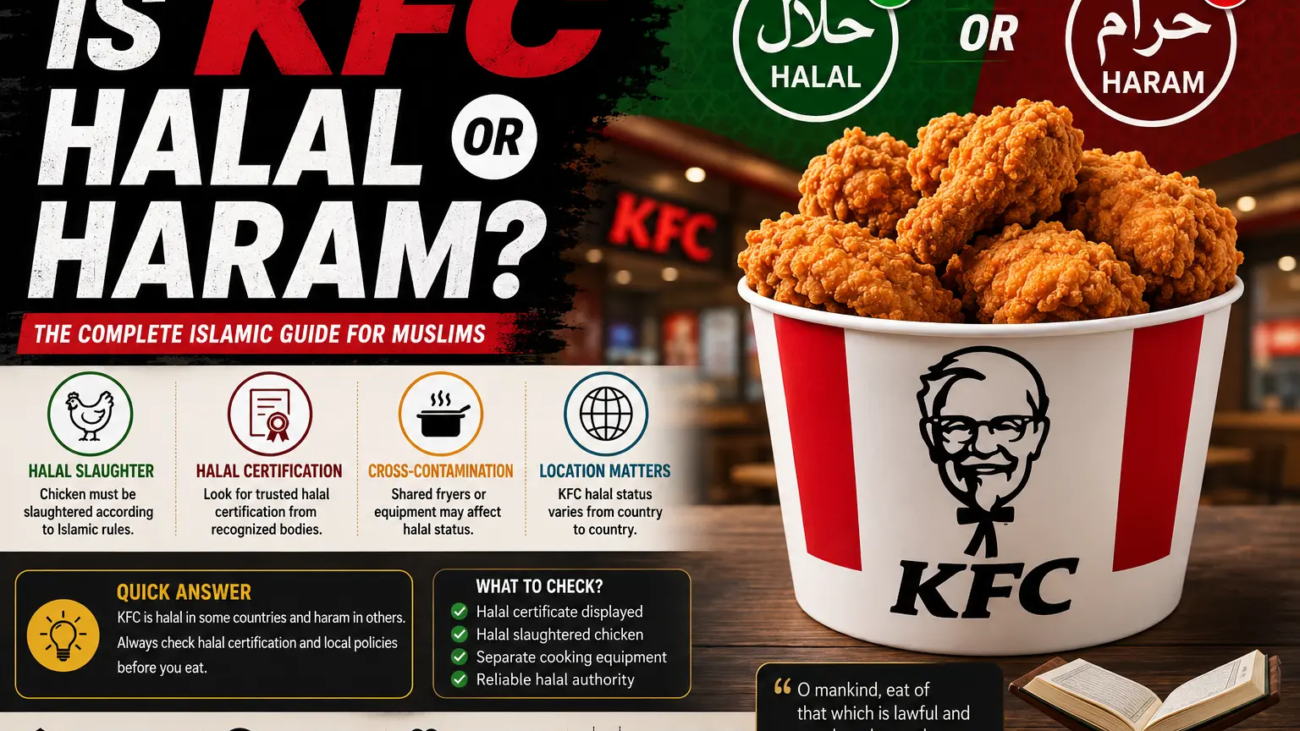
KFC is not halal everywhere. It is halal only in locations where the chicken is halal-certified and prepared according to Islamic guidelines. Always check certification at the specific branch before eating.
Is KFC halal or haram? The answer is: KFC can be halal in some locations and haram in others depending on halal certification, slaughter methods, and kitchen practices. This topic has become one of the most searched food questions among Muslims because fast food is now part of everyday life. From busy work schedules to travel and social outings, people often rely on convenient meals. When a global brand like KFC is present in malls, airports, and major cities around the world, Muslims naturally want to know whether they can eat there without compromising their religious values.
The confusion happens because many people assume a global company follows the same food standards everywhere. In reality, global fast-food chains operate using regional suppliers and different food regulations. This means the chicken served in one country may be completely different from the chicken served in another. This detailed guide explains the halal status of KFC step-by-step so Muslims can make informed and confident decisions while staying true to Islamic dietary principles.
Why Halal Food Matters in Islam
Food in Islam is deeply connected to spirituality, obedience, and daily lifestyle. Eating halal is not just a dietary preference; it is an act of worship and a reflection of a believer’s commitment to living according to divine guidance. The Quran repeatedly encourages Muslims to eat what is lawful and pure, which shows how important food choices are in Islamic teachings. Because of this, Muslims are naturally careful about the source of their meals, especially when eating outside their homes where they do not control the ingredients or preparation methods.
In the modern world, eating outside has become normal and frequent. Families dine out, students eat on campus, professionals rely on quick meals during work hours, and travelers depend on restaurants at airports and highways. This lifestyle change has increased the importance of halal verification more than ever before. The challenge today is not only avoiding pork or alcohol but also understanding industrial food production, supply chains, and kitchen practices. This is why questions about fast-food chains like KFC continue to grow among Muslims worldwide.
Knowing Halal Slaughter in Modern Poultry Production
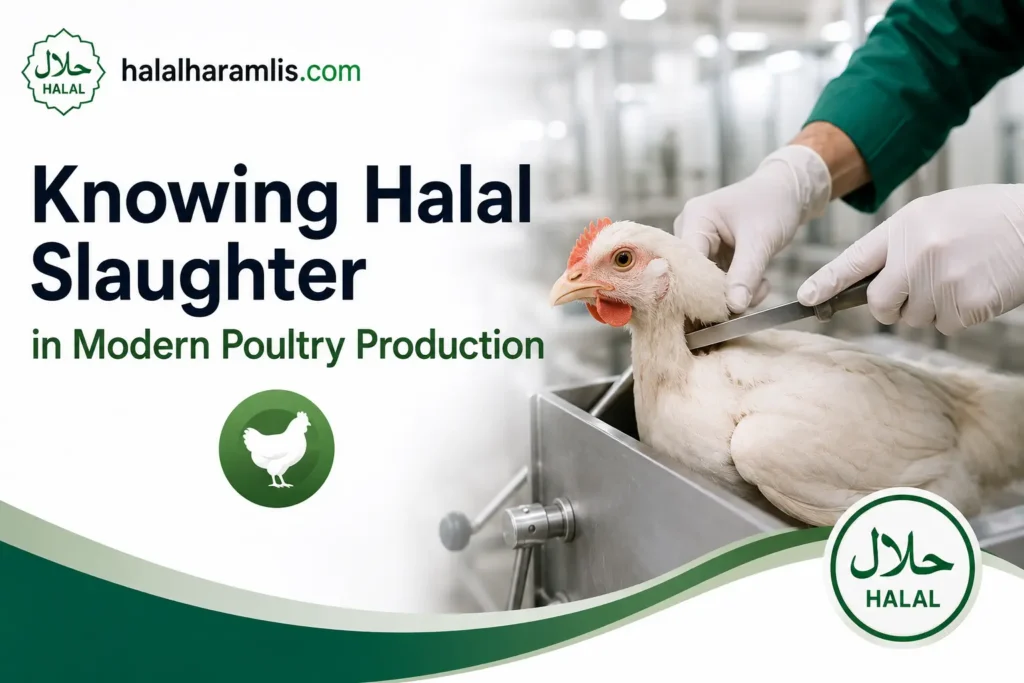
To determine whether KFC chicken is halal, it is essential to understand Islamic slaughter rules in detail. For meat to be halal, several conditions must be met. The animal must be alive and healthy before slaughter, the slaughter must be performed in the name of God, the blood must be drained completely, and the animal must be treated humanely. These rules ensure both spiritual and physical purity of the meat and reflect Islam’s emphasis on ethical treatment of animals.
Modern poultry factories process thousands of chickens every hour using automated systems. This industrial scale creates a major area of debate among Islamic scholars. Some scholars accept machine slaughter if Islamic conditions are followed and supervision is present, while others prefer manual slaughter performed by a Muslim. Because food companies use large industrial systems, halal certification organizations play a crucial role in verifying whether Islamic guidelines are being followed correctly. Without certification, it becomes extremely difficult for consumers to confirm halal status.
The Global Supply Chain Behind Fast Food
Global fast-food companies rely heavily on regional suppliers and local food regulations. This means KFC in one country does not necessarily use the same chicken supplier as KFC in another country. Each location adapts to local demand, government rules, and customer expectations. In regions where halal food demand is high, companies often invest in halal supply chains. In places where halal demand is low, certification may not be prioritized.
This difference is the main reason the halal status of KFC cannot be answered with a simple yes or no. Instead, it must be evaluated by location. Muslims often feel confused because the brand name is the same everywhere, but the sourcing and preparation methods are not. Understanding this global supply chain helps explain why verification is always necessary before eating.
Ingredients Used in KFC Chicken
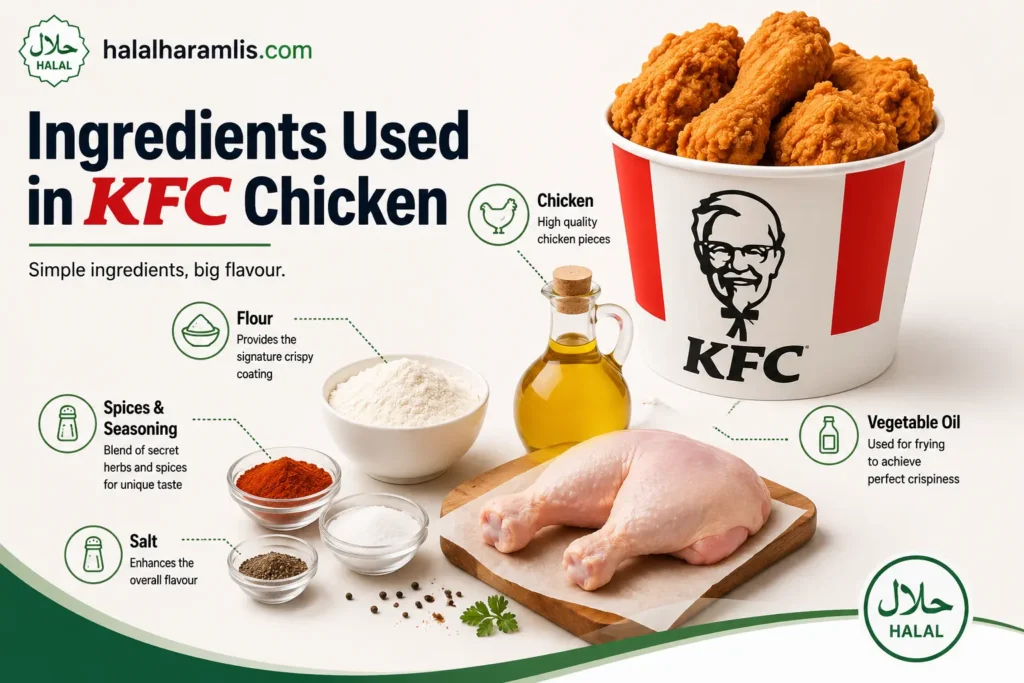
KFC chicken typically includes chicken pieces, flour coating, seasoning spices, marinades, and vegetable frying oil. At first glance, these ingredients appear halal because they are plant-based or commonly permissible. However, the halal concern is not about the seasoning or flour coating. The primary issue is the chicken itself and how it is slaughtered before reaching the restaurant kitchen.
Another factor is food preparation. Even if the ingredients themselves are halal, the preparation environment can affect the final ruling. Shared equipment, shared storage, and shared frying oil may create cross-contamination risks. This shows that halal evaluation goes beyond ingredient lists and includes the entire preparation process.
Contamination in Fast-Food Kitchens
Cross-contamination is one of the most discussed concerns among Islamic scholars when evaluating fast-food chains. This occurs when halal food comes into contact with non-halal food during storage, preparation, or cooking. Large restaurant kitchens prepare many menu items in the same environment, which increases the risk of mixing.
Shared fryers are a common example. If the same oil is used to fry non-halal products, scholars differ in opinion about whether the oil becomes contaminated. Some consider the food doubtful, while others consider it impermissible depending on the level of impurity. Because of this, halal certification bodies often require separate equipment and strict kitchen procedures to ensure complete separation between halal and non-halal food.
Key Factors That Decide KFC Halal Status
| Factor | Why It Matters | Impact |
| Slaughter method | Must follow Islamic rules | Most critical factor |
| Halal certification | Third-party verification | Builds trust |
| Kitchen separation | Prevents contamination | Ensures purity |
Regional Differences in Halal Availability
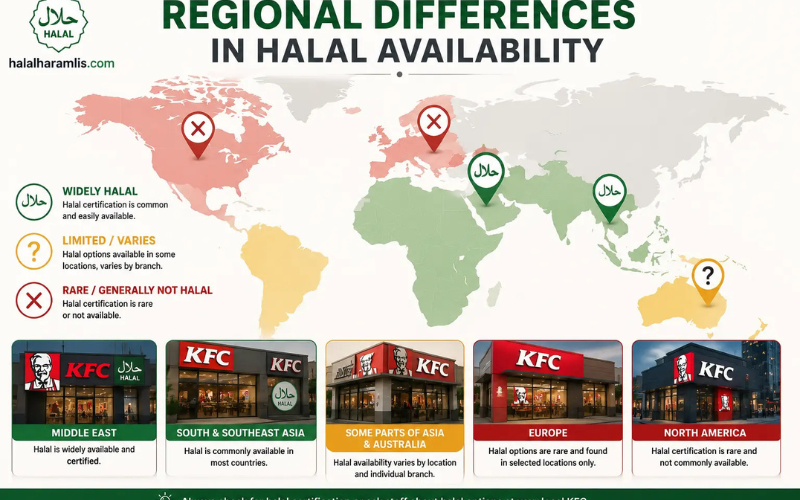
KFC adapts its operations to local markets. In regions where halal demand is high, halal certification is often obtained and displayed in restaurants. In many Western countries, halal certification is optional and less common. Some branches offer halal menus in areas with Muslim communities, but most do not.
This variation means Muslims must check individual branches rather than assuming a universal rule. The same brand may be halal in one city and non-halal in another. Understanding this regional difference is essential for making informed decisions.
Scholarly Opinions on Eating KFC
Islamic scholars generally present three main viewpoints. The first allows eating from halal-certified branches and is widely followed. The second advises avoiding non-certified fast food due to uncertainty. The third allows meat from the People of the Book but questions whether modern factory slaughter meets religious conditions.
These differing opinions exist because modern food production is complex and constantly evolving. Muslims are encouraged to follow scholars they trust and choose caution when uncertainty exists.
How to Verify Halal Certification Yourself
Muslims are encouraged to verify rather than assume. Consumers can check certificates displayed in restaurants, visit official websites, contact local halal authorities, or ask staff about suppliers and kitchen practices. Taking a few minutes to verify halal status can provide peace of mind and prevent doubt.
Halal Decision Checklist
| Question | If Yes | If No |
| Certification visible | Likely halal | Investigate |
| Halal slaughter confirmed | Permissible | Avoid |
| Separate fryers used | Safer | Doubtful |
Fast Food vs Home Cooking
Home cooking provides the highest level of halal certainty because ingredients and preparation are fully controlled. Certified halal restaurants provide a balance between convenience and religious responsibility. Non-certified fast food carries the highest uncertainty.
Food Choice Comparison
| Option | Halal Certainty | Convenience |
| Home cooking | Very high | Medium |
| Certified halal restaurant | High | High |
| Non-certified fast food | Low | High |
FAQs
Is KFC halal everywhere in the world?
No. KFC does not follow one global halal policy. Some locations serve halal-certified chicken while others do not, so the ruling depends on the specific branch.
Can Muslims eat KFC chicken?
Muslims can eat KFC only if the branch is halal certified and follows proper halal slaughter and preparation procedures.
Why does the halal status of KFC change by location?
KFC uses local suppliers in each region. Different countries have different food laws and customer demand, which affects halal certification.
Is KFC chicken halal if it is just chicken and not pork?
Not necessarily. Chicken must be slaughtered according to Islamic rules. If the slaughter method is not halal, the chicken becomes haram.
Does halal certification guarantee KFC is halal?
Yes, if the certification comes from a trusted halal authority and the restaurant follows the certified procedures.
Is cross-contamination a concern at fast-food restaurants?
Yes. Shared fryers, utensils, and preparation areas can make halal food doubtful if strict separation is not maintained.
Is frying oil used at KFC halal?
The oil itself is usually plant-based, but if it is shared with non-halal items, some scholars consider the food doubtful.
What should Muslims do if halal certification is not available?
Most scholars recommend avoiding the food to stay on the safe side and prevent doubt.
Can halal status change over time?
Yes. Suppliers, policies, and certification can change, so it is important to verify regularly.
What is the safest choice for Muslims?
The safest option is to eat at halal-certified restaurants or prepare food at home for complete certainty.
Conclusion
KFC does not have a single global halal ruling. Its status depends on certification, slaughter practices, and kitchen procedures in each location. In certified locations, many scholars consider it permissible. In non-certified areas, caution is strongly recommended.
By verifying halal certification and staying informed, Muslims can enjoy modern convenience while maintaining their religious commitments and peace of mind.