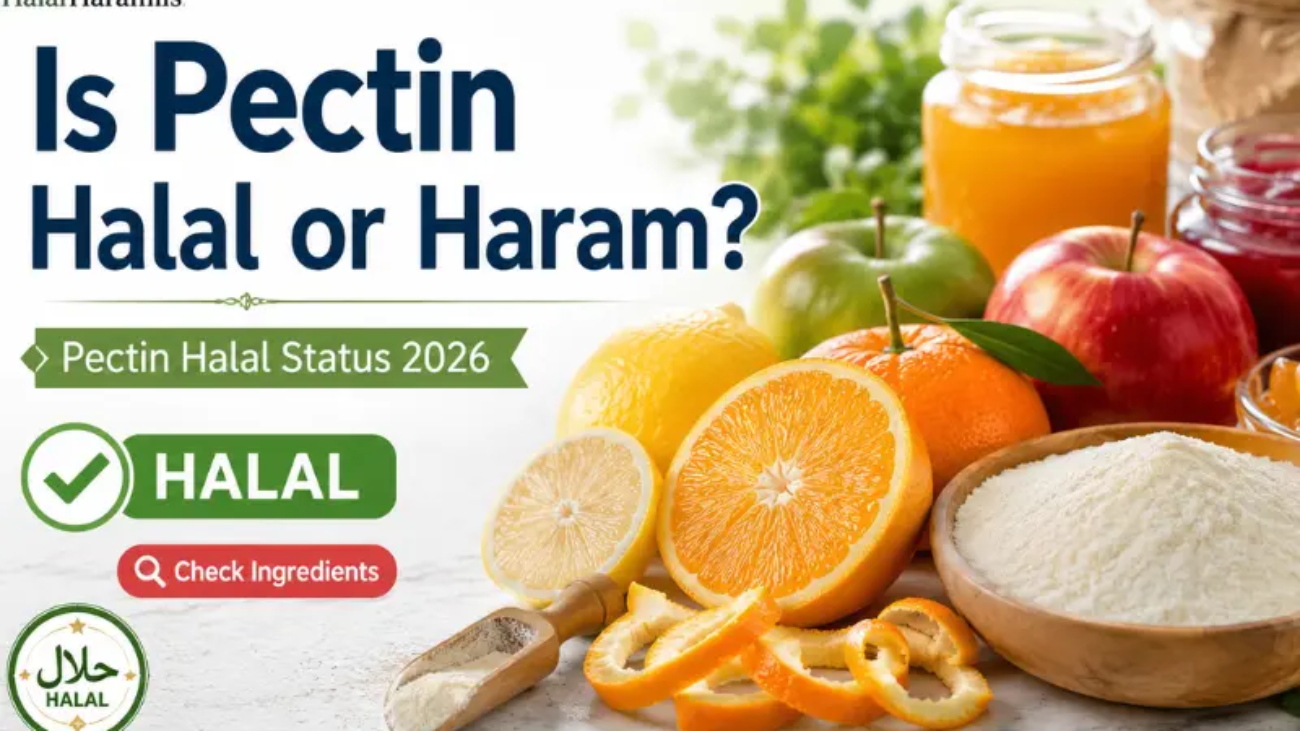
Is Pectin Halal or Haram? In most cases, pectin is halal because it is usually made from fruits such as apples, citrus peels, and other plant sources. Since pectin is generally plant-based, most Islamic scholars consider it permissible for Muslims to consume.
However, the pectin halal status 2026 may still depend on manufacturing processes, additives, and whether the final product contains any non-halal ingredients. Checking halal certification is always recommended.
Is Pectin Halal or Haram?” because pectin is commonly found in jams, candies, yogurts, desserts, medicines, and many packaged foods. Since pectin is often used as a thickening or gelling agent, consumers want to know whether it is suitable for a halal diet.
The good news is that pectin is usually extracted from fruits, making it different from gelatin, which may come from animal sources. Still, understanding Pectin Halal or Haram requires looking at its ingredients, production process, and possible halal concerns. This guide covers everything Muslims need to know about pectin halal status in 2026.
Pectin has become increasingly popular in the food industry because it helps improve texture and consistency in many products. As more Muslims pay attention to ingredient labels, questions about food additives continue to grow. Fortunately, pectin is one of the ingredients that is generally viewed positively from a halal perspective due to its plant-based origin.
What Is Pectin?
Pectin is a natural fiber found in the cell walls of fruits. Food manufacturers extract it mainly from:
- Apples
- Citrus fruits
- Oranges
- Lemons
- Limes
- Grapefruits
Pectin is widely used as a thickener, stabilizer, and gelling agent in foods.
Common products containing pectin include:
- Fruit jams
- Jellies
- Gummies
- Yogurts
- Ice creams
- Fruit fillings
- Medicines
- Dietary supplements
Because it comes from fruits, pectin is generally considered one of the safest food additives for halal-conscious consumers.
Pectin plays an important role in food production. Without it, many jams and jellies would not have their familiar texture. It helps liquids become thicker and creates the gel-like consistency that consumers expect in many fruit-based products.
Quick Answer Table
| Question | Answer |
| Is Pectin Halal? | Usually Yes |
| Plant-Based Source? | Yes |
| Contains Pork? | No |
| Contains Alcohol? | Generally No |
| Suitable for Muslims? | Usually Yes |
| Halal Certification Needed? | Recommended |
Is Pectin Halal?
Yes, pectin is generally halal.
Most commercial pectin is derived from fruit peels and fruit pulp. Since fruits are naturally halal, the resulting pectin is usually halal as well.
Islamic scholars generally permit ingredients that:
- Come from halal plant sources
- Are free from haram additives
- Are not contaminated during production
Therefore, pectin itself is typically considered halal.
The majority of halal certification organizations around the world also recognize fruit-derived pectin as a halal ingredient. This is one reason why pectin is commonly used in halal-certified foods and beverages.
However, Muslims should remember that while pectin itself may be halal, the final product containing pectin may include other ingredients that require verification.
Ingredient Analysis
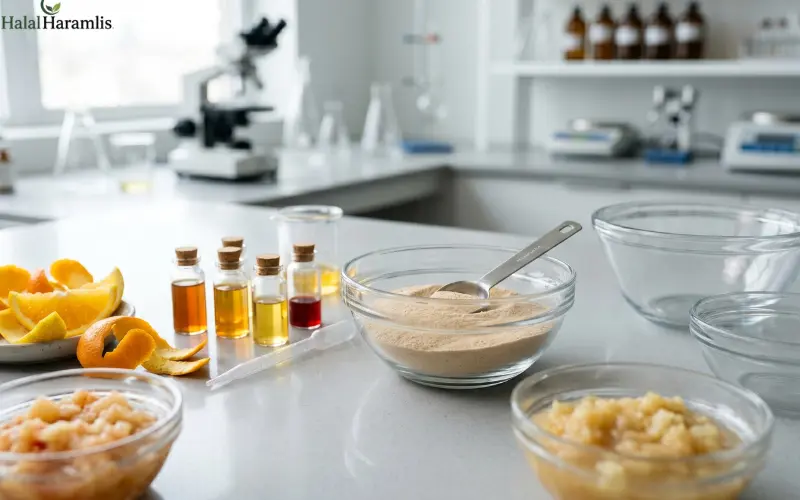
How Pectin Is Made
Manufacturers usually follow these steps:
- Collect fruit peels.
- Extract natural pectin using water and acid.
- Filter and purify the extract.
- Dry it into powder form.
- Package it for food production.
Because the source is usually fruit, the process rarely raises major halal concerns.
The extraction process is designed to isolate the natural pectin found in fruit skins and pulp. Citrus peels are among the most common sources because they contain high amounts of pectin and are readily available as by-products of juice production.
Ingredient Analysis Table
| Ingredient Component | Halal Status | Notes |
| Apple Pectin | Halal | Plant source |
| Citrus Pectin | Halal | Plant source |
| Lemon Pectin | Halal | Plant source |
| Orange Pectin | Halal | Plant source |
| Fruit Fiber | Halal | Natural source |
Additional Ingredient Considerations
Although pectin itself is usually halal, some products containing pectin may also include:
- Artificial flavors
- Preservatives
- Colorings
- Sweeteners
- Stabilizers
These ingredients should be reviewed separately because the halal status of the final product depends on all ingredients combined.
Why Do Muslims Question Pectin?
Many Muslims confuse pectin with gelatin.
Gelatin often comes from:
- Pork
- Non-halal cattle
- Mixed animal sources
Pectin is different because it comes mainly from fruits.
However, Muslims may still question pectin because:
- Ingredient labels are sometimes unclear.
- Manufacturing methods vary.
- Some products contain multiple additives.
- Cross-contamination may occur.
- Imported products may follow different standards.
This is why checking halal certification remains important.
Another reason for confusion is that pectin and gelatin often perform similar functions in food products. Both can create a gel-like texture, which leads some consumers to assume they are the same ingredient. In reality, their sources are completely different.
Does Pectin Contain Gelatin?
Normally, pectin does not contain gelatin.
These are completely different ingredients.
Pectin vs Gelatin Table
| Feature | Pectin | Gelatin |
| Source | Fruits | Animals |
| Vegan Friendly | Yes | No |
| Usually Halal | Yes | Depends |
| Pork Risk | No | Possible |
| Plant Based | Yes | No |
Therefore, pectin is often preferred by Muslims and vegetarians.
Many candy manufacturers now use pectin instead of gelatin to appeal to a wider audience, including Muslims, vegetarians, and vegans. Products labeled as vegan often use pectin because it provides similar texture benefits without animal ingredients.
Does Pectin Contain Alcohol?
Pectin itself does not normally contain alcohol.
The extraction process generally uses fruit materials and food-grade processing methods.
However, Muslims should check:
- Flavored products
- Medicines
- Supplements
- Candy products
Sometimes alcohol may appear in other ingredients rather than the pectin itself.
Alcohol Concern Table
| Product Type | Alcohol Risk |
| Pure Pectin Powder | Very Low |
| Jam Products | Low |
| Gummies | Low |
| Supplements | Medium |
| Medicines | Medium |
In most food applications, alcohol is not part of the pectin ingredient. Nevertheless, some flavored products may use alcohol-based flavor extracts, which is why reviewing the complete ingredient list remains important.
Country-Wise Halal Status
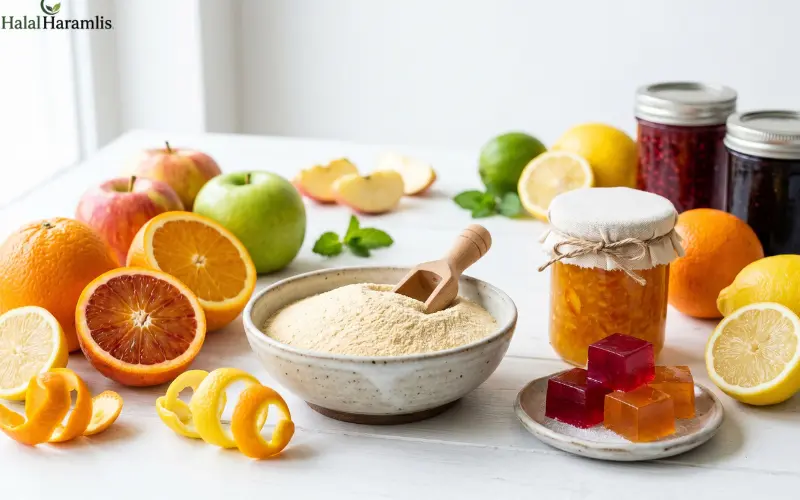
The halal status of pectin is generally similar worldwide because the ingredient is mostly fruit-derived.
Country Comparison Table
| Country | Pectin Status | Notes |
| USA | Usually Halal | Check certification |
| UK | Usually Halal | Check ingredients |
| Canada | Usually Halal | Verify manufacturer |
| Australia | Usually Halal | Review labels |
| Malaysia | Commonly Halal | Strong halal standards |
| UAE | Commonly Halal | Many certified products |
Is Pectin Halal in USA?
In the USA, most pectin products are plant-based and generally halal. However, Muslims should still review ingredient labels and halal certifications.
Many American food companies use citrus or apple pectin. Products carrying halal certification provide additional confidence for Muslim consumers.
Is Pectin Halal in UK?
In the UK, pectin is usually extracted from fruits and is generally considered halal. Certified halal products provide additional assurance.
The UK also has many halal certification organizations that help consumers identify suitable products.
Is Pectin Halal in Malaysia?
Malaysia has one of the strongest halal certification systems in the world. Most pectin used in certified products is carefully reviewed to ensure compliance with halal standards.
Islamic Perspective on Pectin
Islam encourages Muslims to consume foods that are lawful and pure.
Since pectin is generally:
- Plant-based
- Non-intoxicating
- Free from animal sources
Most scholars view it as halal.
However, scholars also encourage Muslims to:
- Read labels carefully.
- Verify ingredients.
- Choose certified halal products when possible.
The basic Islamic principle is that plant-based foods are permissible unless there is clear evidence showing otherwise. Since pectin comes from fruits, it falls within the category of ingredients that are generally accepted by scholars.
Different scholars may emphasize different levels of caution regarding processing methods, but the overall view remains that pectin itself is halal.
How to Verify Halal Status
Follow these simple steps:
Read the Ingredient List
Look for:
- Pectin
- Fruit pectin
- Citrus pectin
Check Halal Certification
A halal logo provides additional confidence.
Contact the Manufacturer
Ask:
- Source of pectin
- Production process
- Cross-contamination controls
Review Other Ingredients
Even if pectin is halal, the final product may contain:
- Alcohol flavorings
- Non-halal gelatin
- Animal-derived additives
Use Trusted Halal Resources
Many halal organizations maintain databases of approved products. These resources can help consumers make informed decisions.
Popular Products That Use Pectin
Pectin is commonly found in:
- Fruit jams
- Jellies
- Marmalades
- Fruit candies
- Yogurts
- Ice creams
- Baking products
- Medicines
Most of these products use pectin as a natural thickener.
Pectin is especially popular in fruit spreads because it helps create a smooth texture while maintaining the natural flavor of the fruit. It is also commonly used in reduced-sugar products because it can help improve consistency.
Halal Alternatives to Pectin
Although pectin is generally halal, some people seek alternatives.
Halal Alternatives Table
| Alternative | Halal Status | Source |
| Agar Agar | Halal | Seaweed |
| Carrageenan | Halal | Seaweed |
| Guar Gum | Halal | Plant |
| Xanthan Gum | Usually Halal | Fermentation |
| Locust Bean Gum | Halal | Plant |
These alternatives are commonly used in food manufacturing and can provide similar thickening or stabilizing functions.
Tips for Muslims
When buying products containing pectin:
- Read ingredient labels.
- Choose trusted brands.
- Look for halal certification.
- Verify supplements and medicines.
- Check imported products carefully.
- Contact manufacturers when unsure.
- Stay informed about ingredient updates.
- Use reliable halal resources.
These simple steps can help Muslims make informed choices.
See Also
- Is Squid Halal or Haram?
- Are Pop Tarts Halal or Haram?
- Is Wine Vinegar Halal or Haram?
- Is Rennet Halal or Haram?
FAQs
Is Pectin Halal?
Yes, pectin is generally halal because it is usually derived from fruits.
Is Pectin Halal or Haram?
Most scholars consider pectin halal due to its plant-based source.
Does Pectin Contain Pork?
No, pectin does not normally contain pork.
Is Pectin Vegan?
Yes, pectin is usually vegan and plant-based.
Is Citrus Pectin Halal?
Yes, citrus pectin is generally halal.
Is Apple Pectin Halal?
Yes, apple pectin is normally halal.
Does Pectin Contain Gelatin?
No, pectin and gelatin are different ingredients.
Does Pectin Contain Alcohol?
Pure pectin generally does not contain alcohol.
Is Pectin Halal in USA?
Most pectin products in the USA are considered halal.
Is Pectin Halal in UK?
Yes, pectin is generally halal in the UK.
Why Do Muslims Ask About Pectin?
Many people confuse pectin with gelatin, which can sometimes come from non-halal animal sources.
What Is the Pectin Halal Status 2026?
The pectin halal status 2026 remains generally halal because commercial pectin continues to be derived primarily from fruits.
Conclusion
So, Is Pectin Halal or Haram? The answer is that pectin is generally considered halal because it is usually extracted from fruits such as apples and citrus peels. Unlike gelatin, pectin does not normally come from animal sources, making it suitable for most Muslims.
The pectin halal status 2026 remains positive, and most scholars regard pectin as permissible. Nevertheless, Muslims should remember that the halal status of a finished product depends on all ingredients, not just pectin. Flavorings, additives, preservatives, and manufacturing practices can sometimes introduce concerns.
Overall, pectin is one of the least controversial food additives from a halal perspective. Its plant-based origin, widespread use, and acceptance by halal certification bodies make it a preferred ingredient in many foods consumed by Muslims around the world.
For the greatest peace of mind, choose products with halal certification, read ingredient labels carefully, and contact manufacturers if needed. By taking these simple precautions, Muslims can confidently enjoy products containing pectin while remaining faithful to halal dietary guidelines.