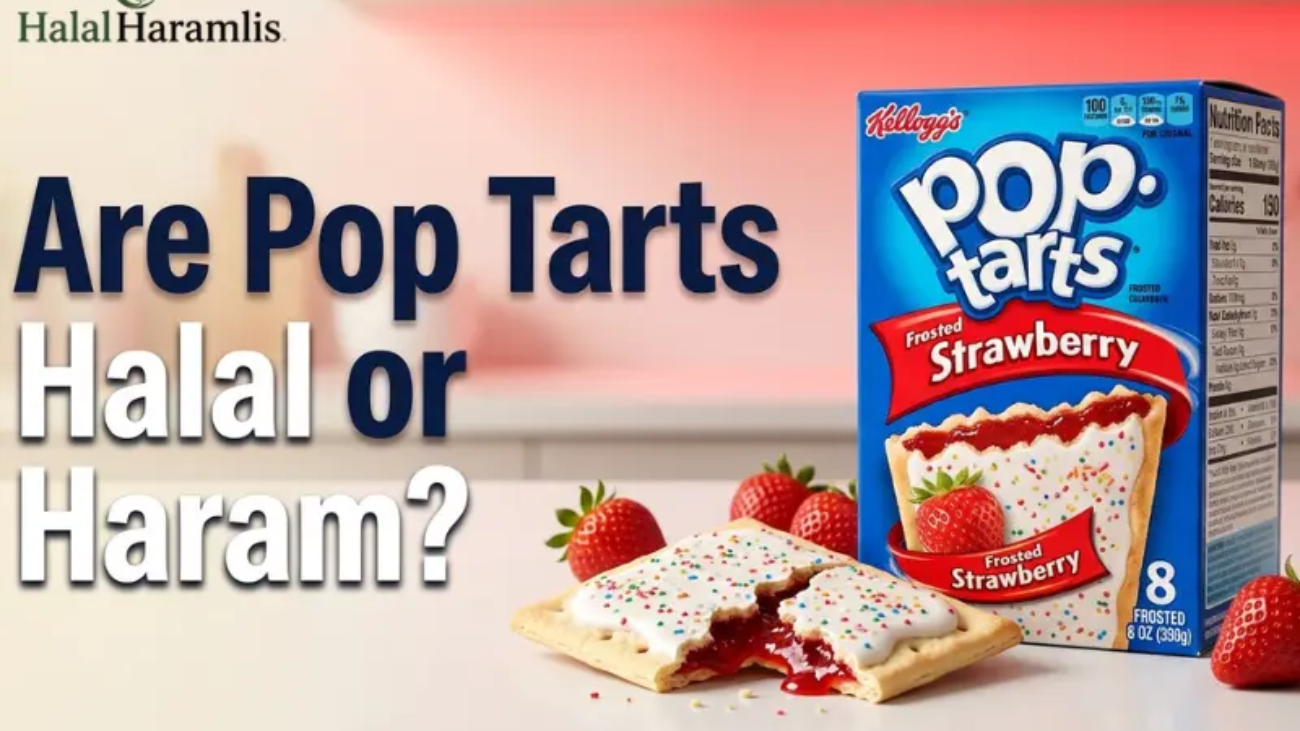
Pop-Tarts are generally considered Haram or not fully Halal in most cases because many flavors contain gelatin, alcohol-based flavorings, or non-halal enzymes, and they are not officially halal-certified in most countries. However, some flavors may be accidentally suitable but still not certified halal, so caution is needed.
If you are wondering “Are Pop Tarts Halal or Haram?”, the simple concern is whether these popular toaster pastries are safe for a halal diet. The quick reality is that most Pop-Tarts available in the USA, UK, and other countries are not officially halal-certified, which makes them questionable for Muslim consumers.
Pop-Tarts are widely eaten as a quick breakfast snack, but their ingredients vary by flavor and region. Many versions may include gelatin (from animal sources), emulsifiers, and flavoring agents that can contain alcohol or non-halal derivatives. Because of this uncertainty, Islamic dietary guidelines generally classify them as haram or doubtful (shubha) unless verified halal certification is clearly shown on the packaging.
Related Post Are Oreos Halal or Haram?
What Are Pop-Tarts?
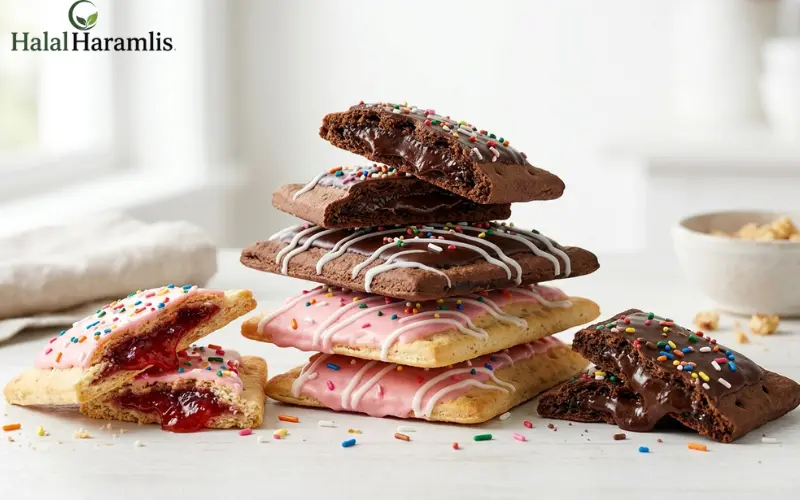
Pop-Tarts are toaster pastries produced by Kellogg’s (now Kellanova). They consist of:
- A baked pastry crust
- Sweet fruit or dessert filling
- Frosting on many varieties
- Sprinkles or toppings on some flavors
They are commonly eaten as:
- Breakfast snacks
- School snacks
- Travel snacks
- Quick desserts
Popular flavors include:
| Popular Pop-Tarts Flavors | Type |
| Strawberry Frosted | Fruit |
| Blueberry | Fruit |
| Cherry | Fruit |
| Brown Sugar Cinnamon | Sweet |
| Chocolate Fudge | Chocolate |
| Cookies & Creme | Dessert |
| S’mores | Marshmallow Dessert |
Because each flavor uses different ingredients, the halal status can vary significantly.
Are Pop-Tarts Halal or Haram?
Overall Verdict
| Product | Halal Status |
| Gelatin-containing Pop-Tarts | Usually Haram or Doubtful |
| Gelatin-free Pop-Tarts | Potentially Halal-Friendly |
| Marshmallow Flavors | Usually Doubtful |
| Frosted Flavors | Require Investigation |
| Halal-Certified Products | Halal |
The biggest concern is that Pop-Tarts are generally not halal-certified, and some flavors contain ingredients that may come from non-halal animal sources.
Why Muslims Question Pop-Tarts
Many Muslims assume Pop-Tarts are halal because they look like simple pastries.
However, several ingredients create concerns:
- Gelatin
- Artificial flavors
- Emulsifiers
- Food colorings
- Frosting ingredients
- Cross-contamination risks
This is why the question “Are Pop-Tarts halal or haram?” continues to be searched by Muslims worldwide.
History of Pop-Tarts
Pop-Tarts were introduced in the 1960s and quickly became one of America’s favorite breakfast products.
Originally, only a few flavors existed:
- Strawberry
- Blueberry
- Brown Sugar Cinnamon
Over time, hundreds of limited-edition flavors were released.
Today Pop-Tarts are sold in:
- USA
- UK
- Canada
- Australia
- Europe
- Many international markets
As ingredients changed over the years, halal concerns increased.
How Are Pop-Tarts Made?
The production process includes:
- Mixing dough ingredients
- Preparing fillings
- Filling pastry shells
- Baking
- Applying frosting
- Adding toppings
- Packaging
The frosting and filling stages are where many questionable ingredients may be introduced.
Gelatin in Pop-Tarts Halal Analysis
One of the biggest concerns is gelatin.
What Is Gelatin?
Gelatin is a protein derived from animal collagen.
It is commonly produced from:
- Pork skin
- Beef bones
- Animal tissues
- Fish sources
It is widely used in food products because it helps create texture and stability.
Is Gelatin in Pop-Tarts Halal?
The answer depends entirely on the source.
| Gelatin Source | Halal Status |
| Pork Gelatin | Haram |
| Non-Halal Beef Gelatin | Haram |
| Halal Beef Gelatin | Halal |
| Fish Gelatin | Halal |
| Unknown Gelatin | Doubtful |
Since most Pop-Tarts do not publicly specify halal gelatin sources, many Muslims choose caution.
Why Gelatin Creates a Problem
Islam requires that animal-derived ingredients come from halal sources.
For gelatin to be halal:
- The animal must be halal
- The animal must be slaughtered according to Islamic rules
- Processing must remain halal
If these conditions are not met, gelatin becomes haram.
Do All Pop-Tarts Contain Gelatin?
No.
Some flavors contain gelatin while others may not.
However:
- Recipes change regularly
- Ingredients differ by country
- New flavors may contain additional additives
Therefore, Muslims should never assume all Pop-Tarts have the same halal status.
Strawberry Pop-Tarts Halal or Haram?
One of the most searched questions is:
Are Strawberry Pop-Tarts Halal or Haram?
The answer is not completely straightforward.
Positive Factors
Strawberry filling generally contains:
- Strawberries
- Sugar
- Corn syrup
- Food starches
These ingredients are usually halal.
Concerns
The concerns may include:
- Frosting ingredients
- Artificial flavors
- Possible emulsifiers
- Manufacturing processes
Strawberry Pop-Tarts Halal Status
| Ingredient Category | Status |
| Strawberry Filling | Usually Halal |
| Sugar | Halal |
| Flour | Halal |
| Frosting | Requires Verification |
| Flavorings | Sometimes Doubtful |
Because there is usually no halal certification, many Muslims classify Strawberry Pop-Tarts as doubtful rather than clearly halal.
Pop-Tarts Ingredients Halal Analysis
Let’s examine common ingredients.
| Ingredient | Halal Status |
| Wheat Flour | Halal |
| Sugar | Halal |
| Corn Syrup | Halal |
| Vegetable Oil | Usually Halal |
| Fruit Fillings | Usually Halal |
| Gelatin | Depends on Source |
| Artificial Flavors | May Be Doubtful |
| Emulsifiers | Require Verification |
| Food Colors | Depends on Source |
Most ingredients appear halal, but a few key ingredients create uncertainty.
Artificial Flavors in Pop-Tarts
Artificial flavors can be complicated.
Some flavorings may use:
- Alcohol carriers
- Animal-derived compounds
- Synthetic ingredients
Not every artificial flavor is haram, but their sources are often undisclosed.
This is why some scholars classify them as doubtful when information is unavailable.
Are Frosted Pop-Tarts Halal?
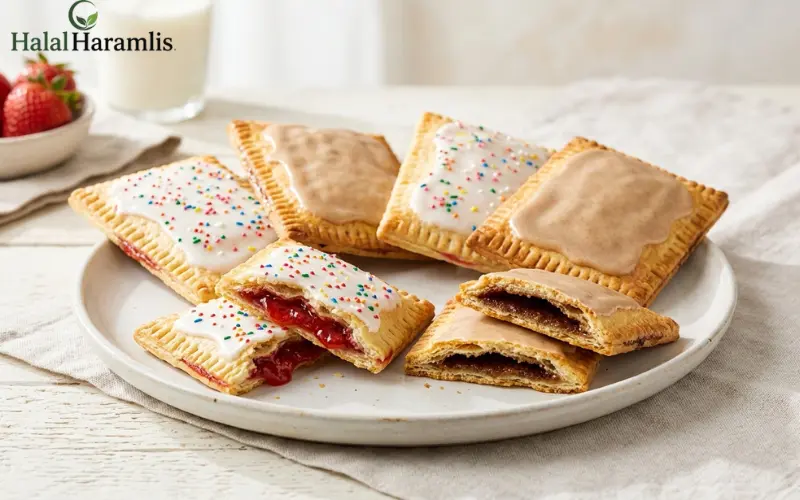
Frosted varieties create additional concerns.
Frosting may contain:
- Emulsifiers
- Artificial flavorings
- Gelatin-based ingredients
- Decorative toppings
Therefore, frosted varieties often require more investigation than unfrosted versions.
Frosted vs Unfrosted Pop-Tarts
| Type | Halal Risk |
| Unfrosted Strawberry | Lower |
| Unfrosted Blueberry | Lower |
| Frosted Strawberry | Medium |
| Chocolate Flavors | Medium |
| Marshmallow Flavors | High |
Generally speaking, unfrosted varieties are often safer choices.
Are Pop-Tarts Halal in the USA?
Many Muslims ask:
Are Pop-Tarts Halal USA?
In the United States:
- Pop-Tarts are not marketed as halal-certified
- Ingredient sourcing varies
- Some flavors contain questionable ingredients
USA Halal Concerns
| Issue | Concern |
| No Halal Certification | Yes |
| Possible Gelatin | Yes |
| Flavoring Sources | Unclear |
| Cross-Contamination | Possible |
As a result, many American Muslims avoid questionable flavors.
Are Pop-Tarts Halal in the UK?
UK formulations sometimes differ from American products.
However:
- Most UK Pop-Tarts are not halal-certified
- Ingredients should still be checked
- Certain flavors may have different recipes
Never assume USA and UK versions are identical.
USA vs UK Pop-Tarts Comparison
| Factor | USA | UK |
| Halal Certification | No | No |
| Ingredient Variations | Yes | Yes |
| Gelatin Risk | Possible | Possible |
| Muslim Consumer Concerns | High | High |
Cross-Contamination Concerns
Even if ingredients appear halal, manufacturing facilities may process:
- Non-halal products
- Animal-derived ingredients
- Dairy and meat products
This creates cross-contamination concerns for stricter Muslims.
What Do Islamic Scholars Say?
Islamic scholars generally divide foods into three categories:
| Category | Ruling |
| Clearly Halal | Permissible |
| Clearly Haram | Forbidden |
| Doubtful | Better to Avoid |
Many Pop-Tarts fall into the third category because ingredient sources are not always fully disclosed.
Hadith About Doubtful Matters
In both Sahih al-Bukhari and Sahih Muslim, the Prophet Muhammad ﷺ taught:
“Whoever avoids doubtful matters protects his religion and honor.”
This principle is often applied to products with uncertain ingredient sources.
Can Muslims Eat Pop-Tarts?
The answer depends on:
- The specific flavor
- The ingredient list
- Personal level of caution
- Scholarly opinion followed
Some Muslims eat gelatin-free flavors.
Others avoid all Pop-Tarts because there is no halal certification.
Ingredients Muslims Should Watch For
Always check for:
| Ingredient | Concern |
| Gelatin | Animal Source |
| Mono and Diglycerides | Source Unknown |
| Artificial Flavors | Possible Alcohol |
| Carmine | Insect-Based Coloring |
| Enzymes | Source May Vary |
These ingredients often require further investigation.
Best Halal Alternatives to Pop-Tarts
If you prefer safer options, consider:
| Alternative | Halal Status |
| Homemade Fruit Pastries | Halal |
| Halal-Certified Bakery Products | Halal |
| Fruit-Filled Biscuits | Usually Halal |
| Halal Snack Bars | Halal |
| Halal Toaster Pastries | Halal |
These options provide greater confidence for Muslim consumers.
Why Many Muslims Avoid Pop-Tarts
The main reasons include:
- No halal certification
- Possible gelatin
- Artificial flavor concerns
- Unknown ingredient sourcing
- Cross-contamination concerns
For many Muslims, avoiding doubtful foods provides peace of mind.
Are Pop-Tarts Vegetarian?
Not always.
Some flavors may contain:
- Gelatin
- Animal-derived ingredients
Therefore, not all Pop-Tarts are vegetarian-friendly.
Are Pop-Tarts Kosher?
Some varieties may carry kosher certifications.
However, kosher does not automatically mean halal.
Muslims should still review ingredients carefully.
Country-Wise Halal Status
| Country | General Status |
| USA | Doubtful |
| UK | Doubtful |
| Canada | Depends on Flavor |
| Australia | Depends on Ingredients |
| Pakistan (Imported) | Check Label |
| UAE (Imported) | Check Certification |
Final Verdict: Are Pop-Tarts Halal or Haram?
Final Answer
| Product | Verdict |
| Pop-Tarts with Gelatin | Usually Haram or Doubtful |
| Pop-Tarts without Gelatin | Potentially Halal-Friendly |
| Strawberry Pop-Tarts | Depends on Ingredients |
| Marshmallow Flavors | Usually Doubtful |
| Halal-Certified Pastries | Best Choice |
Overall, Pop-Tarts cannot generally be considered fully halal because some flavors contain gelatin and other questionable ingredients. Since Pop-Tarts are not typically halal-certified, Muslims should carefully examine ingredient labels and choose safer alternatives when possible.
See Also
FAQs
Are Pop-Tarts Halal?
Some flavors may be halal-friendly, but many are considered doubtful because of gelatin and ingredient concerns.
Does Gelatin in Pop-Tarts Make Them Haram?
If the gelatin comes from pork or non-halal animals, it is haram.
Are Strawberry Pop-Tarts Halal or Haram?
They may be halal-friendly if they do not contain questionable ingredients, but they are generally not halal-certified.
Do All Pop-Tarts Contain Gelatin?
No. Some flavors contain gelatin while others do not.
Are Pop-Tarts Halal in USA?
Most are not halal-certified and may contain doubtful ingredients.
Are Pop-Tarts Halal in UK?
They are generally not halal-certified, and ingredients should be checked individually.
Can Muslims Eat Frosted Pop-Tarts?
Only after verifying the ingredient list.
Are Unfrosted Pop-Tarts Better?
Generally yes, because they contain fewer questionable ingredients.
Do Pop-Tarts Contain Pork?
Some gelatin-containing varieties may potentially use non-halal sources.
Are Pop-Tarts Vegetarian?
Not all varieties are vegetarian.
What Is the Safest Alternative?
Halal-certified pastries and homemade fruit pastries.
Should Muslims Avoid Doubtful Foods?
Many scholars recommend avoiding doubtful foods whenever possible.
Conclusion
Pop-Tarts are one of the most popular toaster pastries in the world, but their halal status is not always clear. While many ingredients such as flour, sugar, fruit fillings, and vegetable oils are generally halal, concerns arise from gelatin, artificial flavorings, emulsifiers, and the lack of halal certification.
The biggest issue is that different flavors use different recipes. Some varieties may be relatively halal-friendly, while others contain ingredients that Muslims should avoid. This is especially true for marshmallow-flavored, heavily frosted, and dessert-inspired Pop-Tarts. Because ingredient formulas can change over time and vary by country, Muslims should always read labels carefully before purchasing.
If you strictly follow halal dietary rules, the safest choice is to select products with clear halal certification or choose halal-certified bakery alternatives. When ingredient sources remain uncertain, following the Islamic principle of avoiding doubtful matters can help ensure confidence in your food choices and keep your diet aligned with halal guidelines.