
Are Jolly Ranchers halal or haram? The short Islamic verdict is that Jolly Ranchers are not fully halal and generally fall into the Mashbooh (doubtful) category for Muslims. Certain varieties — especially Jolly Rancher Gummies and Chews — are widely considered haram because they contain gelatin that is not halal-certified and is most likely derived from pork or non-halal slaughtered animals. While the classic hard candies and lollipops do not contain gelatin, they still remain questionable due to possible alcohol-based flavor extraction, unclear manufacturing processes, glazing agents, and the absence of official halal certification.
In today’s world of highly processed foods, candies that look simple often contain complex ingredients and hidden processing steps. Because of this, Muslims cannot rely on brand names or appearance alone when deciding whether a product is halal. Instead, ingredients, sourcing, and production methods must be carefully examined according to Islamic dietary principles.
Why This Question Matters for Muslims Today
In the past, determining halal foods was simple. Foods were mostly natural and homemade, and ingredients were easy to identify. Today, modern processed foods contain complex chemical compounds, hidden additives, and manufacturing processes that are not visible on labels.
Candy appears simple, colorful, and harmless. Many people assume sweets are always halal because they contain sugar and fruit flavors. However, the global food industry uses advanced food science that introduces hidden concerns such as alcohol used as a solvent in flavor extraction, gelatin derived from non-halal animals, glazing agents from insects, cross-contamination in shared factories, and artificial flavor carriers and stabilizers.
Because of these realities, scholars advise Muslims to carefully examine modern processed foods rather than relying on assumptions. Jolly Ranchers are a perfect example of a product that appears simple but requires deeper halal investigation
Knowing the Jolly Ranchers Product Range
Jolly Ranchers are not a single candy. They are a family of products, each made with different recipes and ingredients. The halal ruling changes depending on the type.
Main Jolly Rancher products include hard candy, gummies, sour gummies, fruit chews, lollipops, candy canes, and seasonal jelly beans. Each of these products uses a different formula, meaning the halal status cannot be answered with a simple yes or no. Islam judges foods based on ingredients and processes, not brand names.
Table Jolly Ranchers Product Types vs Halal Risk
| Product Type | Main Ingredients | Major Concern | Halal Risk |
| Hard Candy | Sugar, Corn Syrup | Flavor extraction | Low / Mashbooh |
| Gummies | Gelatin | Pork or non-halal beef gelatin | High / Haram |
| Sour Gummies | Gelatin + acids | Gelatin source | High / Haram |
| Fruit Chews | Gelatin or emulsifiers | Animal ingredients | High / Haram |
| Lollipops | Sugar + glaze | Shellac coating | Medium / Doubtful |
| Jelly Beans | Glazing agents | Shellac & processing | Medium / Doubtful |
The Islamic Framework for Evaluating Candy
Islamic dietary law is built on three core rules: anything derived from pork is haram, intoxicants are haram, and doubtful foods should be avoided when halal alternatives exist.
Modern scholars apply these rules using principles such as Istihalah (transformation), Istihlak (dilution), and Mashbooh (doubtful foods). These principles are essential when analyzing modern candy production.
Full Ingredient Breakdown of Jolly Ranchers
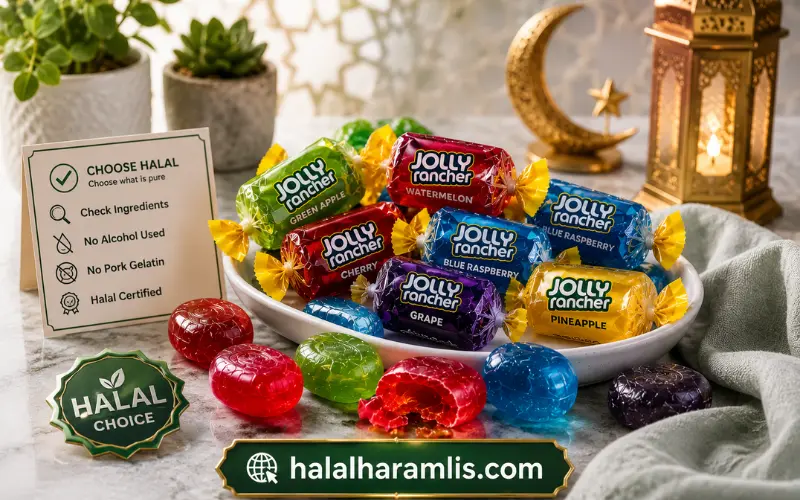
Typical hard candy ingredient list includes sugar, corn syrup, malic acid, natural and artificial flavors, and artificial colors. At first glance this appears halal, but the hidden concern lies in flavor chemistry and processing methods.
Table Ingredient Halal Analysis
| Ingredient | Source | Halal Status | Explanation |
| Sugar | Plant | Halal | Basic sweetener |
| Corn Syrup | Corn | Halal | Plant-derived |
| Malic Acid | Fruit fermentation | Halal | Flavor enhancer |
| Artificial Colors | Synthetic | Halal | Lab produced |
| Artificial Flavor | Synthetic | Halal | Chemical compounds |
| Natural Flavor | Unknown | Doubtful | Source not disclosed |
| Gelatin | Animal collagen | Haram | Likely pork/beef |
Deep Dive Into Flavor Chemistry
Modern candy rarely uses real fruit juice. Food scientists create flavor molecules in laboratories. These flavor compounds must be dissolved and preserved using solvents, and the most common solvent is ethanol (alcohol). Alcohol is used because it extracts flavor efficiently, preserves aroma molecules, and evaporates quickly during processing.
Manufacturers often state the final product contains no alcohol, but the extraction process still raises Islamic concerns. Scholars differ in opinion: some allow it if non-intoxicating and fully evaporated, while stricter opinions recommend avoiding it when halal alternatives exist. Because Jolly Ranchers lack halal certification, this issue remains doubtful.
The Gelatin Problem in Gummies
Jolly Rancher Gummies contain gelatin, which is produced from animal collagen extracted from pig skin, non-halal cattle bones, or fish (rare unless halal certified). Scholars overwhelmingly agree that pork gelatin is haram and non-halal beef gelatin is haram or highly doubtful. Since the gelatin source is not disclosed, gummies are widely considered haram.
Table Gelatin Source Comparison
| Gelatin Source | Halal Status | Scholar Consensus |
| Pork Gelatin | Haram | 100% prohibited |
| Non-Halal Beef Gelatin | Haram/Doubtful | Majority prohibit |
| Fish Gelatin | Halal | Permissible |
| Plant-Based Gelatin | Halal | Fully permissible |
The Lesser-Known Issue: Confectioner’s Glaze
Some Jolly Rancher products use Shellac (E904) for shine. Shellac comes from insect secretions. Scholars differ on insect-derived ingredients; some allow them while others classify them as doubtful. This adds another layer of uncertainty for Muslims.
Cross-Contamination in Candy Factories
Modern factories produce multiple products on shared equipment. A single production line may handle gelatin gummies, chocolate with alcohol flavoring, and candies with insect dye. Even if ingredients appear halal, shared equipment may contaminate products. This is why halal certification is extremely important.
Why Hard Jolly Ranchers Are Still Mashbooh
Hard candy contains no gelatin, but concerns remain due to alcohol-based flavor extraction, lack of halal certification, and possible cross-contamination. For this reason scholars classify them as Mashbooh (doubtful) rather than fully halal.
Regional Differences in Production
Candy formulas vary worldwide. USA production carries higher risk because pork gelatin is common. Europe carries moderate risk. Some Middle Eastern production may use halal-friendly supply chains.
Table Regional Halal Risk Comparison
| Region | Halal Risk | Reason |
| USA | High | Pork gelatin common |
| Europe | Moderate | Ingredient variation |
| Middle East | Lower | Halal supply chains possible |
| Asia | Moderate | Formula differences |
Nutritional and Lifestyle Perspective in Islam
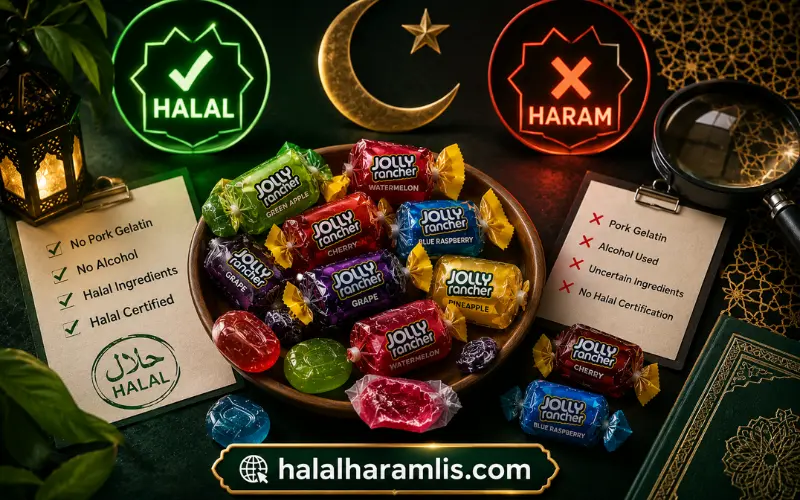
Islam encourages moderation in sweets and discourages excessive sugar consumption. Even halal candy should be eaten responsibly, as Islam promotes balance and self-discipline.
The Rise of the Halal Candy Industry
Today halal candy brands use plant-based gelatin, fish gelatin, alcohol-free flavor extraction, and dedicated halal factories. This makes avoiding doubtful candy easier than ever.
Safer Halal Alternatives
Halal-certified gummies, lollipops, and hard candies are now widely available worldwide. Choosing halal-certified sweets removes doubt and brings peace of mind.
Scholarly Opinions on Doubtful Foods
The Prophet ﷺ taught: “Leave that which makes you doubt for that which does not make you doubt.” This principle guides Muslims toward safer food choices when halal alternatives exist.
How Food Scientists Actually Make Fruity Candy Flavor
Many Muslims assume fruity candy is simply made from fruit juice and sugar. In reality, modern confectionery is a highly technical science that relies on flavor engineering.
Food scientists rarely use real fruit because natural juice:
- Spoils quickly
- Is expensive
- Loses flavor during heating
- Cannot survive long shelf life
Instead, scientists create flavor molecules that mimic fruit aroma. For example:
- Apple flavor → mix of esters like ethyl acetate
- Watermelon flavor → aldehydes and alcohol compounds
- Grape flavor → methyl anthranilate
These compounds must be dissolved in a solvent so they can mix evenly into candy. The most common solvent in the global food industry is ethanol (alcohol).
Even though the alcohol evaporates during processing, the fact it is used in manufacturing creates a halal debate among scholars.
This scientific reality is one of the main reasons modern candy often falls into the Mashbooh category.
knowing the Concept of Mashbooh Foods in Islam
Many Muslims think food must be either halal or haram. However, Islamic law includes a third category called Mashbooh (doubtful).
Mashbooh foods are those where:
- Ingredients are unclear
- Manufacturing process is unknown
- Scholars disagree on rulings
The Prophet ﷺ taught Muslims to avoid doubtful matters when possible. This principle protects faith and prevents accidental consumption of haram.
Jolly Ranchers fit perfectly into this category because:
- Flavor sources are not disclosed
- Gelatin source is unknown
- No halal certification exists
- Shared factories create contamination risk
This is why scholars recommend choosing halal-certified sweets instead.
Why Halal Certification Is So Important Today
Halal certification did not exist during early Islamic history because food production was simple. Today, global food chains involve:
- International ingredient suppliers
- Multi-country manufacturing
- Chemical processing labs
- Shared industrial machinery
A halal certification body verifies:
- Ingredient sourcing
- Slaughter methods (if animal ingredients exist)
- Alcohol-free processing
- Dedicated halal production lines
- Cross-contamination controls
Without certification, consumers must rely on incomplete ingredient lists — which rarely tell the full story.
This is the biggest reason mainstream candy brands remain doubtful.
Psychological & Spiritual Impact of Choosing Halal Food
Halal eating is not only about ingredients — it is also about spiritual mindfulness (Taqwa).
Choosing halal:
- Strengthens obedience to Allah
- Builds discipline in daily life
- Encourages conscious consumption
- Protects spiritual well-being
Many scholars explain that avoiding doubtful foods strengthens the heart and increases spiritual clarity.
When Muslims deliberately choose halal alternatives over doubtful candy, they practice a lifestyle of faith-based decision making.
Economic Growth of the Global Halal Candy Market
The halal food industry is one of the fastest-growing markets in the world. Demand for halal sweets has increased dramatically because Muslims now actively seek certified products.
The global halal confectionery market includes:
- Halal gummy candy
- Halal marshmallows
- Halal chocolates
- Alcohol-free flavoring technology
- Vegan halal sweets
Major manufacturers now produce halal-certified candies specifically for Muslim markets.
This growth means Muslims no longer need to rely on doubtful mainstream brands.
Practical Shopping Guide for Muslims
When buying candy, Muslims can follow a simple checklist:
Look for halal certification logos.
Check ingredient lists for gelatin or glaze.
Avoid products with vague “natural flavors”.
Prefer vegan-certified candy when halal options are unavailable.
Buy from Muslim-owned or halal-focused brands when possible.
This practical approach makes halal living easier in modern society.
We hope you guys find this guide helpful ,here we have more for you:
- Is Doritos Halal?
- Is CAVA Halal?
- Is Dave’s Hot Chicken Halal?
- Is Shake Shack Halal?
- Is Sushi Halal or Haram?
- Are Nerds Gummy Clusters Halal or Haram?
FAQs
Are Jolly Ranchers halal for Muslims?
Jolly Ranchers are generally considered Mashbooh (doubtful). Hard candies may be permissible, but gummies and chews are usually haram due to gelatin that is not halal-certified.
Do Jolly Ranchers contain pork gelatin?
The gummy and chewy versions most likely contain pork-derived gelatin, which makes them haram for Muslims unless proven halal-certified.
Are Jolly Rancher gummies halal?
No. Most Islamic scholars consider Jolly Rancher Gummies not halal because the gelatin source is unknown and typically pork-based.
Are Jolly Rancher hard candies halal?
Hard candies do not contain gelatin, but they are still doubtful due to alcohol-based flavor extraction and lack of halal certification.
Is alcohol used in Jolly Ranchers?
Alcohol is not listed as an ingredient, but it may be used during flavor extraction. Scholars differ on whether this makes the candy permissible or doubtful.
Are Jolly Rancher lollipops halal?
Lollipops may be conditionally halal, but they remain Mashbooh because of flavoring solvents and manufacturing uncertainties.
Why are candies often doubtful in Islam?
Modern candies may contain:
- Gelatin from non-halal animals
- Alcohol-based flavor solvents
- Insect-derived glazing agents
- Cross-contamination in factories
These factors make many mainstream sweets questionable.
Is confectioner’s glaze in candy halal?
Confectioner’s glaze (shellac) comes from insects. Some scholars allow it, while others classify it as doubtful, so many Muslims avoid it.
Are vegan candies automatically halal?
Not always. Vegan candy may still use alcohol-based flavoring, so halal certification is still the safest choice.
Are Jolly Ranchers halal in the USA?
In the USA, the halal risk is higher because pork gelatin is widely used and the brand does not provide halal certification.
Can Muslims eat Jolly Ranchers occasionally?
Some scholars allow hard candy in moderation, but strict Muslims prefer avoiding the brand and choosing halal-certified sweets instead.
What is the safest halal alternative to Jolly Ranchers?
The safest option is halal-certified candy brands that use:
- Plant or fish gelatin
- Alcohol-free flavoring
- Dedicated halal production lines
Conclusion
Jolly Ranchers demonstrate how modern processed foods can appear simple while hiding complex ingredients and manufacturing processes. Although hard candies may seem harmless, the lack of halal certification, the widespread use of alcohol-based flavor extraction, and the presence of gelatin in gummy products make the brand unsuitable for strict halal consumers.
Islam encourages Muslims to choose certainty over doubt. With the growing availability of halal-certified sweets worldwide, avoiding doubtful products has become easier than ever. Choosing halal alternatives not only protects faith but also brings peace of mind and spiritual confidence.